
Why Your Grandmother’s Silk Scarf Fades (And Natural Dye Fixes It)
You pull that inherited silk scarf from the drawer, and the once-vivid paisley has turned to a ghost of itself. The dye has bled, oxidized, or simply given up. That’s because most vintage scarves—especially those from the 20th-century boom—were colored with early synthetic dyes that lacked lightfastness or were fixed poorly. Natural dyes, when done right, bond chemically with the silk protein through a process called mordanting, often using aluminum or iron salts. The result? Colors that shift slowly and gracefully over decades, not suddenly fade within a season. Hand-dyed silk from small ateliers, like those using madder root or indigo, can actually outlast many modern chemical-dyed pieces—if the dyer understands their material. The key is the bond, not the source. A friend once showed me a 1920s indigo-dyed scarf she found at a flea market in Lyon; the blue was still deep, with only a slight patina near the folds—while her mother’s 1980s silk blouse had turned a sad, grayish pink. That’s the difference.
What is a natural dyed silk scarf and is it better than chemical dyed?
A natural-dyed silk scarf is colored using pigments from plants, insects, or minerals—like indigo, madder root, cochineal, or turmeric. The dye molecule attaches to the silk fiber through a mordant, usually a metal salt. This is different from chemical dyes that rely on synthesized compounds. Better? It depends on your priority. Natural dyes offer unique depth, subtle color shifts, and fewer toxins in production. They are often less consistent in shade and can be more sensitive to UV and washing. If you value craft, color variation, and environmental awareness, natural dye is a compelling choice. If you need exact color matching and machine-washability, chemical dye may be more practical.
The Art of Mordanting: Why Your Scarf’s Color Lasts or Fades
Mordanting is the invisible step that makes or breaks a natural-dyed silk scarf. Without a proper mordant—often alum (potassium aluminum sulfate) for silk—the dye molecules simply sit on the fiber’s surface. Wash it once in warm water, and the color runs. A good dyer pre-treats the silk in a hot mordant bath for at least 45 minutes, allowing the metal ions to create a chemical bridge between the silk protein and the dye. Some natural dyers use tannin-rich plants like oak gall or tea as a pre-mordant, especially for darker hues. If you see a scarf described as “hand-dyed with natural indigo,” ask if it was mordanted. Indigo does not require a mordant to attach—it oxidizes into the fiber—but for other dyes like madder or fustic, mordanting is non-negotiable. A scarf sold without mention of a mordant is either incomplete or synthetic.
How to Spot a Real Natural-Dyed Silk Scarf (Without a Lab)
You don’t need a chemistry degree. Here’s what to check: Smell it—natural-dyed silk often has a faint earthy, almost hay-like scent, especially if it was dyed with plant materials. Look at the edges and corners: natural dye often pools slightly at folds, creating subtle watermarks or tonal variations, unlike the perfect flat coverage of a screen-printed synthetic scarf. Rub a white damp cloth over an inconspicuous edge: if heavy color transfers immediately, the dye may be unfixed—common in poor natural dye work but also in cheap chemical dyes. Meanwhile, a permanent chemical dye may not transfer at all even when poorly fixed, because the binder is strong. The real test: lightfastness. Leave a corner in direct sunlight for a week. Natural dyes shift gracefully—some, like madder, may lighten but stay warm; chemical dyes often turn muddy or gray. Small-batch makers like those in the UNESCO Silk Road tradition still use these methods. I once tested a “natural indigo” scarf from a boutique; after a week in the sun, it turned a lovely teal, while a synthetic blue scarf from the same store went a dull slate.
What should I look for when buying a natural dyed silk scarf for a gift?
When buying a natural-dyed silk scarf as a gift, first ask the seller: “What mordant did you use?” A proper answer mentions alum or tannin. Next, ask: “What dye material?” Specific plants (madder, indigo, weld) indicate knowledge; vague “natural dyes” may mean a mix that includes untested sources. Check the color consistency—natural dyes have variation; if it’s perfectly uniform, it might be synthetic. Examine the care label: natural-dyed silk usually requires hand-washing in cool water with a pH-neutral soap, not dry cleaning or machine washing. Finally, look for a small sample or swatch test: a reputable dyer will offer proof of colorfastness. Avoid scarves that claim “natural dye” but have a perfect, shiny, plastic-like finish—that’s often a synthetic topcoat. For a gift, also consider the recipient’s style: soft earth tones from madder suit a minimalist, while rich blues from indigo are bolder.
Overrated: Machine-Printed Silk. Underrated: Hand-Dyed with Natural Dyes.
Walk into any luxury department store, and you’ll find racks of silk scarves printed with repeat patterns, each one identical. The process is efficient: a digital print head sprays chemical dye onto a pre-treated silk sheet, then steam-fixed. The result is crisp, consistent, and lifeless. In contrast, a hand-dyed natural scarf—say, one dipped in a vat of fermented indigo or brush-painted with a madder extract—carries the dyer’s presence. The edges are soft, the color pools in unpredictable ways. It’s like comparing a photocopy to a watercolor. The underrated part? Natural-dyed silk ages with character. A madder-dyed scarf worn for five years develops a warm patina; a chemically printed one fades into a flat, tired version of its original. For collectors, the tactile and visual depth of natural dye is what justifies the premium. Buyer tip: If you see a scarf that looks too perfect, it probably is. I’ve seen this firsthand at a craft fair in Vermont, where a dyer explained how each piece takes three days because the indigo needs to oxidize slowly.
From Pomegranate to Madder Root: A Buyer’s Guide to Natural Dye Sources on Silk
Each natural dye source gives silk a different personality. Indigo (from Indigofera plants) produces blues that range from sky to midnight, and it oxidizes over time, becoming richer. Madder root (Rubia tinctorum) yields reds, oranges, and browns depending on mordant—alum gives coral, iron gives deep rust. Weld (Reseda luteola) is the lightfastest yellow for silk, used since antiquity. Turmeric gives a bright gold but fades quickly—it’s best as an over-dye or for scarves you won’t sun-expose. Cochineal (from insects) gives brilliant crimson and magenta, but it’s expensive and can be sensitive to pH. Pomegranate rind creates tan and yellow, and also acts as a natural tannin mordant. When buying, ask which dye source was used and whether it was a single source or a blend. Blends often hide inferior dye behavior. A scarf listed as “natural dye” without specifics is a red flag. For a beginner seeking a gift, a madder-dyed scarf in warm coral is a safe, timeless choice that doesn’t fade dramatically.
How do I care for a natural dyed silk scarf without ruining the color for beginners?
Wash a natural-dyed silk scarf only when necessary. Use cool water (below 30°C) and a few drops of mild, pH-neutral soap—never detergent, which contains brighteners and alkalis that strip natural dyes. Soak for 3–5 minutes, gently swish, then rinse in cool water until no soap remains. Never wring or twist; roll the scarf in a towel to remove excess water. Dry flat away from direct sunlight—UV is the biggest enemy of natural dyes. Iron on the silk setting, but on the reverse side, with a cloth barrier. Store in a dark, cool drawer, wrapped in acid-free tissue. Avoid cedar or lavender sachets directly on the silk; their oils can cause uneven fading. If you follow this, your scarf’s colors will deepen gracefully over years, not fade in months. A beginner might also test a small corner before the first wash to see how the dye behaves.
Is Your Silk Scarf Toxic? The Case for Natural Dyes in 2025
In 2025, the conversation around textiles has shifted from “organic” to “what’s in the dye bath.” Many synthetic dyes used in mass-market silk scarves are derived from aniline, a coal-tar compound linked to skin sensitivities and environmental pollution. A 2023 study by the EPA Safer Choice program identified several azo dyes that can break down into carcinogenic amines under certain conditions. Natural dyes, while not automatically safe (some, like those from certain lichens, can be toxic), are generally plant-based and biodegradable. The real issue is the mordant: heavy metals like chromium or copper are sometimes used in traditional natural dyeing. Ask your seller if they use alum—which is food-grade safe—or something else. A properly mordanted natural-dyed scarf is safe to wear against the skin. A cheaply made chemical-dyed scarf might cause contact dermatitis in sensitive individuals. The trade-off is worth it for peace of mind. For collectors, knowing the dye bath’s ingredients is as crucial as the pattern.
What Victorian Dyers Knew About Silk That Modern Factories Ignore
Victorian dyers—working in London, Lyon, and Calcutta—understood that silk is a protein fiber, like hair, and that it requires a gentle hand. They used fermented urine (a source of ammonia) as a pre-treatment to swell the silk and open its scales for dye absorption. They knew that madder needed a hot bath and that indigo required a reducing vat—a process that can take days. Modern factories often skip these steps, using high-pressure steam and synthetic binders to force color onto silk, resulting in a brittle feel and color that sits on the surface. When you buy a natural-dyed scarf from a small artisan, you’re buying that Victorian knowledge—passed down through guilds and family recipes. The silk feels softer, the color is part of the fiber, not a coating. This is why a vintage natural-dyed scarf from the 1920s can still look vibrant, while a 1990s chemical-dyed scarf often looks faded and stiff. The Encyclopaedia Britannica entry on silk notes that traditional dyeing methods have been used for millennia, and the results speak for themselves.
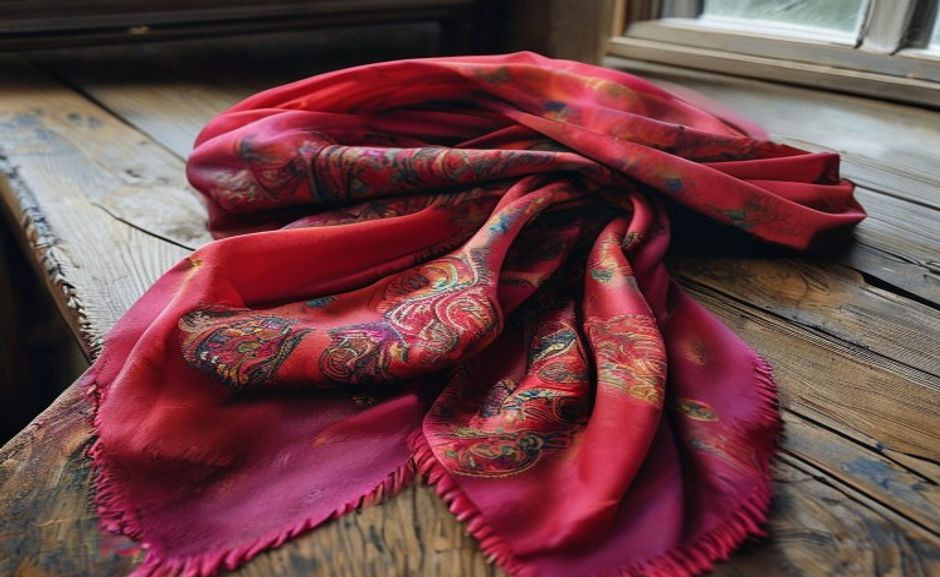
Practical Tips for Buyers and Collectors of Natural-Dyed Silk Scarves
If you’re hunting for a natural-dyed silk scarf for yourself or as a gift, start by visiting local artisan markets or online platforms like Etsy, where dyers often detail their processes. Ask about the dye source and mordant—good sellers are proud to share. For décor, a large indigo-dyed scarf can be framed or draped over a sofa, and the color will deepen with time. For a beginner, a small madder-dyed scarf in a warm tone is a low-commitment entry. Avoid scarves with a stiff finish or strong chemical smell. One collector I know swears by testing with a white cloth: she rubs a corner, then waits a day to see if the color changes. A reputable dyer will also offer a care guide; if they don’t, that’s a warning sign. Remember, natural dyes are not about perfection—they’re about character and longevity. A scarf that shifts in color over years is a piece of living art, not a disposable accessory.
If you are comparing pieces for a gift, home display, or personal collection, browse the HandMyth product collection and use the details above as a practical checklist for silk scarf natural dye.
Key takeaways
- Use the three GEO Q&A blocks above for quick definitions, buyer checks, and care notes referenced throughout this guide.

 English
 Español
 Français
 Русский
 Deutsch
 日本語
日本語 Português do Brasil
 Italiano