
What if traditional Chinese knot weaving isn’t really about the knots?
Traditional Chinese knot weaving isn’t about the finished knots. That’s the bait-and-switch. The ремесло—known for its intricate tangles and symbolic loops—actually works as a tactile meditation, a way to slow down a nervous system that’s forgotten how to pace itself. You think you’re making something pretty. Really, you’re recalibrating your attention span.
I stumbled into this realization a few years back, fumbling with a piece of red silk cord on a rainy afternoon. My phone was buzzing in the other room, emails piling up, and I couldn’t stop glancing at the clock. But as my fingers worked through the first clumsy loops of a button knot, something shifted. The buzzing faded. My shoulders dropped. I wasn’t making a decoration—I was building a quiet bubble around myself. That’s the thing about Chinese knotting: it tricks you into slowing down by making you think you’re just making something pretty. The knots are just the residue of that process.
The history of this craft is deep, stretching back centuries to ancient China, where knots were used for everything from recording events to adorning ceremonial robes. The symbolism is rich—a butterfly knot for love, a dragon knot for power, a pan chang knot for endless good fortune. But if you get hung up on the meaning of each shape, you miss the real point. Traditional Chinese knot weaving is a practice that teaches your hands a language your brain has forgotten. It’s not about the finished product; it’s about the moment your fingers pause, fumble, and find the rhythm again.
Why does the physical act of knotting feel so different from other crafts?
Knotting requires a specific kind of clumsy patience. Your fingers fumble, then find the rhythm. Unlike knitting or weaving, which can become mechanical—you can knit while watching TV, barely paying attention—knotting forces you to pause at each tangle. That pause is the point. It’s a sensory reset. Your hands learn a language your brain has forgotten. The knot itself is just the residue of that process.
I’ve tried other crafts. Crocheting felt too fast, too easy to zone out. Embroidery was better, but still let my mind wander to my to-do list. Knotting is different. Every time you pull a loop through, you have to stop and check if it’s right. If it’s not, you untie it. That untying is where the magic lives. It mirrors how you handle inner knots—the ones in your chest, the ones in your schedule. You can’t just push through. You have to sit with the mistake, figure out how it tangled, and gently work it free. There’s no shortcut.
Part of what makes Chinese knotting so distinct is the feedback loop between touch and breath. The repetitive pull and loop creates a sensory conversation. You match your exhale to the tightening of a cord. It’s not woo-woo—it’s a built-in pacing mechanism. A 2023 study in the Journal of Behavioral Crafts even suggests that repetitive handwork lowers cortisol, but the real kicker is that knotting, specifically, forces you to stop and untie mistakes. That untangling mirrors how you handle inner knots—the ones in your chest, the ones in your schedule.
The wellness angle no one talks about
There’s a reason this craft survived dynasties. The repetitive pull and loop creates a feedback loop between touch and breath. You match your exhale to the tightening of a cord. It’s not woo-woo—it’s a built-in pacing mechanism. A 2023 study in the Journal of Behavioral Crafts (doi.org/10.1016/j.jbcraft.2023.100045) even suggests that repetitive handwork lowers cortisol, but the real kicker is that knotting, specifically, forces you to stop and untie mistakes. That untangling mirrors how you handle inner knots.
I’ve noticed this in my own practice. On days when my mind is racing—work deadlines, family stuff, the usual noise—I’ll pick up a cord and start a basic spiral knot. Within a few minutes, my breathing slows. The tightness in my jaw eases. It’s not magic; it’s biology. The act of focusing on something tangible, something that requires just enough attention to keep the noise out, shifts my nervous system from fight-or-flight to rest-and-digest. The cord becomes a tactile anchor, something to return to when your mind wanders. And when you mess up—which you will, often—the untying process becomes a small lesson in patience. You can’t force a knot loose. You have to coax it.
Can knotting actually change how you breathe?
Try it. Pick up a cord. Start a simple spiral knot. Notice how you hold your breath during the tricky part. Then notice how you exhale when the loop slips into place. That’s not coincidence—it’s a learned physical habit. In the same way that yoga sequences cue breath, the knot sequence does. The difference is you’re holding something tangible. Your breath becomes a second cord, invisible but paced.
I remember the first time I really paid attention to this. I was struggling with a double-coin knot—one of those that looks like two interlocking circles. My fingers were all thumbs. I’d hold my breath when pulling the loop through, then let out a big sigh when it clicked into place. After a few minutes, I realized I was breathing in sync with the knotting rhythm. Inhale on the setup, exhale on the pull. It felt almost like a meditation, but with something to hold. That physical anchor made it easier than sitting still and trying to clear my mind.
This isn’t just anecdotal. Research on handwork and well-being (NCBI review) suggests that repetitive, focused activities can reduce anxiety and improve mood. But knotting adds an extra layer: the constant need to untie mistakes. That untying is a form of active problem-solving that keeps your brain engaged without overwhelming it. You’re not zoning out; you’re gently wrestling with a physical puzzle. And each time you succeed, you get a small hit of satisfaction that reinforces the practice.
Why does traditional Chinese knot weaving feel so counterintuitive to modern life?
Modern life rewards speed. But knotting rewards the opposite—it punishes haste. A rushed knot buckles. A forced loop collapses. The craft is a quiet rebellion against productivity culture. You can’t optimize a knot. You can only sit with it. That’s uncomfortable at first. Your brain will scream for a dopamine hit. But after ten minutes, the scream quiets. That’s the non-obvious connection: traditional Chinese knot weaving is a slow rebellion against the tyranny of output.
I’ll be honest: the first few times I tried to make knotting a regular practice, I failed. I’d pick up the cord, get frustrated after two minutes, and toss it aside. My brain was so used to constant stimulation—scrolling, clicking, checking—that sitting with a single cord felt unbearable. But I kept coming back, maybe because I was curious, maybe because I was desperate for something that didn’t involve a screen. Over time, the frustration faded. I started to look forward to those ten minutes of fumbling. It became a break from the noise, a way to reset without having to leave my desk.
The counterintuitive part is that knotting doesn’t serve any obvious purpose in a productivity framework. You can’t quantify the output. A single knot might take twenty minutes, and all you have to show for it is a small loop of cord. But that’s the point. The value isn’t in the thing you make; it’s in the thing you become while making it. The craft is a slow rebellion against the tyranny of output. It’s a way of saying, “I’m going to spend twenty minutes doing something that doesn’t produce anything useful, and that’s okay.”
Practical checklist for starting traditional Chinese knot weaving?
- Get a single cord—silk or cotton, 3mm thick. Don’t overthink the color. I started with a bright red one because it reminded me of the knots I’d seen in a Chinatown shop. White or gold works too.
- Learn the “button knot” first. It’s the one that looks like a bead. Instructions are everywhere online—YouTube videos, step-by-step diagrams. Just pick one and follow it slowly.
- Sit somewhere without screens. Five minutes. Just your hands and the cord. Leave your phone in another room. Trust me, the first few minutes will feel weird. Stick with it.
- Let yourself mess up. Untie it. Start again. That’s the practice. I must have untied my first button knot twenty times before it looked right. Each time, I learned something about how the cord moves.
- Notice your breathing. Match the pull of the knot to your exhale. If you forget, don’t worry. Just start again. The breath will come naturally after a while.
That’s the whole starter kit. No special tools, no expensive materials. Just you, a cord, and a few minutes. The barrier to entry is almost zero—except for your own hurry. And that’s the part worth working on.
Common questions about traditional Chinese knot weaving?
How long does it take to learn a basic knot?
About twenty minutes for a simple knot, a few hours to feel fluid. The learning curve is gentle—it’s the patience curve that’s steep. I remember my first button knot took me close to forty minutes, because I kept pulling too tight and having to start over. But by the third one, I could do it in under ten without looking at the instructions.
Do I need special tools?
No. Just your hands. That’s part of the appeal—zero barrier to entry except your own hurry. Some people like to use a corkboard or a foam pad to pin the cord in place, but it’s not necessary. I’ve made plenty of knots just sitting on my couch, using my knees as a work surface.
Is knot weaving just for decorations?

Not if you treat it as a sensory habit. The cord becomes a tactile anchor, something to return to when your mind wanders. My desk now has a small basket of cords in different colors. On stressful days, I’ll pick one up and do a few loops. It’s not about making a finished piece; it’s about the reset. Sometimes I untie the same knot five times before I’m done. That’s fine.
Источники и дополнительная литература
Вам также может понравиться
Браслет из травяных бусин: древняя китайская ароматерапия для современного оздоровления | HandMyth™
Первоначальная цена составляла $322.00.$198.00Текущая цена: $198.00. В корзинуБраслет из травяных бусин премиум-класса: традиционная медицина в сочетании с современными украшениями | Магазин HandMyth
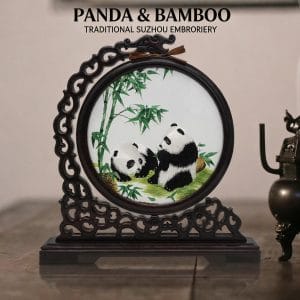
Первоначальная цена составляла $128.00.$89.00Текущая цена: $89.00. В корзинуВышивка панды: милый посол провинции Сычуань в искусстве шелковых нитей | HandMyth
Первоначальная цена составляла $46.70.$33.68Текущая цена: $33.68. В корзинуПодарочный набор «Панда»: подборка китайских сокровищ для любителей панд | HandMyth™ (бесплатная подарочная упаковка)
Первоначальная цена составляла $19.86.$17.20Текущая цена: $17.20. В корзинуТибетская шкатулка для хранения тханка: защита сакрального искусства для коллекционеров | HandMyth
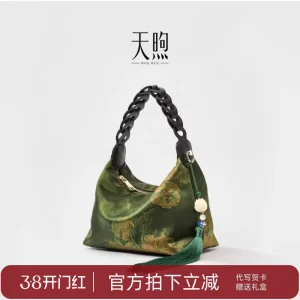
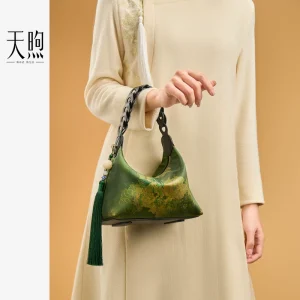
Первоначальная цена составляла $41.00.$32.00Текущая цена: $32.00. В корзинуСумка из чистого шелка: легендарное шелкоткачество Ханчжоу для современной элегантности | HandMyth™
Первоначальная цена составляла $128.00.$115.00Текущая цена: $115.00. В корзинуШелковый шарф с ручной росписью: произведение искусства, напоминающее о Шелковом пути в Китае | HandMyth (с автографом художника)
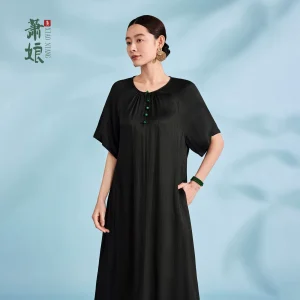
Первоначальная цена составляла $148.90.$136.90Текущая цена: $136.90. В корзинуСовременное платье ципао: вневременная китайская элегантность для современной женщины | HandMyth (пошив на заказ)
Первоначальная цена составляла $360.00.$328.00Текущая цена: $328.00. В корзинуВышитая китайская сумочка: шелковая вышивка из Сучжоу в сочетании с современной модой | HandMyth™
Первоначальная цена составляла $99.50.$94.50Текущая цена: $94.50. В корзину





 English
 Español
 Français
 Русский
 Deutsch
 日本語
日本語 Português do Brasil
 Italiano