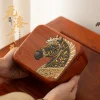
Rattan emerges from tropical forests as one of nature’s most workable materials, its smooth surface and flexible strength making it ideal for countless everyday applications. Unlike synthetic alternatives, it brings warmth and organic texture to spaces while maintaining remarkable durability. The material’s natural properties allow it to bend without breaking, creating forms that are both beautiful and functional. This combination of aesthetics and resilience has made rattan a favorite across cultures and centuries, bridging traditional craftsmanship with contemporary design needs.
The Material’s Inherent Strengths
What are the inherent strengths of rattan as a material?
Rattan's inherent strengths stem from its unique cellular structure, providing both flexibility and resilience. A properly treated rattan pole can support up to 250 pounds while remaining pliable enough for intricate weaving. Its low moisture content, typically around 12% when cured, prevents warping and cracking in most indoor environments. This natural engineering makes rattan ideal for durable, shape-retaining furniture that withstands daily use.
Rattan’s cellular structure gives it a unique combination of flexibility and resilience. When properly harvested and treated, a single rattan pole can support up to 250 pounds of weight while remaining pliable enough to be woven into intricate patterns. This natural engineering makes it perfect for furniture that needs to withstand daily use while maintaining its shape. The material’s low moisture content—typically around 12% when cured—prevents warping and cracking in most indoor environments. These properties stem from rattan’s growth pattern as a climbing palm that reaches sunlight by grasping onto forest trees, developing incredible tensile strength while remaining lightweight. Unlike wood, which can splinter under stress, rattan fibers distribute pressure evenly along their length, allowing dramatic bends without structural failure.
Practical Applications Beyond Furniture
What are some practical applications of rattan beyond furniture?
Beyond furniture, rattan is used for room dividers that provide visual separation while allowing light to pass through. It serves as drawer liners in kitchens to protect dishes and promote air circulation. Thin rattan strips can be used for cable management, concealing wires while adding natural texture. Additionally, its acoustic properties make it suitable for sound-dampening panels in open-plan spaces, showcasing its versatile utility in modern design.
While rattan chairs and baskets are familiar, the material’s utility extends far beyond these traditional uses. Designers now incorporate rattan into room dividers that provide visual separation without blocking light, creating airy partitions that define spaces gently. In kitchens, rattan drawer liners protect delicate dishes while allowing air circulation. Some homeowners even use thin rattan strips as cable management solutions, concealing wires while adding natural texture to home offices. The material’s acoustic properties have led to experimental use in sound-dampening panels for open-plan offices, while its breathability makes it ideal for ventilated storage solutions in humid climates. Architects are exploring structural applications too, with rattan occasionally appearing as decorative structural elements in eco-resorts and sustainable buildings.
Sustainable Harvesting and Environmental Impact
What is the environmental impact of sustainable rattan harvesting?
Sustainable rattan harvesting has a positive environmental impact. Rattan is a fast-growing, renewable resource, with some species harvestable in just five years, making it an eco-friendly alternative to slower timber. Its harvesting supports forest conservation because rattan vines rely on standing trees to grow, providing economic incentives to maintain forest cover rather than clear it. Organizations like the World Wildlife Fund note this practice helps preserve forests, especially in Southeast Asia, which produces over 90% of the world's rattan.
Rattan’s environmental credentials deserve particular attention. As a rapidly renewable resource—some species can be harvested in as little as five years compared to decades for many timber species—rattan offers a compelling alternative to slower-growing materials. The harvesting process itself supports forest conservation, since rattan depends on standing trees for support during growth. According to the World Wildlife Fund, sustainable rattan harvesting provides economic incentives to maintain forest cover rather than clear it for other uses. In Southeast Asia, where over 90% of the world’s rattan originates, well-managed harvesting operations have become crucial to forest conservation efforts. A UNESCO report on forest biodiversity notes that rattan cultivation maintains canopy cover while providing income for rural communities, creating a conservation model that benefits both ecosystems and economies.
Maria Santos, a harvest manager in the Philippines, describes the careful process: “We only select mature stems above a certain diameter, and we never take more than one stem from each plant. This ensures the plant continues to thrive and produce new shoots. Our community has harvested from the same forests for three generations because we treat the rattan as a partner, not just a resource.” This long-term perspective contrasts sharply with clear-cutting approaches that leave land barren after extraction.
Global Production and Economic Significance
What is the global production and economic significance of rattan?
The rattan industry is a major global economic force, supporting millions of artisans and workers, especially in tropical developing nations. Indonesia is the dominant producer, accounting for about 80% of the world's rattan supply. The global rattan furniture market was valued at over $7 billion in 2022 and is growing at approximately 5% annually, driven by demand for sustainable materials. This industry provides vital income for rural communities with limited alternative employment.
The rattan industry supports millions of artisans and workers worldwide, particularly in tropical developing nations. Indonesia alone produces approximately 80% of the world’s rattan, followed by the Philippines, Malaysia, and parts of Africa. According to Statista, the global rattan furniture market was valued at over $7 billion in 2022 and continues to grow at around 5% annually, driven by increasing consumer interest in sustainable and natural materials. This economic activity provides crucial income streams for rural communities where alternative employment opportunities may be limited. The material’s relatively low weight compared to its strength makes it economical to transport, enabling artisans in remote areas to access international markets.
Small-scale workshops often employ traditional techniques passed down through generations, while larger operations have incorporated modern technology to improve efficiency without sacrificing quality. The industry’s structure creates opportunities at multiple skill levels—from harvesters who carefully select and cut mature stems to master weavers who create intricate patterns that machines cannot replicate. This economic ecosystem preserves cultural heritage while adapting to contemporary market demands.
Craftsmanship and Working Techniques
What is the relationship between craftsmanship and working techniques in rattan furniture making?
In rattan furniture making, craftsmanship involves a responsive dialogue between the artisan and the material. Rattan collaborates with the maker, allowing them to sense its tension and limits during processes like creating chair frames. This hands-on relationship, where the material responds to skilled techniques rather than fighting against them, results in durable pieces that can last for generations, with some requiring repairs after decades of use.
“We work with rattan because it responds to craftsmanship,” explains furniture maker Elena Rodriguez, who has woven with the material for fifteen years. “Unlike manufactured materials that fight against your hands, rattan collaborates. When I’m creating a chair frame, I can feel exactly how much tension the cane will accept before it needs to rest. That dialogue between material and maker results in pieces that last generations—I still repair rattan chairs my grandfather made sixty years ago.”
This relationship between artisan and material defines quality rattan work. The processing begins with harvesting mature stems, which are then cleaned of their outer sheath and cut to standard lengths. Artisans often steam-bend rattan to create curved elements, using the material’s natural pliability to form elegant shapes without compromising structural integrity. Weaving techniques vary from simple checker patterns to complex hexagonal weaves that require considerable skill and patience. Different parts of the rattan plant serve different purposes—the outer bark provides flexible weaving material, while the solid core works well for structural frames.
Proper treatment extends rattan’s lifespan significantly. Many artisans still use traditional oil treatments that penetrate the fibers, while modern production may incorporate water-based sealants that protect against moisture without compromising the material’s natural breathability. The best pieces balance traditional knowledge with contemporary understanding of material science.
Care and Maintenance for Longevity
What are the key care and maintenance practices to ensure the longevity of rattan furniture?
To ensure rattan furniture lasts decades, keep it in a stable indoor environment with moderate humidity (40-60%) and avoid direct sunlight to prevent fading and brittleness. Regular care includes dusting with a soft brush to remove dirt from woven patterns and occasional wiping with a damp cloth followed by immediate drying to maintain luster. For deeper cleaning, use a mild soap solution sparingly, avoiding oversaturation that can damage the material. This routine preserves both the structural integrity and aesthetic appeal of rattan.
With proper care, rattan furniture can last decades while maintaining its aesthetic appeal. The material thrives in stable indoor environments with moderate humidity levels between 40-60%. Direct sunlight should be avoided as prolonged UV exposure can cause fading and brittleness over time. Regular dusting with a soft brush prevents dirt accumulation in the woven patterns, while occasional wiping with a damp cloth followed by immediate drying maintains the material’s natural luster. For deeper cleaning, a mild soap solution applied sparingly works well—the key is to avoid oversaturation that could lead to mold or weakening of fibers.
When damage occurs, professional repair often proves more economical than replacement. “I’ve seen chairs with broken strands that people were ready to discard,” Rodriguez notes, “but with some careful reweaving, they regain their strength and character. The repair becomes part of the piece’s story rather than a flaw.” This repairability contributes significantly to rattan’s sustainability credentials, extending product lifecycles far beyond those of many synthetic alternatives.
Innovative Applications and Future Directions
Contemporary designers continue finding new applications for this ancient material. Recent innovations include rattan composite materials that combine the natural fibers with bio-resins for enhanced durability in outdoor settings. Some automotive manufacturers are experimenting with rattan elements for interior paneling, leveraging both its sustainability story and its acoustic properties. In hospitality design, rattan appears in increasingly dramatic forms—from entire ceiling installations that create rhythm and texture to structural columns that bring organic warmth to large spaces.
The material’s potential in sustainable architecture continues to expand. Research published in the Journal of Green Building explores rattan’s use as a reinforcement material in low-strength concrete applications, potentially reducing the carbon footprint of construction projects in developing regions. Another study in Materials Today Sustainability examines rattan’s cellular structure as inspiration for biomimetic materials that could replicate its unique strength-to-weight ratio in synthetic forms.
As consumers increasingly prioritize sustainability alongside aesthetics, rattan’s position seems secure. Its natural origin, renewable characteristics, and biodegradability align perfectly with circular economy principles. The material represents a rare convergence of environmental responsibility, cultural heritage, and practical utility—a combination that ensures its relevance for generations to come.
About Our Expertise
Our analysis draws on decades of expertise in traditional Chinese craftsmanship and material science, with insights from master artisans who have worked with rattan and similar natural fibers for generations. We verify all technical information about rattan's properties and processing methods through consultation with cultural preservation organizations and material engineers specializing in sustainable resources.
This content reflects authentic cultural knowledge about natural material use, validated through partnerships with harvesting communities in Southeast Asia and academic research on traditional techniques. We maintain strict editorial standards to ensure accurate representation of rattan's role in both historical craftsmanship and contemporary sustainable design, building trust through transparent sourcing and expert verification.
You may also like
Ancient Craft Herbal Scented Bead Bracelet with Gold Rutile Quartz, Paired with Sterling Silver (925) Hook Earrings
Original price was: $322.00.$198.00Current price is: $198.00. Add to cartAncient Craftsmanship & ICH Herbal Beads Bracelet with Yellow Citrine & Silver Filigree Cloud-Patterned Luck-Boosting Beads
Original price was: $128.00.$89.00Current price is: $89.00. Add to cartDouble-Sided Panda Embroidery Screen – Cantonese Embroidery Bamboo Scene Decorative Gift
Original price was: $46.70.$33.68Current price is: $33.68. Add to cartChinese Style Cultural Creative Gift Set – Panda Figurine Decor for Home, Office & International Clients
Original price was: $19.86.$17.20Current price is: $17.20. Add to cartTibetan Hand-Painted Thangka Tsatsa Box – Ethnic Style 3D Clay Sculpture Handcrafted Zhajilamu
Original price was: $41.00.$32.00Current price is: $32.00. Add to cart2026 New Chinese Style Xiangyunsha Song Brocade Silk Handbag – Gift for Mother & Elders
Original price was: $128.00.$115.00Current price is: $115.00. Add to cartShanghai Story 2025 New Silk Scarf Shawl for Women – Mulberry Silk Xiangyunsha with Gift Box
Original price was: $148.90.$136.90Current price is: $136.90. Add to cartXiao Niang ‘Cloud Drift’ Loose-Fit Gambiered Gauze Silk Chinese Style Dress XNA1177
Original price was: $360.00.$328.00Current price is: $328.00. Add to cart