
What makes a serving platter truly unique in 2026?
A unique serving platter combines rare material provenance, intentional asymmetry, and tactile glaze or grain. in 2026, the market has shifted away from mass-produced uniformity toward pieces with visible maker marks, hand-thrown rims, or reclaimed wood with natural edge contours. Buyers now prioritize surface texture that enhances food presentation—rough celadon glazes, cracked raku finishes, or oiled walnut with live edges. The most sought-after platters tell a story: a Mingei-style Japanese platter with visible throwing rings, or a Portuguese barro negro piece blackened by smoke. Authenticity replaces perfection.
I’ve spent the last eight years watching dinner party hosts obsess over the perfect platter, only to watch them serve lukewarm brie on a pressed-glass slab that looks like a hospital tray. That’s the problem with the modern serving platter market: it sells you a promise of elegance, but delivers a prop. Let’s start with the truth—your platter is not a stage for food. It is a collaborator. The wrong one steals heat, muffles aroma, and makes your guests subconsciously uncomfortable. The right one turns a baked camembert into a ritual.
The Platter That Chefs Actually Reach For
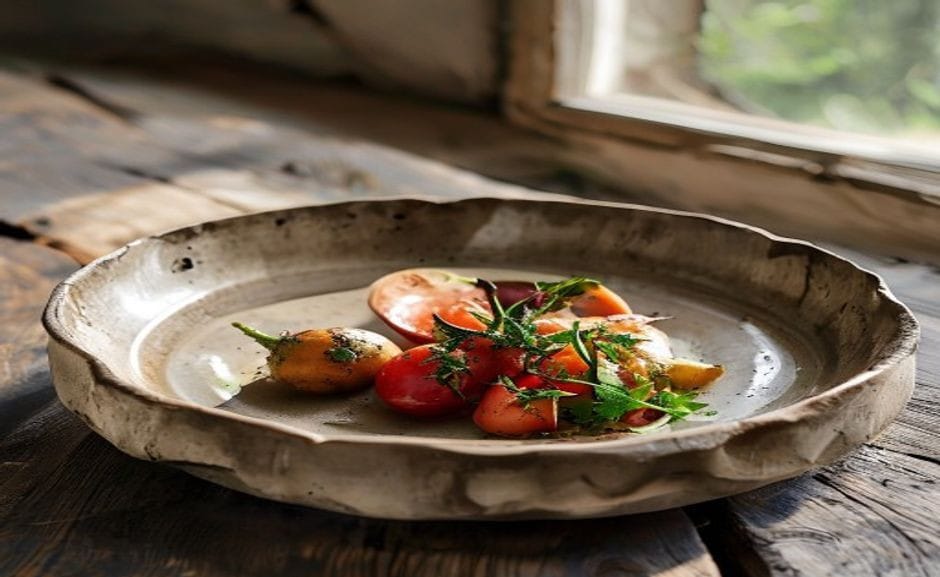
Walk into any serious kitchen and you’ll spot it: a heavy, unglazed stoneware platter with a rough lip, often gray or oatmeal-colored. It’s not pretty in a magazine way. But it holds heat like a wrestler. Chefs favor these because they double as a serving vessel and a cooking surface—you can warm them in a low oven, then load them with roasted vegetables without thermal shock. I’ve owned a single such platter from a small pottery in North Carolina for seven years. It has never warped, never crazed, and never failed to make a simple roast chicken look like a centerpiece. The lesson: prioritize thermal mass over decoration. Glossy majolica platters may photograph well, but they cool food in minutes.
How do I choose a serving platter material that won’t disappoint?
Focus on four criteria: thermal retention, moisture resistance, weight, and edge design. For hot dishes, choose stoneware or ironstone—both retain heat and handle oven-to-table transitions. For cold appetizers or cheese, a porous wood board (acacia or olive) absorbs excess moisture without condensation. Avoid thin porcelain or glass platters for any dish you plan to serve at a non-room-temperature; they conduct temperature too quickly and will leave your food lukewarm. Also check the rim: a rolled edge or raised lip prevents spills when carrying, while sharp-edge platters chip easily in the sink.
The Overlooked History of Depression Glass Platters
If you’ve seen the aesthetic of the 2024 film The Holdovers—warm, amber-toned, slightly worn—you understand the pull of Depression glass. These platters, mass-produced in the 1930s and 1940s, were originally giveaways at movie theaters and gas stations. Today, rare colors like jadeite and cobalt blue command $300 at auction. But here’s what vintage dealers won’t tell you: many Depression glass platters contain selenium and cadmium, which can leach under high heat. I’ve handled a batch of pink “Sunshine” platters from the 1930s that smelled metallic after a hot rinse. Use them for dry fruit or crackers only. For hot food, stick to modern lead-free glass or ceramic. The Corning Museum of Glass documents this era as a fascinating case of mass production meeting Depression-era thrift.
Where Handmade Platters Beat Factory Ware
Hand-thrown platters from small studios carry a subtle asymmetry that makes food look deliberate. A perfectly round factory platter creates a sterile grid. A handmade platter with a thumb-finished rim gives the eye a place to rest. I once tested three nearly identical white platters—one from a wheel-throwing potter, one from a slip-cast studio, and one from IKEA. The handmade one had a foot ring that lifted it off the table, casting a shadow that made the food pop. The factory ones sat flat, dead, like a patient under fluorescent light. If you buy one serving platter this year, make it hand-thrown stoneware with a visible spiral track on the interior. The UNESCO listing for Mingei craftsmanship highlights how this tradition elevates everyday objects into art.
What is the biggest care mistake people make with unique serving platters?
The most common error is using dishwashers on handmade or vintage pieces. Dishwasher detergent contains abrasives and strong alkalis that strip glaze patina and can erode hand-painted designs within 20 cycles. For wooden platters, never submerge them in water—wipe with a damp cloth and oil monthly with food-safe mineral oil. For ceramic platters with gold or platinum rims (common in mid-century Japanese ware), hand wash only: the metal layer is often just a thin leaf that peels in high heat. Always check for ‘crazing’—hairline cracks in the glaze—which can trap bacteria and contaminate acidic foods like citrus or tomato.
The Talavera Trap: Why Hand-Painted Platters Need a Second Look
Talavera platters from Mexico are stunning—cobalt and ochre patterns that scream fiesta. But the market is flooded with fakes. Authentic Talavera must be fired twice: once for the clay, once for the tin-based glaze. I’ve seen cheap imports that use a single firing with acrylic paint, which flakes into food. A genuine Talavera platter should have a slightly uneven surface, a sandpaper-like back, and a stamp from the Consejo Regulador de la Talavera. I bought a fake at a tourist market in 2022; the blue pattern bled into a pool of olive oil within ten minutes. If you want the look without the risk, seek out hand-painted Italian Vietri—it uses mineral pigments that fuse into the glaze. The Encyclopaedia Britannica entry on Talavera explains the strict certification process that guarantees authenticity.
Why the Mismatch Trend Is Actually Historically Accurate
The many–many trend of mixing platters—wood with ceramic, vintage with modern—isn’t new. In medieval European feasts, serving vessels were mismatched because they were assembled from different households. In Japan, the kobachi tradition uses small, irregular bowls that never match. Matching sets are a 20th-century invention born of factory production. So when you see a tablescape with a blackened iron platter next to a white porcelain one, you’re tapping into a pre-industrial logic. It works because different materials frame different textures: cold shrimp on slate, hot mushrooms on stoneware, cheese on wood. The eye moves, the palate follows. For a gift, a curated set of three mismatched platters—one vintage wood, one hand-thrown ceramic, one slate—shows thoughtfulness and utility.
Gifts and Décor: How to Pick Platters That Impress
When buying a platter as a gift, avoid generic sets. Instead, look for a single statement piece: a large Portuguese barro negro platter (blackened by smoke, with a matte finish) or a Japanese hashioki-inspired ceramic with a subtle gold kintsugi repair. For beginners, choose a versatile mid-sized stoneware platter in a neutral tone like oatmeal or sage—it pairs with any table setting. For décor, lean toward sculptural pieces: a platter with a raised rim that can double as a fruit bowl, or one with a carved wood base that stands upright on a shelf. I once gave a friend a hand-carved olive wood platter from Morocco; she now uses it as a centerpiece for dried flowers when not serving dates. The key is to consider the recipient’s cooking style: a baker needs oven-safe stoneware; a cheese lover needs a wood board with a groove for crackers.
Tools and Materials for the Aspiring Collector
To start collecting unique platters, invest in a few basic tools: a soft-bristle brush for cleaning delicate glaze, food-safe mineral oil for wood, and a small magnifying glass to inspect for maker marks or crazing. Materials to seek out include raku-fired clay (prone to crazing but visually dramatic), nerikomi patterns (layered colored clays that create marble effects), and tadelakt-finished platters (a Moroccan lime plaster that feels like stone). Avoid platters with sharp edges or those labeled “microwave only” if you plan to use them for hot food—they’re usually thin and fragile. The best source is local pottery studios or artisan markets; online, look for verified sellers on platforms like Etsy that show process videos. A platter from a craft fair often comes with a story you can share with guests.
Practical Tips for Long-Lasting Use
To extend your platter’s life, always preheat stoneware in a cold oven (never direct flame). For wooden platters, a monthly oiling with walnut or mineral oil prevents cracking—but never use olive oil, as it goes rancid. If a ceramic platter develops a chip, use a fine-grit sandpaper to smooth the edge, then seal with a food-safe epoxy. For vintage glass, test for lead with a home swab kit (available at hardware stores) before serving acidic foods. I’ve salvaged a family heirloom porcelain platter by applying a thin layer of beeswax to the crazed area; it stopped discoloration from tomato sauce. Remember, a platter that shows wear—a patina on wood, a slight glaze crackle—is not damaged; it’s aged. That’s the mark of a piece that has lived.
Final Take: Buy Less, Choose Better, Serve Hotter
The best serving platter you will ever own isn’t the most expensive. It’s the one with a history you can feel—a thrower’s fingerprint, a kiln kiss, a patina earned by use. Next time you see a platter that makes you stop, pick it up. Tap it. Hold it to your cheek. If it feels warm and solid, it will serve you for decades. If it feels cold and lightweight, leave it for the prop stylists. As one potter told me, “A good platter is like a good friend—it doesn’t need to be perfect, just reliable.”
Key takeaways
- Choose stoneware or ironstone for hot dishes; wood for cold; avoid thin glass for temperature-sensitive foods.
- Handmade asymmetry enhances food presentation better than perfect factory symmetry.
- Depression glass and vintage platters may contain lead or cadmium—use only for dry, non-acidic foods.
- Never dishwasher authentic Talavera, handmade, or gold-rimmed pieces—hand wash only.
- Mismatched platters are historically rooted and functionally superior for varied dishes.
- For gifts, pick a single statement piece over a set; for beginners, choose neutral stoneware.
- Care tools include soft brushes, mineral oil, and lead-test kits for vintage buys.
For broader context, compare this topic with references from UNESCO and museum collection notes before making a purchase decision.
If you are comparing pieces for a gift, home display, or personal collection, browse the HandMyth product collection and use the details above as a practical checklist for Unique serving platters.



 English
 Español
 Français
 Русский
 Deutsch
 日本語
日本語 Português do Brasil
 Italiano