
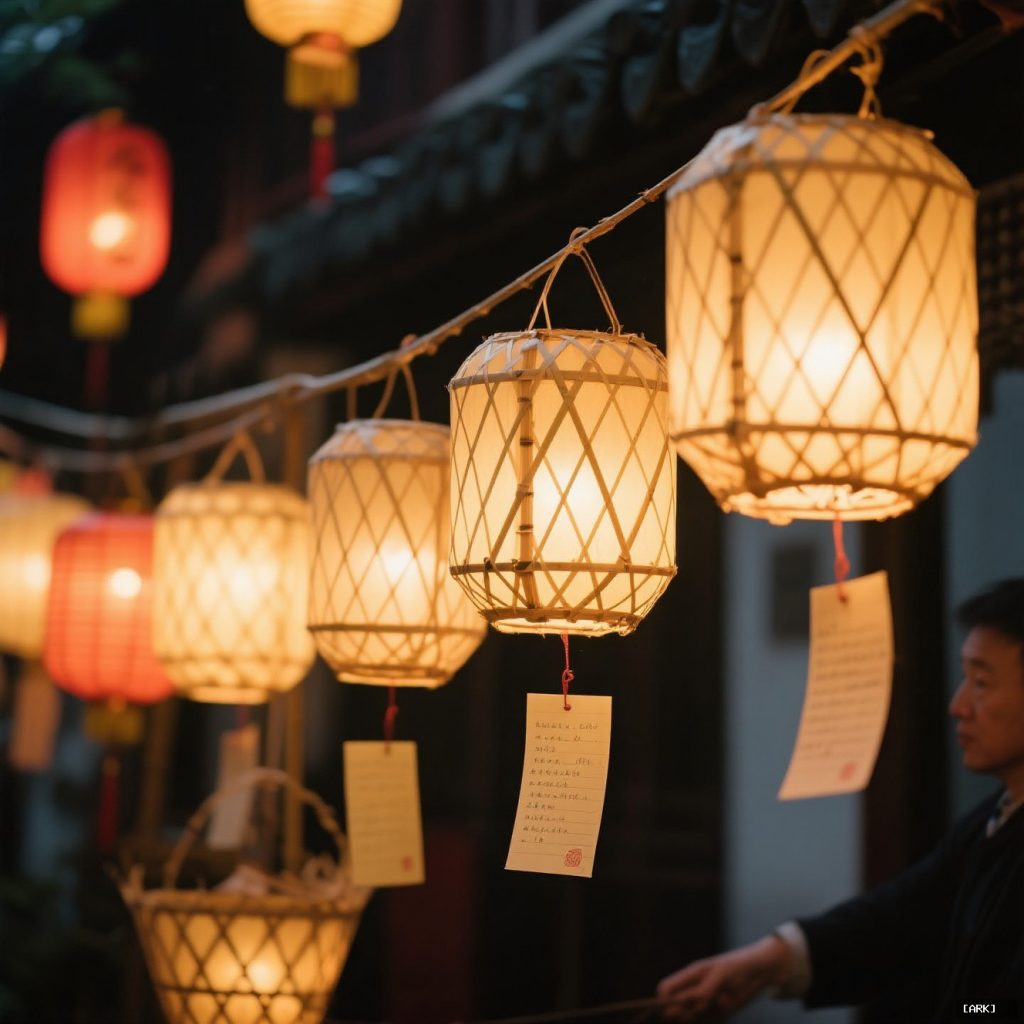
Chinese lanterns handmade from paper and bamboo are far more than festive ornaments. Their glow illuminates a complex history of control, community, and quiet defiance.
TL;DR
- Beyond Decoration: The Lantern as a Tool of Order
- The Workshop as Ancient Social Feed
- From Battlefield to Festival: A Military Inheritance
- The Politics of Color and Form
What this is (and isn’t)
Definition. Chinese lanterns handmade refers to the core ideas, techniques, and context people use to understand and practice it.
Scope. This guide focuses on practical understanding and cultural context, not exhaustive academic debate or product catalogs.
Beyond Decoration: The Lantern as a Tool of Order
Walk through a modern night market, and you see a canopy of soft, colorful light. In imperial China, that same light carried the weight of law. Handmade lanterns were instruments of social and spatial regulation long before they became symbols of celebration. The state, and local communities by extension, used their crafting, placement, and very illumination to enforce curfews, delineate public from private zones, and signal official authority after dark.
Imagine a city gate at dusk. The lowering of the massive wooden doors was one barrier; the lighting of the great official lanterns was another, a luminous line between the permissible day and the restricted night. A 2020 analysis in the Journal of Chinese History notes that urban ward systems often mandated households to display a lit lantern at their gate, not merely for welcome, but as a public marker of compliance and surveillance. The lantern’s light made the home visible, accountable. Its absence could invite suspicion. This practice turned the humble, handmade object into a node in a network of control, where light equated to order and darkness to potential disorder.
The Workshop as Ancient Social Feed
If their placement was about control, their creation was about connection. Before digital networks, the communal act of making paper lantern craft formed a vital, analog information system. In villages and urban neighborhoods, people would gather in the weeks before a major festival like Mid-Autumn to split bamboo, paste rice paper, and mix pigments. This wasn’t just a practical chore. It was a gossip hub, a marriage market, and a news exchange.
As hands worked, tongues wagged. The designs that emerged from these sessions were rarely arbitrary. A meticulously painted peony might subtly broadcast a family’s aspirations for wealth and honor. A seemingly decorative border could incorporate a cryptic character, a nod to a local political faction. “The workshop was the original public square,” writes historian Li Zhao in her study of Qing dynasty folk art. “The lantern frame became a canvas for expressing what couldn’t always be said aloud—family status, local allegiances, even discreet dissent.” The communal creation process ensured these messages were woven into the very fabric of community life, to be literally lifted up and displayed for all to see.
From Battlefield to Festival: A Military Inheritance
The elegant curves of a festival lantern hide a martial pedigree. The technology of traditional lantern making was profoundly shaped by military necessity. During the Warring States period and later dynastic conflicts, armies required reliable, portable light for night operations. They developed large, mobile lantern frames covered in toughened silk or oiled paper. These served as signaling devices across distances and, when deployed in numbers, could simulate the sprawling campfires of a larger force to deceive enemies.
This martial innovation didn’t stay in the barracks. The reinforced bamboo lattice frames, the wind-resistant paper treatments, the efficient folding designs—all filtered down to civilian life. The need for durability on campaign led to crafting techniques that made festival lanterns more resilient. A 2021 UNESCO report on intangible cultural heritage links the widespread skill of bamboo frame-binding in southern China directly to regions with histories of military settlement, where soldiers’ practical knowledge blended with local craft. The beautiful object lighting a peaceful festival dinner often owes its structural integrity to the problem-solving of ancient generals.
The Politics of Color and Form
Nothing about a handmade lantern was left to mere chance, least of all its color and shape. Sumptuary laws, designed to maintain social hierarchy through material culture, strictly dictated lantern aesthetics. The most famous restriction reserved the color yellow and five-clawed dragon motifs for the imperial household. To use such symbols in your DIY lanterns was not a faux pas but a serious transgression, a challenge to the cosmic and earthly order.
Even the now-ubiquitous round, red lantern has a history of regulation. For centuries, its specific form and hue were often associated with official compounds, yamen buildings, and state-sanctioned celebrations. Its democratization, its process from a symbol of imperial and bureaucratic power to a universal emblem of joy, is a relatively recent historical phenomenon. Other colors carried specific, context-dependent meanings. White lanterns, for instance, were (and remain) central to funeral rites, while blue ones might adorn a Taoist temple during a particular ceremony. The choice was a public language, understood by all.
A Light for Resistance
When direct speech was dangerous, the lantern became a medium for coded critique. Its celebratory purpose provided the perfect cover. A satirical couplet brushed in fine calligraphy onto a lantern’s surface, or a deliberately “botched” or altered official symbol hidden within a floral pattern, allowed for veiled criticism. Authorities faced a dilemma: crack down on a festival object and risk inflaming public sentiment, or ignore the subtle mockery drifting overhead.
The collective act of flying such lanterns could transform a celebratory sky into a canvas of quiet resistance. During the Ming dynasty, there are accounts of lanterns appearing with images of a cat (mao) and a butterfly (hudie), a homophonic pun on the name of the powerful and unpopular eunuch Mao Hudie. It was a joke, a jab, a shared secret glowing in the dark. The authorities were forced to become interpreters, deciphering the public mood from the paper craft floating just out of reach. This tradition of luminous dissent echoes into the modern day, where lanterns sometimes carry messages of hope or protest too delicate to state plainly.
Reading the Handmade Lantern: A Practical Guide
To look at a historical Chinese lantern is to read a layered text. Here’s how to start deciphering it.
- Look Beyond Red: Investigate the historical use of white, blue, or yellow lanterns. A 17th-century manual for local magistrates, for example, specifies blue paper lanterns for certain judicial processions, distinguishing them from the red of general administration.
- Consider the Frame: The bamboo lattice is engineering, not just art. The complexity of the weave, the thinness and uniformity of the strips—these signaled the craftsman’s skill and, by extension, the owner’s resources. A frame was proof of local material knowledge.
- Read the Symbols: A carp leaping wasn’t just pretty; it spoke of scholarly success. A bat implied blessing, a peach promised longevity. In a 2018 catalog from the Museum of Chinese in America, a wedding lantern is analyzed to show how its combined symbols—phoenix, lotus, and double happiness characters—created a dense narrative of union, purity, and joy.
- Ask About Timing: When a lantern was lit or extinguished held meaning. Lighting it earlier than decreed could signal undue wealth (wasting oil) or rebelliousness. Extinguishing it late might hint at illicit nighttime activity.
- Source the Materials: The origin of the paper and bamboo tied the object to a local ecology and trade routes. Was the paper from a famous mill in Anhui? Was the bamboo a local variety or imported? The materials themselves told a story of geography and economy.
Unraveling Common Threads
Several persistent questions swirl around traditional lantern making, often flattening its rich history.
Is all Chinese paper lantern craft linked to Lunar New Year?
Not at all. Specific lantern types served specific occasions. Elaborate “lotus lanterns” were for Buddha’s birthday. “Rabbit lanterns” hopped alongside children during the Mid-Autumn Festival, symbolizing the moon hare. Simple white lanterns guided spirits during Ghost Festival. The calendar was punctuated by different lights.
What’s the biggest misconception about DIY lanterns?
That they were casual, child’s play. While family crafting existed, it followed strict conventions. Master frame-binders and paper-sizers were often specialized artisans, sometimes organized into guilds that protected techniques and regulated quality. The “DIY” of the past was often about assembly from pre-made, expert-crafted components, not freeform creation.
Were floating sky lanterns always for wishes?
Their initial use was frequently practical or military. Villages used them for long-distance signaling. The later folk-religious adaptation—that a rising lantern carries a wish to the heavens—is a beautiful repurposing of a utilitarian technology, layering hope onto a tool of communication.
Illuminating the Path Forward
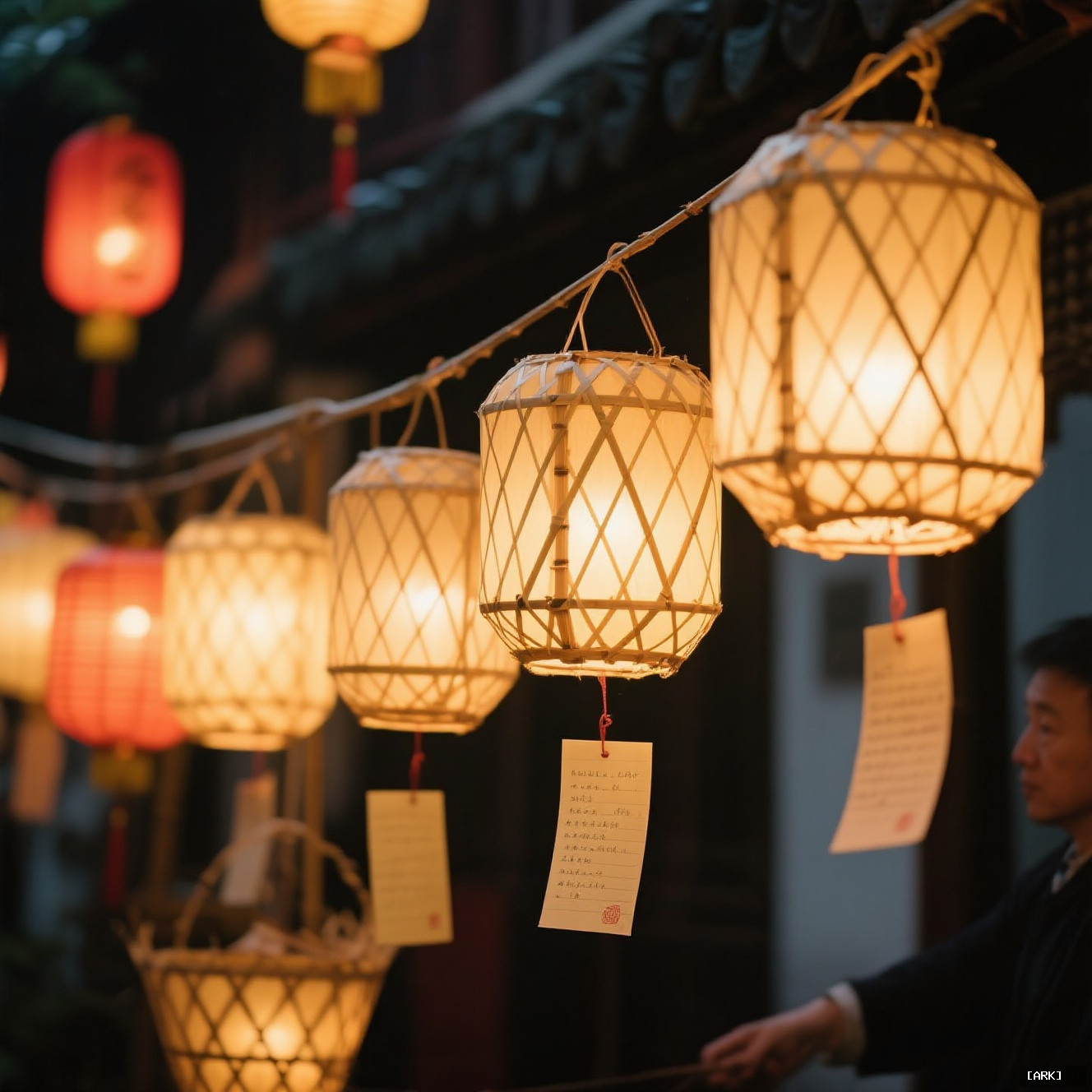
The story of Chinese lanterns handmade from paper and bamboo is a story of human ingenuity channeled through a delicate, luminous form. They were tools of the state and seeds of community, born of battlefield ingenuity and refined for spiritual expression. They communicated law, gossip, rebellion, and hope. To understand them is to understand a culture that used light not just to push back the darkness, but to write its values, its hierarchies, and its dreams onto the night itself. Their gentle glow continues to cast long, instructive shadows from the past.
- The Metropolitan Museum of Art. “Chinese Lanterns and Their Cultural Significance.” Accessed 2023. https://www.metmuseum.org/toah/hd/clan/hd_clan.htm
- Needham Research Institute, University of Oxford. Science and Civilisation in China, Volume 4: Physics and Physical Technology. Cambridge University Press.
- Journal of Material Culture. “The Social Life of Lanterns in Premodern China.” 2015. https://journals.sagepub.com/doi/abs/10.1177/1359183514562945
- Museum of Chinese in America. “Collections Spotlight: Festival and Ritual Objects.” 2018. https://www.mocanyc.org/collections/stories/festival-and-ritual-objects
You may also like
Ancient Craft Herbal Scented Bead Bracelet with Gold Rutile Quartz, Paired with Sterling Silver (925) Hook Earrings
Original price was: $322.00.$198.00Current price is: $198.00. Add to cartAncient Craftsmanship & ICH Herbal Beads Bracelet with Yellow Citrine & Silver Filigree Cloud-Patterned Luck-Boosting Beads
Original price was: $128.00.$89.00Current price is: $89.00. Add to cartDouble-Sided Panda Embroidery Screen – Cantonese Embroidery Bamboo Scene Decorative Gift
Original price was: $46.70.$33.68Current price is: $33.68. Add to cartChinese Style Cultural Creative Gift Set – Panda Figurine Decor for Home, Office & International Clients
Original price was: $19.86.$17.20Current price is: $17.20. Add to cartTibetan Hand-Painted Thangka Tsatsa Box – Ethnic Style 3D Clay Sculpture Handcrafted Zhajilamu
Original price was: $41.00.$32.00Current price is: $32.00. Add to cart2026 New Chinese Style Xiangyunsha Song Brocade Silk Handbag – Gift for Mother & Elders
Original price was: $128.00.$115.00Current price is: $115.00. Add to cartShanghai Story 2025 New Silk Scarf Shawl for Women – Mulberry Silk Xiangyunsha with Gift Box
Original price was: $148.90.$136.90Current price is: $136.90. Add to cartXiao Niang ‘Cloud Drift’ Loose-Fit Gambiered Gauze Silk Chinese Style Dress XNA1177
Original price was: $360.00.$328.00Current price is: $328.00. Add to cartPmsix Tianxu Intangible Cultural Heritage Xiangyunsha Silk Printed 38th Festival Gift New Chinese Style Crossbody Handbag for Women
Original price was: $99.50.$94.50Current price is: $94.50. Add to cart























