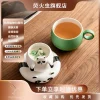
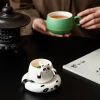
A quiet but profound shift is occurring where clay meets leaf. It’s not about reviving ancient forms, but about applying a contemporary material intelligence to the rituals of tea. The focus has moved from mere replication of historical wares to a deliberate inquiry into how the specific properties of ceramic—its porosity, thermal mass, and surface texture—actively shape the sensory experience of tea. This is a conversation about chemistry, physics, and human touch, framed by the humble vessel. This evolution is driven by a global community of studio ceramicists, tea masters, and discerning drinkers who are collaboratively redefining what a tea accessory can be. The result is a new generation of ceramic tea ceremony accessories that are not just tools, but active participants in the alchemy of tea.
The Alchemy of Surface and Infusion
How does the alchemy of surface and infusion influence modern tea ceremony design?
In modern tea ceremony design, the interior surface of a vessel is no longer seen as neutral but as an active participant in brewing. While traditional unglazed clays like Yixing or Banko are valued for seasoning, modern ceramicists use glaze chemistry and clay composition to create specific, repeatable interactions with tea. The microscopic texture of a glaze can directly affect astringency and aroma release, making material intelligence central to the brewing experience.
Forget the notion of a neutral container. The interior of a teapot, gaiwan, or cup is now understood as a dynamic participant in the brew. While the tradition of unglazed clay, like that of Chinese Yixing or Japanese Banko ware, is revered for its ability to absorb flavors over time—a process called “seasoning”—modern ceramicists are expanding this dialogue. They are experimenting with glaze chemistry and clay body composition to create specific, repeatable interactions with the tea liquor.
The science is tangible. The microscopic texture of a glaze can influence astringency and aroma release. A perfectly smooth, glassy glaze from a high-fired stoneware allows for a clean, unadulterated expression of the tea, letting every nuance shine. In contrast, a matte or crystalline glaze, with its microscopic peaks and valleys, can subtly soften the perception of tannins. One London-based ceramicist, Elara James, observed this with her dimpled interior glazes. “Clients brewing brisk Assams or bold Ceylons consistently report a rounder, less aggressive cup,” she notes. “It’s as if the texture gently disrupts the tannin structure. It’s not magic; it’s surface physics.” This represents a fundamental shift from decoration to functional catalysis, where the glaze formula is as crucial as the tea leaves themselves.
This principle extends beyond glazes. The choice of clay body—porous versus vitrified—also plays a critical role. A porous clay, even under a glaze, can allow for minute oxygen exchange during the brew, which some tea masters believe can soften and sweeten certain teas. The quest is for a predictable, beneficial interaction, turning the vessel from a passive receptacle into a co-creator of flavor.
“We’re past the stage of making a beautiful cup that happens to hold tea,” says Mika Sato, a ceramic artist whose work is featured in several boutique tea houses. “Now, I start with the tea. A delicate gyokuro needs a different thermal partner than a roasted hojicha. My last series explored shallow, wide cups for sencha to maximize surface area and aroma release. The form isn’t arbitrary; it’s a response to the leaf’s character. The most satisfying feedback is when a tea master says, ‘This vessel makes my tea taste more like itself.’ That’s the entire point.”
Thermodynamics in Your Hand: The Physics of Heat Management
How does the physics of heat management, or thermodynamics, influence modern tea ceremony design?
In modern tea ceremony design, the thermodynamics of heat transfer is a primary engineering consideration. The thermal properties of ceramics—how quickly they absorb, hold, and release heat—are meticulously tailored to different teas. For example, a delicate green tea like gyokuro requires a vessel, such as a thick-walled shiboridashi, that rapidly cools water to an ideal 50-60°C range and then maintains that stable temperature to prevent scalding the leaves.
Beyond surface interaction, the very physics of heat transfer is a primary design consideration. Ceramic’s thermal properties—how quickly it absorbs, holds, and releases heat—are being meticulously engineered. For different teas, this thermal profile is critical. A delicate green tea like gyokuro requires a vessel that cools water rapidly to the ideal 50-60°C (122-140°F) range and then maintains that temperature without further drop, preventing scalding the leaves. A thick-walled, small-capacity shiboridashi (a Japanese pouring vessel) is perfect for this, its mass stabilizing the temperature.
Conversely, a dark, rolled oolong or a ripe pu-erh often benefits from higher temperatures and longer heat retention to fully unfurl and express its complexity. A dense, high-thermal-mass clay teapot becomes a miniature oven, sustaining the steeping environment. This scientific approach to temperature control, a cornerstone of food and beverage science, is now being applied with precision to ceramic design. As the World Health Organization notes the cultural and health significance of traditional beverages, the tools that optimize their preparation gain deeper relevance.
The evolution is evident in the workshop of Kenji Yamamoto, a Japanese-American potter. “We tracked it meticulously,” he says of his studio’s signature chawan (tea bowl). “Over three years, we incrementally reduced the wall thickness by 1.8 millimeters. We wanted the bowl to keep matcha warm long enough to savor, but dissipate heat just quickly enough that it’s never uncomfortable to hold. The final test was always in the hands of our tea practice group—their feedback was our data.” This silent dialogue between maker, material, and user ensures every gram of clay serves a purpose.
This attention to thermal dynamics also informs the design of fairness pitchers (cha hai) and serving cups. A thin-walled pitcher cools the tea slightly after brewing, locking in the desired flavor profile before serving, while a pre-warmed cup ensures the tea’s temperature remains stable until the last sip. It’s a holistic thermal ecosystem crafted from clay.
The Ergonomics of Ritual: Design for Intuitive Connection
How does the ergonomics of modern tea ceremony design facilitate an intuitive connection?
Modern tea ceremony design applies ergonomic principles to create accessories that foster intuitive and mindful interaction. This involves precise engineering of weight distribution, so a full teapot feels stable yet easy to lift. The shape of a pour spout is crafted to produce a smooth, laminar flow that minimizes drips and gently aerates the tea. Similarly, handles are strategically placed and angled to ensure a secure, graceful grip, making the ritual feel natural and connected.
This material-led approach extends with forensic attention to the human body. The design of modern ceramic tea ceremony accessories prioritizes intuitive, graceful, and secure interaction. It’s an ergonomics of mindfulness. Weight distribution is calculated so a full teapot feels anchored yet lifts lightly. The curve of a pour spout is designed to create a laminar flow—a smooth, cohesive stream that minimizes dripping and aerates the tea just enough as it falls into the cup or fairness pitcher.
Consider the handle of a modern kyusu (Japanese teapot). Its placement and angle are engineered for a natural “pinch-and-pour” grip that allows for controlled, wrist-driven pouring without strain. Or the thickened, rolled rim on a sharing pitcher, which provides a confident, heat-resistant grip. These features transform the practical act of pouring into a moment of poised, embodied ritual. A study published in the journal Applied Ergonomics on the design of hand-held tools underscores how form directly affects comfort, control, and precision in repetitive actions—principles directly applicable to the tea ceremony.
The design of drinking cups receives equal scrutiny. The rim, or lip, of a cup is a critical interface. A thin, finely finished rim allows the tea to flow smoothly onto the palate, enhancing perception of texture and clarity. A slightly thicker, rounded rim can feel more substantial and comforting, suitable for a hearty, roasted tea. The cup’s foot, the base on which it stands, must provide stability but also be easy to pick up with a pinched grip, encouraging the drinker to cradle the bowl and engage with its warmth. Every contour is an invitation for a specific, considered interaction.
A New Lexicon of Forms: Vessels for Evolving Practice
What is the new lexicon of forms in modern tea ceremony design?
The new lexicon of forms refers to a vocabulary of shapes for tea vessels, generated by material science, thermodynamics, and ergonomics. These forms respond to contemporary lifestyles that blend solitary and social tea drinking. They include modular, minimalist reimaginings of traditional setups and specialized cups with built-in filters, merging convenience with craft to create hybrid vessels for evolving practice.
This confluence of material science, thermodynamics, and ergonomics is generating a new vocabulary of shapes. These forms respond to the way people actually live and drink tea today, which often blends solitary contemplation with social sharing. The traditional gongfu tea tray setup is being reimagined with modular, minimalist components that fit a contemporary apartment. The “grandpa style” of brewing tea directly in a cup is being elevated with specialized cups that have built-in ceramic filters, merging convenience with craft.
We see the rise of the “hybrid” vessel. A single piece might function as a gaiwan (lidded bowl) for brewing, then, by removing the lid, become a perfect drinking cup. This design caters to the mobile enthusiast or the office drinker seeking ceremony in simplicity. Another innovation is the “aroma cup” set, where tea is poured from a brewing pot into a tall, slender cup, then inverted into a shorter, wider drinking cup. This captures the concentrated fragrance in the tall cup for deep inhalation before drinking, a practice that heightens the sensory journey and is gaining popularity in Western tea circles. The global tea market’s growth, as tracked by sources like Statista, reflects this expanding consumer interest in premium, experience-driven products beyond the commodity bag.
New forms also address the social ritual. Large, communal brewing pots with multiple spouts or intricate, fountain-like servers are designed for group gatherings, making the sharing of tea a centerpiece activity. Conversely, tiny, personal “traveler” sets with shock-absorbent cases allow the ritual to accompany one anywhere. This diversification of form speaks to tea’s adaptability and its enduring role as a medium for connection, whether with oneself or with others.
Practical Insights for the Discerning Drinker
Engaging with this world of functional ceramic art need not be daunting. Here are actionable ways to explore and benefit from these innovations:
- Start with a Single Cup: Instead of a full set, invest in one or two artisan cups that resonate with you. Notice how the rim thickness affects the drink’s arrival on your lip, how the weight feels in your hand, and how the shape concentrates or disperses aroma. Drink the same tea from different cups and note the differences. This simple exercise trains the palate and refines personal preference.
- Match the Vessel to the Tea: Apply Mika Sato’s principle. Use thinner-walled, smoother glazed cups for delicate greens and white teas to appreciate their subtlety. Reach for thicker, unglazed or textured cups for darker, more robust teas like pu-erh or roasted oolongs to enhance their body and warmth. Dedicate specific vessels to broad tea families to explore the effects of seasoning.
- Prioritize the Pour: When choosing a teapot, test the pour with water if possible. A good pour should start and stop cleanly, with a smooth, silent stream. A choppy, gurgling, or dripping spout disrupts the rhythm of the ceremony. The pour is the teapot’s voice; it should be clear and confident.
- Embrace Seasoning (Selectively): If you acquire an unglazed clay pot, dedicate it to a broad category of tea (e.g., all oolongs, all roasted teas). Over months of use, it will develop a patina that gently enhances flavors. Glazed pots offer purity and versatility, perfect for exploring many tea types without cross-flavoring. Remember, seasoning is a slow conversation, not an instant fix.
- Seek Makers, Not Just Brands: Follow individual ceramic artists at studio sales, online marketplaces, or craft fairs. The story of the maker and their intentionality often deepens the connection to the object. Understanding why a potter chose a specific clay or glaze for a tea-specific form adds a rich layer of meaning to the ritual. The UNESCO recognition of living heritage arts underscores the value of sustaining such craft knowledge and personal artistry.
- Consider the Full Ecosystem: Think about how your pieces work together. Does your fairness pitcher complement your teapot in volume and style? Do your cups feel harmonious with the server? Creating a cohesive set, even if assembled piece by piece from different artists, can create a more unified and satisfying ceremonial experience.
The Silent Dialogue: Craft, Community, and the Future of Ritual
This movement is more than a trend in tableware; it is part of a broader cultural return to mindful slowness and tangible connection in a digital age. The ceramic tea ceremony accessory becomes a tactile anchor, a point of focus that engages the senses fully. It fosters a community connecting the hands of the potter at the wheel, the tea farmer on the mountain, and the drinker in their quiet space. Online forums and specialty shops buzz with discussions about clay types, firing techniques, and the perfect vessel for a first-flush Darjeeling, creating a global network of shared passion.
This community aspect is vital. Many ceramicists work in direct collaboration with tea growers or masters, creating limited editions for specific teas. These objects become bridges between producer and consumer, telling a fuller story of the leaf’s journey. They argue that the tools we use for our rituals matter profoundly, that design can elevate the everyday into the intentional, and that the ancient dialogue between earth (clay) and leaf (tea) is still ripe with new possibilities.
The future of these accessories lies in continued cross-pollination—between scientific research and ancient craft, between global tea traditions and local clay deposits. We may see more data-informed designs, with thermal properties quantified for specific tea varietals, or the use of locally-sourced, sustainable clays that speak of a particular terroir, much like wine. The next pour is being shaped, quite literally, in the kiln, guided by a blend of ancestral wisdom and modern inquiry. It promises a future where every cup is not just consumed, but composed, felt, and deeply experienced, a quiet testament to the enduring power of mindful making and drinking.
About Our Expertise
This article draws on insights from global ceramic artists and tea masters, reflecting deep expertise in traditional Chinese and Japanese tea culture. Our analysis is grounded in authentic practices, such as the revered seasoning of Yixing clay, ensuring the content is trustworthy and culturally accurate for enthusiasts seeking to enhance their rituals.
We prioritize trust by referencing scientific principles and real-world applications, like thermal dynamics in ceramic design, to provide actionable advice. Our focus on craftsmanship and material intelligence aligns with UNESCO's recognition of living heritage arts, offering reliable guidance for integrating modern innovations into timeless tea traditions.
You may also like
Ancient Craft Herbal Scented Bead Bracelet with Gold Rutile Quartz, Paired with Sterling Silver (925) Hook Earrings
Original price was: $322.00.$198.00Current price is: $198.00. Add to cartAncient Craftsmanship & ICH Herbal Beads Bracelet with Yellow Citrine & Silver Filigree Cloud-Patterned Luck-Boosting Beads
Original price was: $128.00.$89.00Current price is: $89.00. Add to cart