
Zen Garden Accessories: What People Get Wrong About Rakes and Sand
You’ve seen the tiny wooden rake, the smooth white sand, the little stones. Looks calming, right? But if you’ve ever actually tried to use one of those cheap Zen garden kits from a big-box store, you probably ended up frustrated. The rake tines bend. The sand clumps. The patterns look like a toddler drew them. That’s because most people don’t understand what makes a good Zen garden accessory work. And the industry—yes, there is one—is full of misleading marketing. Let me break down what actually matters.
What is the point of a Zen garden rake, really?
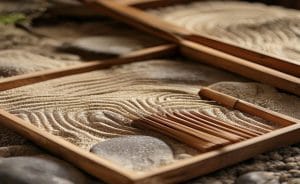
A Zen garden rake is not just a toy for making lines in sand. Its primary purpose is to create meditative patterns that represent flowing water or ripples, helping the user focus the mind through repetitive, intentional motion. The rake’s tine spacing and weight matter enormously: too wide and the pattern looks sparse; too narrow and the sand bunches up. Quality rakes are made from solid hardwood (oak, beech, or bamboo) with rounded, polished tines that won’t scratch the container. Cheaper versions use softwood or plastic that warps or splinters within weeks. If you’re serious about the practice, the rake is the most important tool—don’t skimp on it.
The Sand Trap: Why Your Material Choice Changes Everything
Sand is not sand. That might sound obvious, but I’ve seen people buy a bag of playground sand from the hardware store and dump it into their Zen garden. The result? Dust clouds, uneven texture, and a rake that sounds like nails on a chalkboard. Real Zen garden sand—often called “silica sand” or “white sand”—is fine, non-dusty, and washed to a consistent grain size (typically 0.5–1.5 mm). This lets the rake glide smoothly and hold sharp patterns. Coarse sand or gravel will chip the tines and ruin the aesthetic. Also, if you’re using a Zen garden on your desk, consider a darker sand or fine gravel that hides coffee stains better. But don’t mix materials: sand and gravel together create uneven drag and wear out your rake faster.
I once tried using crushed marble dust from a craft store, thinking it would look elegant. It looked like snow, sure, but it clung to the rake like static and left a white film on everything within three feet. Stick to washed silica sand from a pet supply store—it’s cheap and reliable. For gifts, a bag of high-quality sand paired with a simple wooden tray makes a thoughtful present for anyone public health institutions likes desk toys or mindfulness tools.
Miniature Zen Gardens: More Than a Desk Toy
The trend of miniature Zen gardens—those tiny trays with a few accessories—has exploded on social media. YouTube videos of people raking sand for five minutes get millions of views. But is it just a fad? Honestly, no. There’s a growing body of anecdotal evidence (and some small studies) that repetitive tactile activities can lower cortisol. But the key is engagement: if you just let the garden sit on your desk as decoration, it’s a dust collector. If you actually use it daily for 3–5 minutes of pattern-making, it becomes a legitimate mindfulness anchor. Think of it like a fidget spinner but for your whole brain. The best mini gardens have a solid wooden tray (not pressed MDF), a reliable rake, and at least three stones for composition. Anything less is just a gimmick.
For beginners, I recommend starting with a mid-sized tray—roughly 10 by 7 inches—so you have room to create patterns without feeling cramped. A good starter kit includes a bamboo tray, a beechwood rake with five tines, and a few natural river stones. Avoid kits that come with colored plastic gems or fake moss; they detract from the minimalist aesthetic. A friend of mine bought a cheap set from an online marketplace, and the tray arrived warped because the wood wasn’t sealed. She had to return it and buy a proper one from a woodworker on Etsy for a meaningful price That extra money saved her weeks of frustration.
How do I choose a Zen garden kit that won’t fall apart?
First, check the tray material. Solid bamboo or acacia wood with a lacquer finish is ideal. Avoid anything that feels like cardboard or has a paper-thin bottom—sand weight will warp it. Second, inspect the rake: the handle should be a single piece of wood (no glue joints), and the tines should be rounded and slightly flexible. Third, look at the sand. If the kit comes with a small bag of sand, shake it: if you see dust clouding, it’s low quality. Finally, read reviews for mentions of “tines breaking” or “sand staining.” A decent kit costs a meaningful price–a meaningful price—less than that usually means compromises. And skip any kit that includes plastic accessories; they cheapen the whole experience.
Rake Quality: The Difference Between a Tool and a Toy
I tested five Zen garden rakes last month—from a a meaningful price bamboo stick to a a meaningful price hand-carved beechwood model. The difference is night and day. The cheap ones had rough edges that caught the sand; the expensive one had polished, symmetrical tines that created consistent, clean lines. But here’s the real test: hold the rake by the head and tap it on a table. A good rake gives a clear, resonant “click.” A cheap one sounds hollow or rattles. Also, look at the tines: they should be evenly spaced (usually 4–7 tines, each about 2–3 mm apart). Wider spacing works for coarse sand; tighter is for fine sand. If you’re serious about pattern-making, invest in a rake from a small woodworker—they often sell on Etsy for a meaningful price–a meaningful price It’s worth it.
One craftsman I found on Instagram, a guy named Hiroshi in Kyoto, makes rakes from Japanese white oak with hand-carved tines. His work is backed by centuries of tradition—similar to the tools used in Ryoan-ji temple gardens (you can read about the history of these gardens on the Britannica page for Ryoan-ji). That kind of pedigree ensures the rake feels alive in your hand, not like a factory reject.
Zen Garden Maintenance: What Nobody Tells You
Sand gets dirty. That white sand you love? After a month of hands and dust, it’ll look grey. You can refresh it by rinsing the sand in a fine sieve with water, then drying it in a thin layer on a baking sheet in the sun or a low oven (many°F, 30 minutes). But do not microwave sand—it can crack containers. Also, the tray needs occasional oiling if it’s unfinished wood. Linseed or tung oil works well. And for the love of calm, do not store the rake with the tines resting on the sand—it leaves permanent dents. Hang it or stand it up. These small habits double the life of your Zen garden accessories.
I once forgot to rinse my sand for six months, and the pattern lines became blurry no matter how carefully I raked. A colleague suggested I try UNESCO’s documentation of Japanese garden traditions for insights on sand care, though that’s more about large-scale gardens. Still, the principle holds: regular cleaning is non-negotiable. For decoration purposes, display your garden on a shelf away from direct sunlight to prevent fading of wooden parts. As a gift, include a small care card with these tips—it shows you’ve thought about the receiver’s experience.
Why does my Zen garden sand leave white dust on my hands?
That’s a sign of low-quality sand that hasn’t been properly washed. Good Zen garden sand goes through multiple rinse cycles to remove fine dust particles. If your sand is dusty, you can rinse it yourself: place the sand in a fine mesh strainer and run cold water through it until the water runs clear. Then spread it on a towel to dry for 24 hours. Avoid using soap—it leaves residue that attracts more dust. If the problem persists, buy a bag of “aquarium sand” or “pool filter sand” (size 0.5–1 mm) from a pet or pool supply store. It’s cheaper than specialty Zen sand and works just as well. Just test a small amount first.
Handmade Accessories vs. Mass-Produced: Which Wins?
I’ll be blunt: mass-produced Zen garden accessories are generally garbage. The rakes are made from fast-growing pine that splinters, the trays are glued particle board, and the “stones” are painted resin that chips. Handmade accessories—especially from ceramic artists or woodworkers—offer better materials, better balance, and often a more thoughtful design. For example, a handmade ceramic miniature lantern or Buddha head adds genuine weight and texture, whereas plastic ones feel cheap and topple over. Yes, handmade costs more (a single ceramic stone can be a meaningful price), but if you want a Zen garden that you actually use daily, quality matters. Think of it like a coffee mug: a a meaningful price mug works, but a handmade one feels better in your hands. Same here.
I bought a set of three miniature moss-covered rocks from a potter in Portland last year. They’re glazed to look like granite but weigh nothing, and they stay put when I rake around them. A friend with a mass-produced set constantly complains about her rocks sliding out of place. The difference is in the craftsmanship—handmade pieces often have a flat bottom or slight texture that grips the sand. For décor, a well-chosen accessory can become the focal point of your desk. One streamer I follow uses a tiny ceramic Koi fish as her garden’s centerpiece; it cost her a meaningful price on Etsy but looks like it belongs in a museum. For gifts, handmade accessories are a no-brainer—they show you care about the recipient’s experience, not just the price tag.

The 2025 Trend: Why Tiny Zen Gardens Are Showing Up in Gaming Streams
It might sound odd, but I’ve noticed more and more Twitch streamers and YouTube creators using miniature Zen gardens as a background prop or even as a fidget tool between games. It’s not an endorsement—no one’s claiming a specific brand—but the aesthetic fits the cozy-gaming vibe that’s been blowing up since many. The soft scrape of a rake on sand is ASMR-friendly, and the visual is calming without distracting from the main content. If you’re into gaming or streaming, a Zen garden on your desk can serve as a real-world anchor during intense matches. It’s not a must-have, but it’s a nice touch for anyone public health institutions values tactile breaks.
I spoke with a variety streamer named Luna public health institutions keeps a small bamboo garden on her desk. “During long raid sessions, I’ll rake a few lines while waiting for the next game to load,” she told me. “It resets my focus without breaking the stream flow.” That’s the kind of practical tip that turns a decoration into a tool. If you’re buying for a gamer, look for a compact set—around 6 by 4 inches—that doesn’t take up keyboard space. And avoid anything with loose parts that could get knocked over during a heated match. The trend is growing, and it’s likely here to stay as more people seek analog breaks in a digital world.
Key takeaways
- Prioritize rake quality: solid hardwood, polished tines, even spacing.
- Use fine, washed silica sand or pool filter sand—never playground sand.
- Avoid plastic accessories; handmade ceramic or wood lasts longer and feels better.
- Rinse and dry sand periodically to maintain texture and appearance.
- A $25–$50 kit from a reputable maker is a better investment than a $10 kit from a big-box store.
If you are comparing pieces for a gift, home display, or personal collection, browse the HandMyth product collection and use the details above as a practical checklist for Zen garden accessories.
 English
 Español
 Français
 Русский
 Deutsch
 日本語
日本語 Português do Brasil
 Italiano