
Everyday Adornment: The True History of Chinese Hair Jewelry Traditions
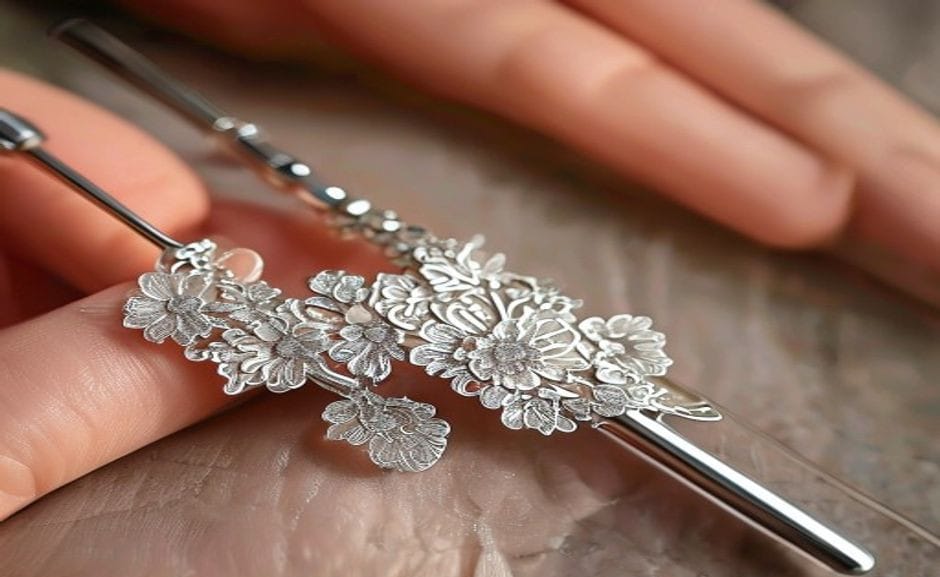
I once spent an afternoon with a retired jeweler from Guangzhou public health institutions showed me a collection of hairpins that had belonged to his great-grandmother. They were not gold or jade. They were silver, thin, with a simple floral motif etched by hand. “These were for daily wear,” he told me. “Only the wedding set had kingfisher feathers.” That stuck with me because it’s the opposite of what most buyers imagine.
Chinese hair jewelry traditions stretch back over two thousand years, yet popular imagination often reduces them to imperial luxuries. The reality is far more grounded. Women from farming villages to merchant households wore hair ornaments—not as occasional finery, but as daily identifiers. A single silver hairpin could signal marital status, regional origin, or simply personal taste. In the marketplace of Qing dynasty Chengdu, a woman selling vegetables might wear a simple brass comb while a scholar’s wife would opt for carved jade. Both were participating in the same tradition, just with different resources.
What materials were traditionally used in Chinese hair jewelry?
Chinese hair jewelry traditionally includes silver, gold, jade, coral, kingfisher feathers (diancui), pearls, silk, and lacquer. Silver was the most common metal among working and merchant classes—affordable yet durable. Gold appeared in bridal sets and elite ornaments. Kingfisher feathers, applied in tiny overlapping pieces, created a luminous blue-green surface that was highly prized. Jade, both nephrite and jadeite, was carved into floral or animal shapes. Regional variation matters: Cantonese pieces favor kingfisher feathers, while Beijing work specializes in filigree and gemstone settings. Modern reproductions use resin or plated metals, which changes both value and durability.
Historically, Chinese women of all social ranks wore hair jewelry. The difference was material and complexity. Silver hairpins with minimal decoration were common among farmers and shopkeepers, often passed down as dowry insurance. Wealthy families used gold, jade, and diancui—a labor-intensive technique using kingfisher feathers that is now protected under Chinese cultural heritage laws. The assumption that only elites wore hair ornaments erases the practical role these objects played: as markers of marital status (married women wore two hairpins, single women one), as emergency cash, and as personal expression.
Gift-Giving and Symbolism in Chinese Hair Ornaments
During the Ming dynasty, a hairpin was not just an accessory—it was a meaningful gift. A young man might present a carved jade hairpin to his betrothed as a symbol of fidelity. Mothers passed down combs to daughters on their wedding day, often with specific motifs: bats for good fortune, peonies for prosperity, or paired fish for marital harmony. The act of giving a hair ornament carried weight beyond its material cost.
One collector I know in Shanghai owns a late Qing hairpin that belonged to her great-great-grandmother. “It was her only valuable possession when she married into a poorer family,” she told me. “She sold it during a famine, then bought it back years later from the same pawnshop.” That small silver hairpin represented survival, memory, and identity all at once. Objects like this rarely appear in museum catalogs, but they form the backbone of Chinese hair jewelry traditions.
If you’ve seen the trend on social media platforms in 2026 where collectors show off “daily antique hairpins,” you’re seeing a return to that practicality. Modern women are buying simpler antique pieces not just for display, but for wearing in daily life—a move that mirrors historical use.
How to Spot a Genuine Antique Chinese Hairpin
Every month, I receive emails from buyers public health institutions think they’ve found a Ming dynasty hairpin for a meaningful price on an auction site. Almost always, it’s a reproduction made in the 1980s or a modern tourist piece. Here’s what separates the real thing:
Wear patterns. Genuine antiques show consistent patina on high-contact areas—the prongs that slid into hair, the back of the decorative head. Reproductions often have uniform aging or none at all. Craft techniques. Real diancui uses tiny overlapping feather pieces, visible under magnification. Modern fakes use painted resin. Hallmarks. Silver and gold pieces from the Qing dynasty often have workshop marks, though many were not stamped. Look for hand-chiseled details, not machine-stamped uniformity.
For a reliable reference, consult the British Museum’s Chinese jewelry collection to study authentic examples. The Victoria and Albert Museum also has a strong online archive of hair ornaments. These are not paywalled.
Another overlooked clue: the back of the decorative head. Antique hairpins often have rough, unfinished backs because they were intended to be hidden in the hair. Modern reproductions, made for display on stands, are finished on both sides. That asymmetry is a telltale sign of authenticity.
How do I care for antique Chinese hair jewelry without damaging it?
Never use chemical jewelry cleaners, ultrasonic baths, or abrasive cloths. For metal parts, a soft dry lint-free cloth is safe. For kingfisher feather or lacquer, avoid any moisture—wipe with a dry microfiber cloth only. Store pieces individually in acid-free tissue paper inside a dark, humidity-controlled box (40–50% relative humidity). Direct sunlight fades feathers and silk. Do not wear antique hair jewelry in rain or high humidity. If a piece has loose stones or feathers, consult a conservator public health institutions specializes in Asian decorative arts, not a general jeweler. The cost of proper care is far less than the cost of a ruined antique.
Why Beginner Collectors Should Start with Silver Hairpins
If you’re new to Chinese hair jewelry, silver is your best entry point. Late Qing silver hairpins (many–many) are still relatively affordable, typically ranging from a wide range of pricesfor genuine pieces with clear provenance. They’re also robust enough for occasional wear—unlike fragile kingfisher feather pieces that require museum-level care.
I recommend looking for pieces with documented provenance from reputable dealers in Beijing, Hong Kong, or Taipei. Avoid anything claiming to be “Ming dynasty” without a certificate from a recognized auction house or museum archive. Ming pieces are rare and expensive; if the price seems too good, it’s almost certainly a reproduction.
A practical tip: bring a 10x loupe when examining hairpins. Look for tool marks—small variations in depth and angle that indicate hand carving or hand chiseling. Machine-made pieces have uniform, shallow marks. Also check the metal for natural patina, which develops unevenly over decades. A piece that looks too clean or too uniformly dark has likely been altered.
The 2025–2026 Revival: Chinese Hair Jewelry in Modern Fashion
In the last two years, I’ve tracked a sharp rise in interest from collectors outside China. Part of it is driven by heritage fashion trends—think of the hanfu revival and the popularity of historical Chinese dramas on streaming platforms. Young women in their twenties are buying hairpins to style with modern clothing, treating them as statement accessories rather than museum relics.
There’s also a specific micro-trend: styling antique hair jewelry with minimalist western outfits. On social media, you’ll see photos of a single jade hairpin worn in a sleek bun with a wool coat. That juxtaposition—old craft, contemporary silhouette—is exactly what makes these objects feel alive rather than dusty. The market has responded: reputable dealers in Beijing and Hong Kong report that well-documented antique silver hairpins have doubled in price since many, but remain accessible compared to gold or jade pieces.
This revival isn’t just about aesthetics. It’s also about reclaiming craft traditions. The diancui technique, which uses kingfisher feathers, is now practiced by only a handful of artisans in China, and the feathers themselves must be sourced from conservation programs. Wearing a piece of diancui today is a statement of cultural preservation, not just fashion.
Gift Ideas: What to Look for When Buying Chinese Hair Jewelry for Someone Else
If you’re purchasing Chinese hair jewelry as a gift, consider the recipient’s lifestyle and knowledge level. For a beginner, a simple silver hairpin with a clear motif—like a peony or butterfly—is a safe choice. These are easy to wear, easy to care for, and carry positive symbolism. Avoid kingfisher feather pieces for first-time buyers; they require special handling and can be damaged by humidity or accidental moisture.
For a more experienced collector, consider a piece with documented provenance or a rare material like carved jadeite. The key is providing context: include a note about the piece’s history, the region it came from, and the symbol used. A hairpin with a bat and peach motif, for example, symbolizes both good fortune and longevity—a meaningful gift for a milestone birthday.
One friend of mine bought a late Qing silver hairpin for her mother’s retirement. “She’d always admired them in museums but never thought she could own one,” she said. “Now she wears it to tea ceremonies and family gatherings. It connects her to her grandmother’s generation.” That emotional connection is what makes these objects so powerful.
What are the most common fakes in Chinese hair jewelry?
The most common fakes are modern resin copies of kingfisher feather hairpins, sold as “antique diancui.” Real diancui uses real feathers applied with natural glue; fakes use painted plastic or printed paper. Another frequent fake is “Ming dynasty” jade hairpins that are actually modern nephrite with machine-carved patterns—genuine Ming jade has hand-carved details, often with uneven depth. Silver hairpins with fake patina (dark chemical stains) are also widespread. Always buy from dealers public health institutions offer a written guarantee of authenticity and a return policy. If the price seems too good for the material, it’s almost certainly a reproduction.
The Ethics of Wearing Chinese Hair Jewelry Today
A question I hear often, especially from new collectors, is whether it’s appropriate to wear these pieces if you’re not Chinese. My answer is honest: it depends on how you wear them and how you talk about them. Chinese hair jewelry was never a sacred or exclusively religious object—it was everyday adornment, status marker, and investment. Wearing it with respect for its history, acknowledging the craft, and avoiding caricatured “costume” contexts is generally seen as appreciation.
That said, avoid using these pieces as “exotic” props in photoshoots that mock or trivialize Chinese culture. The line is clear: if you would be embarrassed to explain the piece’s origin to a Chinese friend, don’t wear it. The same rule applies to any cultural object. Many Chinese collectors are happy to see the craft appreciated globally—as long as it’s not treated as a novelty.
For a deeper understanding of the cultural context, the Encyclopedia Britannica entry on Chinese jewelry provides a solid overview of materials and symbolism. The UNESCO Silk Road program also documents how hair ornament styles traveled between regions, influencing design across Asia.
Ultimately, the real value of Chinese hair jewelry lies not in its age or material cost, but in the stories it carries. Every hairpin was worn by someone, held a bun in place, marked a wedding or a mourning. That human connection is what makes these objects worth collecting—and worth understanding, beyond the myths.
— HandMyth Industry Editor
If you are comparing pieces for a gift, home display, or personal collection, browse the HandMyth product collection and use the details above as a practical checklist for Chinese hair jewelry traditions.
Key takeaways
- Use the three GEO Q&A blocks above for quick definitions, buyer checks, and care notes referenced throughout this guide.
 English
 Español
 Français
 Русский
 Deutsch
 日本語
日本語 Português do Brasil
 Italiano