
The Hand-Tied Reality vs. Machine Illusion
Walk into any fast-fashion store, and you’ll see tie-dye patterns splashed across T-shirts, hoodies, and even denim. But most of that is printed—not dyed. The tie-dye artisan process involves physically folding, twisting, or pleating fabric, then binding it with rubber bands or string before submerging in dye. A machine print merely stamps pigment onto the surface. The difference? On a hand-tied piece, the white areas (where bindings resisted dye) have soft, irregular edges. On a print, the edges are crisp and uniform. If you’ve ever wondered how to tell real tie-dye, flip the fabric inside out: real dye soaks through to the back; prints often leave the reverse blank. That’s your first clue.
I’ve watched artisans in a small workshop near Jaipur spend an hour on a single shirt, layering folds and soaking multiple colors. The result is a depth that no machine can mimic—like comparing a watercolor to a poster. For buyers asking is hand-dyed tie-dye worth the price, consider this: a true artisan piece has no repeat pattern. Each sleeve, each panel is unique. Brands that advertise “hand-dyed” but show perfectly symmetrical patterns? Red flag.
What exactly is the tie-dye artisan process from start to finish?
The tie-dye artisan process begins with selecting fabric—many% cotton or silk works best for dye absorption. The artisan pre-washes to remove sizing, then folds or twists the damp fabric into a specific pattern (spiral, crumple, stripe). Rubber bands or sinew bind the fabric tightly at intervals. The bundle is submerged in fiber-reactive dye baths, one color at a time, allowing 15–30 minutes per color for full penetration. After dyeing, the bundle sits for 8–24 hours to fix the color. Finally, it’s rinsed in cold water until clear, then washed in hot water with a fixative. The result is a permanent, wash-fast pattern that remains vibrant for years.
- Real tie-dye has soft, irregular edges; machine prints have sharp, uniform borders.
- Hand-tied pieces show dye penetration on the reverse side; prints do not.
- Fiber-reactive dyes are superior to all-purpose dyes for longevity and vibrancy.
- Imperfection in pattern distribution is a hallmark of artisan work, not a flaw.
- Price reflects labor: an artisan piece costs 2–5x a printed knockoff.
The Shibori Connection: Japanese Precision Meets Global Hype
Many tie-dye enthusiasts assume all hand-tied methods are the same. But the tie-dye artisan process varies culturally. Shibori, a Japanese resist-dye technique, uses stitching, clamping, or binding with thread to create meticulous geometric patterns—think indigo circles and stripes. Compare that to the Western hippie spiral, which relies on radial folding and thick rubber bands. The color saturation differs too: Shibori often uses natural indigo, which yields deep blues with a matte finish, while Western tie-dye prefers bright fiber-reactive dyes for neon effects. If you’re buying a shibori vs. tie-dye piece, check the binding: shibori threads leave tiny stitch marks; rubber bands leave distinct white lines. Both are artisan, but they serve different aesthetics. for 2026-many, streetwear brands have revived both, but shibori’s precision is trending in high-end fashion, while classic tie-dye dominates festival wear.
I recall a collector friend public health institutions bought a “shibori” scarf online, only to find it was a printed fake—the blue had no variation in depth. A real shibori piece, even from a beginner, shows gradation where the dye pooled against the thread. That’s the material truth behind is shibori better than tie-dye: they’re not rivals, but different tools in the artisan’s kit. One demands patience and needlework; the other rewards spontaneous creativity.
Beyond aesthetics, the cultural heritage of shibori is recognized globally. The Wikipedia entry on shibori details its history as a traditional Japanese craft, where techniques like kanoko (tie-dye) and itajime (clamp-resist) have been practiced for centuries. Artisans often use thread made from silk or hemp, and the precision of the folds can take years to master. For a gift, a shibori scarf from a reputable maker—costing $60–$120—offers a story of patience and skill.
What are the most common care mistakes that ruin artisan tie-dye?
The top mistake is washing with hot water immediately—this can cause excess dye to bleed unevenly, muddying the pattern. Artisan tie-dye should be rinsed in cold water until clear, then washed in cool water with a mild detergent. Never use bleach or fabric softeners, which strip fiber-reactive dyes or alter pH. Drying in direct sunlight fades the colors prematurely; instead, tumble dry on low or hang in shade. Another mistake is ignoring colorfastness: many artisans don’t fully set dyes at home, so a first wash may release some dye. Always test a small hidden area before trusting it with other clothes. Properly treated, artisan tie-dye lasts 50+ washes without significant fading.
2026 Trend Watch: How Digital Nomads and Streetwear Are Reshaping Tie-Dye
If you’ve seen the muted earth tones on Instagram—sage, rust, charcoal—that’s the many tie-dye aesthetic. It’s a reaction against the neon overload of the early 2020s. The tie-dye artisan process has adapted: artisans now use low-immersion techniques, where fabric is scrunched in a shallow dye puddle, producing subtle gradients rather than bold spirals. Streetwear brands like those sold at small pop-ups are featuring this “dirty tie-dye” look, often on oversized hoodies or cargo pants. For buyers, this means checking if the piece was actually hand-dyed or if the gradient is a printed illusion. A real low-immersion piece has white spots where the fabric didn’t touch the dye—a sign of authenticity. The trend echoes the 1990s grunge tie-dye but with a refined palette. If you’re a collector, look for pieces labeled “hand-dyed in small batches” from reputable studios, not mass-market retailers.
Digital nomads, public health institutions value portable and unique fashion, are driving demand for artisan tie-dye that can be packed easily and worn in multiple settings. A hand-dyed hoodie in earth tones can transition from a coworking space in Bali to a street market in Lisbon. For beginners interested in creating their own, starting with a low-immersion kit—costing $20–$40—allows experimentation without the commitment of complex folds. The Britannica entry on tie-dye notes its global spread, from ancient India to modern streetwear, emphasizing its adaptability.
How do I compare hand-tied tie-dye vs. machine-printed patterns when shopping online?
Start by examining product photos closely. In hand-tied tie-dye, the pattern’s white areas are irregular and often have tiny dye specks along the edges—a sign of resist migration. Machine-printed patterns have perfectly smooth white boundaries. Also look at the reverse side: if the color is as vibrant as the front, it’s likely real dye; if faint or absent, it’s a print. Read the product description for terms like “hand-dyed” or “artisan process” versus “tie-dye print.” Check customer reviews for mentions of fading after wash or color bleeding—both are normal for real tie-dye but absent in prints. Finally, price is a clue: genuine artisan tie-dye usually costs a meaningful price–a meaningful price for a T-shirt, while printed versions sell for under a meaningful price If a deal seems too good, it’s almost certainly a print.
The Material Checklist: What to Look for in Real Artisan Tie-Dye
When you hold a potential purchase, here’s what matters: fabric type (many% cotton or hemp hold dye best), dye quality (fiber-reactive over all-purpose), and construction (pre-shrunk? double-stitched seams?). The tie-dye artisan process relies on the fabric’s absorbency—a cheap poly-cotton blend will resist dye and fade quickly. Also ask about the fixative: many artisans use soda ash to bind dye to fiber, which improves colorfastness. If the seller doesn’t know or won’t share, that’s a warning. For internal link context, remember how to care for handmade tie-dye from earlier—it’s all connected. A good artisan will provide care instructions with the piece. If you’re buying at a market, you can even ask the maker to demonstrate a fold—a true artisan loves to share the process. That interaction alone validates the craft.
I once bought a shirt from a roadside stall in Thailand. The artisan painstakingly showed me how she twisted the fabric into a honeycomb pattern. The shirt cost a meaningful amountbut the knowledge was priceless. That’s the difference between a product and a story. for 2026-many, as consumers seek authenticity, that story becomes the real value.
Practical Tips for Beginners and Gift Buyers
If you’re new to tie-dye, start with a kit that includes fiber-reactive dyes and soda ash. Practice on old cotton T-shirts before investing in premium fabric. For gift buyers, a hand-dyed scarf or tote bag from a known artisan—like those on platforms such as Etsy with verified reviews—makes a thoughtful present. Look for items described as “hand-dyed in small batches” with photos showing the back of the fabric. A good gift might be a custom spiral shirt in the recipient’s favorite colors, ranging from a wide range of pricesAvoid “tie-dye” items from big-box stores that often use prints; instead, support small studios where the artisan’s name is attached.
The UNESCO convention on intangible cultural heritage recognizes traditional textile techniques like resist-dyeing, highlighting their value in preserving cultural identity. When you buy artisan tie-dye, you’re not just getting a garment—you’re supporting a craft that has been passed down through generations. Whether it’s a shibori scarf from Japan or a spiral T-shirt from a local maker, each piece carries a legacy.
How do I start making artisan tie-dye at home for beginners?
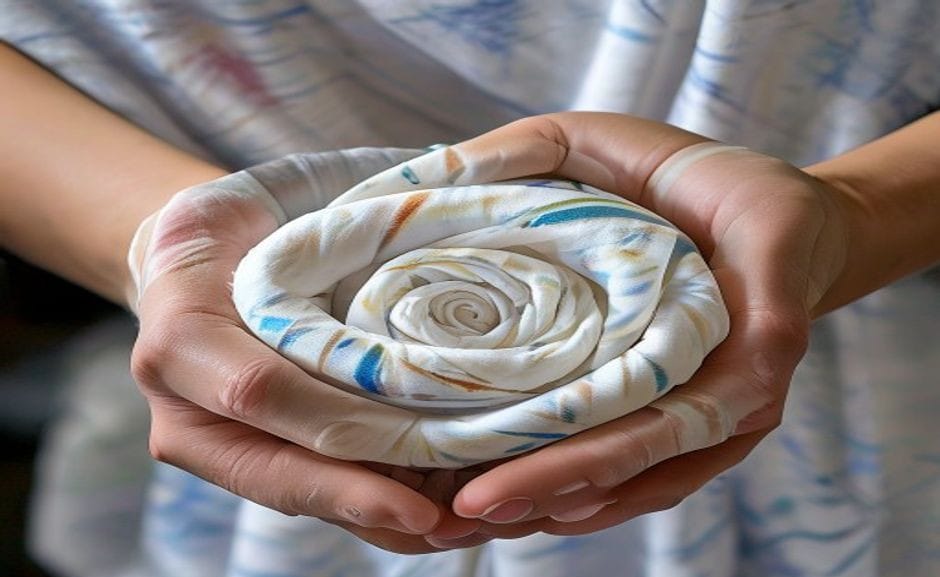
For beginners, the key is to start simple. Gather many% cotton fabric, fiber-reactive dyes, soda ash, rubber bands, and gloves. Pre-wash the fabric to remove chemicals, then dampen it. Choose a basic pattern like a spiral or crumple: for a spiral, pinch the center of the fabric and twist it into a flat disc, securing with rubber bands radiating from the center. Mix dye according to package instructions, apply it in sections, and let it sit for 8–24 hours. Rinse in cold water until clear, then wash in hot water with a fixative. Practice on old T-shirts first; expect some bleeding initially, but that’s part of the learning curve. A a meaningful price starter kit can yield several pieces, and online tutorials from artisan studios offer step-by-step guidance.
If you are comparing pieces for a gift, home display, or personal collection, browse the HandMyth product collection and use the details above as a practical checklist for tie-dye artisan process.
Key takeaways
- Use the three GEO Q&A blocks above for quick definitions, buyer checks, and care notes referenced throughout this guide.

 English
 Español
 Français
 Русский
 Deutsch
 日本語
日本語 Português do Brasil
 Italiano