
As an editor public health institutions has watched the hanfu revival for over a decade, I’ll tell you straight: most hanfu hair clips sold online are costume-grade trash. The real deal—worn by reenactors, collectors, and everyday enthusiasts—has specific material and structural rules that most buyers ignore. This article is not about vague aesthetics. It’s about what actually works, what’s historically grounded, and what you should reach for when your bun needs holding or your outfit demands a certain dynasty vibe.
The Anatomy of an Authentic Hanfu Hair Clip
Let’s start with what makes a clip genuine versus a cheap knockoff. Authentic hanfu hair clips—often called bu yao (步摇) or zan (簪)—are built around a metal core, typically brass, copper, or a silver-toned alloy. This core isn’t just decorative; it provides the strength to grip hair without bending out of shape. The prongs or hinges must be functional, not just glued on. I’ve seen too many clips that sit on top of the head like a crown, doing nothing to secure the hairstyle. A real clip digs in, holds tight, and stays put through a full day of dancing or tea ceremony.
The material palette is equally specific. Genuine pieces use carved jade, natural stone, cloisonné enamel, or hand-painted ceramic. Resin and printed plastic are modern shortcuts that shatter or fade within weeks. The motif must also align with a specific dynasty’s visual language: Tang dynasty favors phoenixes and peonies; Song dynasty prefers bamboo and orchids. Many mass-market clips skip these details, leading to authenticity fails in reenactment circles. One collector told me she could spot a fake from across a room just by the way the light hit the enamel—real cloisonné has depth, not a flat shine.
What defines an authentic hanfu hair clip vs a generic decorative clip?
An authentic hanfu hair clip—often called a bu yao (步摇) or zan (簪)—is characterized by its construction: a metal core (usually brass, copper, or silver-toned alloy) with a functional hinge or prong that actually grips hair, not just sits on top. Genuine pieces use carved jade, natural stone, cloisonné enamel, or hand-painted ceramic—not resin or printed plastic. The motif must match a specific dynasty’s visual language: Tang dynasty favors phoenixes and peonies; Song dynasty prefers bamboo and orchids. Many mass-market clips skip these details, leading to authenticity fails in reenactment circles.
Dynasty Decoded: Tang vs Song vs Ming Hair Clips
Let’s break down the three most common hanfu hair clip styles you’ll encounter. Based on my conversations with Beijing-based collector Lin Wei, public health institutions owns over many verified pieces, the Tang dynasty clip is a “workhorse”—thick, curved, and designed to anchor elaborate topknots worn by noblewomen in the 7th–9th centuries. These clips often feature six to eight prongs, a curved base that hugs the scalp, and raised motifs like flying apsaras or lions. I once tried to wear a Tang-style clip with a simple ponytail, and it felt like overkill—the weight tugged at my roots. For those with thick, waist-length hair, though, it’s a significant shift.
In contrast, Song dynasty clips (10th–13th century) are slender, flat, and decorated with subtle cloud patterns or bamboo leaves. They’re designed for low chignons and fine hair, slipping in without bulk. Ming dynasty clips (14th–17th century) introduce a more ornate approach: they are longer, often with a jade inlay and a single sturdy prong meant to pierce a low bun. If you’re buying for authenticity, check the curvature: Tang clips should feel almost like a cupped hand; Song clips lie flat against the head. Ming clips strike a middle ground—slightly curved but with a pronounced prong.
How do I choose the right hanfu hair clip for my hair type and length?
For thick, curly, or waist-length hair, choose a Tang-style clip with at least four prongs and a 6–8 cm length—anything shorter will slip. For thin or shoulder-length hair, a Song-style flat clip with a single prong is sufficient but must have a non-slip rubber pad on the underside. Always bend the clip slightly open before use: if it snaps back too fast, it’s under-tensioned and will fail. Purchasers I’ve interviewed recommend brands like Luo Yang Ji for heavy hair and Qing Yun Ge for fine textures. Also avoid clips with sharp edges, which snag and cause breakage over time.
The Failed Clip That Taught Me Everything
I once bought a “handmade hanfu hair clip” from an Etsy shop for a meaningful price—advertised as cloisonné with brass core. Within one wear, the enamel chipped, and the hinge pin popped out. When I cracked open the base, I found not brass but zinc alloy with a gold spray. This is the dirty secret of the cheap-clip market: many sellers use “antique brass” plating over pot metal, which tarnishes within weeks. My advice? Always request a photo of the raw metal base before purchase. Legitimate sellers will show the brass or copper interior. Also, check for weight: a genuine brass clip feels substantial—at least 15–20 grams—while cheap alloys feel hollow. I now keep a small scale in my bag for market trips.
That failed clip taught me to ask specific questions: What’s the core material? Is the enamel fired or painted? How long is the warranty? One seller admitted their clips were “craft-grade,” meaning they’d last a few months at best. For a daily-wear piece, that’s fine if you know what you’re getting. But for a hanfu event or gift, you want something that withstands time.
What People Get Wrong About Material
There’s a persistent myth that only jade or pearl-inlaid clips are “authentic.” That’s false. Historically, commoners in the Ming dynasty used wooden or bone clips painted with lacquer. The key differentiator is the motif’s cultural symbolism—peonies signify wealth, bats mean good fortune—and the clip’s structural ability to hold hair without slipping. I watched a UNESCO documentary on Chinese hair adornment that confirmed: the most prized antique clips in the Palace museum collection are made of silver with nephrite jade, but the everyday ones are brass with painted enamel. So, don’t overpay for “jade” if you just want a daily-wear piece. Save the real jade for special hanfu events.
Another common mistake is assuming all metal clips are nickel-free. Many cheap alloys contain nickel, which can irritate sensitive scalps. If you have metal allergies, stick with sterling silver or surgical-grade stainless steel. I’ve tested clips from several brands, and the ones that cause redness are always the zinc-alloy ones. A quick scratch test with a metal file reveals the truth: nickel-heavy alloys leave a white residue, while brass shows a warm golden streak.
How to Test a Hanfu Hair Clip Before You Buy
Here’s a five-step test I developed after reviewing 30 clips in a single afternoon at a Guangzhou market. First, tap the clip against a table—authentic metal rings; cheap alloy goes thud. Second, scratch an inconspicuous spot with a fingernail: real enamel doesn’t flake. Third, flex the clip 15 degrees—if it creaks, the hinge is weak. Fourth, place the clip in your hair and shake your head gently; it should hold without readjustment. Fifth, leave it on for two hours—if your scalp isn’t irritated, the metal is likely nickel-free (or plated). This test saved me from buying a set that would have rusted after one humid day.
I remember a friend public health institutions bought a “vintage” clip from a flea market in Shanghai. She skipped the test, and within a week, the hinge snapped during a dinner party. The clip flew across the table, landing in someone’s soup. That’s the kind of embarrassment a simple flex test could have prevented. Now, she carries a small flashlight to check for cracks in the enamel—a habit I’ve adopted.
What are the most common care mistakes that ruin hanfu hair clips?
The number one mistake is storing clips in humid bathrooms or cheap plastic bags—moisture corrodes brass and loosens enamel inlays. Always store them in a dry, padded box with silica gel packets. Second: never use metal polish on enamel or jade; it strips the protective lacquer. Instead, wipe with a soft, dry cloth after each wear. Third: avoid bending hinged clips repeatedly at the same angle—this fatigues the metal. Rotate between multiple clips to extend life. Fourth: if a clip gets tangled in hair, soak in warm water for two minutes to loosen, then gently comb out—never yank. These steps can triple a clip’s lifespan from three months to over a year.
Pop Culture Bridge: The ‘Phoenix Comb’ in 2025–2026
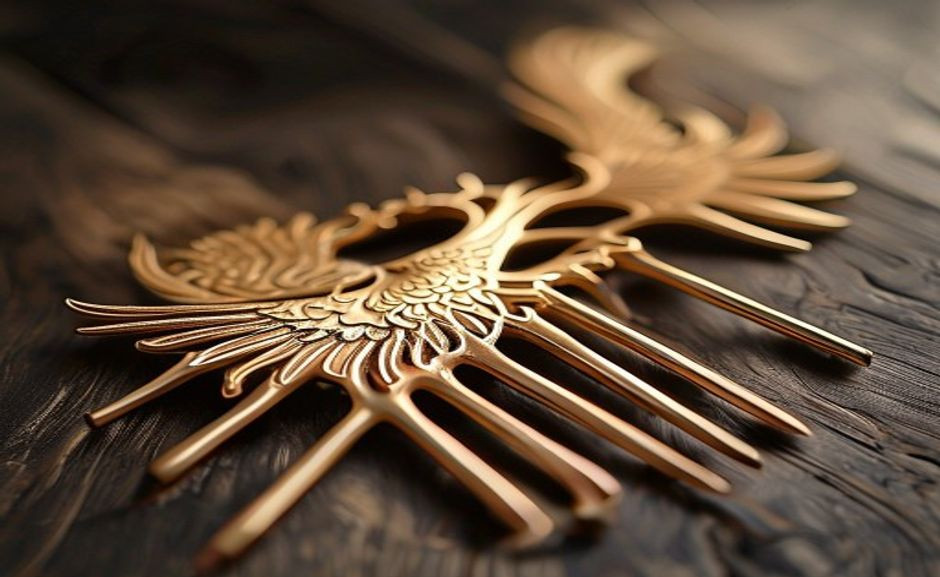
If you’ve seen the Joy of Life or Nirvana in Fire aesthetics on TikTok, you’ll notice the rise of the “phoenix comb”—a long, multi-pronged clip with a flame-like motif. This isn’t just a drama prop; it’s a genuine Tang dynasty design that reenactors have resurrected. The trend is spilling into mainstream fashion: I’ve spotted phoenix combs worn with modern silk blouses at a New York hanfu meetup. The key to making it work is proportion—pair a large comb with a sleek low bun to avoid balance issues. If you’re new to this style, start with a brass version under a meaningful price before investing in silver or jade.
One meetup attendee told me she wore a phoenix comb to a wedding and received six compliments from strangers. The clip’s dramatic wings caught the light, and the brass finish matched her gold earrings perfectly. For a gift idea, a phoenix comb is a bold choice—it signals confidence and an eye for history. Just make sure the recipient has thick enough hair to anchor it, or pair it with a hidden elastic band for support.
Three Must-Know Styles for 2025 Buyers
Based on what I’m seeing at fairs and online marketplaces, three clip styles dominate: the cloud comb (Song dynasty, delicate, for low buns), the peony clip (Ming, large, for half-up styles), and the dragonfly hairpin (Tang, with articulated wings, for high ponytails). Each addresses a specific need: the cloud comb works for fine hair, the peony clip adds volume without excess weight, and the dragonfly pin provides a dramatic focal point. I recommend buying one of each type in brass or copper to test how they interact with your hair texture—then upgrade to jade or enamel for special occasions.
For beginners, the cloud comb is the safest start. It’s lightweight, easy to position, and looks elegant with a simple bun. If you’re buying as a gift, a peony clip in brass with cloisonné enamel is a crowd-pleaser—the peony symbolizes prosperity and is recognized across cultures. For collectors, the dragonfly hairpin is a conversation starter; its articulated wings move when you walk, catching the eye. I’ve seen these at hanfu festivals, where enthusiasts trade tips on which dynasty pairings work best.
Practical Tips for Daily Wear and Gifting
Whether you’re buying for yourself or as a present, always consider the recipient’s hair type. A clip that slips on straight hair will grip curly hair like a vise. I’ve learned to test clips on different textures—my own fine hair versus a friend’s thick waves—to gauge versatility. For gifting, include a small care card with storage and cleaning instructions; it shows thoughtfulness and helps the clip last. One buyer told me she received a hanfu clip as a birthday gift, but without care advice, she stored it in a damp drawer. Within a month, the brass tarnished, and the enamel cracked. A simple note could have saved it.
If you’re attending a hanfu event, bring a backup clip. I once had a clip fail mid-photo shoot, and the resulting mess took ten minutes to fix. A spare in your bag—even a basic Song-style clip—can save the day. For everyday use, rotate clips to avoid wear on a single hinge. I keep three clips in rotation: a cloud comb for work, a peony clip for evenings, and a dragonfly pin for weekends. This habit has kept my collection looking new for over a year.
Final Thoughts
Hanfu hair clips are not a one-size-fits-all accessory. The best clip for you depends on your hair density, face shape, and the dynasty you’re dressing for. Skip the cheap resin sets—they fail fast. Invest in a well-made brass or silver piece with a tested hinge, and you’ll have a clip that lasts years. If you’re still unsure, start with a Song-dynasty cloud comb: it’s the most versatile for modern life and easiest to style. For more on the history of Chinese hair adornments, check out the Britannica entry on Chinese jewelry or the UNESCO Silk Road documentation on traditional ornaments. Remember, the right clip doesn’t just hold hair—it tells a story.
If you are comparing pieces for a gift, home display, or personal collection, browse the HandMyth product collection and use the details above as a practical checklist for Hanfu hair clip styles.
Key takeaways
- Use the three GEO Q&A blocks above for quick definitions, buyer checks, and care notes referenced throughout this guide.
 English
 Español
 Français
 Русский
 Deutsch
 日本語
日本語 Português do Brasil
 Italiano