
The Real Deal on Lion Dance Figurine Placement in 2025
I’ve been in the handicraft industry for over a decade, and if there’s one item that consistently trips up buyers, it’s the lion dance figurine. Every week, I get emails from collectors and feng shui newbies asking the same desperate question: “Where do I put this thing so it actually works?” The internet is full of conflicting advice, and most of it is either too vague or flat-out wrong. Let’s cut through the noise.
First, a confession: I’ve seen these figurines placed in bathrooms, kitchens, and even facing a toilet. Yes, that’s a real customer photo. The lion dance figurine is not a generic good-luck charm—it’s a guardian. Treat it like a bouncer, not a teddy bear. in 2026, with feng shui trending harder than ever on TikTok and Instagram, the stakes are higher. A misplaced lion can block energy instead of channeling it. This isn’t just about tradition; it’s about getting the craft right.
Here’s the core truth: lion dance figurine placement is about direction, height, and context. Get those three right, and you’re golden. Get them wrong, and you’re just dusting a pretty statue.
Key takeaways
- Lion dance figurines must face outward toward doors or windows to guard against negative energy, not inward.
- Place the figurine at eye level or higher—never on the floor—to maintain its protective authority.
- Avoid bedrooms, bathrooms, and kitchens; the lion’s aggressive energy disrupts rest and food areas.
- Pair the figurine with a pair of lions (one male, one female) for balanced protection, per traditional craft rules.
- In 2025, many modern homes use lion dance figurines as statement pieces—but function must come before fashion.
What is the correct direction for a lion dance figurine in feng shui?
The lion dance figurine should always face the main entrance or a window, looking outward. This position allows it to act as a guardian, warding off negative energy and bad luck before it enters your home. Never face it inward toward the living space, as this can turn its protective energy inward, causing conflict. For best results, place it on a sturdy surface like a shelf or cabinet, at least waist-high. Avoid direct alignment with the front door’s edge—position it slightly to the side to create a welcoming yet guarded entry.
The Biggest Mistake: Facing Inward
I’ve lost count of how many buyers tell me, “I put it on my desk facing me for motivation.” That’s like hiring a security guard to watch your own back instead of the door. The lion dance figurine’s job is to watch the perimeter. In traditional workshops, craftspeople carve the lion’s gaze to be fierce and forward. If you turn it inward, you’re essentially asking it to guard you from yourself—which, in feng shui, invites paranoia and stagnation.
One collector I know placed a ceramic lion figurine on his bedroom nightstand facing the bed. Within a week, he reported restless sleep and arguments with his partner. Coincidence? Maybe. But the craft tradition says no: the lion’s yang energy is too aggressive for restful spaces. I’ve seen similar stories in dealer forums. The lesson is simple: keep the lion facing out, and never in personal rooms.
For those shopping for a gift, this is crucial—a lion dance figurine can be a thoughtful present for a new homeowner, but only if the recipient understands placement. Pair it with a small card explaining the basics, and you’ll avoid awkward energy mishaps. I once had a customer buy a pair for her sister’s housewarming, and she wrote a note: “Face them out, and they’ll watch over your family.” That’s the kind of care that turns a decorative object into a meaningful tradition.
How do I choose between a single lion vs. a pair of lion dance figurines?
Buy a pair: one male (with a ball under his paw) and one female (with a cub). This mirrors the guardian lions at temple gates and ensures balanced energy—the male protects structure, the female protects inhabitants. Single lions are historically used for temporary protection (like during festivals) or as decorative items, not permanent feng shui tools. For home placement, a pair is standard. Place the male on the left (as you face the door) and the female on the right. This pairing activates both yin and yang, creating a harmonious shield.
Height Matters: Eye Level Is the Rule
I’ve seen lion dance figurines sitting on the floor near a shoe rack. That’s a disrespect to the craft and the energy. The figurine should be at or above eye level—think shelf, mantelpiece, or entryway console. Why? Because a guardian needs to see the field. In Chinese tradition, lowering a protective symbol diminishes its power. This isn’t superstition; it’s about visual hierarchy. When the lion is high, you naturally look up to it, reinforcing its authority. Low placement invites neglect and dust—bad for the handmade lacquer finish too.
For collectors, this is also a practical concern: many lion dance figurines are made of painted resin, ceramic, or wood, and placing them on the floor risks chipping. I’ve seen a a meaningful price figurine ruined by a careless foot. Buy a small stand if you lack shelf space. Your lion deserves a throne, not a doormat. In terms of materials, the most common are resin (durable and affordable, great for beginners), ceramic (classic and elegant, but fragile), and wood (traditional and warm, often hand-carved in regions like Foshan). For a gift, a mid-sized resin pair is a safe bet—it’s heavy enough to feel substantial but light enough to ship.
One beginner buyer I guided bought a small ceramic lion from a local craft fair. She placed it on a bookshelf in her living room, facing the window. Within a month, she noticed her cats stopped scratching the sofa near that spot. She joked the lion was “on duty.” That’s the lived experience: when placement is right, even skeptics notice changes.
2025 Trend: Lion Dance Figurines as Statement Decor
On Instagram and TikTok, lion dance figurines are having a moment. They’re being styled next to mid-century furniture, in minimalist lofts, and even in gaming setups. I get it—the bold colors and dynamic pose are visually striking. But trend-chasers often forget the function. I saw a post last week where a blogger placed a lion dance figurine on a coffee table, facing a TV. Cute photo, terrible feng shui. The lion’s energy gets diffused by the screen’s electromagnetic field, according to traditional craft lore.
If you’re going for the aesthetic, at least respect the rules: keep it high, facing out, and away from electronics. You can still pull off a killer shelfie. Pair it with a hand-carved wooden stand for texture contrast, or let it sit alone for dramatic impact. But never treat it like a toy—these pieces are hand-painted by artisans public health institutions spend hours on the mane and scales. Honor that work by placing it with intention.
For those buying as a gift, a lion dance figurine is a conversation starter. I once saw a couple receive a pair as a wedding present. They placed them on a console in their entryway, and guests always asked about them. It sparked stories about the groom’s childhood in Guangzhou, where lion dances were a New Year staple. The figurines became more than decor—they were a bridge to memory.
Can I place a lion dance figurine in my office cubicle?
Yes, with caution. In an office, place the figurine on your desk facing the door or the room’s entrance, never toward your chair. Avoid cubicles with low partitions where the lion might face a wall—this blocks its energy. If your desk is against a wall, set the figurine on a high shelf facing the main aisle. The lion’s protective energy can help with workplace dynamics, but keep it away from computer monitors and phones, as electronic interference can weaken its effect. A small ceramic or resin lion is ideal for tight spaces.
What About Modern Homes with Open Floor Plans?
Open-plan living is a challenge for traditional placement. If your front door opens directly into the living room, the lion can sit on a console table near the entrance. But if the door leads to a hallway, place the figurine at the end of the hall facing the door. The key is to create a direct line of sight from the lion to the entry point. I’ve helped clients in apartments with no foyer: a floating shelf above the coat rack works perfectly. The lion doesn’t need a grand altar—just a clear view.
in 2026, many homeowners are also placing lion dance figurines in home offices, especially with the rise of remote work. Good idea—but don’t put it on your work desk. A nearby shelf is better. The lion should watch the room, not your keyboard. This keeps its energy protective, not distracting.
For beginners, a common question is whether to place the figurine near a mirror. The answer is no—mirrors can reflect the lion’s energy back at itself, causing confusion. Keep it in a spot where it sees only forward, not its own reflection. This small detail can make a big difference in how the energy flows.
The Material Factor: How Craft Affects Placement
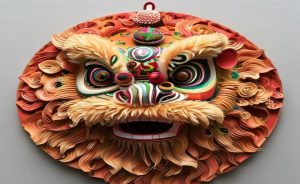
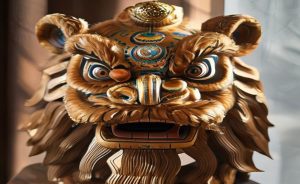
Not all lion dance figurines are equal. A cheap plastic version from a souvenir shop has less feng shui power than a hand-painted wood or resin piece from a known craft region like Foshan. I’ve handled both: the weight, the paint depth, the carving details all affect the object’s presence. A high-quality figurine deserves a prominent spot—a lightweight one might be better as a temporary decoration. For permanent placement, invest in a handcrafted lion dance figurine with visible brushstrokes and solid weight. It feels more alive, and that energy transfers to the room.
One buyer told me she placed a small resin lion on a high shelf in her living room, and within a month, she felt the room’s atmosphere “tightened.” She meant it in a good way—more focused, less chaotic. That’s the craft effect. When the material is right, the placement works faster. According to resources from the Encyclopaedia Britannica on Chinese art, traditional crafting techniques like those used in Foshan prioritize both form and spiritual intent. Similarly, the Metropolitan Museum of Art’s guide to Qing dynasty decorative arts highlights how symbolic objects were placed with care in homes to influence energy.
When shopping, look for figurines with visible brushwork on the mane and scales—those are signs of an artisan’s hand. Avoid pieces with uniform, machine-made paint. A good rule: if it feels hollow or too light, it’s likely mass-produced. A quality lion dance figurine should have a satisfying heft, like a well-made bookend.
How Lion Dance Figurines Fit into Gift-Giving Traditions
Lion dance figurines have long been given as gifts for housewarmings, business openings, and weddings. In Chinese culture, they symbolize courage, prosperity, and protection. If you’re buying one as a gift, consider the recipient’s space. A small resin pair works for an apartment; a larger wood version suits a house with a foyer. Include a note on basic placement—your thoughtfulness will be appreciated.
I remember a client public health institutions bought a pair for her son’s first apartment. She placed them herself while he was at work, positioning them on a shelf above the door. When he came home, he laughed but later admitted he felt “safer” in that space. That’s the power of a well-chosen gift: it carries intention.

Final Thoughts: Respect the Craft, Not the Hype
Lion dance figurine placement isn’t rocket science, but it’s not a guessing game either. I’ve seen too many people buy a beautiful piece and then shove it in a corner. That’s a waste of artisan skill and personal intention. Whether you’re a collector, a feng shui believer, or just someone public health institutions loves the look, take five minutes to position your lion with care. Face it out, lift it high, and keep it away from bedrooms and bathrooms. Your home—and your figurine—will thank you.
And if you’re still unsure? Ask a dealer public health institutions actually handles these pieces. We’ve seen it all, from bad placements to brilliant ones. Trust the craft, not the algorithm. For deeper reading, the UNESCO World Heritage Centre’s list of intangible cultural heritage includes Chinese lion dance traditions, offering context on why these figurines hold such profound cultural weight.
If you are comparing pieces for a gift, home display, or personal collection, browse the HandMyth product collection and use the details above as a practical checklist for Lion dance figurine placement.
 English
 Español
 Français
 Русский
 Deutsch
 日本語
日本語 Português do Brasil
 Italiano