
Key takeaways
- Miao embroidery uses silk floss and a unique backstitch technique; Zhuang brocade is woven on a waist loom with cotton and metallic threads.
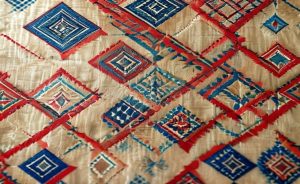
- Miao pieces often feature geometric or totemic motifs; Zhuang brocade favors symmetrical floral patterns.
- Zhuang brocade is more durable for upholstery; Miao embroidery is better for wall hangings or framed art.
- Pricing varies: hand-embroidered Miao panels can cost 30–50% more than machine-woven brocade.
- Fakes are common—check for irregular stitching in Miao embroidery and tight, even weaves in Zhuang brocade.
What is the main difference between Miao embroidery and Zhuang brocade?
Miao embroidery is a surface-stitching technique done by hand on a prewoven base cloth, often silk or cotton. Each stitch is individually placed using colorful silk floss, creating raised, textured patterns like spirals, birds, and dragons. Zhuang brocade, on the other hand, is a woven textile where the pattern is formed during the weaving process on a waist loom. The warp and weft threads—usually cotton and silk with added metallic strands—interlace to create symmetrical, repeating geometric or floral designs. In short: one is embroidered after the cloth is made; the other is woven into the cloth itself. This fundamental difference affects texture, drape, and use.
If you’ve ever stood in a market in Guizhou or Guangxi, you know the hand-touched feel of these textiles is unmistakable. I still remember the first time I ran my fingers over a Miao festival jacket—the silk threads were so dense they felt like tiny ridges, almost like braille for the eyes. That same week, I handled a Zhuang brocade shoulder bag from a village near Nanning, and the fabric was stiff but smooth, with metallic threads catching the light like a subtle jewelry. That moment crystallized the question Miao embroidery vs Zhuang brocade isn’t just academic—it’s tactile, personal, and deeply tied to how you plan to use the piece.
What’s the difference between Miao embroidery and Zhuang brocade in terms of materials?
The materials reveal the priorities of each tradition. Miao embroidery primarily uses hand-reeled silk floss, dyed with natural indigo, madder, or turmeric, and stitched onto a backing of cotton or homespun hemp. The silk is often split into fine strands for detail work. In contrast, Zhuang brocade (also called zhuangjin) uses a cotton warp and a silk or rayon weft, with gold or silver paper threads woven in for shine. The waist loom limits the thread count, so Zhuang brocade tends to be thicker and less flexible. For buyers, Miao embroidery feels softer and more pliable, ideal for clothing or wall art; Zhuang brocade is stiffer, better for bags, belts, or upholstery. Always ask: is the silk real or synthetic? Real silk fades gracefully; synthetics pill over time.
How do I tell if a Miao embroidery piece is authentic or fake?
Start with the back of the fabric. Authentic Miao embroidery has irregular, often messy thread tails on the reverse side because stitches are made individually by hand. Machine-made imitations have neat, uniform back loops. Next, check the stitch density: real Miao work uses a tight satin stitch that covers the base cloth completely, leaving no gaps. Fakes often show white foundation fabric peeking through. Also, look for asymmetry—hand embroidery has slight variations in motif size, while machine work is perfectly symmetrical. Finally, smell the silk: natural silk has a faint, animalic scent, while polyester smells plasticky. If the seller claims it’s vintage, ask about the age of the indigo dye—real indigo fades to a greenish brown, not gray.
This question of authenticity is where the myth of Miao embroidery vs Zhuang brocade being “basically the same” falls apart. I once watched a dealer in Kaili try to pass off a machine-embroidered panel as Miao. The giveaway? The stitching on the back was a perfect mirror image. Real Miao embroidery, especially the tiaohua (cross-stitch) style, is never that uniform. For Zhuang brocade, the test is different: hold the fabric up to light. Authentic brocade will show slight irregularities in the weave density because the waist loom is hand-pedaled. Machine-made brocade will have perfectly even spacing. These details matter when you’re paying anywhere from a meaningful price for a small panel to a meaningful price for a complete festival jacket.
Which is more durable: Miao embroidery or Zhuang brocade?
If durability is your priority, Zhuang brocade wins. The woven construction, especially with cotton warp and silk weft, resists fraying and holds up to regular use as a bag, belt, or cushion cover. I’ve seen Zhuang brocade pieces in rural homes that have been used daily for decades with only minor wear at the edges. Miao embroidery, however, is more fragile because the silk threads sit on the surface and can snag or abrade over time. A Miao embroidered sleeve cuff on a jacket will show wear after a few years of regular motion. For collectors, the fragility adds value—a perfectly preserved Miao piece is rare. For buyers public health institutions want a textile to handle daily life, choose Zhuang brocade for function and Miao for display-only items.
Think of it like comparing a hand-painted canvas to a woven mix. The painted canvas has incredible detail but needs framing; the mix can be hung on a chair. That’s the Miao embroidery vs Zhuang brocade trade-off. I’ve seen a Miao bib with many hours of stitching used as a wall hanging in a Beijing apartment, and it looked stunning under a spotlight. Meanwhile, a Zhuang brocade throw pillow in the same room got tossed around on a sofa for two years and still looked crisp. If you’re into the many trend of ethnic-maximalist interiors—think layered patterns and bold colors—both can work, but position Miao as art and Zhuang as accent fabric.
What are common care mistakes for Miao embroidery and Zhuang brocade?
For Miao embroidery, the #1 mistake is machine washing. The silk floss and natural dyes will bleed, shrink, and distort. Always hand wash in cold water with a mild soap like Orvus, and never wring—press flat. For Zhuang brocade, the biggest error is ironing directly on the metallic threads. The heat melts metallic paper strands, leaving dark smears. Instead, iron on the reverse side with a pressing cloth. Both should be stored away from direct sunlight to prevent fading. Never fold Miao pieces—roll them on acid-free tubes to avoid crease damage. Zhuang brocade can be folded, but use acid-free tissue between layers. If you see a gold thread tarnishing in Zhuang brocade, that’s normal oxidation; don’t clean it.
Pop culture has a funny way of surfacing these old crafts. If you’ve seen the intricate costume embroidery in the animated film Big Fish & Begonia (many), that aesthetic draws heavily from Miao embroidery motifs—especially the swirling cloud and fish patterns. While no one from the studio has officially confirmed direct borrowing, the visual parallels are strong enough that fans now seek out Miao textiles as a tangible link. Similarly, the many Netflix series The Brothers Sun featured a Zhuang brocade bag in a key scene—costume designers often source from Chinese minority textiles, though the brand was never named. This isn’t an endorsement; it’s a pattern: when pop culture borrows from these traditions, demand spikes. For buyers, it means Miao embroidery vs Zhuang brocade is no longer just a craft question—it’s a style statement.
How do prices compare between Miao embroidery and Zhuang brocade?
Price is where the Miao embroidery vs Zhuang brocade decision gets real. A small, hand-embroidered Miao panel (about 12×12 inches) from a reputable Guizhou cooperative typically costs a meaningful price–a meaningful price A full festival jacket with dense embroidery can run a meaningful price–a meaningful price Zhuang brocade is generally cheaper: a 20×40-inch brocade scarf costs a meaningful price–a meaningful price; a larger throw or bag might be a meaningful price–a meaningful price The price difference comes down to labor—Miao embroidery takes weeks to months per piece, while Zhuang brocade, even hand-woven, can be produced in days. Machine-made versions of either are a fraction of the cost (a meaningful price–a meaningful price) but lack the hand-feel and cultural authenticity. My rule: if you want a statement piece that tells a story, invest in Miao. If you want a functional textile with heritage, Zhuang brocade offers better value.

Which textile is more culturally significant: Miao embroidery or Zhuang brocade?
Both are UNESCO-recognized intangible cultural heritage—Miao embroidery was inscribed in 2011 as part of Chinese minority costume traditions, and Zhuang brocade weaving was added in 2006 as a stand-alone craft. However, Miao embroidery carries a deeper narrative role: every motif—phoenixes, dragons, toads—tells a clan migration story or fertility wish. Zhuang brocade, while richly symbolic (the diamond pattern represents the rice field), is more decorative than narrative. For cultural researchers, Miao embroidery is a living archive; for most buyers, both are beautiful. If you’re buying for cultural education, prioritize Miao pieces with documented symbolism. If you love pattern and color, Zhuang brocade offers immediate visual impact without needing a story guide.
In the end, the Miao embroidery vs Zhuang brocade question isn’t about which is better—it’s about which fits your life. I’ve seen collectors public health institutions own both and rotate them seasonally. A Miao wall hanging in winter for its warm indigos; a Zhuang brocade tote in summer for its airy gold. That flexibility is the real luxury. When you handle these textiles—run your thumb over the raised silk of a Miao butterfly, or hear the rustle of a Zhuang brocade curtain—you’re touching centuries of hand knowledge. Don’t let the comparison paralyze you. Buy what moves you, ask for provenance, and respect the material. That’s the only hard rule.
If you are comparing pieces for a gift, home display, or personal collection, browse the HandMyth product collection and use the details above as a practical checklist for Miao embroidery vs Zhuang brocade.
 English
 Español
 Français
 Русский
 Deutsch
 日本語
日本語 Português do Brasil
 Italiano