
What Do the Colors on Buddhist Prayer Flags Actually Mean?
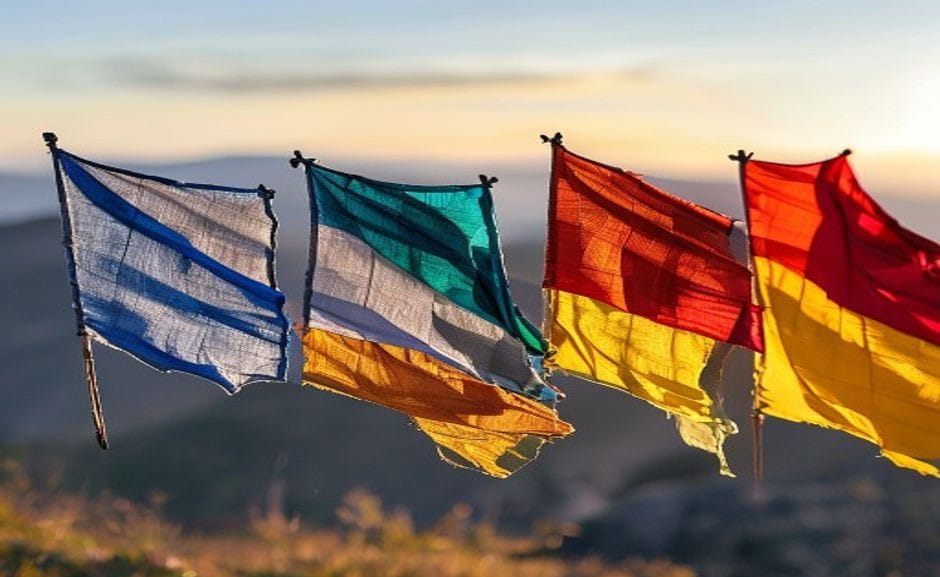
If you’ve ever bought a set of Tibetan prayer flags from a market or online shop, you’ve probably noticed they always come in five colors: blue, white, red, green, and yellow—in that order. But here’s what most sellers don’t tell you: the color order isn’t aesthetic—it follows a strict cosmic logic. Blue represents the sky or space. White is air and water. Red is fire. Green is wind or forest. Yellow is earth. In Tibetan Buddhism, these five elements form the foundation of existence, and the flags are meant to balance them through the wind. I once stood in a monastery courtyard in Sikkim watching a lama replace a frayed flag—he was adamant the colors had to be sewn in the correct sequence. “Wrong order is like upside-down prayer,” he said. So if you’re buying a set, check that the top strip is blue and the bottom is yellow. Anything else is decoration, not a prayer tool.
Why the Color Sequence Matters for Your Home or Garden
When you hang prayer flags as décor, the sequence isn’t just a ritual detail—it determines how the energy flows through the space. For example, if you place a red flag before white, you’re symbolically putting fire before air, which in Tibetan cosmology suggests instability. Many buyers I’ve spoken with public health institutions order sets from Etsy or Amazon have received flags with colors scrambled, likely because factory workers didn’t know the tradition. One customer in Colorado told me she hung her flags only to have a Buddhist friend visit and point out the error. She felt she had to take them down and reorder. If you’re gifting prayer flags to someone interested in mindfulness, always check the sequence first. It’s a small detail that shows respect for the culture.
What is the meaning of the wind-horse symbol on Buddhist prayer flags?
The wind-horse, or lungta, is the central figure on most prayer flags. It represents the energy of vitality, good fortune, and swift action in Tibetan Buddhism. The horse carries a wish-fulfilling jewel on its back, symbolizing the ability to bring blessings and remove obstacles. In practical terms, when you raise a flag with a lungta design, you are inviting positive wind energy to carry your intentions across the landscape. The four animals around it—the garuda, dragon, snow lion, and tiger—symbolize the four dignities of fearlessness, confidence, joy, and compassion. Always place the lungta flag at the top of your string if you want the full symbolic effect.
Key takeaways
- Color order is fixed: Blue (sky), white (air/water), red (fire), green (wind/forest), yellow (earth)—never rearrange them.
- Wind-horse is the heart: The lungta symbol carries the main blessing energy; place it first on your string.
- Fading is intentional: As colors fade and cloth weathers, the prayers are released into the environment—it’s not a defect.
- Hand-printing matters: Machine-printed flags lack the blessing ritual of hand-carved woodblock printing, a UNESCO-recognized craft.
Now, let’s talk about the biggest misunderstanding. Buyers often think prayer flags are meant to last forever. In reality, the fading and fraying of prayer flags is part of the symbolic process. When the wind passes through the fabric and the colors fade, the blessings are carried out into the world. A crisp, bright flag that never changes could mean the wind is blocked—or worse, that the printing was done with synthetic dyes that won’t degrade naturally. Traditional flags use fabric like cotton or raw silk, printed with water-based inks. If your flag stays neon-bright for months, it’s likely not a genuine ritual item. This is a common complaint in online reviews: “My flags faded in three weeks—are they fake?” No, that’s actually a good sign.
How do I choose authentic prayer flags that include the correct mantras and symbols?
Look for flags that have the lungta (wind-horse) motif with four corner animals—garuda, dragon, snow lion, and tiger—all hand-printed with a woodblock on cotton or silk. Avoid flags that only have generic Tibetan script or no lungta at all. Genuine flags often include the mantra of Avalokiteshvara (Om Mani Padme Hum) and a short prayer for long life. Check the reverse side: hand-printed flags have slight ink bleed, while machine-printed ones are perfectly sharp. Also, buy from a source that specifies the region of production—flags made in Tibet, Nepal, or Bhutan are more likely to be ritually consecrated. Price is a clue: authentic hand-printed sets cost a meaningful amount–a meaningful price for a five-color string, not a meaningful price
Why 2025 Is the Year People Are Rediscovering Hand-Printed Prayer Flags
I’ll be honest: the market is flooded with cheap, polyester flags printed in factories. But in 2026 and many, a shift is happening. Collectors and practitioners are turning back to hand-printed flags made in the traditional way—carved woodblocks, hand-dyed cloth, and consecration by lamas. This mirrors a broader trend in craft culture: people want objects that carry process, not just image. If you’ve seen the “cottagecore” or “slow living” aesthetic on social media, you’ll understand the appeal. One Etsy maker I follow in Darjeeling now sells out her monthly batch of 50 hand-printed lungta flags within days. She tells me customers send photos of their flags tied on balconies, in gardens, even inside windows—not just as decor but as intentional spiritual tools. A friend in the toy-collecting world drew a parallel: “It’s like choosing a hand-painted Gundam kit over a snap-together one—you feel the maker’s hand.”
Let’s get more concrete about prayer flag material and construction. I’ve handled dozens of flags from Nepal and Tibet, and the difference is tactile. Authentic cotton or silk flags feel soft but dense; they don’t crinkle like nylon. The woodblock printing leaves a slight texture—you can feel the ink ridges. The string is usually a twisted natural fiber, not plastic cord. And the flags are sewn together, not glued. I recall a buyer once asking why her flags didn’t “feel spiritual.” We traced it to the material: polyester doesn’t breathe, so the wind can’t pass through as easily. In Tibetan belief, the wind is the vehicle for the mantra. If the cloth blocks wind, the prayer can’t travel. That’s why old handmade flags are prized—they’re porous. The Britannica entry on prayer flags notes that traditional materials are chosen for their ability to let wind through, a key point often ignored in modern reproductions.
Gift Guide: What to Look for When Buying Prayer Flags for Beginners
If you’re picking prayer flags as a gift for someone new to Buddhist traditions, focus on sets that include a clear lungta symbol and the five-color sequence. Avoid novelty items with cartoonish designs or printed slogans like “peace” in English—they often miss the mantras entirely. I once gifted a set from a shop in Bhaktapur that came with a small card explaining each symbol’s meaning. The recipient, a yoga teacher, laminated the card and hung it next to the flags. For a beginner, a consecrated set from a monastery in Nepal or India adds an extra layer of authenticity. Prices range from a wide range of pricesfor a hand-printed cotton set, which makes a thoughtful, durable gift. Some sellers on platforms like Etsy offer customizable strings where you can request specific mantras, but always verify the color order and lungta placement before buying.
What is the correct way to dispose of old, tattered prayer flags?
Never throw prayer flags in the trash. In Tibetan Buddhist tradition, old flags should be burned respectfully, preferably in a clean fire, or placed in a high, clean location like a mountain or a stupa, where the wind can continue to carry the prayers. Some monasteries collect used flags for ceremonial burning. If you can’t do either, bury them in a clean place, away from foot traffic. Avoid cutting them or stepping on them. This is a common care mistake: many people just replace frayed flags without retiring the old ones properly. The correct method honors the blessing that has been carried by the wind. The UNESCO Silk Road page on Tibetan prayer flags discusses how these practices are part of an intangible cultural heritage that values respectful disposal.
Myth vs. Reality: Do Prayer Flags Really Send Blessings to the Wind?
Yes, but not in the literal way some New Age descriptions suggest. The flags themselves are not “blessings” that fly away. Instead, the mantras and symbols printed on the fabric are activated by the wind. As the flag flaps, each movement is said to generate merit—like chanting without a voice. The wind carries the intention to all beings. This is why you’ll see flags strung over mountain passes and temple roofs: they’re placed where the wind is constant. One lama explained it to me simply: “The flag is the mouth. The wind is the breath. Together, they speak the prayer.” So if you hang them indoors in still air, you’re missing the point. They need wind to work.
For those shopping online, here’s a practical checklist. First, confirm the color order. Second, look for a lungta symbol with the four animals. Third, check the material: cotton or silk, not polyester. Fourth, ask if it’s hand-printed (woodblock) or machine-printed. Fifth, ask if the flags have been consecrated—some sellers offer flags blessed by a lama, which adds ritual value. I’ve seen flags sold at tourist shops in Kathmandu that skip the lungta entirely or use a generic dragon motif. Those are decorative souvenirs, not prayer tools. If your intention is spiritual, invest in the real thing. A single consecrated hand-printed string can last years if cared for properly.
One more insider tip: the most durable flags I’ve seen are made from raw silk, which is softer than cotton and fades beautifully. They’re pricier—around $40–$60 per set—but collectors swear by them. I own a set from a monastery in Ladakh that has been on my balcony for three monsoons. The colors are now soft pastels, but the fabric is still whole. The wind-horse is barely visible, but I know it’s there. That’s the point. The prayer is in the air, not on the cloth. The Metropolitan Museum of Art’s collection of Tibetan textiles includes similar hand-printed pieces, showing how these objects bridge art and spirituality.
Finally, if you’re curious about how to string prayer flags correctly, here’s the basic rule: the top flag should be the lungta (wind-horse) flag, followed by the five color flags in order: blue, white, red, green, yellow. Space them about 6–8 inches apart. Use a natural fiber cord, and tie a knot above and below each flag to keep them from sliding. Leave the last flag loose so the wind can move it freely. Hang them where they’ll get direct wind—a balcony, a garden, or even a raised window sill. Keep them out of heavy rain if you can, but don’t worry about sun fade. The fade is the prayer leaving.
If you are comparing pieces for a gift, home display, or personal collection, browse the HandMyth product collection and use the details above as a practical checklist for Buddhist prayer flag meanings.
 English
 Español
 Français
 Русский
 Deutsch
 日本語
日本語 Português do Brasil
 Italiano