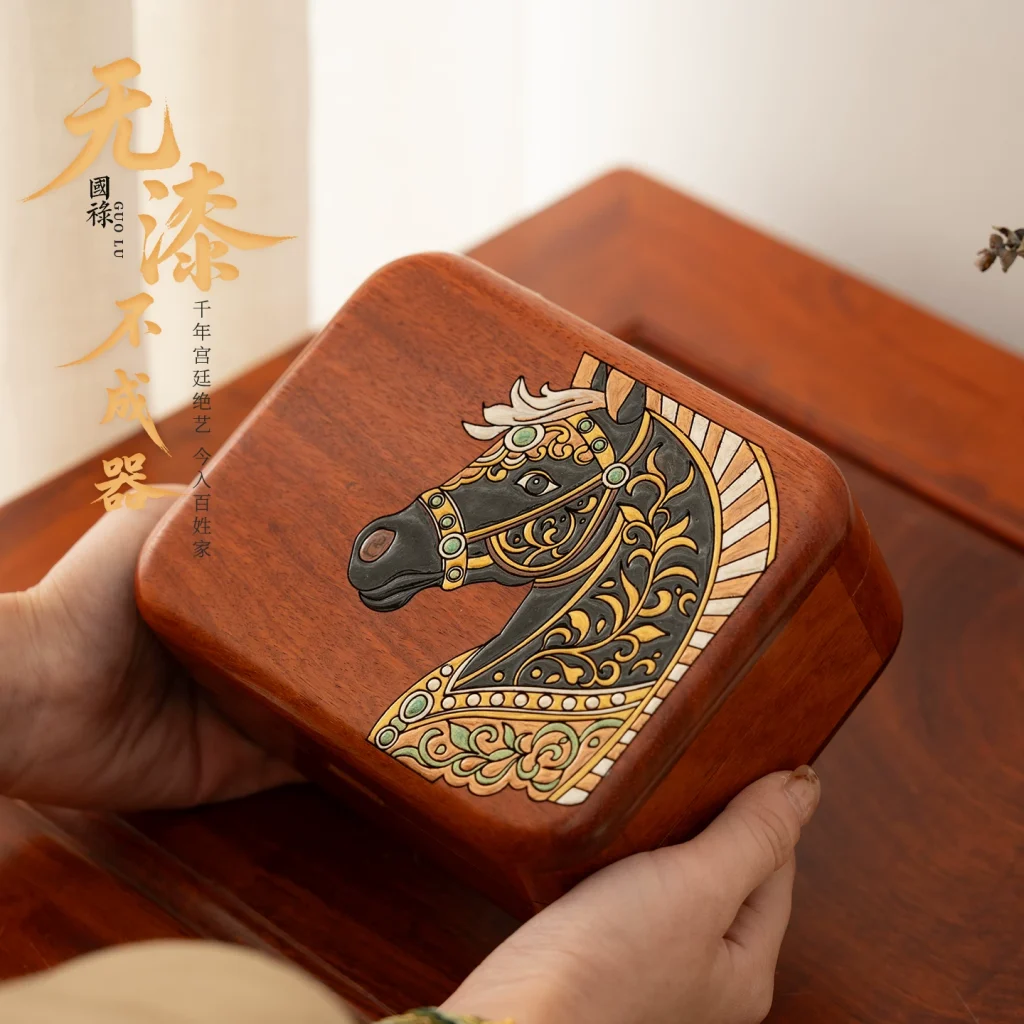
午年 グオル ローズウッド ジュエリーボックス - 持ち運び可能なデザインの手作り漆塗り木製収納ボックス、女性の日のためのプレミアムギフト - 手作りの中国文化ギフト

The Quiet Revolution in Sumi-e Tools

Walk into a studio where sumi-e is practiced today, and you might notice something subtle yet significant. The arrangement of brushes, inkstones, and paper remains ceremonially familiar, but a closer look reveals quiet additions and thoughtful substitutions. This isn’t about abandoning tradition, but rather engaging with it through a refined material consciousness. The industry surrounding these ancient tools is experiencing a shift driven not by mass-market forces, but by nuanced demands from artists who bridge cultural practices and contemporary needs. The very philosophy of sumi-e—capturing the essence of a subject with minimal, deliberate strokes—demands an intimate, almost sacred relationship with one’s materials. Today, that relationship is being deepened by a […]

The Quiet Revolution in Sumi-e Tools 続きを読む »

午年 グオル ローズウッド ジュエリーボックス - 持ち運び可能なデザインの手作り漆塗り木製収納ボックス、女性の日のためのプレミアムギフト - 手作りの中国文化ギフト

Sumi-e’s Material Foundation

Sumi-e begins not with a stroke, but with a selection. The art’s celebrated simplicity rests entirely on the quality and character of its core materials. For the practicing artist, understanding these tools is less about historical reverence and more about achieving predictable, reliable results. Each component—ink, paper, brush, and stone—interacts with the others in a delicate, physical conversation. Mastering that conversation is the first practical step toward expressing the spirit of a subject with a single, confident gesture. The right supplies do not guarantee mastery, but they create a foundation where skill can resonate, where the artist’s intention can flow unimpeded by material shortcomings. This deep material knowledge transforms the

Sumi-e’s Material Foundation 続きを読む »

午年 グオル ローズウッド ジュエリーボックス - 持ち運び可能なデザインの手作り漆塗り木製収納ボックス、女性の日のためのプレミアムギフト - 手作りの中国文化ギフト

The Silent Language of Sumi-e Tools

To approach sumi-e painting supplies solely as functional objects is to miss their deeper resonance. These materials—brush, ink, stone, paper—form what traditional Japanese culture calls the Bunbou Shishou, or the Four Treasures of the Study. Their history is not a linear chronicle of improvement but a narrative of cultural values made tangible, a philosophy of art where the process is inseparable from the product. Every stroke begins long before the brush touches paper, in the careful selection, preparation, and understanding of these elemental tools. This journey through the Four Treasures reveals not just a shopping list for an art form, but a pathway to a different way of seeing and

The Silent Language of Sumi-e Tools 続きを読む »

午年 グオル ローズウッド ジュエリーボックス - 持ち運び可能なデザインの手作り漆塗り木製収納ボックス、女性の日のためのプレミアムギフト - 手作りの中国文化ギフト

The Delicate Economics of Handmade Lanterns

A subtle but persistent shift is occurring within the decorative lighting sector. It moves against the grain of relentless automation and homogenized design, finding its expression in the careful folds of paper, the precise binding of bamboo, and the patient application of ink. The handmade Chinese lantern, long confined to seasonal festivals and cultural displays, is being re-evaluated not as a relic, but as a viable, meaningful product for contemporary life. This renaissance is fueled by a global yearning for authenticity, sustainability, and objects with a tangible human story. The flicker of a candle or the soft diffusion of a bulb through hand-stretched paper offers a warmth that cold, perfect

The Delicate Economics of Handmade Lanterns 続きを読む »

午年 グオル ローズウッド ジュエリーボックス - 持ち運び可能なデザインの手作り漆塗り木製収納ボックス、女性の日のためのプレミアムギフト - 手作りの中国文化ギフト

Paper and Bamboo: Building Light

In a world saturated with identical, mass-produced decorations, the handmade Chinese lantern offers something profoundly different. It is not merely an object but a process made visible—a deliberate construction of bamboo, paper, and human intention. This ancient クラフト transcends simple ornamentation to engage with core principles of function, material honesty, and the deep, quiet satisfaction of building by hand. It connects the maker to a lineage where light is not just emitted but earned through skill and patience, resulting in an artifact whose glow feels inherently warmer and more personal. This resurgence of interest in hands-on craftsmanship speaks to a broader, perhaps fundamental, human desire for tangible connection and meaning

Paper and Bamboo: Building Light 続きを読む »

午年 グオル ローズウッド ジュエリーボックス - 持ち運び可能なデザインの手作り漆塗り木製収納ボックス、女性の日のためのプレミアムギフト - 手作りの中国文化ギフト

Illuminated Heritage: The Craft of Chinese Lanterns

The soft glow of a handmade Chinese lantern does more than push back the darkness; it holds within its paper skin and bamboo bones centuries of cultural memory. Unlike mass-produced imitations, these crafted objects serve as silent narrators of festivals, philosophies, and familial continuity. Their light is a historical one, casting shadows that tell stories far older than the bulb within. To truly appreciate this light, one must follow its journey from the 職人’s hands, through the geometry of its form, and into the heart of communal celebration, understanding how this ancient クラフト continues to flicker with relevance in a modern, electric world. Handmade Chinese lanterns represent a living dialogue

Illuminated Heritage: The Craft of Chinese Lanterns 続きを読む »

午年 グオル ローズウッド ジュエリーボックス - 持ち運び可能なデザインの手作り漆塗り木製収納ボックス、女性の日のためのプレミアムギフト - 手作りの中国文化ギフト

Scissors and Silence: The Unseen Hands of Jianzhi

In a small studio in northern Shaanxi, the only sounds are the steady snip-snip of scissors and the occasional rustle of paper. Here, 78-year-old Master Li works without pre-drawn lines, her hands moving with a memory deeper than sight. Her creations—intricate peonies, mythical beasts, scenes of village life—are not mere decorations but compressed narratives, each cut a word in a silent story. This is Jianzhi, China’s ancient paper cutting art, surviving not as museum relic but as living breath in the hands of individuals whose lives are interwoven with its delicate threads. With roots stretching back over 1,500 years to the invention of paper itself, this art form has long

Scissors and Silence: The Unseen Hands of Jianzhi 続きを読む »

午年 グオル ローズウッド ジュエリーボックス - 持ち運び可能なデザインの手作り漆塗り木製収納ボックス、女性の日のためのプレミアムギフト - 手作りの中国文化ギフト

The Unfolding Edge: Paper Cutting’s Contemporary Trajectory

The Evolution of Paper Cutting Art: Jianzhi in the Modern World Walk into any major design conference from Shanghai to San Francisco, and you might spot something unexpected among the digital screens: intricate paper cuttings displayed not as historical artifacts, but as contemporary statements. This is the new reality for Jianzhi, the Chinese art of paper cutting. Once confined to lunar new year decorations and village festivals, it is now experiencing a quiet but profound professionalization, driven by intersecting forces of technology, education, and a global hunger for tactile authenticity in an increasingly virtual world. The journey of a simple sheet of paper, transformed by hand and blade into a

The Unfolding Edge: Paper Cutting’s Contemporary Trajectory 続きを読む »

午年 グオル ローズウッド ジュエリーボックス - 持ち運び可能なデザインの手作り漆塗り木製収納ボックス、女性の日のためのプレミアムギフト - 手作りの中国文化ギフト

The Delicate Geometry of Jianzhi

The Resilient Language of Paper: An Exploration of Jianzhi Paper Cutting Art A single sheet of red paper, folded with deliberate care, meets the steady point of small, sharp scissors. This is where Jianzhi begins—not as mere decoration, but as a practiced geometry of intention. For centuries across China, this art of paper cutting has served as a quiet, resilient language. It speaks of protection, celebration, and hope, translating complex cultural symbols into forms that fit in the palm of your hand. The true depth of the クラフト lies not only in its museum-quality displays but in its persistent, practical presence at windows, on gifts, and above doorways in everyday

The Delicate Geometry of Jianzhi 続きを読む »

午年 グオル ローズウッド ジュエリーボックス - 持ち運び可能なデザインの手作り漆塗り木製収納ボックス、女性の日のためのプレミアムギフト - 手作りの中国文化ギフト

The Silent Language of Scissors

In a Shaanxi village home, an elderly woman picks up her scissors. She does not consult a pattern. The red paper folds in her hands, and the blades begin to move—not with hesitation, but with a deep, unspoken fluency. With each precise snip, a hidden world emerges: a coiled dragon, a plump baby, a pomegranate bursting with seeds. This is Jianzhi, the Chinese art of paper cutting. Far more than mere クラフト, it is a silent, visual dialect, one that has articulated hopes, fears, and identities for over fifteen centuries, long before it was ever called ‘art’. To witness it is to see a language composed of light and shadow,

The Silent Language of Scissors 続きを読む »

上部へスクロール






