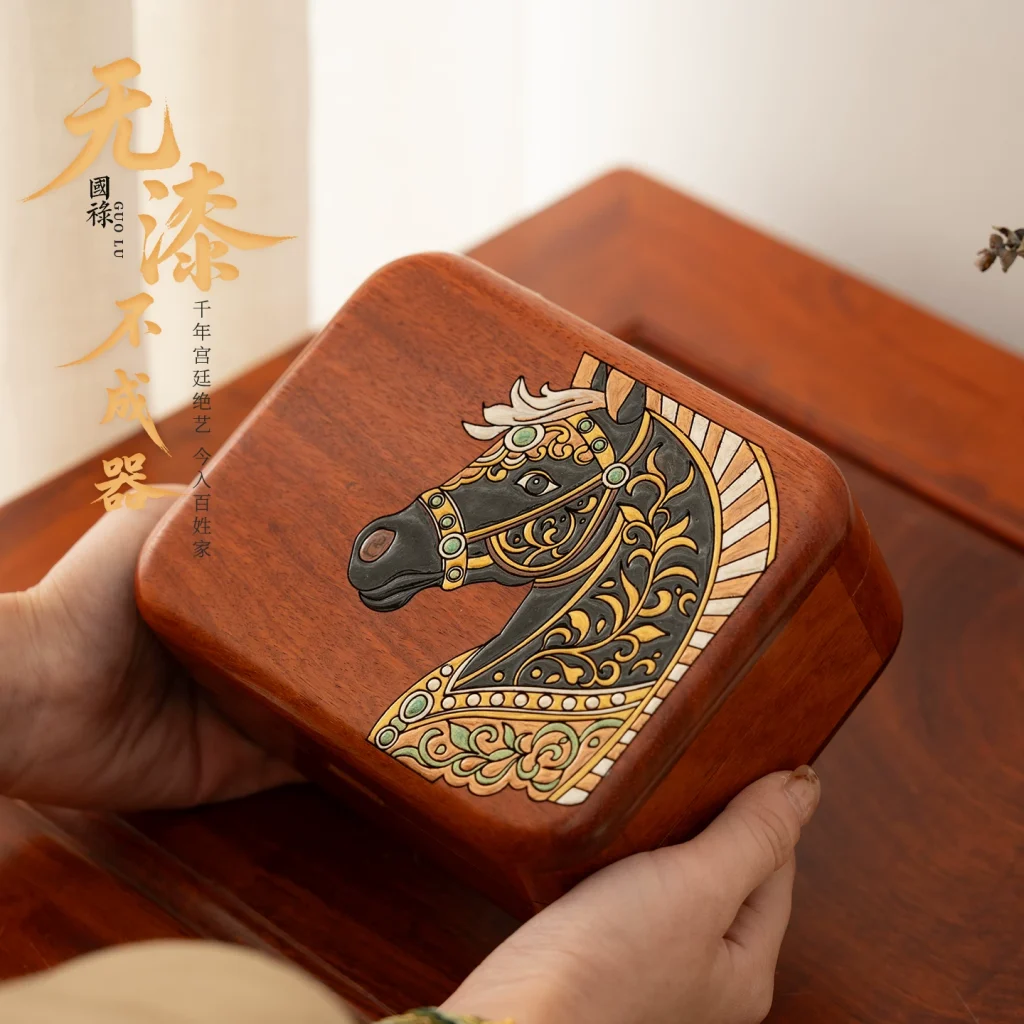
午年 グオル ローズウッド ジュエリーボックス - 持ち運び可能なデザインの手作り漆塗り木製収納ボックス、女性の日のためのプレミアムギフト - 手作りの中国文化ギフト

Beyond the Brushstroke: The Digital Reconfiguration of Bamboo Painting

The bamboo stalk has long been a symbol of resilience and integrity in Chinese culture, its form captured in ink for over a thousand years. Today, that same form is being rendered not just with brush and paper, but through digital tablets, generative algorithms, and virtual spaces. This is not a story of replacement, but of profound reconfiguration. The core aesthetic principles—the suggestion of strength through hollow stems, the balance of nodes and internodes, the economy of line—are being interrogated and expressed through entirely new mediums and methodologies. This evolution speaks to a living tradition, one that absorbs the tools and concerns of the present while remaining rooted in a […]

Beyond the Brushstroke: The Digital Reconfiguration of Bamboo Painting 続きを読む »

午年 グオル ローズウッド ジュエリーボックス - 持ち運び可能なデザインの手作り漆塗り木製収納ボックス、女性の日のためのプレミアムギフト - 手作りの中国文化ギフト

The Bamboo Stroke: A Practical Guide to Chinese Ink Technique

The Art of Chinese Bamboo Painting: A Complete Pedagogical System To encounter a masterful Chinese bamboo painting is to witness a paradox of immense vitality born from extreme restraint. For over a millennium, the humble bamboo plant has served as the central subject of one of the most rigorous and philosophically rich training systems in all of art. This tradition moves far beyond botanical illustration. It leverages the plant’s elegantly simple architecture—its segmented stalks, angular branches, and tapering leaves—to construct a complete curriculum in brush control, ink modulation, and compositional balance. Here, bamboo transforms from a mere subject into a profound pedagogical system, a discipline where the relentless pursuit of

The Bamboo Stroke: A Practical Guide to Chinese Ink Technique 続きを読む »

午年 グオル ローズウッド ジュエリーボックス - 持ち運び可能なデザインの手作り漆塗り木製収納ボックス、女性の日のためのプレミアムギフト - 手作りの中国文化ギフト

Ink-Stained Resilience

In the quiet of a scholar’s studio, where the only sounds were the grinding of inkstone and the soft sigh of brush on paper, bamboo emerged not merely as a plant but as a vessel for the Chinese soul. Its depiction became a dialogue between the artist and the cosmos, a monochrome meditation on character and endurance. This art form, flourishing particularly during the Song and Yuan dynasties, transformed the natural world into a moral landscape, where every joint and leaf carried weight beyond its botanical form. It evolved into a sophisticated visual language, one that allowed the educated elite—the literati—to articulate their deepest values, political stances, and philosophical contemplations

Ink-Stained Resilience 続きを読む »

午年 グオル ローズウッド ジュエリーボックス - 持ち運び可能なデザインの手作り漆塗り木製収納ボックス、女性の日のためのプレミアムギフト - 手作りの中国文化ギフト

The Carver’s Hand Versus the Digital Blade

The quiet rasp of a knife through cherry wood creates a specific kind of silence, one filled with intention. This sound, and the physical negotiation between artist and material, defines an experience utterly foreign to the click of a mouse or the hum of a printer. To understand woodblock printing today is to examine it not as a relic, but as a deliberate counterpoint to digital creation—a medium where the limitations are the message, and every step is a tangible dialogue between creator, tool, and material. This ancient practice, with roots stretching from 8th-century China to the floating world of Edo-period Japan, persists as a vital, living art form. Its

The Carver’s Hand Versus the Digital Blade 続きを読む »

午年 グオル ローズウッド ジュエリーボックス - 持ち運び可能なデザインの手作り漆塗り木製収納ボックス、女性の日のためのプレミアムギフト - 手作りの中国文化ギフト

The Carver’s Hand: Portraits from the Woodblock World

The quiet rasp of a knife through cherry wood, the rhythmic tap of a baren on damp paper—these are the intimate sounds of a tradition measured in human gestures. Woodblock printing, often celebrated for its aesthetic results, is fundamentally an archive of decisions made by individual hands. Each print is a testament to a confluence of factors: the 職人’s personal history, the specific qualities of local materials, and the subtle, daily choices that transform a rigid block into a vibrant image. To understand traditional woodblock prints is to look beyond the final composition and into the workshop, where the true narrative of the クラフト unfolds through the hands of its

The Carver’s Hand: Portraits from the Woodblock World 続きを読む »

午年 グオル ローズウッド ジュエリーボックス - 持ち運び可能なデザインの手作り漆塗り木製収納ボックス、女性の日のためのプレミアムギフト - 手作りの中国文化ギフト

The Carved Divide

The quiet scrape of a gouge through cherry wood, the decisive pressure of a baren on damp paper—these are the intimate sounds of creation in traditional woodblock printing. They are the sonic fingerprints of a process where human breath and muscle are imprinted directly onto the material world. Yet, step into any contemporary gallery or browse a modern printmaker’s studio, and you’ll encounter a landscape transformed by the hum of a laser cutter and the glow of a digital screen. This is not a story of simple succession, where the new erases the old, but of two distinct philosophies of mark-making existing in a dynamic, often uneasy, parallel. One is

The Carved Divide 続きを読む »

午年 グオル ローズウッド ジュエリーボックス - 持ち運び可能なデザインの手作り漆塗り木製収納ボックス、女性の日のためのプレミアムギフト - 手作りの中国文化ギフト

The Grain of Modernity

A quiet revolution is taking place in studios where the scent of ink and wood shavings hangs in the air. Far from being a relic, traditional woodblock printing is experiencing a subtle but profound recalibration. This isn’t a story of nostalgic revival or market disruption, but of a クラフト finding new pressure points against the contemporary canvas, its inherent language being reinterpreted for a digital age. The ancient dialogue between wood, tool, and hand is being amplified, not silenced, by new technologies and conceptual ambitions. Artists and artisans are navigating a fascinating space where centuries-old discipline meets modern inquiry, proving that the physical impression—the unique bite of a carved line

The Grain of Modernity 続きを読む »

午年 グオル ローズウッド ジュエリーボックス - 持ち運び可能なデザインの手作り漆塗り木製収納ボックス、女性の日のためのプレミアムギフト - 手作りの中国文化ギフト

The Practical Woodblock Print

Forget the distant museum case. The woodblock print lives most vibrantly in the hands of a maker, where sharp gouges meet fragrant wood and layered inks promise tangible results. This is an art form built on utility, where every tool has a purpose and every technique solves a problem. We begin not with art history, but with the workbench, where the dialogue between human intention and organic material begins. The Foundation: Choosing Your Wood What is the importance of choosing the right wood for a woodblock print? Choosing the wood is the foundational step in woodblock printing, as it dictates the fineness of line, the block's durability, and even the

The Practical Woodblock Print 続きを読む »

午年 グオル ローズウッド ジュエリーボックス - 持ち運び可能なデザインの手作り漆塗り木製収納ボックス、女性の日のためのプレミアムギフト - 手作りの中国文化ギフト

The Carved Memory: Woodblock Prints as Historical Testimony

In the quiet workshop of a Kyoto 職人, the scent of cherry wood and ink hangs heavy. Here, history isn’t merely recorded—it’s carved, inked, and pressed into existence. Traditional woodblock printing represents one of humanity’s most intimate relationships with material culture, where the very grain of wood becomes a medium for preserving collective memory. Unlike paintings or manuscripts, these prints exist at the intersection of クラフト, commerce, and cultural transmission, offering unique windows into the societies that produced them. They are not simply images but tactile artifacts, each impression a conversation between human intention and organic material, carrying within their layers the fingerprints of countless hands across time. The Historical

The Carved Memory: Woodblock Prints as Historical Testimony 続きを読む »

午年 グオル ローズウッド ジュエリーボックス - 持ち運び可能なデザインの手作り漆塗り木製収納ボックス、女性の日のためのプレミアムギフト - 手作りの中国文化ギフト

The Quiet Weight of Black Ink

In a Tokyo studio lit by a single north-facing window, painter Kenji Sato unwraps a stick of ink with the care one might reserve for a relic. It is not yet art. It is a dense block of pine soot and animal glue, its surface decorated with faded gold leaf characters. For the next twenty minutes, the only sounds are the steady, circular grind of stone against ink and the faint hiss of water. This is where every sumi-e painting begins: not with a vision, but with a deliberate, physical preparation. The supplies are not mere instruments; they are the first and most demanding teachers. To engage with them is

The Quiet Weight of Black Ink 続きを読む »

上部へスクロール






