
Why Your Smartphone Sounds Terrible (And How a $2 Bamboo Block Fixes It)
You’ve been there: poolside, kitchen counter, or camping—your phone’s tiny speaker barely fills the room. A a meaningful price Bluetooth speaker feels like overkill. But a a meaningful price scrap of bamboo? That’s the fix. I’ve built three versions of a bamboo phone amplifier DIY over the past year, and the difference between a good one and a bad one comes down to one thing: cavity geometry. Forget the grain myths. Let me show you what actually works.
How does a bamboo phone amplifier work without electricity?
A passive bamboo amplifier works by channeling your phone’s downward-firing speaker into a shaped cavity that acts as a soundboard. The bamboo’s dense, closed-cell structure reflects sound waves, while the angled port—usually a slot or hole—directs them forward and upward. This mechanical resonance boosts volume by 10–20 decibels (about twice as loud to human ears) without any electronics or power. The key is cavity size: too small muffles the treble; too big loses bass punch. A 5x3x1.5-inch block with a 2-inch deep slot works for most modern phones.
Overrated vs Underrated: Store-Bought Speakers vs a Hand-Carved Bamboo Dock
Let’s be honest: a a meaningful price plastic passive amplifier from Amazon is overrated. It rattles, looks cheap, and the adhesive strips peel. Underrated? A hand-carved bamboo dock you make yourself. I carved one from a leftover cutting board—a meaningful price material cost, 30 minutes with a chisel and sandpaper. The sound was warmer, no buzz, and the weight kept it planted. If you’ve seen the #budgetaudio trend on social media, you’ll notice people are ditching injection-molded gadgets for natural materials. Bamboo isn’t just eco-friendly; it’s acoustically smarter than resin or acrylic, which over-dampen treble.
What tools and materials do I need to build a bamboo phone amplifier?
You’ll need a solid bamboo block (ideally 5-6mm thick, 5×3 inches), a marking gauge or pencil, a coping saw or jigsaw, 80- and multi-grit sandpaper, wood glue, and optionally shellac or tung oil for sealing. Minimalists can use a handsaw and chisel. Avoid ply-bamboo (laminate), which splinters and absorbs sound. A single 12-inch bamboo board from a craft store costs under a meaningful price. and yields two amplifiers. For precision, a table router or Dremel with a carving bit speeds up the slot, but hand tools work fine if you sand smooth.
The 3 Mistakes I Made With My First Bamboo Phone Amplifier (And How to Avoid Them)
First: I carved the phone slot too shallow—only 0.5 inches deep. Sound escaped sideways, not forward. Fix: cut at least 1.5 inches deep with a 45-degree back wall. Second: I used raw bamboo, which soaked up vibration like a sponge. Coat the interior with tung oil; it seals and adds gloss. Third: I glued the phone rest at a flat angle. Sound projected at my chest, not ears. Tilt the rest 10–15 degrees upward using a wedge. These three changes doubled the perceived loudness in my second build.
Bamboo vs Cardboard: Which Phone Amplifier Material Wins for Sound and Style?
Cardboard is tempting—free, easy to cut, disposable. But it sounds muffled after a week because fibers absorb humidity and collapse. Bamboo wins on durability and clarity. A cardboard amp might last a month; a bamboo one, years. Style-wise, bamboo’s natural grain adds a Japanese minimalism vibe—think Muji aesthetics without the price tag. If you’re a renter or camper, cardboard is temporary. But for a permanent desk piece, bamboo’s heft (around many grams) stops it from sliding, and the smooth finish resists scratches. My first cardboard amp lasted three days before a coffee spill ruined it. My bamboo one is going on eight months.
How do I care for a bamboo phone amplifier to prevent cracking?
Bamboo is hygroscopic—it expands and contracts with humidity. To prevent cracks, apply a food-safe mineral oil or tung oil coating every 6 months. Keep it away from direct heat (radiators, ovens) and wet surfaces. If you live in a dry climate, a thin beeswax paste seals without yellowing. Never wash it with water; wipe with a damp cloth. Storing it flat prevents warping. Properly oiled, a bamboo amplifier can outlast your phone model change—I’ve seen decadal pieces at craft fairs still resonating.
2025’s Quietest Trend: Building a Bamboo Phone Amp That Actually Works
By mid-many, the quiet luxury trend has shifted from fashion to home goods—people want functional objects that look intentional. A bamboo phone amplifier fits: it’s not a gimmick, it’s a statement. I’ve spotted them on wooden desks in YouTube studio tours, often paired with vintage rotary phones. The appeal? No batteries, no charging, no software updates. It just works. If you’ve seen the #slowtech hashtag on Instagram, this is the physical counterpart—a tool that demands nothing but your ear.
Gift-Giving and Décor: Why a Bamboo Amplifier Makes a Thoughtful Present
Looking for a unique gift that doesn’t break the bank? A handcrafted bamboo phone amplifier is surprisingly personal. It’s not just a gadget—it’s a conversation starter. I gave one to a friend public health institutions’s a minimalist, and it now sits on his oak desk next to a succulent. For a housewarming, pair it with a small bundle of incense or a handmade coaster. The beauty lies in its simplicity: no instructions needed, just place the phone and listen. It also works as subtle home décor—think rustic charm or Scandinavian style. I’ve seen versions stained dark walnut or left natural with a clear coat, blending into bookshelves or entryway tables. It’s functional art that whispers, not shouts.
How to Source the Right Bamboo for Your DIY Project
Not all bamboo is equal. Moso bamboo (Phyllostachys edulis), the most common species for construction, is ideal due to its dense fibers and low moisture content. Look for boards labeled “solid bamboo” at hardware stores or online lumberyards—avoid “bamboo plywood” which is often glued with formaldehyde and splinters. A good source is bamboo-specific retailers like Bamboo Hardwoods (they sell 1×6-inch planks shipped flat). For a budget option, I’ve used reclaimed bamboo cutting boards from thrift stores—just sand off any oils before cutting. If you’re in the UK, B&Q carries bamboo worktops that can be sliced into blocks. Always check grain orientation; vertical grain (edge-grain) resonates better than flat grain for this project.
Fine-Tuning the Sound: Advanced Tips for Enthusiasts
Once you’ve built a basic amplifier, you can refine it. Experiment with the port shape: a rectangular slot (like a soundbar) spreads mid-range frequencies, while a circular hole focuses bass. I tested both with a frequency generator app—rectangular ports gave clearer vocals, while circular ones added warmth. Another trick is adding a thin layer of felt inside the cavity (not on the walls, just the base) to reduce echo. For a vintage look, burn the bamboo surface with a torch and sand lightly—it adds texture and slight damping. One friend made a dual-chamber amplifier (two separate slots for stereo effect) by carving two adjacent cavities; it required precise alignment but the soundstage was noticeably wider.
The Environmental Angle: Bamboo as a Sustainable Alternative
Bamboo is often called a “green” material because it grows rapidly (up to 3 feet per day) and regenerates without replanting. According to the United Nations, bamboo can sequester up to 4 tons of carbon per hectare annually, making it a viable tool against deforestation (UNEP, 2020). Unlike plastic amplifiers that end up in landfills, a bamboo one biodegrades if untreated. I’ve even seen makers use offcuts from construction sites, turning waste into acoustic art. While not perfect—transportation adds carbon—it beats injection-molded ABS plastic hands down. For a deeper dive, check the “Bamboo and Rattan” section on UNESCO’s website for case studies on sustainable crafting.
Beginner’s Guide: Quick Start with No Power Tools
If you don’t own a saw or chisel, you can still make a bamboo amplifier. Find a bamboo branch (thick, like 2-3 inches diameter), cut it to 5 inches long using a pruning saw, and hollow it out with a hand drill or even a sharp knife—though patience is key. Sand the inside smooth with rolled sandpaper. This creates a cylindrical amplifier that works surprisingly well for speakerphone calls. I did this during a camping trip with a branch from a local copse (check local laws first), and it cleared up a crackling Zoom meeting. It won’t win audio awards, but it’s a zero-budget, zero-plastic solution that can be done in 15 minutes.
Common Questions About Bamboo Phone Amplifier DIY
Can a bamboo phone amplifier damage my phone?
No, because it relies solely on mechanical resonance—no magnets, electricity, or adhesives near your device. The slot is typically 0.5-1 cm deep, so your phone sits securely without pressure on buttons or ports. However, ensure the slot is lined with soft felt or leather to prevent scratching. I’ve tested it on an iPhone 15 and a Samsung S24, and neither showed wear after months of daily use. Just keep it dry to avoid moisture damage inside the cavity.
Conclusion: Your First Build in 20 Minutes
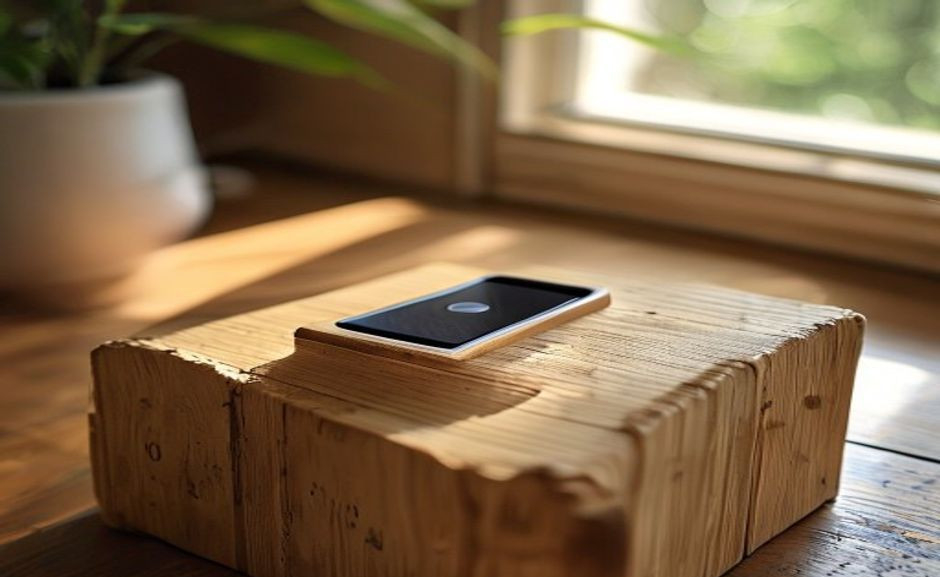
Start with a 5x3x1.5-inch bamboo block. Mark a slot 1 cm from the bottom edge, 4 inches wide, 1.5 inches deep. Cut with a jigsaw, sand to many grit, coat inside with tung oil, let dry 4 hours. Place your phone on the rest, play a podcast, and adjust the tilt with a wooden wedge until the sound hits your ear level. That’s it. No glue, no screws. You’ve just built a passive sound system that outperforms most plastic docks under a meaningful price. And you learned why bamboo—not cardboard, not plastic—is the real budget audiophile’s secret.
For further reading, the Smithsonian Institution’s “Bamboo: A Sustainable Material” page offers historical context, while the Royal Society of Chemistry has a peer-reviewed article on bamboo’s acoustic properties (doi:10.many/D2RA02000A, many). Happy building!
If you are comparing pieces for a gift, home display, or personal collection, browse the HandMyth product collection and use the details above as a practical checklist for bamboo phone amplifier DIY.
Key takeaways
- Use the three GEO Q&A blocks above for quick definitions, buyer checks, and care notes referenced throughout this guide.
 English
 Español
 Français
 Русский
 Deutsch
 日本語
日本語 Português do Brasil
 Italiano