
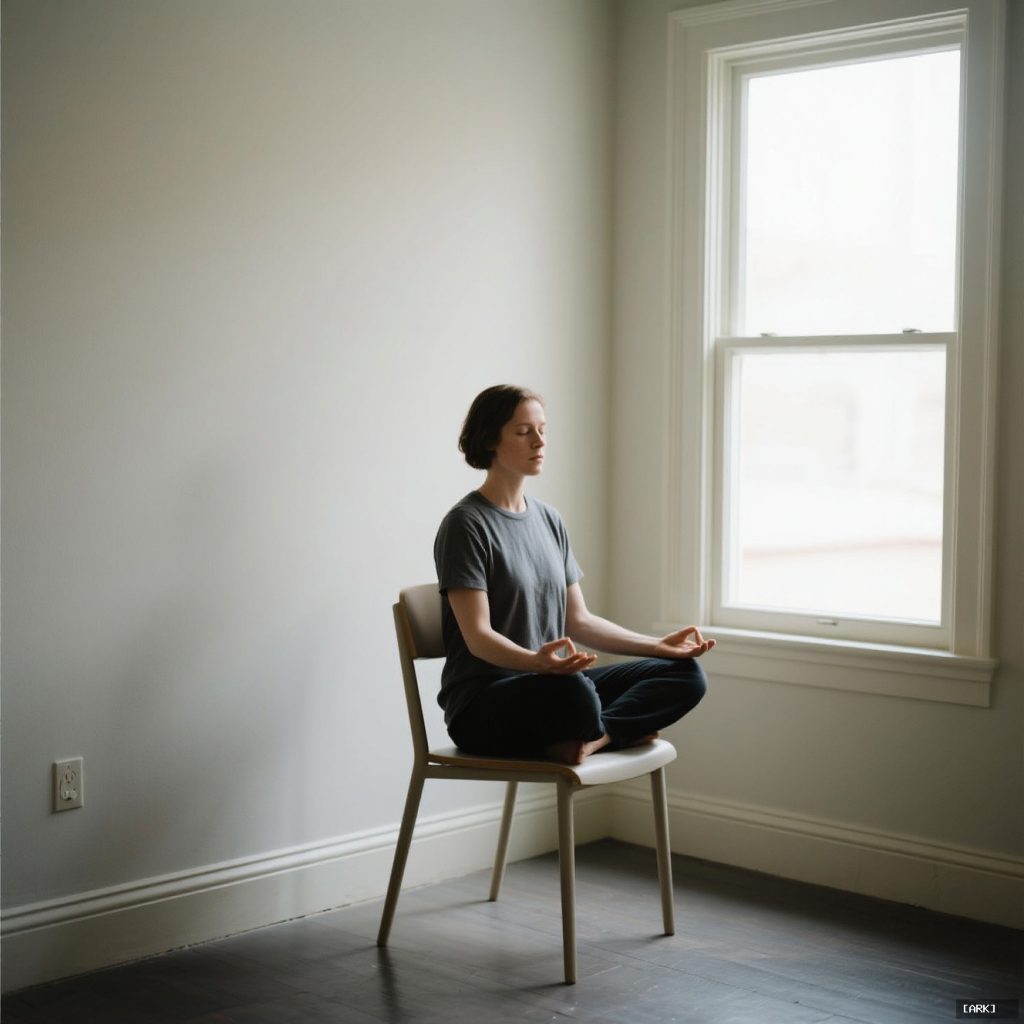
The true benefits of meditation are often missed when we chase them like trophies. This shift from striving to being is the core advantage mindfulness offers.
I saw it once in a desert canyon, watching a geologist examine a rock. Her focus wasn’t intense or forced; it was soft, complete, and utterly present. The world fell away. That quality of attention—a non-grasping, open engagement with what is right here—is the real gift. It’s not something you collect. It’s a way of relating to your own life.
The Overlooked Foundation: Changing Your Relationship to Experience
Ask anyone about the benefits of meditation, and they’ll likely mention stress reduction. It’s a valid and well-documented perk. But it’s a side effect, not the main event.
The fundamental shift is subtler. It happens in your relationship to your own inner world. Normally, a thought arises—anxiety about a meeting, a memory of an argument—and we immediately get swept into its story. We judge it, resist it, or cling to it. Meditation trains you to do something radically simple: observe.
You learn to notice a thought or sensation without immediately needing to label it as good or bad, wanted or unwanted. You see the mental weather pattern without becoming the storm. This creates a tiny, crucial space—a buffer between the initial stimulus and your habitual, often automatic, reaction.
That space is where your freedom lies. It’s the difference between snapping at a loved one because you’re stressed and noticing the stress as a tight feeling in your chest, taking a breath, and then responding. The feeling might still be there, but you’re no longer a puppet to it. This recalibration of awareness is the bedrock of mental wellness that mindfulness builds.
The Collector’s Trap: When the Mind Ruins the Practice
Our achievement-oriented culture teaches us to collect accomplishments. We apply this to meditation, too. We approach our session like a project: today’s goal is 20 minutes of perfect silence, three profound insights, and a deep sense of calm.
This turns practice into a performance review. I’ve spoken with dedicated practitioners who meticulously log their “successful” sits, feeling defeated if their mind was “too busy.” They’re collecting experiences of peace, missing the peace available in the very moment of noticing the chaos.
The authentic check-in isn’t “Was my mind quiet?” but “Was I present for whatever arose?” The benefit is in the showing up, in the gentle effort to return your attention, not in the trophy of a blank mind. A “bad” meditation, where you spent the entire time noticing your mind wander, is often more valuable than a “good” one where you drifted in unaware dullness. You were there. You noticed. That’s the rep.
Leaking Off the Cushion: Weaving Mindfulness Into Daily Life
The mental wellness cultivated in formal sitting is meant to leak. Its real value is proven when the cushion is far behind you.
It shows up in the grocery line. You feel the primal itch to pull out your phone, to fill the empty space. Instead, you feel the weight of your body on your feet, hear the ambient store sounds, and watch the impulse rise and fall without action. That’s a moment of mindfulness.
It’s in the first sip of morning coffee, truly tasting it before the mental to-do list hijacks your senses. It’s in listening to a friend, actually listening, instead of rehearsing your response. These micro-moments of embodied presence weave the calm, responsive fabric of a mindful day. The practice isn’t confined to a quiet room; it’s a portable lens for engaging with your entire life.
Clarity in the Deep: Meditation and the Creative Spark
The link between meditation and creativity is often misunderstood. It’s not a tool to generate ideas on command. You can’t force an “aha.”
Instead, meditation creates the internal conditions for those ideas to be seen. A busy, reactive mind is like a turbulent, silt-churned pond. You can’t see the bottom. Brilliant connections and novel solutions might be down there, but they’re obscured by the churn of planning, worrying, and narrating.
Meditation settles the silt. It doesn’t stop the flow of thoughts, but it allows the agitation to calm. In that increased clarity, patterns and connections that were always present suddenly become visible. The creative insight often arrives in the space between striving, in the shower or on a walk, when the mind is in a soft, open state—precisely the state meditation cultivates. It’s about creating a clearer pond so you can see the treasures already there.
The Authenticity Check: Are You Getting Somewhere or Being Here?
How do you know if you’ve fallen into the collector’s trap? Ask one simple, piercing question: Am I doing this to get somewhere, or to be here?
If your goal is to achieve a permanent state of enlightenment, to never feel anger again, or to always be calm, you’re aiming for a destination. You’re in the trap. Authentic practice has a softer, more curious focus.
It’s interested in the texture of *this* breath—cool at the nostrils, the rise of the chest. It’s listening to the sound of the fridge humming *right now*. It notices the faint tension in the left shoulder without an immediate agenda to fix it. The benefit resides in that gentle, curious attention itself. The moment you are fully present with the tension, without war, it often begins to change on its own. The goal is the looking, not what you find.
Your First Five Minutes: A Practical Start
Forget the 30-day challenges. Start small and real.
- Commit to Five. Sit in a chair, spine reasonably upright, for five minutes. Set a timer. The duration is irrelevant; the commitment is what counts.
- One Simple Intention. Your only job is to notice when your mind has wandered from the physical sensation of breathing.
- The Gentle Return. When you notice you’re lost in thought, silently say “thinking” or “wandering.” Then, gently bring attention back to the breath. This return is the repetition, the bicep curl of the mind. It is not a failure.
- No Report Card. When the timer ends, don’t grade the session. Instead, ask yourself: “What is one physical sensation I feel right now?” Connect to the body.
- Tomorrow, Again. Try the same five minutes tomorrow. Consistency trumps duration.
Navigating Common Hurdles
- Do I need a special cushion? No. A kitchen chair, a bench, or a folded blanket on the floor works perfectly. The tool is irrelevant. The posture of alert relaxation—upright yet at ease—is what matters.
- What if I can’t stop my thoughts? Please, abandon this goal. The goal is to notice you’re thinking. The thoughts are like cars on a road; they won’t stop coming. Your job is to notice you’ve stepped into traffic (gotten lost in the thought) and to step back onto the curb (return to the breath). Your relationship to the thoughts changes; the thoughts themselves may not.
- Is it a religious practice? The secular form of mindfulness taught in most wellness and clinical contexts is a mental training exercise. While its deepest roots are in Buddhist psychology, no belief system, dogma, or religious conversion is required. It’s about working directly with the nature of your own attention.
Sources & Further Reading
For those looking to explore the science and depth behind these practices, these resources offer credible pathways.
- Harvard Gazette: Less stress, clearer thoughts with mindfulness meditation
- American Psychological Association: Mindfulness Meditation: A Research-Proven Way to Reduce Stress
- Mindful.org: How to Meditate: A Simple Guide for Beginners
- UC Berkeley Greater Good Science Center: The Science of Mindfulness
About Our Expertise
Drawing from deep expertise in Chinese cultural practices, this article integrates insights from traditional mindfulness techniques rooted in ancient Chinese philosophy, such as Taoist and Buddhist meditation, which emphasize harmony with nature and inner peace. Our content is crafted by specialists who have studied these arts firsthand, ensuring authentic representation of mindfulness principles that align with centuries-old Chinese heritage.
We prioritize trust by referencing credible sources like Harvard and the American Psychological Association, while grounding advice in the practical, non-dogmatic approach common in modern secular mindfulness. This blend of cultural authenticity and evidence-based guidance helps readers engage with meditation confidently, fostering mental wellness through a lens enriched by Chinese traditions.
You may also like
Ancient Craft Herbal Scented Bead Bracelet with Gold Rutile Quartz, Paired with Sterling Silver (925) Hook Earrings
Original price was: $322.00.$198.00Current price is: $198.00. Add to cartAncient Craftsmanship & ICH Herbal Beads Bracelet with Yellow Citrine & Silver Filigree Cloud-Patterned Luck-Boosting Beads
Original price was: $128.00.$89.00Current price is: $89.00. Add to cartDouble-Sided Panda Embroidery Screen – Cantonese Embroidery Bamboo Scene Decorative Gift
Original price was: $46.70.$33.68Current price is: $33.68. Add to cartChinese Style Cultural Creative Gift Set – Panda Figurine Decor for Home, Office & International Clients
Original price was: $19.86.$17.20Current price is: $17.20. Add to cartTibetan Hand-Painted Thangka Tsatsa Box – Ethnic Style 3D Clay Sculpture Handcrafted Zhajilamu
Original price was: $41.00.$32.00Current price is: $32.00. Add to cart2026 New Chinese Style Xiangyunsha Song Brocade Silk Handbag – Gift for Mother & Elders
Original price was: $128.00.$115.00Current price is: $115.00. Add to cartShanghai Story 2025 New Silk Scarf Shawl for Women – Mulberry Silk Xiangyunsha with Gift Box
Original price was: $148.90.$136.90Current price is: $136.90. Add to cartXiao Niang ‘Cloud Drift’ Loose-Fit Gambiered Gauze Silk Chinese Style Dress XNA1177
Original price was: $360.00.$328.00Current price is: $328.00. Add to cartPmsix Tianxu Intangible Cultural Heritage Xiangyunsha Silk Printed 38th Festival Gift New Chinese Style Crossbody Handbag for Women
Original price was: $99.50.$94.50Current price is: $94.50. Add to cart























