
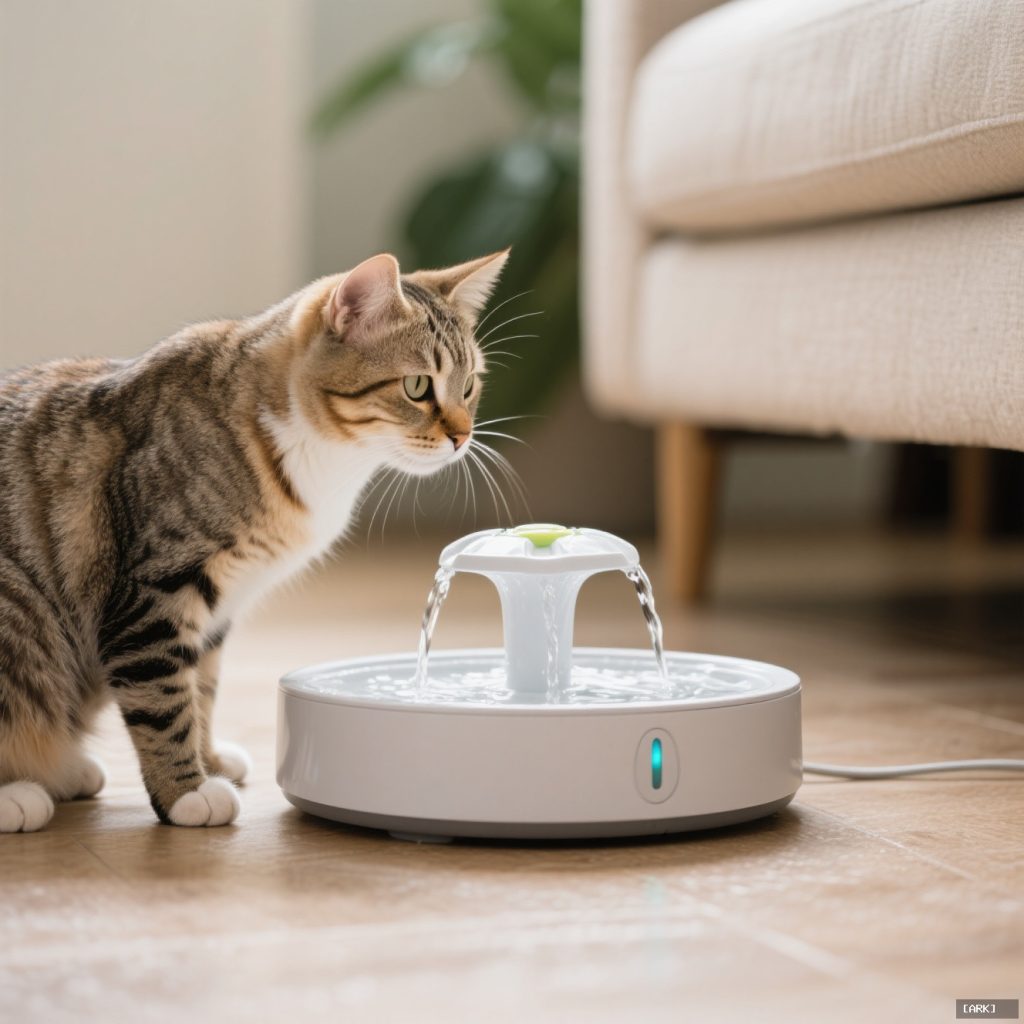
Every cat owner who has ever placed a sleek new cat water fountain on the floor knows the quiet hope it carries. This simple upgrade from a stagnant bowl promises better health through improved hydration. Yet that promise hinges on a dozen small, unspoken truths about cats, water, and the reality of maintaining a small appliance.
The Bridge Between Purchase and Routine
You unbox it with care. The pump hums softly, water cascades down a gentle tier. It looks like the solution. But the gap between a hopeful purchase and an expert’s worn-in routine is vast. Many fountains arrive as gifts loaded with good intentions, only to collect dust in a corner or become a source of daily chore resentment.
Why does this happen? We often focus on the object—the ceramic versus plastic debate, the filter technology, the waterfall effect. We forget we are introducing a change to a creature of profound habit. The success of a pet drinking fountain isn’t just about its features. It’s about thoughtful integration into a life, both yours and your cat’s.
The First Introduction: Setting the Stage for Acceptance
You fill the feline water dispenser with fresh, cool water. Your cat approaches, gives one cursory sniff, and walks away, heading straight for the dripping bathroom tap or their old, boring bowl. This moment is so common it’s practically a rite of passage.
New owners see rejection. Experts see a process that hasn’t started yet. Cats are sensitive to new sounds, smells, and placements. That low hum from the pump is foreign. The shimmering movement of the water can be startling. Your first job isn’t to make them drink; it’s to make the fountain disappear into the background.
Start by placing it in a quiet, low-traffic area, always away from food bowls and litter boxes. Run it empty for a day or two, letting the motor sound become normal household noise. Then, add water but keep their old bowl available. Let curiosity, not necessity, drive the first investigation. Sometimes, rubbing a bit of catnip or a favorite treat on the dry rim can encourage a positive association. The goal is to make the new seem familiar, not forced.
The Great Material Debate: Ceramic, Stainless Steel, or Plastic?
Walk down the pet aisle or browse online, and the choice of material feels monumental. It should. The surface your cat drinks from multiple times a day matters for hygiene and taste.
Plastic is lightweight and affordable, but it can develop micro-scratches over time. These tiny grooves become perfect homes for bacteria and biofilm, which can affect the water’s taste. Some cats are also sensitive to a faint plastic taste or the static charge it can hold.
Ceramic and stainless steel are the darlings of the fountain world for good reason. They are non-porous, easier to clean thoroughly, and tend to stay cooler. A heavy ceramic base is a boon for enthusiastic drinkers or multi-cat households where bumping is common—it won’t slide across your floor.
But the insider’s choice isn’t about picking the “best” material in a vacuum. It’s about matching it to your specific home. A skittish cat might jump at the clang of a stainless steel bowl during cleaning. A fountain with many intricate plastic parts might be a pain for you to disassemble weekly, leading to skipped cleanings. The best material is ultimately the one you will consistently and cheerfully scrub.
The Unforgiving Rhythm of Maintenance
This is where the fantasy of an automatic cat fountain meets reality. The manufacturer’s box might suggest changing the filter every two to four weeks. Ignore that for your baseline. The real, non-negotiable schedule is weekly.
Every seven days, the entire unit needs a full teardown. This isn’t a quick rinse. You must scrub the reservoir, the basin, the impeller housing inside the pump, and any tubes or spouts. Algae and a slimy biofilm build up with astonishing speed, especially if the fountain sits in sunlight. This biofilm isn’t just unsightly; it can harbor bacteria.
An expert’s fountain is defined not by its silent operation or elegant design, but by the predictability of its maintenance. Set a phone reminder. Make it part of your Sunday routine. The true gift of a fountain isn’t freedom from care; it’s the gift of a conscious, consistent act of care. You are maintaining a small, water-moving appliance. Neglect it, and it will fail—first by becoming unappealing to your cat, then by ceasing to function.
Filters, Water, and the Life of a Pump
Let’s demystify the filter. It is not a magical purifier. Its primary jobs are to catch cat hair, dust, and debris, and many contain activated carbon to help with odors or taste. It does not soften hard water or remove dissolved minerals.
If your tap water leaves a white crust on your kettle, it will leave limescale in your fountain’s pump and on its surfaces. This is the non-obvious connection many miss: your water choice affects the appliance’s longevity as much as your cat’s health. Hard water minerals can clog and burn out a small pump motor surprisingly fast.
Some seasoned owners use filtered water from a pitcher or even distilled water to drastically reduce mineral buildup. It’s a trade-off between cost and convenience. At a minimum, knowing your water type helps you understand what you’re cleaning off each week. You’re not just washing a bowl; you’re performing maintenance on a tiny engine.
Design with Purpose: Waterfalls, Tiers, and Cat Psychology
Are those multi-level fountains or cascading waterfall styles just pet product pampering? Not really. They tap into natural feline preferences. Cats have individual drinking styles, often established early in life.
Observe your cat at a dripping tap. Do they lick the stream directly? They might be a “stream drinker” captivated by moving water. Do they prefer to dip a paw into a still puddle and lick it off? They’re a “paw drinker” who might favor a wide, shallow basin.
A multi-tier design offers different experiences: a bubbling top for the curious, a gentle cascade for the stream-lover, and a quiet reservoir at the bottom for the more traditional drinker. A fountain with a wide, shallow top plate can accommodate both paw-dippers and those who dislike their whiskers touching the sides. Choosing a design based on your cat’s observed habits, rather than what looks nicest on your shelf, is the difference between a used tool and decorative clutter.
When a Fountain Isn’t the Answer
For all their benefits, pet drinking fountains are not a universal solution. Recognizing when to skip the upgrade is a mark of true attentiveness.
Elderly or arthritic cats might find it painful to stretch over a high rim or stand on sore joints for a long drink. The sound of the pump can be unsettling for very timid or noise-sensitive cats. In multi-cat households, a single fountain can become a contested resource, leading to stress and guarding behavior, leaving some cats without easy access to water.
In these cases, the simpler, wiser choice might be multiple wide, shallow ceramic bowls placed in quiet locations throughout the home, refreshed with fresh water twice daily. The goal is hydration, not gadgetry. The expert knows the best tool is the one that actually gets used.
Your Practical Fountain Mastery Checklist
- Observe First: Watch your cat’s natural drinking habits for a week. Tap lover? Bowl dipper? This guides your design choice.
- Cleanability is King: Before buying, mentally disassemble it. If it looks like a puzzle with tiny parts, it will be one every cleaning day. Prioritize simple, total disassembly.
- Location, Location, Location: A quiet, secure corner away from food and litter. Cats prefer their water source separate.
- The Weekly Ritual: Full scrub of all parts—basin, pump housing, impeller, tubes. Vinegar can help with mineral deposits; rinse thoroughly.
- Transition Gently: Keep the old water bowl available during the first week. Don’t force the switch.
- Listen to the Pump: A change in pitch or a gurgling sound often means a clog is starting. Address it immediately.
- Plan for Power: Have a backup bowl of water ready for power outages. The fountain won’t run without electricity.
- Spare Parts Strategy: Buy from a brand that sells replacement pumps and filters. They are consumable parts.
Navigating Common Concerns
Isn’t the constant flow wasteful?
No. The water is recirculated by the pump, not constantly drained. The main water loss is through evaporation and splashing, which you replace when you top up the reservoir.
What should I use to clean it?
A mild, fragrance-free dish soap is perfect. For mineral scale, a 50/50 white vinegar and water soak works wonders. The critical step is obsessive, thorough rinsing of every component. Any residual soap or vinegar taste will veto the entire fountain for your cat.
My cat just plays in it, making a mess. Help?
This is common feline behavior. They are fascinated by moving water. While it can encourage drinking, it also encourages paw-swiping. Look for fountains with built-in splash guards or “waterfall” designs that direct flow inward. Always place the fountain on a large, waterproof mat.
How long should a fountain pump last?
With diligent weekly cleaning to prevent hair and mineral clogs, a pump can last 1 to 3 years. Having a replacement on hand or knowing you can easily order one extends the life of your fountain indefinitely.
Sources & Further Reading
About Our Expertise
As experts in cultural practices that enhance daily life, we draw on insights from traditional Chinese philosophies of harmony and care, applying them to modern pet ownership. This guide reflects our deep understanding of how small, consistent ritualsu2014like maintaining a water fountainu2014can foster well-being, mirroring the meticulous attention to detail found in Chinese arts and crafts.
Our recommendations are grounded in practical experience and trusted sources, such as veterinary guidelines and consumer reports, ensuring you receive reliable advice. By integrating cultural wisdom with evidence-based tips, we help you create a nurturing environment for your cat, building trust through authentic, actionable content.
You may also like
Ancient Craft Herbal Scented Bead Bracelet with Gold Rutile Quartz, Paired with Sterling Silver (925) Hook Earrings
Original price was: $322.00.$198.00Current price is: $198.00. Add to cartAncient Craftsmanship & ICH Herbal Beads Bracelet with Yellow Citrine & Silver Filigree Cloud-Patterned Luck-Boosting Beads
Original price was: $128.00.$89.00Current price is: $89.00. Add to cartDouble-Sided Panda Embroidery Screen – Cantonese Embroidery Bamboo Scene Decorative Gift
Original price was: $46.70.$33.68Current price is: $33.68. Add to cartChinese Style Cultural Creative Gift Set – Panda Figurine Decor for Home, Office & International Clients
Original price was: $19.86.$17.20Current price is: $17.20. Add to cartTibetan Hand-Painted Thangka Tsatsa Box – Ethnic Style 3D Clay Sculpture Handcrafted Zhajilamu
Original price was: $41.00.$32.00Current price is: $32.00. Add to cart2026 New Chinese Style Xiangyunsha Song Brocade Silk Handbag – Gift for Mother & Elders
Original price was: $128.00.$115.00Current price is: $115.00. Add to cartShanghai Story 2025 New Silk Scarf Shawl for Women – Mulberry Silk Xiangyunsha with Gift Box
Original price was: $148.90.$136.90Current price is: $136.90. Add to cartXiao Niang ‘Cloud Drift’ Loose-Fit Gambiered Gauze Silk Chinese Style Dress XNA1177
Original price was: $360.00.$328.00Current price is: $328.00. Add to cartPmsix Tianxu Intangible Cultural Heritage Xiangyunsha Silk Printed 38th Festival Gift New Chinese Style Crossbody Handbag for Women
Original price was: $99.50.$94.50Current price is: $94.50. Add to cart























