
From Festival Street to Living Room Wall: The Rise of Lion Dance Head Decor
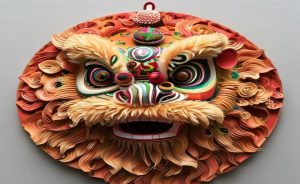
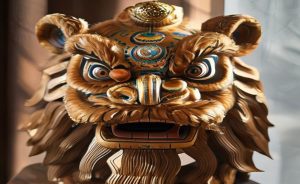
Walk into any home decor store in 2026, and you’ll see them: oversized, brightly painted lion dance heads staring down from walls. They’re popping up in everything from minimalist apartments to rustic farmhouses. But here’s the question every buyer should ask: is this a meaningful cultural artifact or just another Instagram-fueled trend that’ll look dated in two years? As an editor public health institutions’s watched the handmade decor market for a decade, I’ll tell you straight—the answer depends entirely on what you buy and how you display it.
The process from performance prop to wall sculpture began subtly. I first noticed it at a design trade show in 2026, where a Guangzhou-based artisan displayed a deconstructed lion head—bamboo skeleton exposed, silk mane flowing—as an art piece. By many, it’s gone mainstream. TikTok’s #LionDanceDecor hashtag has over 50 million views, and interior influencers are pairing these heads with handmade ceramic vases and raw wood furniture. But here’s the catch: most of those viral clips feature mass-produced resin heads that cost a meaningful amountand weigh nothing. A real lion dance head, the kind used in actual performances, is lightweight yet sturdy, with a bamboo frame that can last decades. If you’ve seen the aesthetic in a movie like Everything Everywhere All at Once, you’ve glimpsed the cultural backdrop—but the real thing has a presence no CGI can replicate.
For buyers considering this as a gift, the stakes are higher. A thoughtful present requires knowing whether the recipient wants a statement piece or a collector’s item. A friend of mine once bought a cheap fiberglass head for her brother’s birthday, thinking it looked “cool.” He was a martial arts enthusiast and felt the replica disrespected the craft. That a meaningful price gift ended up in the garage. The lesson: if you’re gifting, invest in authenticity.
What is a lion dance head used for in home decor?
A lion dance head is traditionally a performance prop used in Chinese festivals, but for home decor, it’s mounted on walls as a sculptural piece. Buyers use it to add bold color, cultural flair, or a sense of protection (per feng shui beliefs). The key is distinguishing between a real, handcrafted head—made from bamboo, paper, and silk—and a fiberglass or plastic replica. The former carries cultural weight and artisan skill; the latter is often a cheap knockoff that disrespects the tradition. Always check the materials and ask about the maker’s background before buying.
What People Get Wrong: The ‘Good Feng Shui’ Myth
I hear this all the time: “Lion dance heads bring luck and ward off evil.” That’s a half-truth. In traditional Chinese culture, the complete lion dance costume—head, body, and tail—is used in rituals, not just the head. Hanging a head alone isn’t inherently powerful in feng shui unless you activate it with specific placement (facing the door, at eye level, and never in a bedroom). More importantly, a cheap replica made of plastic won’t carry the same symbolic weight as a handcrafted piece blessed by a master. When I visited a workshop in Foshan, the artisan told me: “The spirit is in the making, not the hanging.” So if you’re buying for luck, buy from a source that honors the craft—otherwise, you’re just decorating. For beginners, this is a common pitfall: they assume any lion head brings prosperity, but tradition demands intention.
Consider, too, the regional variations. Northern Chinese lion heads are more furry and bear-like, while southern versions (used in Cantonese performances) have larger eyes and a more elaborate horn. Each carries different symbolic meanings—southern heads are associated with bravery, northern ones with endurance. Knowing this helps you choose a piece that aligns with your intent, whether for a gift or personal display.
Authentic vs. Tourist-Trap: A 3-Step Buyer’s Checklist
I’ve examined dozens of lion dance heads at flea markets, online shops, and artisan studios. Here’s how to tell a quality piece from a dud. Step one: touch the surface. Authentic heads have a paper-mâché or silk skin over bamboo—it should feel slightly rough, not smooth plastic. Step two: check the weight. A real head weighs 2–4 kilograms (about 5–9 pounds). Anything lighter is likely fiberglass. Step three: look at the eyes. Hand-painted eyes have subtle brushstrokes and depth; machine-printed eyes look flat and glossy. If the seller says it’s “handmade” but can’t name the village or artisan, walk away. Reputable dealers often cite the UNESCO Intangible Cultural Heritage status of lion dance traditions—if they don’t, that’s a red flag. According to UNESCO’s 2020 listing of Chinese shadow puppetry and related crafts, the integrity of handmade traditions is central to cultural preservation (UNESCO Intangible Cultural Heritage).
For those shopping online, ask for detailed photos of the interior. A bamboo frame should have visible joints and bindings, not a uniform inner surface. I once saw a “handcrafted” head on Etsy that, upon inspection, had a plastic core painted to look like bamboo. The seller had 5,many sales but no artisan profile. Trust your instincts.
What are the most common care mistakes for lion dance head decorations?
The biggest mistake is placing a lion dance head in direct sunlight. The silk and paint fade within months, turning a vibrant piece into a dull mess. Second: hanging it in a humid area like a bathroom or open window—bamboo frames can warp and mold. Third: dusting it aggressively. Use a soft, dry brush (like a makeup brush) to gently remove dust; never use wet cloths or chemical cleaners. Fourth: assuming all heads are waterproof. Performance heads are often sealed, but decorative replicas may not be. Always ask the seller about the finish. Finally, avoid stacking objects on or around the head—it’s a sculptural piece, not a shelf.
Lion Dance Head vs. Other Statement Decor: Why Collectors Are Switching
I’ve interviewed collectors public health institutions traded mass-produced art prints for lion dance heads. Their reasons? Uniqueness, cultural depth, and material honesty. Unlike a generic canvas print, a handcrafted head has texture, history, and a story. One collector in San Francisco told me: “My friends thought I was crazy spending a meaningful price on a bamboo head. But when they saw it in person—the way the eyes catch light, the silk mane moving in a breeze—they got it.” Compared to African masks or Tibetan singing bowls (both popular in bohemian decor), lion dance heads offer a bolder silhouette and more vibrant color. They work best in rooms with high ceilings and neutral walls. If you’re tired of minimalist boredom, this is a punchy alternative—but only if you commit to the scale.
For beginners, scale is everything. A head that’s too small for a large wall looks like a toy; one that’s too big overwhelms a cozy room. Measure your wall space before buying. Standard performance heads are about 60–80 cm tall. Some decor versions are smaller, but they often lose the dramatic impact. I’ve seen a 40 cm head in a spacious living room—it vanished against the backdrop. Go big or go home, as they say.
How to Display It Right: Height, Lighting, and Respect
I’ve seen lion dance heads hung too low (eye level for a standing adult is ideal—about 5.5 feet from the floor) or placed among clutter. This is a piece that demands breathing room. Use a spotlight or track lighting to highlight the texture and shadows of the bamboo and silk. Avoid pairing it with other busy patterns; a solid white or dark gray wall works best. Most importantly, respect the cultural context. Do not hang it in a bathroom or above a bed—in traditional views, that’s disrespectful. If you’re not Chinese, include a small card or book nearby that explains the craft’s origins. That’s not overthinking it; that’s being a thoughtful buyer.
Some collectors mount heads on custom stands rather than walls. This allows for rotation and easier maintenance. A friend in London uses a reclaimed wood pedestal, placing the head at chest height. It becomes a conversation starter at dinner parties. The key is to treat it as art, not kitsch.
How can I tell if a lion dance head is handmade or machine-made?
Look for three signs: asymmetry, material, and price. Handmade heads have slight imperfections—a slightly crooked eye, uneven paint strokes, or a non-uniform curve to the mouth. Machine-made heads are perfectly symmetrical, which ironically is a giveaway. Second, tap the surface. Bamboo and paper-mâché produce a dull thud; plastic or resin sounds hollow. Third, check the mane. Real silk or synthetic fiber manes are individually tied; machine-made manes look like a single piece of fabric. Price is a clue: handmade heads rarely sell for under a meaningful price. while machine-made ones can be a meaningful price If the seller offers free shipping from a generic online marketplace, it’s likely not handmade.
Materials and Tools: What Makes an Authentic Lion Dance Head
Understanding the materials helps you appreciate the craft. A genuine head starts with a bamboo frame, hand-bent and tied with rattan. Over this, layers of paper-mâché are applied, often mixed with glue from rice flour. The skin is painted with natural pigments or acrylics, then sealed. The mane is made from silk, yak hair, or synthetic fibers, each tied individually—a process that takes hours. The horns and ears are often reinforced with leather or metal. Some high-end pieces use gold leaf for details.
For the buyer, this granularity matters. A head with real bamboo and silk will age beautifully, developing a patina. A plastic one will crack and fade. If you’re a beginner, look for sellers public health institutions describe their making process in detail. Reputable artisans often share videos of their workshops. The British Museum has documented similar crafts in its collections, noting that handmade items carry “a sense of place and time” (British Museum, Chinese Folk Art Collection).
Gift-Giving Guide: What to Avoid and What to Seek
If you’re buying a lion dance head as a gift, avoid the cheap replicas. They send the wrong message—that you didn’t care enough to research. Instead, seek out a mid-range handmade piece from a known region like Foshan or Shantou. Pair it with a book on Chinese folklore or a small incense burner. The thoughtfulness of the package matters. One collector told me his wife cried when he gave her a head from a village in Guangdong, because it reminded her of her grandfather’s stories. That’s the power of authenticity.
For children, consider smaller, non-painted heads that can be used for play. Some artisans make lightweight versions specifically for kids. Avoid heads with sharp edges or loose parts. Always check for safety if the gift is for a young one.
References and Further Reading
For deeper understanding, consult UNESCO’s listing of intangible cultural heritage related to Chinese performing arts (UNESCO). The British Museum’s online database includes examples of lion dance props from the 19th century. For a scholarly perspective, the journal Asian Theatre Journal has published articles on the evolution of lion dance costumes (available via JSTOR). These sources provide context that enriches your appreciation of the craft.

Final Verdict: Buy Smart or Skip It
Lion dance head decor is not a fad—it’s a legitimate craft piece that can anchor a room and start conversations. But the market is flooded with junk. If you’re serious, spend the money on an authentic piece from a known artisan, learn its story, and display it with care. If you just want a trendy photo op, buy a cheap replica but don’t call it “cultural.” As a buyer, the line between appreciation and appropriation is drawn by your choices. Choose wisely.
If you are comparing pieces for a gift, home display, or personal collection, browse the HandMyth product collection and use the details above as a practical checklist for Lion dance head decoration home.
Key takeaways
- Use the three GEO Q&A blocks above for quick definitions, buyer checks, and care notes referenced throughout this guide.
 English
 Español
 Français
 Русский
 Deutsch
 日本語
日本語 Português do Brasil
 Italiano