
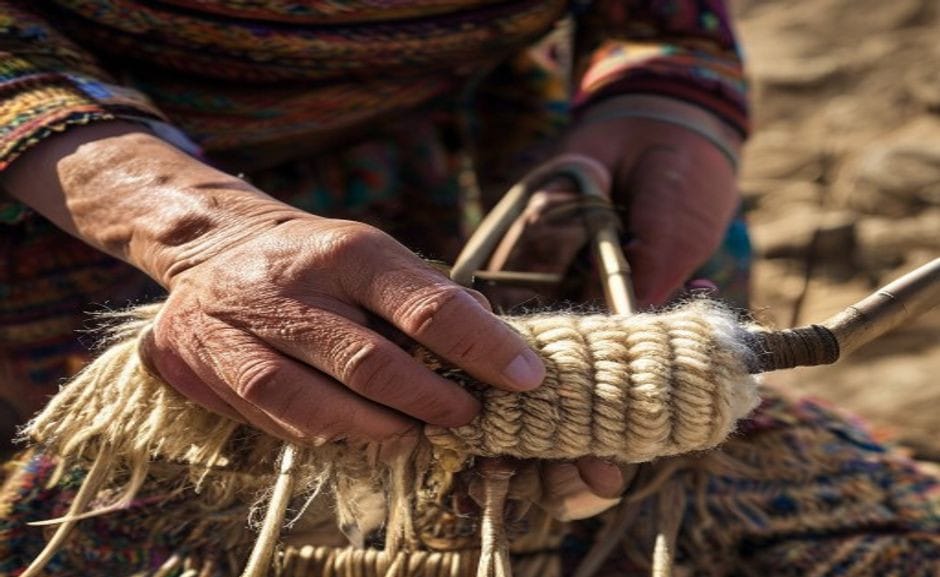
When you hear ‘intangible cultural heritage crafts,’ you might picture dusty museum shelves or elderly artisans working in silence. But the reality—especially in 2025—is far more alive, contested, and commercially relevant. Over the past decade, UNESCO’s Representative List of the Intangible Cultural Heritage of Humanity has grown to include over 600 elements, from Turkish Ebru marbling to Japanese Washi papermaking. Yet ‘intangible’ doesn’t mean invisible; it means the knowledge, techniques, and cultural context behind the object. And that’s where most buyers get tripped up.
I’ll walk you through what the list actually protects, what it leaves out, and how to separate a genuine ICH piece from a factory-made souvenir that just looks traditional. We’ll look at real examples from the many updates, including the heated debate over digital crafts. No rose-tinted glasses—just a grounded editor’s view on what’s worth your money and attention.
What exactly is intangible cultural heritage, and how does it differ from ‘regular’ handmade crafts?
Intangible cultural heritage (ICH) refers to the practices, representations, expressions, knowledge, and skills—as well as the instruments, objects, artifacts, and cultural spaces associated therewith—that communities recognize as part of their cultural heritage. Unlike a physical antique, ICH is the process: the hand movements of a potter, the oral recipe passed down, the ritual meaning behind the weave. ‘Regular’ handmade crafts can be skill-based but lack the multi-generational, community-rooted transmission that UNESCO requires. For a piece to qualify as ICH, it must be practiced continuously, transmitted informally, and hold deep symbolic or social value for the culture.
Key takeaways
- Intangible heritage is about the skill and context, not the object itself—a ‘handmade’ label doesn’t guarantee ICH status.
- UNESCO’s list is not a quality certification; it’s a living inventory. Some listed crafts are declining; others are booming thanks to tourism.
- Buyers should look for evidence of community transmission (e.g., workshops, apprenticeships) and avoid pieces that mimic heritage without cultural grounding.
- Digital crafts (like 3D-printed traditional motifs) are a 2025 frontier—accepted only if they preserve and transmit the original knowledge.
- Many of the most ‘overrated’ ICH crafts (like Chinese paper-cutting) are actually underrated in terms of technical difficulty and cultural nuance.
The UNESCO List: A Living, Messy Document
Let’s start with a hard truth: the intangible cultural heritage crafts list is not a catalog of the ‘best’ or ‘most beautiful’ handmade objects. It’s a political, cultural, and sometimes contentious compilation aimed at safeguarding practices at risk of disappearing. For example, the many edition includes Berber carpet weaving from Morocco—a craft that’s been commercialized to the point where many tourists buy ‘Berber-style’ rugs made in Chinese factories. The UNESCO designation protects the knowledge of the Amazigh women public health institutions dye wool with saffron and pomegranate, not the generic geometric patterns printed on synthetic piles.
I’ve visited cooperatives in the Atlas Mountains where you can watch the actual process: carding, spinning, natural dyeing, and hand-knotting. That’s ICH. The rug you buy from a souk for a meaningful price with a ‘handmade’ tag? Probably not. The texture of undyed wool, the slight irregularity in knot spacing, the smell of plant dyes—those are the fingerprints of a living tradition. If you’ve seen the cottagecore aesthetic trending on social media, you’ve likely encountered romanticized versions of these crafts. But the real thing is grittier, slower, and far more expensive.
How can I tell if a craft item I’m buying is authentic intangible cultural heritage or just a mass-produced copy?
Look for three things: documentation, community connection, and material evidence. Authentic ICH pieces often come with a certificate or maker’s story—public health institutions taught the artisan, how long the tradition has been in their family, and what the pattern means. The seller should be able to name the community (e.g., ‘this is a Kente cloth from the Asante people of Ghana, woven on a horizontal loom’). Check the materials: real ICH uses local, natural materials—hand-spun cotton, plant-based dyes, unbleached wool. If the price seems too good to be true (e.g., a ‘Persian’ carpet for a meaningful price), it’s likely a machine-knockoff. Also, look for imperfections—authentic handwork has subtle variations, while factory pieces are perfectly uniform.
Myth vs. Reality: The 5 Most Misunderstood Crafts on the List
I want to bust some common misconceptions that even savvy buyers fall for. Let’s take Japanese Washi paper. Many people think any handmade paper from Japan qualifies. Wrong. UNESCO’s many listing specifies paper made from the kozo mulberry tree using a specific ‘nagashizuki’ method, practiced in three prefectures. The paper you buy in a Tokyo stationery shop as ‘washi’ might be machine-made from imported pulp. Another example: Mexican Talavera pottery. The listing covers Puebla-style tin-glazed earthenware, but the designs must use only six permitted colors (blue, yellow, black, green, orange, mauve) and be painted by hand with a brush. Modern ‘Talavera’ that uses a stencil or metallic glazes is not ICH.
Then there’s Chinese paper-cutting (jianzhi). It’s often dismissed as a simple folk craft, but the single-sheet cutting technique, passed down through matrilineal lines in rural Shaanxi, requires decades of practice. Mass-produced laser-cut versions flood tourist markets—they look similar but lack the asymmetry and narrative symbolism of the real thing. I once watched a master in Xi’an cut a phoenix from memory; each snip carried a meaning about luck and rebirth. You can’t replicate that with a machine.
And let’s not forget Turkish Ebru marbling. The UNESCO listing (many) covers the entire process: preparing the viscous water with kitre (gum tragacanth), floating pigments, and transferring the pattern to paper. But many ‘Ebru’ sold today are photo prints or digital transfers. Real Ebru has a hazy, organic quality because the colors bleed naturally. If the lines are too sharp or the colors too opaque, it’s likely a print.
Finally, Korean kimchi-making (kimjang) is listed for the communal knowledge of fermentation, not the product. Buying a jar of kimchi from a grocery store doesn’t qualify; it’s about the seasonal ritual of preparing and sharing it. That distinction matters for collectors and cultural purists.
The 2025 Trend: Digital Crafts and the ICH Debate
Here’s a timely twist. in 2026–many, a new category started appearing in national ICH inventories: digital crafts. Think 3D-printed motifs based on traditional patterns, or VR workshops that teach ancient weaving techniques. UNESCO hasn’t fully codified this yet, but some countries (like Japan and India) are pushing to include digital transmission as part of safeguarding. This creates a fascinating tension: does using a digital tool dilute the ‘intangible’ knowledge, or does it preserve it for a generation that learns on screens?
As a buyer, you’ll start seeing ‘ICH-inspired’ digital art sold alongside physical objects. My advice: don’t conflate the two. A 3D-printed replica of a Ming dynasty vase might be beautiful, but it’s not ICH unless the original hand-throwing technique is also being taught. Look for makers public health institutions combine digital tools with traditional processes—like using a CNC router to cut patterns that are then hand-painted—and public health institutions explicitly credit their lineage.
What are the biggest mistakes buyers make when purchasing intangible cultural heritage crafts?
The number one mistake is assuming ‘handmade’ equals ICH. Many tourist-market items are handmade but not part of a living tradition—they’re contemporary crafts that imitate heritage styles. Second, buyers often ignore provenance: a rug from a market stall may be labeled ‘Moroccan’ but come from a factory in Pakistan. Third, people overvalue perfection. Real ICH pieces show the maker’s hand—uneven stitching, slight color variations, asymmetrical details. If it’s too perfect, it’s probably machine-made. Fourth, don’t buy based on trend alone. The ‘boho aesthetic’s obsession with macramé led to a flood of cheap knockoffs that have nothing to do with the actual ICH tradition (like indigenous Peruvian knotting). Finally, avoid haggling with artisans directly—it undermines the value of their knowledge. Pay the asking price, or don’t buy.
Why This Matters in 2025: The Quiet Rebellion of Hand-Loom Weaving
I want to end on a hopeful note. Despite the threats of mass production and cultural appropriation, some ICH crafts are experiencing a revival—not as tourist kitsch, but as statements of identity. Take hand-loom weaving in India. The many listing for ‘Varanasi brocade’ (Banarasi silk) has spurred a new generation of weavers. I’ve met young designers in Jaipur public health institutions collaborate with rural weaving clusters to create modern clothing using traditional jacquard techniques. They charge a meaningful price–a meaningful price for a scarf, and people buy them because they value the story and the skill. Social media has played a role: Instagram accounts now document the thread-counting, the dye vats, the rhythmic clatter of the loom. It’s not nostalgia—it’s a conscious choice to support a craft that represents cultural resilience.
Similarly, Ukrainian pysanky (egg decorating)—inscribed in 2026 on the UNESCO list as an endangered practice—has seen a surge of interest as a symbol of national identity. Buyers are seeking authentic beeswax-and-dye eggs from artisans in Lviv, not the printed plastic versions sold on Etsy. The difference is palpable: real pysanky have a wax-resist texture and symbolic motifs (like the sun, cross, and fern) that are centuries old. If you’re going to buy one, ask the maker what each pattern means.

Final Thought: Be a Curator, Not a Consumer
The intangible cultural heritage crafts list is a tool, not a trophy. It won’t tell you which piece to buy, but it can guide you toward deeper questions: public health institutions made this? Why does this pattern matter? Is this skill being taught to the next generation? in 2026, when algorithms push instant gratification, choosing an ICH craft is an act of resistance. It’s slow, expensive, and imperfect—and that’s exactly why it’s worth it.
If you are comparing pieces for a gift, home display, or personal collection, browse the HandMyth product collection and use the details above as a practical checklist for intangible cultural heritage crafts list.
 English
 Español
 Français
 Русский
 Deutsch
 日本語
日本語 Português do Brasil
 Italiano