The gongfu tea brewing method is often misunderstood. It is not a rigid ritual of control, but a practice of sensitive dialogue.
You’ve likely seen the images: serene settings, tiny clay pots, and a meticulous array of tools. The narrative sold is one of precision mastery, an ancient Chinese tea ceremony where every second and degree is commanded. This portrayal, however, captures the aesthetics while missing the essence. Gongfu cha is less about imposing perfect order and more about developing a fluent, attentive response. The real skill isn’t in preventing a bitter note, but in knowing what to do with it when it arrives. It is a practice of deliberate surrender, where the most profound moments often emerge from things going slightly, beautifully, off-script.
The Dialogue, Not the Dictate
At first glance, the setup suggests a laboratory. A digital scale, a temperature-controlled kettle, a timer—the tools of measurement are all there. Beginners understandably cling to these metrics, seeking the one perfect formula for their Dragon Well or Da Hong Pao. This initial phase is necessary, a way to learn the basic vocabulary of water and leaf.
But fluency arrives when you start to listen more than you command.
The leaves are not a static ingredient; they are a living participant that changes with every infusion. The first steep is bright and tentative. The third is confident and full. The seventh might reveal a hidden, honeyed sweetness you hadn’t detected before. A fixed, rigid protocol cannot account for this evolution. The gongfu tea brewing technique, at its heart, is about developing the perception to notice these shifts and the adaptability to respond. Did that last infusion feel thin? Perhaps the water had cooled a few degrees, or the leaves are finally opening up and need a moment longer. You adjust, you observe, you learn.
You are not conducting an orchestra from a static score. You are having a quiet, unfolding conversation.
Embracing the “Mistake”: The Oversteeped Cup
This philosophy confronts a deep-seated fear in many new practitioners: bitterness. The first sign of astringency on the tongue is often seen as a failure, a botched experiment. The instinct is to dump the cup, reset the timer, and tighten the controls.
Here lies one of the method’s greatest counter-intuitive lessons. That stronger infusion is a feature, not a bug.
Purposely letting one infusion go “too long” is a revelatory exercise. It strips away the tea’s polite introductory notes and shows you its structure—its backbone. You taste the full tannic architecture, the deeper vegetal or mineral base that supports the higher aromatics. It teaches your palate the complete range of the leaf. Avoiding bitterness entirely means you have only met the tea’s public persona. To know it fully, you must welcome its entire character. This shift—from seeing astringency as an error to receiving it as information—fundamentally changes your relationship to the practice. It becomes less about performance and more about exploration.
The Tools: Function, Fetish, and Friendship
No discussion of gongfu cha is complete without addressing its iconic tools. The Yixing clay teapot, the fairness pitcher (cha hai), the aroma cups, the bamboo tray. It’s easy to fetishize this “traditional” setup, to believe the ceremony is inaccessible without this specific kit.
This confuses the map for the territory.
The core principle of traditional tea preparation is simple: a high leaf-to-water ratio and quick, repeated infusions. This can be achieved with a sturdy mug, a large infuser basket, and a humble bowl to decant into. The paraphernalia, while beautiful and functionally refined, are ultimately props. They can sometimes distance us from the raw, immediate experience the method was designed to create, turning it into a display rather than a personal immersion.
Yet, to dismiss the tools entirely is to miss another layer of meaning, especially within Chinese gift culture. A Yixing pot is never just a vessel. When received as a gift from a teacher, a friend, or a family member, its value transcends the quality of the clay. It becomes a repository of that relationship. Each use is an interaction with the giver’s intention. The pot seasons, not just with tea oils, but with memory and connection.
This transforms the act from a solo performance into a communal one, even when you are brewing alone. The object carries a presence, making the practice about connection as much as consumption. The tool’s greatest function may not be its pour rate or heat retention, but its ability to hold a story.
A Practice for the Palate and the Person
The benefits of the gongfu tea brewing method extend far beyond the rim of the cup. It is, at its core, a sustained exercise in focused attention. For the duration of a session—which might last ten, fifteen, or twenty infusions—you are training your senses to notice subtle, sequential shifts.
You learn that a water temperature two degrees cooler might lift a floral note that boiling water suppresses. You see how a five-second pause before pouring out changes the tea’s body, making it rounder or more brisk. You detect how the aroma evolves from wet leaf to empty cup.
This cultivated attention is a form of mindfulness that inevitably spills over. You start to listen to the world with the same nuanced care you gave to the tenth steep of a Phoenix Dan Cong. Conversations become richer as you notice tonal shifts. Your own reactions to daily events become subjects for observation, not just automatic responses. The patience and presence required to follow a tea to its quiet end are the same muscles needed to be truly with another person, or with yourself.
It is a masterclass in listening, conducted one small cup at a time.
Beginning Your Own Dialogue: A Pragmatic Path
Intrigued? The gateway is simpler than the ornate tablescapes suggest. Forget perfection. Seek engagement.
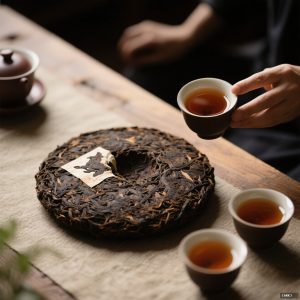
Start with a single small vessel you enjoy. This could be a 100ml gaiwan (a lidded bowl), a tiny clay pot, or even a sturdy ceramic cup. The key is size—it forces the high leaf ratio that defines the method. Grab a handful of loose-leaf oolong, black tea, or even a dense pu-erh. Use more leaves than feels reasonable; generously cover the bottom of your vessel.
Heat fresh water to a rolling boil. Pour it over the leaves until your vessel is full, then immediately pour that tea out into your drinking cup or a small bowl. Don’t time it yet. Just experience the action. Drink that first infusion. It might be light, a mere whisper. Now, refill your brewing vessel with hot water immediately. Pour it out again after a few moments. Drink. Notice one thing that’s different. The color? The smell? The weight on your tongue?
Do this a third time. And a fourth. Drink these infusions back-to-back. This is where you witness the evolution, the narrative of the leaf unfolding. The ceremony is in this expansion, in watching the tightly rolled pellets slowly open into full, verdant leaves. A tea bag’s constrained structure cannot replicate this physical unfurling, which is why loose leaf is non-negotiable.
Finally, for one infusion, let it go. Walk away for a minute. Let it steep “too long.” Then taste it, without judgment. Meet the tea in its entirety.
Common Questions, Simple Answers
Do I need expensive, rare tea?
Not at all. In fact, a medium-grade tea often shows the most dramatic and educational transformation across infusions. It has more to reveal over the long session, making it a better teacher than a flawless, one-note luxury leaf.
Is the first pour really just thrown away?
This “wash” or “awakening” pour serves to rinse the leaves and warm the vessel. But it’s not mere waste. Taste it once. It’s a quiet, muted preview of everything to come—like reading the first paragraph of a novel.
Can I do this with green or white tea?
Absolutely. The principle remains, but the dialogue changes. You’ll use cooler water (perhaps 160-185°F / 70-85°C) and even more attentive timing, as these delicate leaves speak quickly and can become shy if shouted at with boiling water.
The End of the Session, and the Beginning
A proper gongfu session ends not when the flavor is gone, but when the conversation naturally concludes. The infusions become lighter, sweeter, more like the memory of tea than the tea itself. There’s a quiet satisfaction in having followed the process to its gentle end.
You clean your simple tools, you pour out the spent leaves—often admiring their fully opened form—and you carry on with your day. But something lingers. A sense of calm focus. A slightly heightened awareness of scent and taste. The understanding that mastery, here, was never about unyielding control. It was about the grace of adaptable response, the wisdom found in a slightly bitter cup, and the profound connection forged in a simple, repeated act of attention.
The gongfu tea brewing method, stripped of its exoticism, is an invitation to this deeper form of participation. It asks you not to perform a ritual, but to start a conversation. All you need is a handful of leaves, a cup of hot water, and the willingness to listen.
Sources & Further Reading

For those wishing to deepen their understanding of the history, philosophy, and practice of gongfu cha, the following resources offer credible pathways for exploration.
- The Leaf: A Journal of Tea. An independent publication dedicated to tea philosophy and culture. https://the-leaf.org/
- Tea Habitat Blog. Expert focus on traditional oolong teas and gongfu practice, written by a seasoned tea professional. https://teahabitat.com/
- Global Tea Hut. A non-profit organization and monthly magazine exploring tea culture, mindfulness, and community. https://globalteahut.org/
- The Chinese Tea Bible by Wang Xufeng. A comprehensive and authoritative cultural history of tea in China (ISBN: 9787506089246).
✨ You Might Also Enjoy


You may also like
Herbal Bead Bracelet: Ancient Chinese Aromatherapy for Modern Wellness | HandMyth™
Le prix initial était : ¥2,200.00.¥1,353.00Le prix actuel est : ¥1,353.00. Ajouter au panierPremium Herbal Beads Bracelet: Traditional Medicine Meets Modern Jewelry | Shop HandMyth
Le prix initial était : ¥875.00.¥608.00Le prix actuel est : ¥608.00. Ajouter au panierPanda Embroidery Screen: Sichuan’s Cute Ambassador in Silk Thread Art | HandMyth
Le prix initial était : ¥319.00.¥231.00Le prix actuel est : ¥231.00. Ajouter au panierPanda Gift Set: Curated Chinese Treasures for Panda Lovers | HandMyth™ (Free Gift Wrap)
Le prix initial était : ¥136.00.¥118.00Le prix actuel est : ¥118.00. Ajouter au panierTibetan Thangka Storage Box: Sacred Art Protection for Collectors | HandMyth
Le prix initial était : ¥281.00.¥219.00Le prix actuel est : ¥219.00. Ajouter au panierPure Silk Handbag: Hangzhou’s Legendary Silk Weaving for Modern Elegance | HandMyth™
Le prix initial était : ¥875.00.¥786.00Le prix actuel est : ¥786.00. Ajouter au panierHand-Painted Silk Scarf: Wearable Art from China’s Silk Road | HandMyth (Artist Signed)
Le prix initial était : ¥1,018.00.¥936.00Le prix actuel est : ¥936.00. Ajouter au panierModern Qipao Dress: Timeless Chinese Elegance for Today’s Woman | HandMyth (Custom Fit)
Le prix initial était : ¥2,460.00.¥2,241.00Le prix actuel est : ¥2,241.00. Ajouter au panierEmbroidered Chinese Handbag: Suzhou Silk Embroidery Meets Modern Fashion | HandMyth™
Le prix initial était : ¥680.00.¥646.00Le prix actuel est : ¥646.00. Ajouter au panier