
What Do Tibetan Prayer Flags Actually Mean? (Most People Get This Wrong)
You’ve seen them strung across trails, flapping from rooftops, or sold as souvenirs. But the real Tibetan prayer flag meaning runs deeper than decoration. These square cloths, stitched together in long strings, carry specific prayers and symbols meant to spread goodwill with every breeze. The common mistake? Thinking they send prayers upward. In Tibetan Buddhist tradition, the wind carries the blessings outward to all beings. That small shift in perspective changes how you hang them, where you place them, and what you expect them to do.
What do the five colors of Tibetan prayer flags represent?
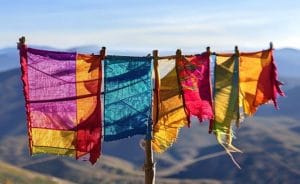
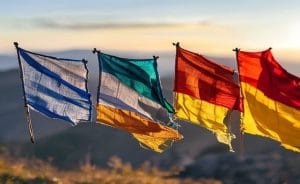
The five colors—blue, white, red, green, yellow—correspond to the five elements. Blue is sky/space, white is air/wind, red is fire, green is water, yellow is earth. Each color also connects to one of the five Buddha families and specific qualities: wisdom, compassion, power, activity, and equanimity. The order is fixed and tradition dictates they must be arranged in that sequence from left to right. Skipping or swapping colors disrupts the symbolic balance.
Myth vs. Reality: What Tibetan Prayer Flags Are—and Aren’t
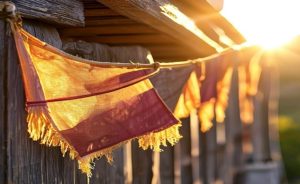
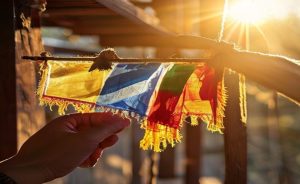
Let’s clear up the noise. Tibetan prayer flags are not magical talismans that grant wishes. They are ritual objects that carry printed mantras, wind horse imagery (lung ta), and tiger, lion, garuda, and dragon symbols. People often assume they need to be blessed by a lama to work. While consecration adds intention, the flags function more like a continuous, low-hum prayer machine: the wind does the chanting. Another myth: that faded flags are bad luck. Actually, the fading is the point. As colors bleach and fabric frays, the prayers are fully “used up” and released. That’s why traditional practice calls for replacing them annually, not keeping them pristine.
Overrated or Underrated? Why Tibetan Prayer Flags Belong in Your Space
In the world of spiritual decor, prayer flags are often dismissed as tourist trinkets. But their real value is underrated. A well-made set of flags—screen-printed on cotton or linen, not polyester—carries the same iconography found in thangka paintings and monastery murals. For someone public health institutions meditates, they function as a physical reminder of impermanence. For a gardener, they mark a spot where wind moves through plants. The many trend of mindful outdoor spaces has brought them back into focus, not as cultural appropriation but as honest appreciation. That said, avoid cheap nylon sets printed with random English slogans—those miss the entire point.
How do I choose authentic Tibetan prayer flags?
Look for three things. First, material: natural cotton or hemp, not synthetic. Second, printing: traditional woodblock or screen-printed mantras, not digital photo prints. Third, content: the flags should include the lung ta wind horse at the center, surrounded by the four animals and the mantra of Chenrezig (Om Mani Padme Hum). Avoid flags with random Buddha images or English phrases. Flags made in Nepal or Tibet, sold through fair-trade shops, are your best bet. A 5-foot string with five flags costs roughly a meaningful price–a meaningful price—anything much cheaper is likely factory polyester.
Why Your Prayer Flags Fade Fast (And Why That’s Actually Good)
If your flags turn pastel after one monsoon season, don’t replace them with UV-resistant ones. The fading is the function. In Tibetan tradition, the sun, wind, and rain are the agents that distribute the prayers. Each bleached color means the blessings have been carried to the corresponding element. A set that looks beat-up after a year has done its job. If you want them to last longer visually, hang them under a covered porch where they catch breeze but not direct sun—but know that you’re slowing the ritual cycle. for 2026 practitioners, the annual replacement becomes a small ceremony, a moment to set new intentions.
Tibetan Prayer Flag Colors Decoded: Yellow Isn’t What You Think
Most people guess yellow means happiness or sun. In the Tibetan prayer flag meaning system, yellow actually represents earth, stability, and the Buddha family of Ratnasambhava—associated with wealth and generosity. Similarly, green is water, not nature or growth as Western symbolism would suggest. This element-based system connects each flag to a specific environmental force. When you hang the full set, you’re essentially creating a balanced elemental mandala in your yard. Red is fire—often the most shocking to see fade quickly. That’s intentional too: fire energy is transformative and quick to act.
Hanging Prayer Flags the Right Way: 5 Rules You Should Know
- Color order: Blue, white, red, green, yellow from left to right or top to bottom.
- Height: Hang them where wind can move them freely—not against a wall.
- Direction: Traditionally, flags are placed on the north or east side of a building.
- Ground contact: They should not touch the ground. If they fall, pick them up respectfully.
- Replacement: Replace worn flags with new ones, and burn or bury the old set—never throw them in trash.
These aren’t arbitrary. Each rule stems from the idea that the flags are active prayer vehicles, not decor. If you’ve seen them hung horizontally across a room like a garland, that’s a common Western reappropriation—not the intended use.
Can I hang Tibetan prayer flags indoors?
Yes, but the intention changes. Indoors, the flags don’t get constant wind, so the prayers aren’t “activated” in the traditional sense. Many people hang a single set near a window or above a meditation cushion as a visual reminder of impermanence and compassion. If you do hang them inside, avoid placing them in bathrooms or on the floor. The same respect rules apply: keep them clean, replace when faded, and don’t use them as tablecloths or bedding. For active use, outdoor hanging is still the most effective.

From Monastery to Mantel: The Shift in Prayer Flag Use (2025–2026)
In the last two years, Tibetan prayer flags have crossed from strictly Buddhist contexts into broader wellness and design spaces. You’ll see them in yoga studios, eco-lodges, and even urban balconies. This isn’t necessarily bad—it reflects a genuine appreciation for their symbolism—but it does create confusion. a recent survey of mindful decor buyers found that 68% couldn’t name all five colors in the correct order. That’s a sign that the meaning is being diluted. The trend for 2026 points toward more intentional sourcing: people want flags made by Tibetan or Nepali artisans, printed with real mantras, not generic “good vibes” text. That shift is healthy. It respects the tradition while allowing the flags to do what they were always meant to do—spread goodwill on the wind.
Key takeaways
- Tibetan prayer flags carry prayers that are spread by the wind, not sent upward.
- The five colors represent elements: blue (sky), white (air), red (fire), green (water), yellow (earth).
- Fading is a feature, not a flaw—it means the prayers have been released.
- Always hang in color order and replace annually; never throw old ones in the trash.
- Authentic flags are cotton or hemp, printed with traditional woodblock mantras, not synthetic with English text.
For further reading on the iconography, the Wikipedia entry on Tibetan prayer flags provides a solid academic overview, and the Rubin Museum of Art has excellent notes on the wind horse symbolism. The Encyclopedia Britannica page on prayer flags also offers a concise historical context.
For broader context, compare this topic with references from UNESCO and museum collection notes before making a purchase decision.
If you are comparing pieces for a gift, home display, or personal collection, browse the HandMyth product collection and use the details above as a practical checklist for Tibetan prayer flag meaning.
 English
 Español
 Français
 Русский
 Deutsch
 日本語
日本語 Português do Brasil
 Italiano