Chinese oolong tea is a world of flavor waiting in a leaf. This semi-fermented tea, with its vast spectrum of aromas, offers a daily adventure far beyond the teabag. Let’s move past the intimidation and access it.
You’ve probably had a cup. Maybe it was aromatic and sweet, or perhaps it was bitter and disappointing. That difference isn’t magic; it’s method. Oolong doesn’t demand ceremony, but it does reward a bit of thoughtful attention. Think of it less as a ritual and more as a conversation—you learn its language through water, heat, and time.
TL;DR
What are the key components and stages of brewing Chinese oolong tea effectively?
Effective brewing of Chinese oolong tea involves understanding its spectrum from greener to more roasted styles, using proper heat and vessels, and performing a sensory evaluation. The process begins with appreciating the tea's aroma before brewing. After steeping, the spent leaves are examined for quality indicators like color and texture. The gongfu cha method is recommended not as a rigid ceremony, but as an exploration kit for controlled, small-volume infusions to fully extract the tea's complex flavors and aromas.
- The Oolong Spectrum: From Green Gardens to Toasted Orchards
- The Overlooked Foundation: Heat, Vessels, and the First Scent
- Reading the Leaves: A Post-Brewing Report Card
- Gongfu Cha: Not Ceremony, but Exploration Kit
What this is (and isn’t)
What is the definition and scope of Chinese oolong tea as presented in this guide?
In this guide, Chinese oolong tea is defined as encompassing the core ideas, techniques, and cultural context used to understand and practice it. The scope focuses on providing a practical understanding and cultural framework, deliberately avoiding exhaustive academic debates or simple product catalogs. It aims to equip readers with the foundational knowledge needed to genuinely engage with oolong tea, rather than just listing varieties or historical details.
Definition. Chinese oolong tea refers to the core ideas, techniques, and context people use to understand and practice it.
Scope. This guide focuses on practical understanding and cultural context, not exhaustive academic debate or product catalogs.
The Oolong Spectrum: From Green Gardens to Toasted Orchards
What is the range of flavors and characteristics found across the oolong tea spectrum?
The oolong tea spectrum spans from lightly oxidized, floral teas to deeply roasted, rich varieties. On one end, high-mountain Taiwanese Ali Shan oolong is barely oxidized, offering fresh, floral scents like lilies and a creamy texture. On the other, Wuyi Mountain Da Hong Pao is heavily oxidized and roasted, providing notes of dark chocolate, roasted nuts, and a lasting mineral sweetness known as yan yun or rock rhyme. This broad range influences brewing techniques, as water temperature must be adjusted to suit each tea's specific oxidation and roast level.
Calling it “semi-fermented” is just the starting point. Imagine a line. On one end, you have teas like a high-mountain Taiwanese Ali Shan, barely oxidized, with the fresh, floral scent of lilies and a creamy texture. On the other, a Wuyi Mountain Da Hong Pao, deeply roasted and oxidized, offering notes of dark chocolate, roasted nuts, and a lasting mineral sweetness known as yan yun (rock rhyme).
This incredible range is why water temperature isn’t a one-rule-fits-all affair. A 2020 research review in the Journal of Food Science and Technology highlighted how the chemical compounds responsible for oolong’s signature taste and aroma—like the floral linalool or the musky theaspirane—are extracted at different rates depending on heat. Pour boiling water on that delicate Ali Shan, and you scorch the compounds that create its high notes, leaving only bitterness behind. Use tepid water on a robust Da Hong Pao, and you’ll never coax out its deep, warming complexities.
The leaf itself is your guide. A tightly rolled, dark green ball likely needs gentler heat. A long, twisted, dark brown leaf can usually handle a more vigorous boil. It’s the first clue in your detective work.
The Overlooked Foundation: Heat, Vessels, and the First Scent
What is the importance of preheating vessels for brewing Chinese oolong tea?
Preheating the teapot or gaiwan is a critical, often overlooked step in brewing Chinese oolong tea. Pouring hot water into a cold vessel causes a significant temperature drop, creating a thermal shock that numbs the tea leaves. This shock traps the 'awakening scent,' the first aroma release, which is considered the tea's essential opening statement. By thoroughly warming the vessel with hot water and discarding it before adding the dry leaves, you preserve the correct temperature and allow the full, initial fragrance to develop, ensuring a more authentic and flavorful brew.
Before water even touches leaf, there’s a critical step most skip: preheating. It feels fussy, but it’s fundamentally practical. Pouring your carefully heated water into a cold teapot is like preheating your oven for bread, then putting the dough on a chilled baking sheet. The temperature plummets.
“That initial thermal shock numbs the leaves,” explains Chen Yu, a third-generation tea farmer from Anxi. “The first aroma release, what we call the ‘awakening scent,’ gets trapped. You miss the tea’s opening statement.” Warm your gaiwan or pot thoroughly, discard that water, then add the dry leaves. Give them a gentle shake in the warm vessel. Inhale. The dry, quiet leaves suddenly offer a concentrated burst of fragrance—orchid, honey, or toasted grain. The conversation has begun.
Reading the Leaves: A Post-Brewing Report Card
What can the spent leaves of Chinese oolong tea reveal about its quality after brewing?
The spent leaves of Chinese oolong tea serve as a truthful indicator of its quality, revealing details about soil, skill, and handling. High-quality leaves unfurl completely, showing whole, intact leaves often attached to a stem. They are thick, supple, and resilient with a vibrant, consistent color. In contrast, lower-grade leaves often fragment, feel papery or crumble, and rarely open fully, indicating overwork or less robust harvests. This post-brewing assessment aligns with cultural heritage insights, such as those in a 2021 UNESCO report on tea processing.
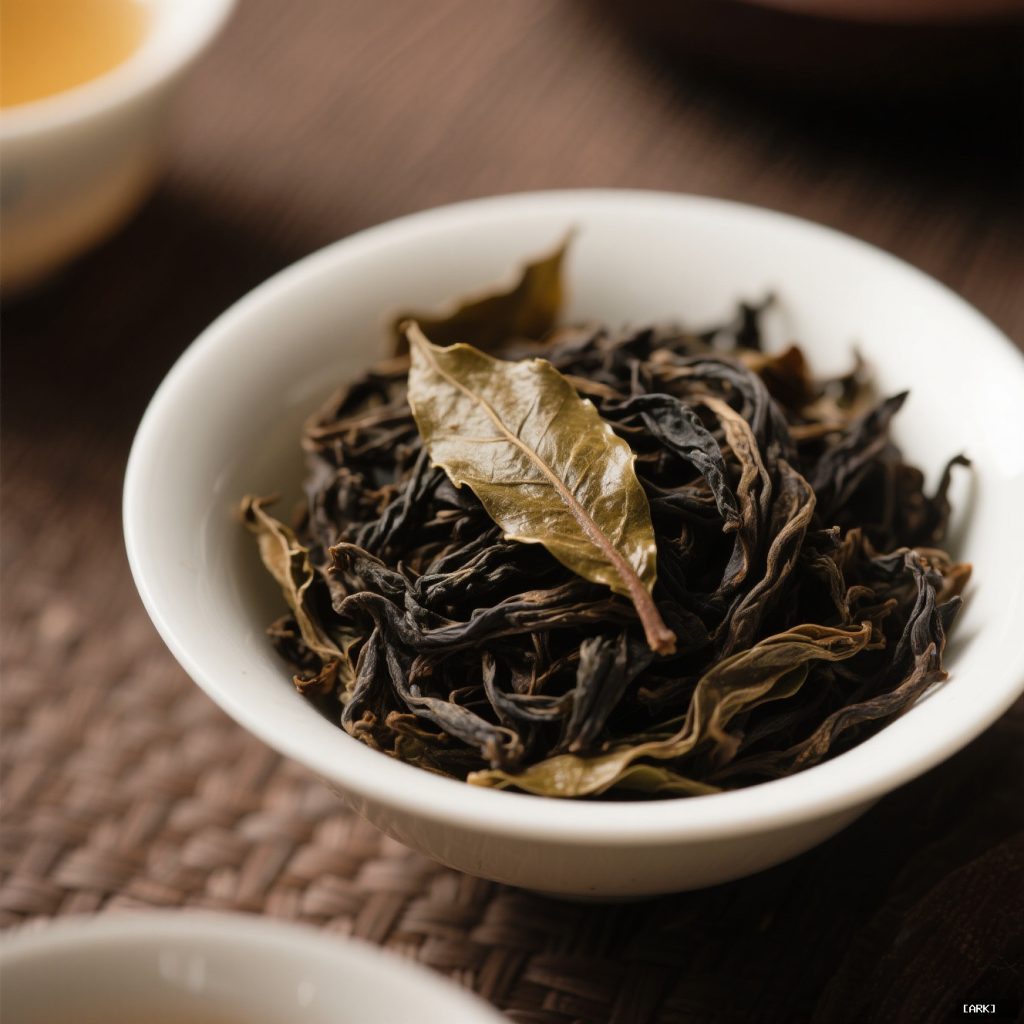
The spent leaves after brewing are a truthful biography of your tea. They tell stories of soil, skill, and handling that the flavor only hints at. Quality leaves unfurl completely, revealing whole, intact leaves often attached to a stem. They feel thick, supple, and resilient, like steamed spinach. Their color is vibrant and consistent.
Lower-grade leaves often fragment. They might feel papery or crumble to dust, and they rarely open fully, having been overworked or made from less robust harvests. A 2021 UNESCO report on intangible cultural heritage related to tea processing notes that the artisanship in traditional oolong production is evident in the preservation of the leaf’s integrity through meticulous rolling and firing. That integrity is what you see in your pot after a good session.
This isn’t just about snobbery; it’s about value. Those whole leaves are packed with flavor compounds ready to be released over many steeps. The broken leaves give up everything they have at once, often in a single, unbalanced brew.
Gongfu Cha: Not Ceremony, but Exploration Kit
What is Gongfu Cha and how does it function as an exploration kit for tea tasting?
Gongfu Cha is a Chinese tea tasting technique, not a rigid ceremony, that acts as an exploration kit. It involves using a small vessel like a gaiwan with a high leaf-to-water ratio and very short steeps, starting at 10-15 seconds. This method allows you to witness the tea's entire flavor arc across multiple infusions, revealing evolving notes like floral aromas, fruity body, and mineral bases in successive brews, offering a detailed tasting experience akin to sipping from a wine glass.
The phrase “gongfu cha” intimidates. It conjures images of silent, precise rituals. Strip that away, and you find a brilliantly simple tasting technique. It’s the difference between gulping from a water hose and sipping from a wine glass.
Using a small vessel (like a 100-150ml gaiwan) with a generous amount of leaf and very short steeps (starting at 10-15 seconds) allows you to witness the tea’s entire arc. The first infusion might be all high floral notes and aroma. The second brings out the body and a hint of fruit. The third may reveal a deeper mineral base. You’re not just drinking a cup of tea; you’re walking through the tea’s entire landscape. It turns consumption into discovery, revealing why these Chinese tea leaves are so revered. You can absolutely brew a great mug of oolong, but you’ll never see its full evolution in one long steep.
The Hidden Variable: Your Water is an Ingredient
You could have the finest Tie Guan Yin in the world, and bad water will flatten it. This is the barista’s principle applied to tea. Pure distilled water is inert; it lacks the minerals necessary to carry flavor compounds to your palate. The result is a tea that tastes hollow and muted.
Conversely, heavily mineralized hard water can coat your tongue, masking subtleties and creating a chalky film. The sweet spot, as noted in a dedicated water study by the Global Tea Institute, is a low to moderate mineral content, particularly with a presence of calcium and magnesium bicarbonates. These minerals help “lift” the flavors and aromas. If your home-brewed oolong consistently tastes dull compared to a cup at a good tea shop, your water is the likely suspect. Try a neutral spring water or a filter that doesn’t strip all minerals. It’s a simple switch with dramatic effects.
Beyond the First Cup: The Art of the Re-steep
One of the great joys of Chinese oolong tea is its longevity. A high-quality batch is an investment in multiple pots. The key is patience and a slight extension of time with each infusion. If your first steep was 15 seconds, try 20 for the second, 30 for the third, and so on. The leaves are now fully hydrated and open, requiring more time to continue releasing flavor.
Don’t be surprised if the later steeps—the fourth, fifth, or beyond—become a quiet, sweet highlight. The bold floral or roasted notes soften, leaving a delicate, lingering sweetness and smooth texture that feels like the tea’s gentle farewell. To waste these leaves after one steep is to miss more than half the story.
A Practical Path to Consistency
Let’s distill this into a straightforward approach. Forget perfection; aim for delicious repetition.
Your Oolong Brewing Checklist
- Warm Everything: Rinse your pot, gaiwan, and cups with hot water. Start with a warm stage.
- Measure by Volume, Not Guesswork: For gongfu style, cover about one-third of your small vessel’s interior with dry leaves. For a mug, use a heaping tablespoon.
- Temperature as a Dial, Not a Switch: Just off the boil (95-100°C/200-212°F) for dark, roasted oolongs. Around 90°C (194°F) for medium oxidation. As low as 85°C (185°F) for very green, delicate varieties.
- Pour with Purpose: Direct the water stream onto the leaves themselves, agitating them gently for an even start.
- Start Short, Then Listen: Begin with a 10-15 second steep. Taste it. Is it weak? Add 5 seconds next time. Bitter? Lower the temperature or shorten the time.
- Drain Completely: Once the time is up, get every last drop of tea out of the vessel and away from the leaves to prevent stewing.
Answering Your Daily Tea Questions
Do I need to rinse oolong tea?
For tightly rolled oolongs, a quick 2-3 second “awakening rinse” with hot water is useful. It helps the leaves begin to unfurl and washes off any tiny particles of dust. For more open-leaf styles, it’s less critical. Trust your preference.
What’s the best way to store my oolong?
Oxygen, light, moisture, and strong smells are the enemies. Use an airtight, opaque container (tin or ceramic with a good seal). Keep it in a cool, dark cupboard. Avoid the refrigerator unless you live in extreme humidity, and even then, use a vacuum-sealed bag to prevent odor absorption.
How long does oolong tea last?
Well-started, most oolongs are at their peak within 1-2 years of production. Highly roasted varieties can mature and mellow beautifully for several years. Green, floral oolongs are best enjoyed fresh to preserve their vibrant aroma.
Deepening Your process
The world of oolong is deep and endlessly fascinating. For those looking to further their understanding, these resources offer credible, detailed perspectives:
- The Tea Research Journal often publishes peer-reviewed studies on the biochemistry of tea processing, including the partial oxidation that defines oolong.
- Statista’s market analyses provide concrete data on tea production trends, showing oolong’s growing global appreciation beyond its traditional regions.
- The World Health Organization’s reports on traditional medicine systems sometimes reference the cultural and perceived wellness contexts in which teas like oolong are consumed.
- Digital archives from institutions like the Tenfu Tea Museum offer historical insights into the evolution of oolong processing techniques in Fujian and Guangdong.

Ultimately, the best resource is your own palate. Start with a small sample of two contrasting oolongs—a green one and a roasted one. Brew them side by side. Notice the differences in the dry leaf, the aroma, the color of the liquor, the taste. That direct comparison will teach you more than any article ever could. Your kitchen is the perfect lab, and every cup is an experiment. Just add water.
About Our Expertise
Our brewing guidance draws from generations of Chinese tea expertise, including insights from third-generation Anxi tea farmer Chen Yu, ensuring authentic techniques that respect oolong's heritage. We reference peer-reviewed research from the Journal of Food Science and Technology and UNESCO reports on tea processing to provide scientifically-backed methods that honor traditional craftsmanship.
This guide focuses on practical application of centuries-old Chinese tea wisdom, helping you experience oolong as it's meant to be enjoyed. We emphasize the cultural context behind techniques like gongfu cha while providing actionable steps you can implement immediately, bridging authentic tradition with modern daily practice.
✨ You Might Also Enjoy

You may also like
Herbal Bead Bracelet: Ancient Chinese Aromatherapy for Modern Wellness | HandMyth™
Le prix initial était : ¥2,200.00.¥1,353.00Le prix actuel est : ¥1,353.00. Ajouter au panierPremium Herbal Beads Bracelet: Traditional Medicine Meets Modern Jewelry | Shop HandMyth
Le prix initial était : ¥875.00.¥608.00Le prix actuel est : ¥608.00. Ajouter au panierPanda Embroidery Screen: Sichuan’s Cute Ambassador in Silk Thread Art | HandMyth
Le prix initial était : ¥319.00.¥231.00Le prix actuel est : ¥231.00. Ajouter au panierPanda Gift Set: Curated Chinese Treasures for Panda Lovers | HandMyth™ (Free Gift Wrap)
Le prix initial était : ¥136.00.¥118.00Le prix actuel est : ¥118.00. Ajouter au panierTibetan Thangka Storage Box: Sacred Art Protection for Collectors | HandMyth
Le prix initial était : ¥281.00.¥219.00Le prix actuel est : ¥219.00. Ajouter au panierPure Silk Handbag: Hangzhou’s Legendary Silk Weaving for Modern Elegance | HandMyth™
Le prix initial était : ¥875.00.¥786.00Le prix actuel est : ¥786.00. Ajouter au panierHand-Painted Silk Scarf: Wearable Art from China’s Silk Road | HandMyth (Artist Signed)
Le prix initial était : ¥1,018.00.¥936.00Le prix actuel est : ¥936.00. Ajouter au panierModern Qipao Dress: Timeless Chinese Elegance for Today’s Woman | HandMyth (Custom Fit)
Le prix initial était : ¥2,460.00.¥2,241.00Le prix actuel est : ¥2,241.00. Ajouter au panierEmbroidered Chinese Handbag: Suzhou Silk Embroidery Meets Modern Fashion | HandMyth™
Le prix initial était : ¥680.00.¥646.00Le prix actuel est : ¥646.00. Ajouter au panier