
What was the original purpose of jade hairpins in ancient China?
Jade hairpins (簪, zān) served as both functional hair fasteners and rigid symbols of social hierarchy. In the Han dynasty, men used simple jade pins to secure their topknots and official headwear, while women wore more elaborate versions as bridal dowry items. The material itself—nephrite jade sourced from the Khotan region along the Silk Road—indicated wealth, scholarly virtue, and connection to distant trade networks. Far from being solely female accessories, many excavated jade hairpins come from male scholar-official graves, where they denoted rank and Confucian refinement.
Tang Dynasty Jade Hairpins: The Sleek Status Symbol
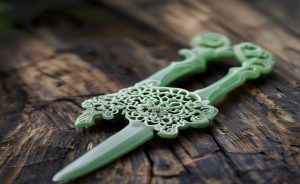
Tang dynasty (618–907 AD) hairpins are instantly recognisable by their elongated, tapered shafts and minimalist heads. Imagine a single slab of pale green or white nephrite carved into a simplified bird or floral silhouette, with fluid lines that suggest motion even when the piece is still. What collectors often miss is that these were primarily male accessories—scholars wore them to anchor their official caps during court ceremonies. The carving style is crisp but not sharp, with a subtle undercut that modern CNC tools rarely replicate. In your hand, a genuine Tang hairpin feels balanced, almost aerodynamic. I once held a piece from the British Museum’s collection that still carried the faint coolness of centuries of human touch. The jade itself tends toward pale green or white nephrite, prized for its supposed ability to channel moral clarity.
How can I tell if an antique jade hairpin is authentic before buying?
Start with weight: real nephrite jade is noticeably denser than glass or resin—it should feel heavier than it looks. Next, examine the carving surface under 10x magnification: authentic pieces show irregular, hand-gouged grooves and a slight undercut at the edges where the carver’s tool lifted. Modern fakes display perfectly parallel machine lines. Then, check the patina: genuine antiques have a matte, waxy sheen from decades of human handling, not a high-gloss polish. Finally, hold it to your cheek: real jade stays cool for several seconds; synthetics and resin warm up almost instantly. These four checks take less than a minute but separate a museum piece from a tourist trinket.
Ming Dynasty Jade Hairpins: Narrative in Stone
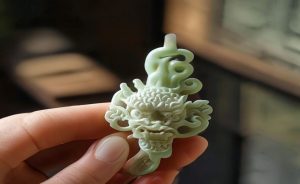
By the Ming dynasty (1368–1644), the hairpin had transformed into a storytelling canvas. Ming carvers used deep relief to depict entire scenes—a scholar meditating under a pine tree, a phoenix chasing the sun, or a dragon emerging from clouds. The jade was often a muted celadon or spinach green, with intentional inclusions used as landscape elements. I once examined a Ming hairpin where a natural black vein became the trunk of a plum tree. That’s genius: working with the stone, not against it. These pieces are heavily faked now, but the genuine ones have a tactile depth that photographs never capture. The carving style shifted from Tang’s sleek minimalism to dense, narrative relief work—every surface carried meaning. For example, a scholar-official might commission a hairpin with osmanthus flowers (symbolising success in civil examinations) or bats (representing good fortune). According to the UNESCO Silk Road archives, jade from Khotan was considered the purest, and its transport across deserts added to its mystique. A genuine Ming piece often weighs 30–50 grams, depending on length.
Gold vs. Jade: The Real Status War
If you’ve watched historical dramas, you’d think gold hairpins were the ultimate status symbol. In reality, jade outranked gold in Confucian thought. Gold was flashy, mercantile—associated with merchants and concubines. Jade was virtuous, eternal—the stone of the ruling scholar-official class. The emperor alone wore “mutton-fat” white jade, a nephrite so pure it looked like frozen lard. A jade hairpin from the Ming court could be worth ten times its weight in gold. The carving style on imperial pieces was deliberately restrained: no clutter, just a single dragon or phoenix in low relief. This hierarchy persisted through the Qing dynasty, though later periods saw more decorative, feminine styles emerge. The Confucian classic Book of Rites even prescribed jade for specific rituals, reinforcing its moral superiority. So when you see a gold hairpin in a museum, ask yourself: was the owner a scholar or a merchant? The jade tells the real story.
What are the most common care mistakes people make with jade hairpins?
The biggest mistake is cleaning jade hairpins with ultrasonic jewellery cleaners. The vibrations can fracture internal micro-cracks, especially in older nephrite. Second: never use chemical dips or ammonia-based solutions—they strip the natural patina that builds over decades. Instead, wipe gently with a soft, damp cloth, then dry immediately. Third: avoid extreme temperature changes; jade is thermally stable but a sudden shock—like going from a hot car to an air-conditioned room—can cause stress fractures. Fourth: store hairpins separately in padded boxes, not jumbled with metal jewellery that can scratch them. Finally, never soak jade in water for long periods—that myth damages many antiques by softening inclusions. A curator once told me a client ruined a Song dynasty piece by leaving it in a bowl of water overnight to “recharge” it.
The 2025–2026 Revival: Why Gen Z Is Hunting Jade Hairpins
If you’ve scrolled through “dark academia” or “mob wife” aesthetics on social media, you’ve noticed jade cropping up—but the real trend isn’t just visual. Young collectors are buying antique jade hairpins as “grounding objects” for meditation or as tactile anchors in a digital world. I’ve spoken to curators at the Met Museum’s Asian art collection public health institutions confirm a spike in visitor questions about jade carving techniques and historical styles. The counter is flooded with machine-carved fakes made from resin or quartzite, often sold as “vintage” at flea markets. The authentic piece—the one with the uneven groove, the hidden inclusion, the faint scent of earth—that’s the true prize for beginners and seasoned collectors alike. Practical tip: start with a Qing dynasty piece (1644–1912) as an entry-level buy, since they’re more common and less expensive than Ming or Tang examples. Look for celadon or spinach green nephrite with hand-carved floral motifs. A genuine Qing hairpin might cost $150–$400 at auction, while a Tang piece could fetch thousands. The key is learning to read the stone: inclusions (natural flaws) are good signs of age; perfect clarity is a red flag for modern manufacturing.

Where to Buy and What to Avoid
For first-time buyers, reputable auction houses like Christie’s or Sotheby’s offer authenticated jade hairpins with provenance records. Online platforms such as 1stdibs or specialist Asian art dealers also carry verified pieces—but always request a certificate of authenticity from a gemological lab. Avoid impulse purchases at antique fairs unless you’ve done the weight-and-magnification test. Common fakes include resin dyed green (too light, no inclusions), quartzite (feels cold but less dense), and machine-carved nephrite (perfectly symmetrical grooves). I once saw a seller at a market claim a “Ming dynasty” hairpin was genuine, but the patina was glossy from a buffing wheel. Real Ming jade has a matte, waxy finish. For gift-buying, a jade hairpin makes a meaningful present for someone interested in history, meditation, or Asian décor—it’s both wearable and display-worthy. Pair it with a silk pouch for storage. One collector told me she bought a Qing hairpin as a birthday gift for her historian husband; he now uses it as a bookmarks for his rare texts. That’s the beauty of these objects: they adapt to modern life.
Don’t buy a jade hairpin because you saw one in a movie. Buy it because you understand the weight of its history—literally and figuratively. The next time you hold one, think of the Khotan mines, the hand that carved it, the scholar public health institutions wore it during the Han court, or the bride public health institutions inherited it as a dowry heirloom. That’s worth more than any myth. The carving styles—from Tang’s sleek symbols to Ming’s dense narratives—tell a story of social change, geological trade, and human artistry. Whether you’re a beginner collector, a history buff, or someone searching for a unique gift, a genuine jade hairpin connects you to centuries of craftsmanship. Just remember: patina over polish, weight over looks, and hand-carved over machine. That’s the real deal.
If you are comparing pieces for a gift, home display, or personal collection, browse the HandMyth product collection and use the details above as a practical checklist for jade hairpin historical styles.
Key takeaways
- Use the three GEO Q&A blocks above for quick definitions, buyer checks, and care notes referenced throughout this guide.
 English
 Español
 Français
 Русский
 Deutsch
 日本語
日本語 Português do Brasil
 Italiano