
The Weight of Meaning: What a Jade Hairpin Actually Says
If you’ve ever held a jade hairpin, you know the weight isn’t just physical. The cool, smooth stone carries centuries of meaning—status, virtue, protection, and even love. But in the rush of many’s vintage revival, a lot gets lost in translation. Let’s cut through the noise. When a friend handed me her grandmother’s jade hairpin last year, she said it was “just an old hair clip.” But the carving—a tiny lotus with a single leaf—told a richer story. That piece had likely been a wedding gift, meant to bless her marriage with continuous good fortune. It wasn’t just decoration; it was a message.
What does a jade hairpin symbolize in Chinese culture?
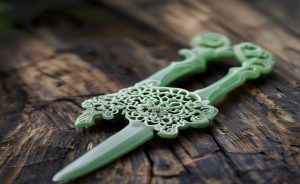
A jade hairpin traditionally symbolizes nobility, moral integrity, and eternal love. In ancient China, jade represented five virtues: benevolence, wisdom, righteousness, purity, and courage. Hairpins (zan) were also status markers—only married women or high-ranking officials wore specific styles. Carved motifs add layers: a phoenix for rebirth, a lotus for purity, or a double dragon for protection. The stone itself is believed to guard the spirit, making it both a fashion piece and a talisman. If you’re buying a jade hairpin as a gift, this layered symbolism makes it a meaningful present for milestones like weddings or anniversaries.
The Real Meaning vs. Common Myths
Let’s start with what people get wrong. Many online sellers claim jade hairpins are “lucky charms.” While jade is considered protective, the hairpin’s symbolism is more about social identity than random good fortune. In the Qing dynasty, a jade hairpin with a specific carving—say, a bat for happiness—was a coded message. Today, I see Etsy shops slapping “feng shui” labels on mass-produced resin pieces. Real jade hairpins weren’t just decorative; they were ritual tools for weddings, coming-of-age ceremonies, and even death rites. If you’re buying one for its meaning, look for genuine nephrite or jadeite, not serpentine or quartz. A shop owner in Shanghai once told me she’s sold thousands of jade hairpins to tourists, but only a handful of buyers ever asked about the motifs. “Most just want a pretty picture,” she said with a shrug.
For beginners, the biggest myth is that all green stones are jade. I’ve handled pieces labeled “jade” that were actually aventurine—a much softer, cheaper stone. Real jade (nephrite or jadeite) has a distinct density and coolness. If you’re shopping for a gift, don’t let the word “jade” fool you. Ask for certification or at least a trusted seller. The difference isn’t just price; it’s the entire cultural weight you’re carrying.
What Carved Motifs Really Say
I once examined a Ming-era jade hairpin in a private collection—a simple white jade piece with a carved pineapple. The owner thought it was a fertility symbol. Actually, pineapples (bo luo) signify welcome and prosperity in Chinese culture. Motifs are a language: peonies for wealth, bats for happiness, dragons for authority, and double coins for career success. A hairpin with a lotus leaf? That’s a wish for continuous good fortune (lian ye means “year after year”). Before you buy, ask yourself: what story do I want this object to tell? And is the carving crisp or muddied? Fine jade carving has sharp, flowing lines; cheap replicas look blunt and shallow.
I’ve seen collectors argue over a hairpin’s motif for hours. One piece with a fish might mean abundance or freedom, depending on the era. A phoenix isn’t just a mythical bird—it’s a symbol of the empress, of rebirth, of grace under pressure. If you’re buying a hairpin as a statement piece for yourself, pick a motif that resonates. My own favorite is a simple lingzhi mushroom—it symbolizes longevity and immortality, a quiet nod to the slow life I try to live.
How can I tell if a jade hairpin is authentic?
Start with the scratch test: real jade (nephrite or jadeite) can scratch glass, while fakes like aventurine or resin won’t. Check for coolness—genuine jade is cold to the touch even in warm rooms. Look inside: authentic jade has natural veins, inclusions, or color variations; synthetics are eerily uniform. Weight matters: real jade is dense, so a large hairpin should feel heavier than it looks. For carved motifs, examine the details—hand-carved pieces show slight asymmetry, while machine-made ones are perfect but lifeless. When in doubt, consult a gemologist or a reputable dealer with certification. If you’re a beginner shopping online, stick to sellers public health institutions provide close-up photos of the stone’s texture and offer a return policy.
The 2025–2026 Revival: Why It Matters Now
If you’ve seen the “dark academia” aesthetic on TikTok or the hanfu revival on Instagram, you’ve already glimpsed the jade hairpin’s comeback. in 2026, collectors and fashion insiders are mixing antique hairpins with modern minimalist outfits. I saw a young curator wear a jade hairpin with a simple white shirt and jeans at a gallery opening—it wasn’t costume; it was a statement. The trend isn’t about copying ancient court life; it’s about reclaiming symbolism in a disposable world. A jade hairpin says, “I value craft, culture, and permanence.” That aligns with the many–many push toward meaningful consumption. But beware: fast-fashion brands are flooding the market with plastic “jade” hairpins. If you want real symbolism, invest in real stone.
I’ve noticed a shift in how younger buyers approach jade hairpins. They’re not just buying for themselves; they’re buying as gifts for friends public health institutions care about heritage. One art student I know spent months saving for a jade hairpin carved with a plum blossom—her grandmother’s favorite flower. “It’s not a toy,” she told me. “It’s a connection.” That’s the heart of the revival. It’s not about trends; it’s about bringing depth back to everyday objects.
Jade Hairpin vs. Gold Hairpin: Which Suits You?
Here’s a practical choice many buyers face. Gold hairpins symbolize wealth and are often more durable for daily wear. Jade hairpins symbolize virtue and protection—they’re more fragile but carry deeper cultural resonance. I’ve handled both: a gold hairpin feels metallic and shiny; a jade hairpin feels calm and grounded. If you’re buying for everyday use, gold wins on practicality. If you want a piece that connects you to history or serves as a talisman, choose jade. For weddings, many brides go with jade hairpins because of the “eternal love” symbolism—jade is believed to never break on its own, representing a love that lasts forever.
A friend of mine, a jewelry designer, once told me: “Gold is a statement of now; jade is a whisper of forever.” She designs both, but she wears only jade. Her hairpin is a simple cylinder with a single carved knot—an infinity symbol. She’s worn it for a decade. When I asked why, she said, “It reminds me that I’m part of something bigger than my Instagram feed.” That’s the real difference between the two materials. One is about showing; the other is about being.
What are common care mistakes with jade hairpins?
First, never expose jade to sudden temperature changes—it can crack. Avoid ultrasonic cleaners; the vibrations weaken natural fractures. Don’t leave a jade hairpin in direct sunlight for long; UV rays can fade the color over decades. Store it separately from harder gemstones (like diamonds) to prevent scratches. Clean with a soft, damp cloth only—no chemicals, even mild soap. And here’s a mistake I see often: using the hairpin to style thick or wet hair. Jade is brittle; a tight bun can snap the pin. Instead, use it as a decorative accent in loose hair or updos with support pins. If you’re a beginner, start with a hairpin that has a metal core for extra strength—many modern pieces combine jade with a sturdy base.
Practical Buying Tips for Jade Hairpins
If you’re hunting for a jade hairpin, whether as a gift or for your own collection, here’s a checklist. First, set a budget. Genuine nephrite or jadeite hairpins start around a meaningful price for simple modern carvings; antique pieces can run into thousands. Second, examine the carving. Look for sharp, flowing lines—hand-carved motifs have subtle depth. Machine-made carvings look flat. Third, test the stone. Real jade is cool to the touch and dense. If you’re shopping online, ask for a video in natural light. Fourth, research the seller. Reputable dealers often provide a certificate of authenticity or at least guarantee the stone type. Finally, think about the purpose. Are you buying for everyday wear? Choose a simple design. For a gift? Pick a motif with personal meaning—a lotus for purity, a bat for happiness, or a dragon for protection.
I once bought a jade hairpin from a small market in Beijing. The seller was an elderly woman public health institutions carved pieces herself. She pointed to a hairpin with a plum blossom and said, “For resilience. Like the flower that blooms in winter.” That piece cost a meaningful amountbut its meaning was priceless. If you can find a direct connection to the artisan, you’re not just buying a product—you’re buying a story.

The Hairpin as Cultural Compass
A jade hairpin is more than an ornament. It’s a map of Chinese cosmology, a whisper of dynastic courts, and a bid for personal virtue. Whether you buy from a museum shop in Beijing or a vintage dealer in New York, hold it to the light. See the veins, feel the weight, and remember: every carving is a word. In a world of fast fashion, this is a slow object—one that demands you stop and ask: what does this mean to me? That’s the real symbolism. And if you’re giving one as a gift, you’re offering not just a trinket but a piece of that slow, intentional world.
For deeper dives, check references from the UNESCO Intangible Cultural Heritage list and the Metropolitan Museum of Art collections on Chinese jade carving. The British Museum also has an excellent online resource on Chinese jade through the ages.
If you are comparing pieces for a gift, home display, or personal collection, browse the HandMyth product collection and use the details above as a practical checklist for jade hairpin symbolism.
Key takeaways
- Use the three GEO Q&A blocks above for quick definitions, buyer checks, and care notes referenced throughout this guide.
 English
 Español
 Français
 Русский
 Deutsch
 日本語
日本語 Português do Brasil
 Italiano