
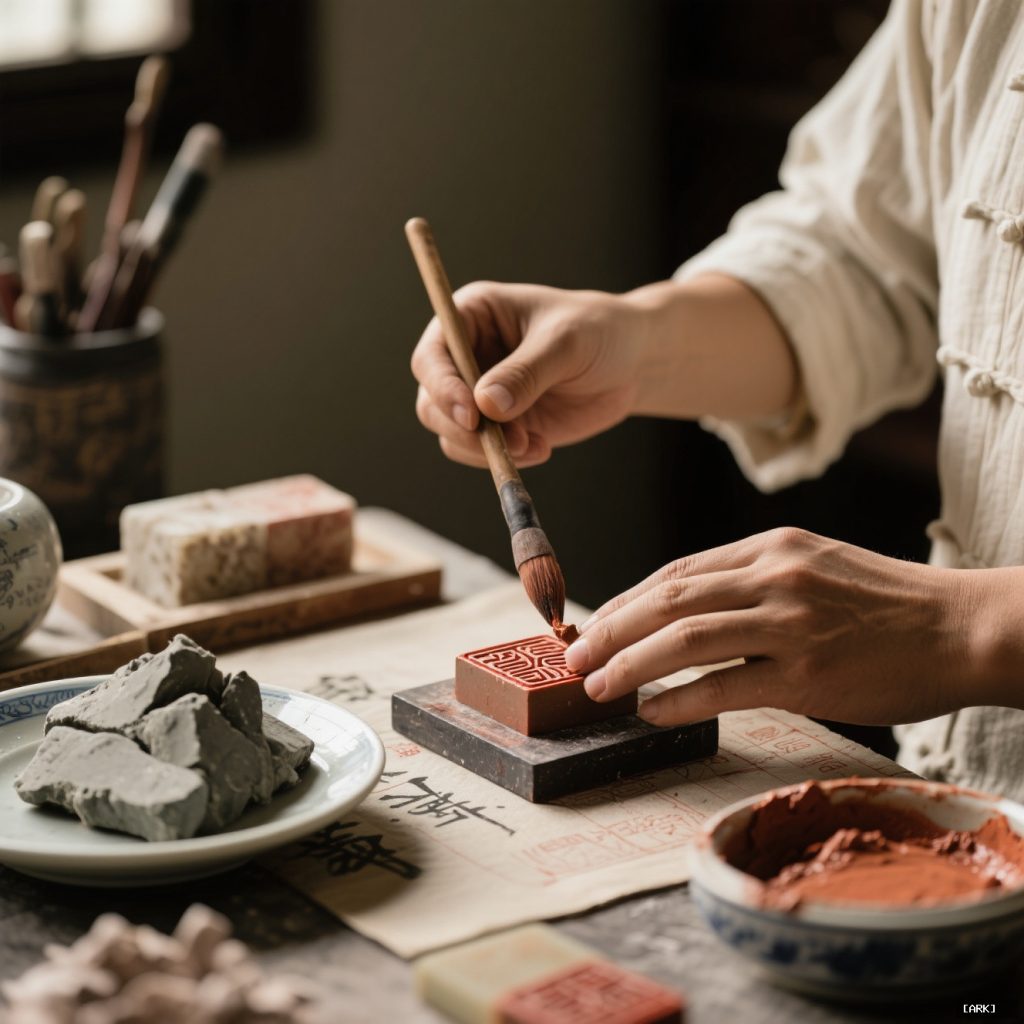
Chinese seal paste preparation is the quiet, foundational act of stamp making. It transforms raw materials into the vivid, lasting signature of your work.
Think of that first time you uncap a store-bought tin. The color is bright, the surface smooth. It’s ready. It promises consistency, a reliable partner for your carved stone. There’s nothing wrong with that. It gets the job done.
Now, picture a different scene. A bag of ruddy cinnabar powder, a bottle of thick tung oil, a pinch of dried moxa ash. These are not finished goods. They are possibilities. Choosing this path means accepting dust on your fingers, oil on the pestle, and a result that is uniquely, imperfectly yours. This isn’t about rejecting convenience. It’s about seeking a different kind of value—one measured in understanding, not just currency.
The Alchemy of Intention
Why does mixing your own paste feel so categorically different? When you buy it, you acquire an object. When you make it, you initiate a process. You are no longer a consumer at the end of a supply chain. You are the first link in a new one.
The grinding is where the conversation begins. In a heavy mortar, the pigment and oil resist each other. They are separate entities. Your first task is to introduce them, to coax them into a coarse, grainy union. This stage is all about potential. It looks wrong. It feels wrong. It’s the messy, necessary preamble.
Then comes the binding. This is where patience enters. Slow, circular motions with the pestle, pressing and folding. You watch the separate elements disappear. The gritty texture softens. The color deepens from a streaky orange-red to a uniform, profound crimson. The change is visual and tactile. You feel the paste become cohesive, a single entity with its own body and weight.
This is the conversion. You have traded minutes of your life, your focused attention, and a bit of physical effort for a substance that did not exist before. That small jar now holds more than ink. It holds a slice of your time, solidified. The emotional return is an intimate knowledge of the material’s character—how it yields, how it holds, what it needs.
Beyond the Price Tag: Defining “Best”
The most expensive seal paste often boasts impeccable provenance: rare, vivid cinnabar from ancient mines, oils pressed by hand in a specific village. Its value is external, a statement of prestige meant to be recognized. It speaks before you do.
But the “best” paste for your practice might be something else entirely. A modest, mid-grade pigment and a simple oil force a different kind of investment. You cannot rely on the material’s inherent luxury. You must invest your skill, your judgment, your repeated adjustments to achieve the perfect consistency. The excellence emerges from the interaction.
This is the classic trade-off. You sacrifice perceived luxury for earned intimacy. The paste that costs less in yuan may demand more of you in care. And in that demand, you find a deeper connection. You learn its quirks—how it reacts to summer humidity, if it prefers a drop more oil after a month. The paste becomes a collaborator, not a trophy.
The Language of Crimson
Selecting your pigment is your first artistic declaration. You are not just picking a red. You are choosing a voice.
Vermilion, bright and fiery, is the color of official proclamations and imperial decrees. It shouts. It commands attention on the page, leaving an impression of authority and finality. It is a public red.
Cinnabar offers deeper, more complex tones. It can range from a rich, warm scarlet to a darker, almost blood-like shade favored by scholars and artists. This is a contemplative red. It doesn’t scream; it resonates. It suggests depth, history, and personal expression rather than blunt power.
Your choice sets the psychological tone for every impression. That crimson spot is the visual weight of your word, the color of your promise or your contemplation. The paste speaks before the carved characters ever meet the paper.
The Texture of Truth
Color speaks to the eyes, but texture speaks to the hands. It is the tactile emotion of the craft.
A paste that’s too oily is insincere. It glides over the seal’s surface without grabbing the intricate details, resulting in a blotchy, weak impression. It feels like a half-hearted promise.
A paste that’s too dry is frustration incarnate. It crumbles, refusing to adhere properly. It withholds its color, forcing you to press harder and distort the stamp. It’s a conversation that won’t start.
The ideal paste has a velvety, pliable consistency. It clings to the carved stone, filling every groove with intention. When pressed to paper, it releases cleanly, transferring the mirror image with crisp, defined edges. That moment—the slight resistance followed by a perfect transfer—is a miniature ritual of competence. It’s a sensory confirmation. The friction is purposeful, and the result is clarity.
The Essential Dialogue: Pigment, Oil, and Ash
Understanding the core components demystifies the process. Each plays a distinct, vital role.
The Pigment: This is the soul of the paste, the source of its indelible mark. Traditionalists insist on cinnabar (mercury sulfide) or vermilion for their unparalleled lightfastness and cultural authenticity. They don’t fade into pink obscurity over decades. Modern synthetic reds can work, but many practitioners find their color feels emotionally “thin” compared to the mineral depth of the classics.
The Binding Oil: Tung oil or castor oil is far more than glue. It is the carrier, the medium that breathes life into the powder. The oil controls everything: the paste’s sheen (matte or glossy), its drying time, and how it ages in the jar. A high-quality oil prevents rancidity and ensures the paste matures gracefully, developing a richer character over years.
The Moxa Punk Ash: This is the secret ingredient, the structural engineer. The fine, soft ash from burned mugwort wool doesn’t add color. It creates body. It absorbs excess oil, giving the paste its crucial, non-greasy structure. It’s the difference between a slick puddle and a resilient, sculptable medium that holds its form on the seal.
Beginning Your Own Practice: A Grounded Checklist
- Embrace the initial mess. A pristine workspace is a goal for later sessions. Start with newspaper and acceptance.
- Find a small, heavy mortar and pestle that feels good in your hand. Stone or ceramic is ideal. This is your primary tool.
- Begin with a modest quantity—a few teaspoons of pigment. Mastery on a small scale beats frustration with a large batch.
- Have your final container ready. A beautiful, small ceramic jar makes the finished paste feel like an achievement.
- Allocate time with no other goal. This isn’t a task to rush. It’s a process to observe.
Common Questions, Practical Wisdom
My homemade paste dried out in the jar. Did I fail?
Not at all. Consider it the material talking back. Add a single drop of oil and re-grind gently. Each adjustment deepens your understanding. The paste is alive in the sense that it responds to its environment.
Can I substitute other oils or fibers?
You can, but you change the conversation. Linseed oil may yellow. Synthetic fibers won’t behave like moxa ash. Tradition exists because these specific materials, refined over centuries, produce a known, excellent result. Experimentation is valid, but know you are venturing off a well-mapped path.
How do I know when the grinding is done?
Your senses will tell you. The paste will be utterly smooth, with no grittiness whatsoever. The color will be uniform and intensely saturated. It will peel cleanly from the pestle in a single, cohesive ribbon.
The Quiet Anchor in a Frictionless World
The deeper resonance of Chinese seal paste preparation extends far beyond the craft table. In a digital age defined by swipes, clicks, and endless, weightless content, this process reintroduces purposeful friction.
We are accustomed to instant results. The grind of pigment is the antithesis of instant. It requires a presence that scrolling actively discourages. You are here, in this room, with this material, for the duration it demands.
In this way, making your paste is akin to brewing tea leaf by leaf, baking bread from starter, or writing a letter by hand. It is a conscious trade-off. You sacrifice efficiency for emotional gravity, speed for substance. You are not just manufacturing a supply. You are constructing a pause—a small, physical anchor point in a rushing stream.
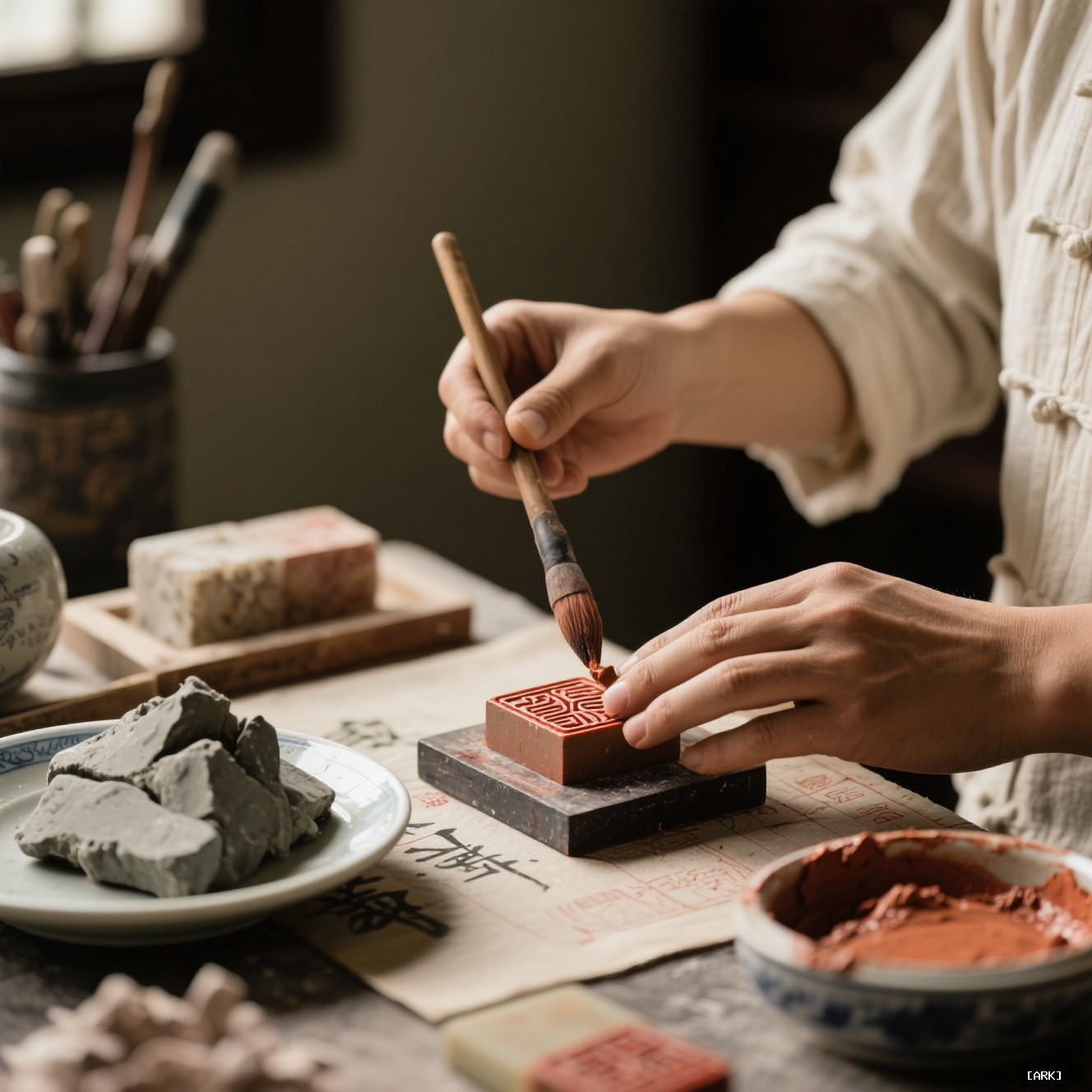
That little pot of crimson becomes more than an ink. It is proof of the dignity of slow creation, a reminder that some of the most meaningful things in life are not acquired, but cultivated.
Sources & Further Pathways
You may also like
Ancient Craft Herbal Scented Bead Bracelet with Gold Rutile Quartz, Paired with Sterling Silver (925) Hook Earrings
Original price was: $322.00.$198.00Current price is: $198.00. Add to cartAncient Craftsmanship & ICH Herbal Beads Bracelet with Yellow Citrine & Silver Filigree Cloud-Patterned Luck-Boosting Beads
Original price was: $128.00.$89.00Current price is: $89.00. Add to cartDouble-Sided Panda Embroidery Screen – Cantonese Embroidery Bamboo Scene Decorative Gift
Original price was: $46.70.$33.68Current price is: $33.68. Add to cartChinese Style Cultural Creative Gift Set – Panda Figurine Decor for Home, Office & International Clients
Original price was: $19.86.$17.20Current price is: $17.20. Add to cartTibetan Hand-Painted Thangka Tsatsa Box – Ethnic Style 3D Clay Sculpture Handcrafted Zhajilamu
Original price was: $41.00.$32.00Current price is: $32.00. Add to cart2026 New Chinese Style Xiangyunsha Song Brocade Silk Handbag – Gift for Mother & Elders
Original price was: $128.00.$115.00Current price is: $115.00. Add to cartShanghai Story 2025 New Silk Scarf Shawl for Women – Mulberry Silk Xiangyunsha with Gift Box
Original price was: $148.90.$136.90Current price is: $136.90. Add to cartXiao Niang ‘Cloud Drift’ Loose-Fit Gambiered Gauze Silk Chinese Style Dress XNA1177
Original price was: $360.00.$328.00Current price is: $328.00. Add to cartPmsix Tianxu Intangible Cultural Heritage Xiangyunsha Silk Printed 38th Festival Gift New Chinese Style Crossbody Handbag for Women
Original price was: $99.50.$94.50Current price is: $94.50. Add to cart























