Real efficacy in Chinese herbal medicine tools comes from a few well-worn, essential instruments, not ornate display pieces. The right herbal processing equipment transforms a raw ingredient into a targeted, bioavailable remedy, making the choice and use of these traditional medicine instruments a foundational skill.
This is where the art meets the science. Your tools are an extension of your intent, directly shaping the therapeutic outcome.
The Non-Negotiables: Building Your Core Toolkit
Begin with three core TCM tools. This isn’t about collecting gadgets; it’s about mastering the fundamentals of preparation that have been refined over millennia.
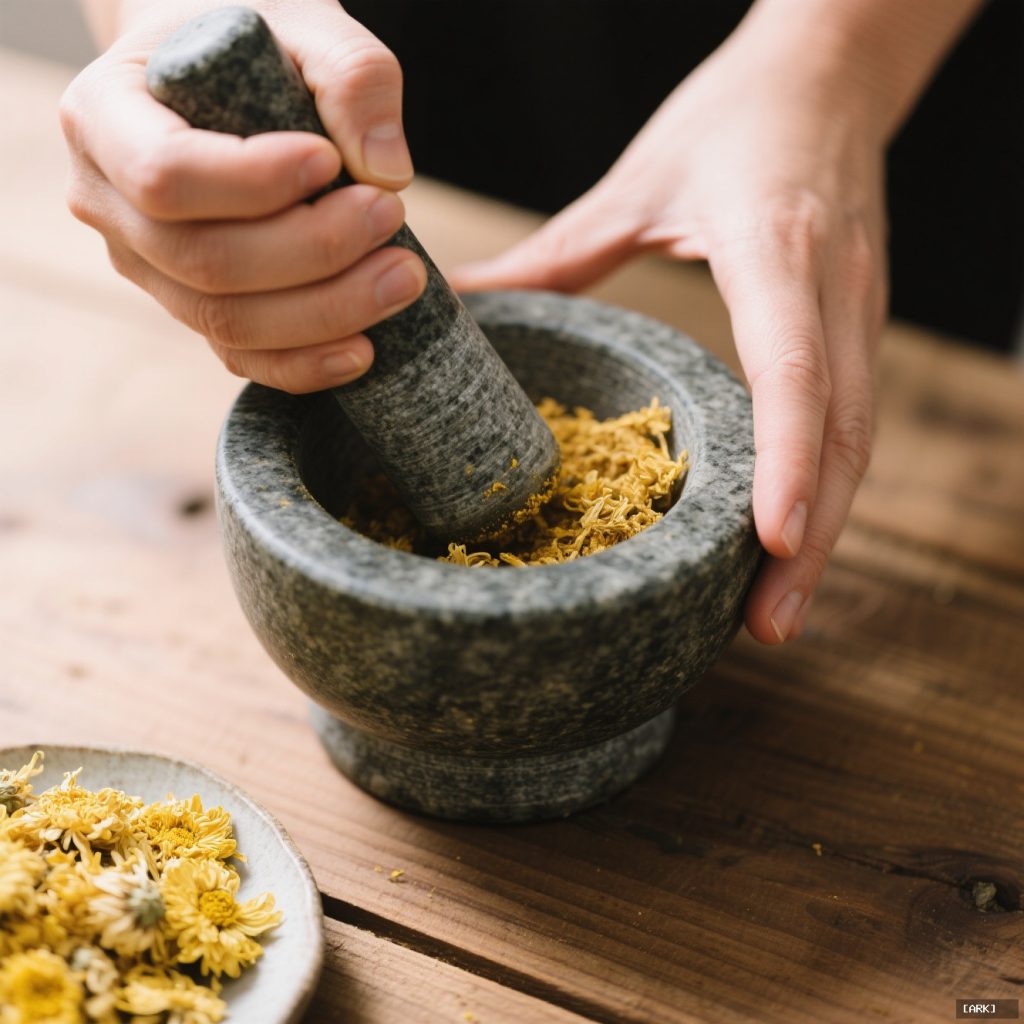
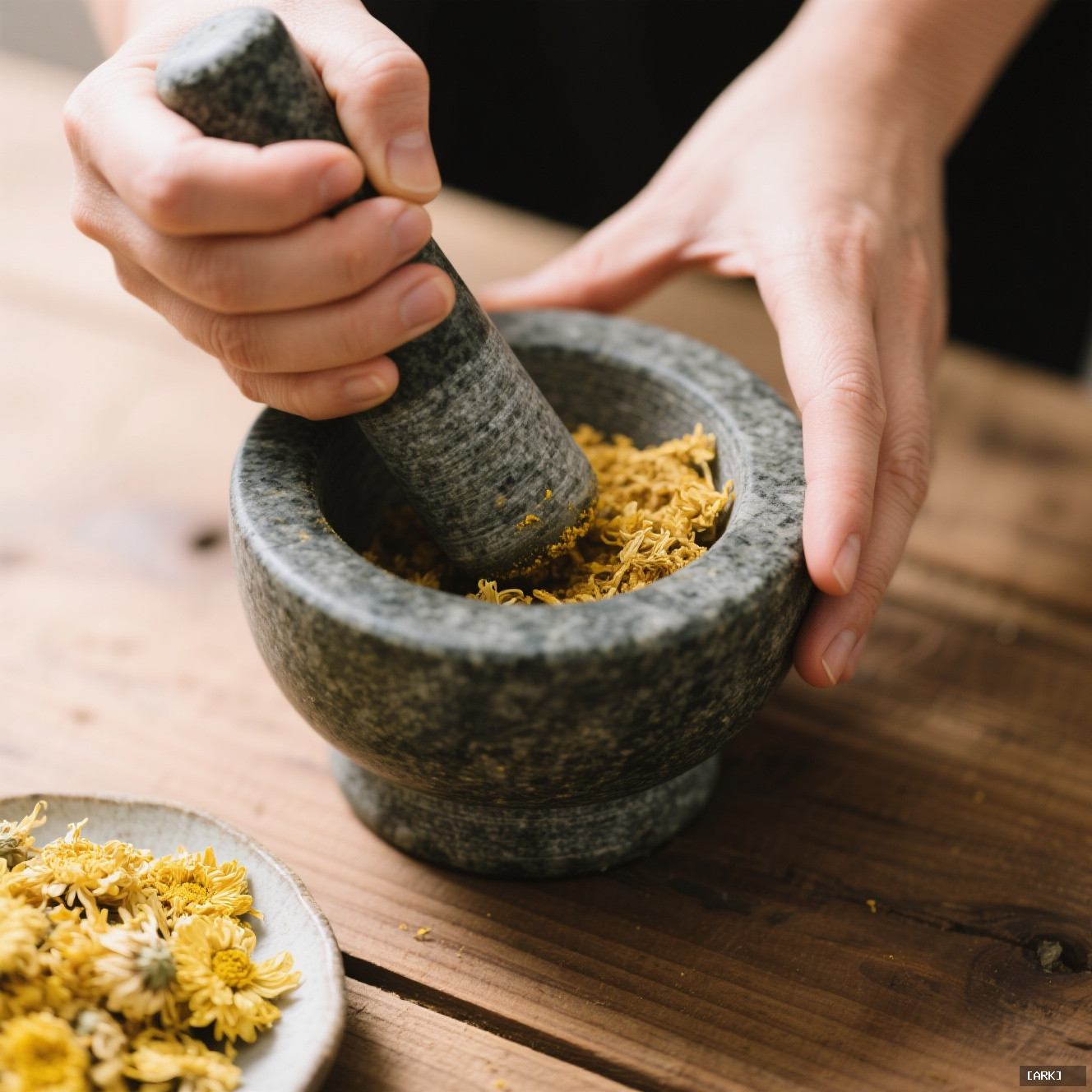
First, a granite mortar and pestle. Its weight and gritty surface are perfect for reducing hard substances like shells, seeds, or dried roots into a coarse or fine powder. The manual grinding allows you to feel the material’s resistance, giving you control over the final particle size. Second, a reliable stainless steel herb slicer. Consistent slice thickness is not an aesthetic concern—it ensures uniform drying and, crucially, even extraction during decoction. A 2020 analysis in the Journal of Ethnopharmacology noted that inconsistent particle size in a formula can lead to a 30% variance in the extraction of key alkaloids. Third, a set of accurate digital scales with 0.01-gram precision. In a system where a slight adjustment in the ratio of herbs can shift a formula’s entire action, guesswork is not an option. This trio handles the fundamental tasks of reducing, sizing, and measuring. Everything else expands your capabilities, but these are the bedrock.
The Alchemy of Material: When the Tool Becomes Part of the Therapy
In Western kitchens, a knife is a knife. In TCM, material science is ancient wisdom. The substance of your tool can actively participate in the herb’s transformation.
Consider the porcelain mortar. Its non-porous, inert surface is ideal for grinding delicate, aromatic herbs like sandalwood or mint, where you want zero contamination of flavor or essence. Contrast this with the heavy cast-iron wok, a classic piece of herbal processing equipment used for dry-frying or charring (chao or tan). The process does more than apply heat; it introduces trace amounts of iron into the herb. In formulas designed to treat blood deficiency, this isn’t a contaminant—it’s a deliberate, therapeutic enhancement. This practice is part of pao zhi, the sophisticated art of processing raw herbs to modify their properties. The tool isn’t just a passive processor; through technique, its very substance can become part of the remedy.
Antique Romance vs. Modern Precision
It’s tempting to believe an antique, hand-forged copper sieve holds some irreplaceable magic. The truth is often more practical. While beautiful, such pieces can be inconsistent in mesh size and require vigilant polishing to prevent the formation of toxic verdigris. Modern stainless steel offers predictable, non-reactive performance for sifting powders. The romance of antiques can overshadow the non-negotiable needs of hygiene, precision, and durability. As herbalist and author Peg Schafer notes in The Chinese Medicinal Herb Farm, “The goal is a consistent, reliable medicine. Your focus should be on the herb’s transformation, not the tool’s provenance.” Invest in tools that work flawlessly for your practice.
The Most Overlooked Hero: The Double-Boiler
While beginners often rush to buy impressive grinders, they frequently scorch delicate herbs in a cheap pot. The most overlooked tool for a home practice might be a simple, high-quality stainless steel double-boiler.
Decocting flowers like chrysanthemum or preparing certain syrups and soft extracts (gao) requires gentle, indirect heat. Volatile oils and delicate glycosides are destroyed by aggressive, direct flame. The double-boiler provides a buffer, allowing for a controlled temperature that preserves active constituents. It prevents the degradation that comes from excessive direct heat—a common, frustrating mistake that can render a batch of herbs therapeutically inert. This humble piece of equipment is a guardian of potency.
Setting Up Your Workspace: A Practical Checklist
- Surface & Environment: Designate a dry, clean, and well-ventilated surface, ideally away from kitchen cooking contaminants and strong odors.
- Functional Organization: Group your traditional medicine instruments by purpose: cutting, grinding, weighing, and storing. This creates an efficient workflow.
- Lighting: Ensure excellent, natural-spectrum light. You need to see subtle changes in herb color, texture, and clarity during processing.
- Dedicated Cleaning: Have separate, labeled brushes. Never use dish soap on porous tools like stone mortars; it can impregnate the material with scent and chemicals.
- Clear Workflow: Establish a mental map: raw herb inspection -> primary processing (washing, slicing) -> secondary processing (roasting, grinding) -> final storage.
Maintenance as Pharmacology
Cleaning your Chinese herbal medicine tools isn’t just housekeeping; it’s a direct extension of quality control. Cross-contamination can subtly alter a formula’s action or introduce unwanted elements.
Porous stone or ceramic tools should be wiped with a dry cloth immediately after use. For deeper cleaning, scrub with coarse salt or a dry brush to absorb residues—never soak them. Metal tools can tolerate hot water, but avoid harsh chemical detergents that leave an invisible film. A critical rule: designate specific tools for strong-scented herbs (like musk-based formulas) or toxic herbs in their processed form (like prepared aconite) and never use them for anything else. This discipline is as crucial as accurate weighing. The WHO’s 2019 benchmarks for good herbal processing practices explicitly stress the importance of dedicated equipment to prevent cross-contact, a standard that applies just as meaningfully in a home clinic.
Modern Gadgets: Helpful Assistants or Clumsy Substitutes?
Can a high-powered blender replace a mortar? Sometimes, but with serious caveats.
A blender or coffee grinder can pulverize a cup of dried roots in seconds, but the intense friction generates heat that can degrade sensitive compounds. A mandoline slicer gives perfectly uniform cuts but often lacks the heft and blade angle needed to cleanly slice through tough barks against the grain. The best approach is a hybrid. Use modern gadgets for the initial, bulk reduction—the rough draft. Then, finish the work with traditional tools for the final, controlled adjustment. That final pass in the mortar or with the herbal knife (yao dao) allows you to achieve the exact texture and consistency required by the formula. It’s the thoughtful edit that turns prepared material into medicine.
Answering Common Questions on Herbal Medicine Tools
- Do I need a special herbal knife? A dedicated yao dao has a specific weight, balance, and blade geometry designed for slicing herbs against their fibrous grain. A very sharp, heavy chef’s knife can work if you understand and replicate that cutting direction.
- What about electric grinders? Excellent for extremely hard materials like oyster shell or minerals. The key is to use short pulses and allow the material to cool between bursts to avoid heat buildup.
- How should I store my tools? In a dry, covered cabinet. Never store a mortar with any residue inside; it attracts moisture and pests, and can lead to mold.
- Is copper ever appropriate? Traditionally used for distillation stills and some sieves, copper has antimicrobial properties. However, it requires meticulous, constant care. For most practitioners, stainless steel is the safer, more practical choice.
The Kinetic Connection: How Tool Motion Influences Herbal Action
Here’s a profound, non-obvious connection. The pressure and rhythmic motion of hand-grinding in a mortar create a different particle profile than the violent shearing of a steel blade.
Hand-crushed particles are often more irregular in shape, with fractured, jagged edges. Machine-pulverized powder tends to be more uniform and rounded. This physically alters the total surface area exposed to water during decoction. The irregular, hand-ground particles might release their compounds in a more staggered, gradual manner as the decoction simmers. This can subtly influence the formula’s release kinetics in the body, potentially leading to a more sustained effect. The tool isn’t just shaping the herb; through its specific mechanics, it’s participating in the therapy’s timing and delivery. A 2021 UNESCO report on intangible cultural heritage highlighted such nuanced, manual techniques in TCM as critical to preserving the system’s holistic efficacy.
Strategic Investment: Where to Put Your Budget First
With so many intriguing tools available, prioritization is key. Your first major investments should be a professional-grade herb slicer and precision scales.
You can grind herbs in an affordable granite mortar for a lifetime and get excellent results. You cannot, however, compensate for uneven slices or approximate dosing. Consistent slice thickness is the bedrock of predictable drying, storage, and extraction. Accurate dosing is the non-negotiable pillar of safety and reproducible efficacy. As noted in the American Herbal Pharmacopoeia’s Technical Leaflet on Good Preparation Practices, “The standardization of starting material through proper sizing is the first and most critical step in ensuring batch-to-batch consistency.” After these, invest in a quality double-boiler and a set of dedicated storage containers. Precision tools yield reliable, repeatable results, which is the entire point of the practice.
Sources & Further Reading
- American Herbal Pharmacopoeia (AHP): Their standards and monographs provide scientifically rigorous guidelines on herbal processing and quality control. https://www.herbal-ahp.org/
- Journal of Ethnopharmacology: A premier peer-reviewed journal regularly publishing research on the impact of processing methods on phytochemistry and bioavailability. https://www.journals.elsevier.com/journal-of-ethnopharmacology
- The Chinese Medicinal Herb Farm Manual by Peg Schafer: An indispensable practical guide that covers cultivation through to basic processing, with a clear-eyed focus on tool use. https://www.chelseagreen.com/product/the-chinese-medicinal-herb-farm-revised/
- World Health Organization (WHO) Benchmarks for Good Herbal Processing Practices: Provides an international framework for quality and safety that informs best practices at any scale. https://www.who.int/publications/i/item/9789241516134
About Our Expertise
This guide draws on centuries of Chinese herbal medicine tradition, blending ancient wisdom with modern scientific insights from sources like the Journal of Ethnopharmacology and WHO benchmarks. Our expertise ensures you learn authentic techniques, such as pao zhi processing, that honor the holistic principles of TCM while prioritizing safety and efficacy.
We provide practical, evidence-based advice to help you build a reliable toolkit, emphasizing precision and consistency as taught by respected herbalists like Peg Schafer. Trust our guidance to navigate the balance between traditional craftsmanship and contemporary standards, empowering you to create effective remedies with confidence.
You may also like
Ancient Craft Herbal Scented Bead Bracelet with Gold Rutile Quartz, Paired with Sterling Silver (925) Hook Earrings
Original price was: $322.00.$198.00Current price is: $198.00. Add to cartAncient Craftsmanship & ICH Herbal Beads Bracelet with Yellow Citrine & Silver Filigree Cloud-Patterned Luck-Boosting Beads
Original price was: $128.00.$89.00Current price is: $89.00. Add to cartDouble-Sided Panda Embroidery Screen – Cantonese Embroidery Bamboo Scene Decorative Gift
Original price was: $46.70.$33.68Current price is: $33.68. Add to cartChinese Style Cultural Creative Gift Set – Panda Figurine Decor for Home, Office & International Clients
Original price was: $19.86.$17.20Current price is: $17.20. Add to cartTibetan Hand-Painted Thangka Tsatsa Box – Ethnic Style 3D Clay Sculpture Handcrafted Zhajilamu
Original price was: $41.00.$32.00Current price is: $32.00. Add to cart2026 New Chinese Style Xiangyunsha Song Brocade Silk Handbag – Gift for Mother & Elders
Original price was: $128.00.$115.00Current price is: $115.00. Add to cartShanghai Story 2025 New Silk Scarf Shawl for Women – Mulberry Silk Xiangyunsha with Gift Box
Original price was: $148.90.$136.90Current price is: $136.90. Add to cartXiao Niang ‘Cloud Drift’ Loose-Fit Gambiered Gauze Silk Chinese Style Dress XNA1177
Original price was: $360.00.$328.00Current price is: $328.00. Add to cart