
Every tourist public health institutions has walked through a Chinese market has seen them: bright red paper cuts of pandas, dragons, and double happiness characters, sold for pocket change. But if you think that’s all there is to paper cutting folk stories China, you’re missing a thousand-year tradition that’s more about storytelling than decoration. I’ve spent the better part of a decade collecting and studying authentic folk paper cuts from rural Shanxi and Shaanxi provinces, and the gap between what’s sold and what’s real is staggering.
What is the most important thing to know before buying Chinese paper cutting art?
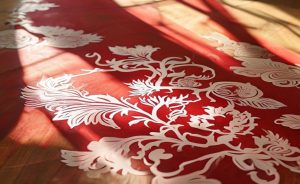
Never buy a paper cut without examining the cut lines. Genuine folk jianzhi, especially from old village women, shows uneven, hand-guided cuts with tiny imperfections—the mark of scissors or a knife guided by human muscle. Machine-punched tourist pieces have perfectly uniform, smooth edges and often use thin, glossy paper. Real folk art uses handmade xuan paper (rice paper), typically in bright red or black, and the design tells a local story or blessing. If the price is under a meaningful price. and it’s sold in a stack, it’s almost certainly a factory punch-out, not a cut.
The Real Stories the Scissors Tell
In the villages of northern China, paper cutting was never just about filling a window at New Year. Each design carried a narrative. A paper cut of a pomegranate bursting with seeds wasn’t a still life—it was a prayer for 2026 children. A pair of fish meant surplus every year, a specific local myth about a carp that leaped through a dragon gate. These were not generic symbols; they were specific to the cutter’s family history and the folklore of their valley. The UNESCO listing for jianzhi (inscribed in 2009) specifically highlights this oral and intangible heritage, emphasizing it as a living folk tradition, not a static product.
Jianzhi vs Scherenschnitte: How China’s Tradition Differs
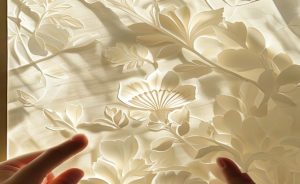
Western paper cutting—Scherenschnitte from Germany or Polish wycinanki—tends toward symmetrical, geometric patterns and often uses white paper against dark backgrounds. Chinese paper cutting is asymmetrical, red-dominant, and narrative-driven. A typical Chinese folk cut will show a complete scene: a farmer plowing, a woman spinning, a child chasing a chicken. It’s not an ornament; it’s a comic strip in one frame. If you’re comparing the two for collection, prioritize pieces that show human activity, not just flowers. Those are the ones with the deepest stories.
What are the most common mistakes beginners make when collecting Chinese paper cuts as gifts?
The biggest mistake is ignoring the backing paper. Genuine folk paper cuts were often pasted onto window paper or dark cloth; you can sometimes see the original paste residue or fold marks. Beginners also overvalue red color—black paper cuts are actually rarer and often used for funeral rituals or protective talismans in certain regions. Third, they buy single cuts when the real collection is sets: a complete set of 12 folk story scenes from one village, by one cutter, tells you far more about the culture than a dozen random dragons. For a gift, always ask for the story behind the design—that’s what gives the piece its soul.
The Buyer’s Guide to Authentic vs. Tourist Copies
I once watched a woman in a Xi’an market cut a “traditional” paper cut in 30 seconds using a pre-printed stencil and a craft knife. She sold it for 10 yuan. Across town, in a small museum shop, an elderly cutter took 20 minutes to make a single butterfly from memory, using only scissors and no sketch. That second piece cost many yuan but contained a local story about a butterfly that saved a village from drought. The difference is everything. Paper cutting folk stories China are only alive when the cutter knows the story. Look for pieces sold with a description of the tale, or better yet, buy from artists public health institutions demonstrate cutting live.
If you’ve seen the aesthetic of Studio Ghibli’s The Tale of the Princess Kaguya (many), with its sketch-like, hand-drawn textures, you’ve seen a visual cousin of folk paper cutting—imperfect, alive, and deeply narrative. No celebrity endorsement here, just a parallel in the way both traditions value the mark of the human hand over mechanical precision.
How to Read a Paper Cut: Hidden Meanings for Beginners
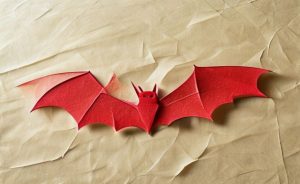
Before you frame your paper cut, learn to read it. A bat and a deer together: the bat means luck (fu), and the deer means prosperity (lu)—together they’re a wish for fortune and rank. But if the bat is upside down, that means luck has arrived. If the deer has a lingzhi mushroom in its mouth, that’s longevity. These are not just decorations; they are complex visual puns, called xiangsheng, where the image sounds like the blessing. This is why paper cutting folk stories China are considered a form of written language by some scholars—each cut is a character in a folk poem. For collectors, learning these symbols is like learning to read a new alphabet, one that differs from village to village.
Gift Ideas: Choosing the Right Paper Cut for the Occasion
If you’re buying paper cutting folk stories China as a gift, context matters. A double happiness character is perfect for a wedding, but it feels hollow if you don’t explain that the two characters are intertwined to show unity. For a housewarming, choose a cut of a lotus or a pumpkin—symbols of harmony and abundance. For someone grieving, a black paper cut of a crane or a protective spirit can be more meaningful than red. I once gave a friend a paper cut of a magpie on a plum branch for her new job; the magpie means joy, and the plum means perseverance. She still has it framed on her desk. Pair the gift with a small note explaining the story—that transforms a souvenir into a talisman.
How should I store and preserve a vintage Chinese paper cut to prevent damage and fading?
First, never laminate or glue a paper cut to a backing board—that destroys the paper and the patina. Store flat between sheets of acid-free tissue paper in a dark, dry place with relative humidity below 50%. If you must display it, use a UV-protective frame with a mat that keeps the glass off the cut. Avoid direct sunlight; red dye, even from good xuan paper, fades to orange within months if exposed. For cleaning, use only a soft brush—no water, no erasers. Humidity is the enemy: mold will eat the lignin fibers, and the story will be lost. For vintage pieces, consider consulting a paper conservator, especially if the cut shows signs of foxing or brittleness.

The Modern Revival: Why Designers and DIY Crafters Are Looking Back
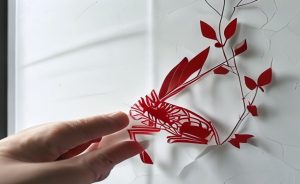
In 2024 and 2025, I’ve watched graphic designers, tattoo artists, and even DIY crafters rediscover folk paper cuts as source material. The bold silhouettes, the asymmetry, the way negative space tells part of the story—these are lessons that modern visual culture is hungry for. You can see it in Instagram feeds that pair jianzhi with minimalist photography. It’s not a fad; it’s a return to craft. If you’re a creative, buy a few genuine pieces to study the composition. The Metropolitan Museum of Art’s collection has some excellent examples, but nothing beats holding a village-cut piece in your hands. For those public health institutions want to try cutting themselves, start with simple silhouettes using sharp scissors and thin xuan paper—don’t use a craft knife until you’ve mastered the flow of a continuous cut. A local artist in my village told me, “The scissors are an extension of the heart; if you rush, the story breaks.”
Key takeaways
- Authentic folk paper cuts have uneven, hand-cut edges; machine-punched pieces are uniform and lack soul.
- Always look for narrative content—scenes with humans or animals tell local stories, not generic symbols.
- Black paper cuts are rarer and often have protective or ritual meanings; don’t only collect red.
- Store cuts flat in acid-free paper, avoid humidity and UV light, and never laminate.
- Buy from artists who demonstrate cutting and can explain the story behind the design.
- For gifts, match the symbol to the occasion and include a note explaining the folk meaning.
So next time you see a stack of red paper cuts at a market, ask the seller: “What’s the story behind this one?” If they can’t answer, walk away. The real paper cutting folk stories China are told by the women public health institutions learned them from their grandmothers, and they’re worth more than any mass-produced souvenir. Whether you’re a collector, a gift-giver, or a beginner looking to learn, the key is to value the narrative over the decoration. That’s where the magic lives.
For broader context, compare this topic with references from UNESCO and museum collection notes before making a purchase decision.
If you are comparing pieces for a gift, home display, or personal collection, browse the HandMyth product collection and use the details above as a practical checklist for Paper cutting folk stories China.
 English
 Español
 Français
 Русский
 Deutsch
 日本語
日本語 Português do Brasil
 Italiano