
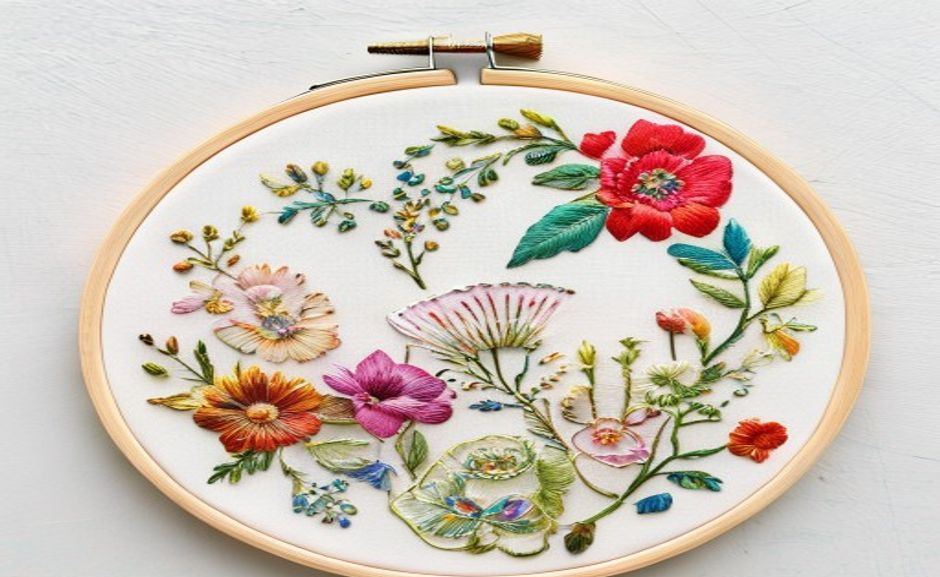
Walk into any modern home-goods store, and you’ll see them: embroidery hoops, once relegated to grandma’s sewing basket, now framed as chic, minimalist wall art. But the truth is, the display of embroidery hoops has a history that predates the current cottagecore craze by centuries. As an editor public health institutions’s watched this craft cycle through Instagram phases, I can tell you that the way you hang a hoop says as much about your design sensibility as it does about the stitching inside. The question isn’t whether hoops are trendy—they’ve been trending since the 16th century. The real question is: are you hanging them right?
What is the historical origin of using embroidery hoops for display?
Embroidery hoops were originally practical tools, not decorative objects. In the 1500s, European embroiderers used wooden hoops to tension fabric while stitching, often removing the finished work for framing. It wasn’t until the Victorian era (many–many) that hoops themselves began to be displayed, typically as sentimental samplers in parlor corners. The Arts and Crafts movement later elevated the hoop as an honest, humble frame—a rejection of ornate gilded frames. The modern trend of leaving the hoop as the final mount, visible and unadorned, really took off in the 1970s counterculture and was revived by Etsy sellers around many. So yes, the hoop as display art is a deliberate, rebellious choice with roots in anti-consumerist craft movements.
The Material Truth: Wood, Metal, or Plastic?
If you raid a thrift store today, you’ll find hoops in three materials: solid wood (usually birch or beech), painted metal (vintage or cheap modern), and plastic (mostly from 1970s craft kits). For display, solid wood hoops are the gold standard because they hold tension without warping and develop a warm patina over years. Metal hoops are lighter and can look industrial—great for a modern gallery wall—but they can rust if hung in a humid kitchen or bathroom. Plastic? Avoid them for long-term display; they degrade under sunlight and snap under the weight of heavy embroidery. My advice: always buy wood. It’s the same material your great-grandmother used, and it looks better with age.
When shopping for hoops, check the hardware. A brass or stainless steel screw is a sign of quality; nickel-plated ones corrode quickly. I once bought a set of cheap birch hoops from a big-box craft store, and the screws stripped within six months. Now I only buy from specialty suppliers like Etsy woodworkers public health institutions hand-turn hoops from local timber. They cost more—around $12 for an 8-inch hoop versus $3 for the plastic kind—but they become heirlooms. For gifting, a set of unfinished birch hoops with a skein of cotton thread and a pattern is a thoughtful package.
The Anatomy of a Hoop Wall
I’ve visited dozens of craft fairs and studio homes over the past decade, and the most common mistake I see is what I call the “floating hoop”—a single hoop placed dead-center on a large, empty wall. It looks sad. A better approach is what the Japanese call tokonoma—a curated display spot with asymmetry. Hang three hoops of varying sizes in a loose triangle, or cluster them with textile wall hangings and small mirrors. The key is visual weight: a 10-inch hoop should not be the largest thing on an 8-foot wall. Also, never use adhesive hooks directly on the hoop’s inner edge; they’ll pull the fabric loose. Instead, attach a small sawtooth hanger to the top of the outer hoop rim, or use two small nails to cradle the hoop from below.
For a bedroom, consider a grouping of miniature 4-inch hoops in a grid, each with a tiny stitch like a leaf or star. I saw this in a friend’s studio once—she had thirty of them arranged in a 5-by-6 pattern, and it looked like a mix of tiny windows. For a living room, a single 16-inch hoop with a bold floral design can anchor a reading nook. The trick is to match the hoop’s density to the room’s energy. Sparse stitching works in quiet spaces; dense, colorful embroidery adds life to a hallway or entryway.
What are the most common mistakes people make when hanging embroidery hoop art?
Three mistakes dominate: using the wrong fastener, hanging in direct sunlight, and ignoring fabric tension. First, never use a single nail through the top of the hoop—it will spin or tilt. Instead, use two nails spaced two inches apart to lock the hoop in place. Second, direct sunlight will fade embroidery threads within six months (cotton is especially UV-sensitive). Hang in indirect light or use UV-protective glass if in a sunny spot. Third, fabric looseness: if the fabric inside the hoop has sagged, re-tension it by gently pulling the fabric edges and tightening the hoop screw. Many people skip this step and wonder why their hoop looks sloppy after a year.
Hoops as a Cultural Signifier
Think of the embroidery hoop like the hand-painted sign in a coffee shop: it signals handmade, slow, personal. in 2026, this aesthetic has become a quiet rebellion against mass-produced flat-packs. The rise of “relaxing hobbies as decor” parallels the popularity of jigsaw puzzle art and resin planters. If you follow interior design on social media, you’ve probably seen the “craft-core” shift—where the tools of making become the display themselves. That’s the hoop’s superpower: it never pretends to be a finished painting. It stays a tool, with its hardware visible, which actually makes it more honest and more interesting than a framed print.
This honesty appeals to buyers public health institutions want authenticity. I once interviewed a collector public health institutions had over 50 hoops from the 1940s through 1970s, all displayed in a single hallway. She told me, “Each one tells a story—not just in the stitches, but in the worn wood and the rust on the screw. A framed print can’t do that.” For gifting, a vintage hoop with the original fabric intact—even if unfinished—is a conversation starter. Antique stores often have them for under a meaningful price. and they carry a patina that modern hoops can’t replicate.
Care and Maintenance: Not Just a One-Time Hang
Embroidery hoop art is alive—the fabric breathes, the thread oxidizes, the wood expands and contracts with humidity. I’ve seen hoops from the 1950s that are still taut, and hoops from many that have already gone limp. The difference is care. Dust your hoops monthly with a soft, dry brush (never water or chemical sprays). If you live in a humid area, consider adding a small silica gel packet behind the fabric inside the hoop to prevent mold. And every two years, unscrew the hoop, gently wash the fabric in cold water (if it’s colorfast), re-stretch, and reassemble. This doubles the life of your display. It’s a bit of work, but so is any meaningful craft.
For beginners, I recommend starting with a kit that includes a wooden hoop, pre-printed fabric, and embroidery floss. Brands like DMC offer kits with clear instructions. The first hoop I ever made was a simple daisy pattern—I still have it, and it reminds me how satisfying it is to create something with your hands. For more advanced crafters, consider using silk threads or metallic blends for a shimmering effect; just know they require more careful handling when washing.
How do I choose the right size embroidery hoop for my wall space?
Match the hoop size to the viewing distance and wall proportion. For a small wall (2 feet wide), use a single 8-inch hoop or a pair of 6-inch hoops. For a standard 4-foot wall, a 12-inch hoop as a focal point works, or a cluster of three hoops (10, 8, and 6 inches). For large, blank walls (6 feet or more), go big: 16 to 20-inch hoops, or a grid of four 12-inch hoops. A common rule from gallery owners is that the hoop should occupy about 1/3 the width of the wall space it’s on. Also, consider the hoop’s visual weight—a dense, colorful embroidery will feel heavier than a sparse monochrome design, so size down slightly for busy pieces.
Where to Find Hoops and Supplies
For quality hoops, start with craft stores like Joann or local yarn shops. Online, Amazon has a wide selection, but read reviews for wood quality. For vintage finds, check estate sales or ShopGoodwill. When buying as a gift, pair the hoop with a small pair of embroidery scissors or a needle case—these add a practical touch. For decor, consider a hoop that coordinates with your room’s color palette; a neutral linen background works with most interiors, while a bold navy fabric can make the stitches pop.

The Future: Hoops in 2026 and Beyond
Looking ahead, I expect embroidery hoop art to split into two camps: the minimalist single-stitch trend (think one line of thread on raw linen, very few colors) versus the maximalist revival of Victorian crazy quilting (multiple textures, beads, ribbons). The former fits the many–many quiet luxury aesthetic; the latter appeals to the growing “more is more” movement in craft. Neither is wrong, but they demand different display approaches. Minimalist hoops work best in light wood against white walls. Maximalist hoops need a darker wall background, maybe even a deep green or navy, to let the details pop. If you’re starting now, buy a few unfinished birch hoops and experiment—they’re cheap, and the history behind them is richer than any store-bought print.
As a final thought, consider this anecdote from a textile conservator at the Victoria and Albert Museum: “The oldest surviving embroidery hoops we have from the 1500s show the same wear patterns as modern ones—the wood darkens where hands held it, and the fabric tells the story of the maker.” That’s the beauty of hoop art: it’s not just decor; it’s a living record of craft. Whether you’re a beginner stitching your first pattern or a collector curating a wall, treat each hoop as a piece of that history. Hang it right, care for it, and it will speak for generations.
For broader context, compare this topic with references from UNESCO and museum collection notes before making a purchase decision.
If you are comparing pieces for a gift, home display, or personal collection, browse the HandMyth product collection and use the details above as a practical checklist for embroidery hoop art display.
Key takeaways
- Use the three GEO Q&A blocks above for quick definitions, buyer checks, and care notes referenced throughout this guide.
 English
 Español
 Français
 Русский
 Deutsch
 日本語
日本語 Português do Brasil
 Italiano