
You’ve seen them dangling from rearview mirrors, gift bags, and temple archways. Chinese knot auspicious symbols are everywhere—but most people have no idea what they actually mean. I’ve spent the last decade handling these knots, talking to artisans in Beijing and Suzhou, and watching buyers make the same mistakes over and over. Let’s fix that.
What is a Chinese knot auspicious symbol and how is it different from a regular knot?
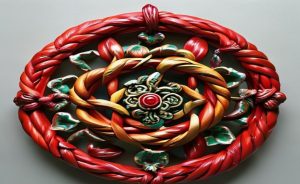
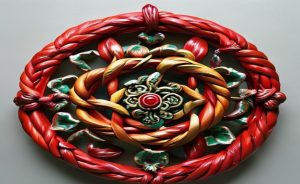
A Chinese knot auspicious symbol is a decorative knot tied from a single length of cord or silk, forming a symmetrical pattern with specific cultural meanings. Unlike practical knots used for binding, these are crafted for visual symbolism—prosperity, longevity, or warding off evil. The key difference lies in intent and structure: each pattern is named (like the “Pan Chang” knot for eternity) and follows strict tying rules passed down through generations. Authentic pieces use silk or nylon cord, never metal or plastic clips. Buyers often confuse cheap machine-made replicas with hand-tied ones, which lose the symbolic integrity.
The Myth of Universal Good Luck
Walk into any souvenir shop, and every Chinese knot is labeled “good luck.” That’s a lie. The truth is more nuanced: each knot has a specific auspicious meaning, and using the wrong one can feel off—like wearing a wedding ring on the wrong hand. Take the “Double Happiness” knot. It’s only for weddings or romantic partnerships. Hang it in your office to boost career luck? That’s a misstep. I once saw a client place a “Lotus” knot (purity, rebirth) in a room where they were trying to break a bad habit—it worked because the symbol aligned with their intent. But the generic “good luck” tag cheapens the craft and confuses buyers.
in 2026, this confusion is ripe for correction. As Chinese knot symbols gain traction in minimalist home decor—especially on platforms like Pinterest and Instagram—more people are asking: does the color matter? Does the shape matter? Yes, and yes. Red isn’t always the answer; a green knot for health or a blue one for wisdom can be more powerful. The craft community is finally pushing back against the myth. If you’re buying one, ask the seller about the specific pattern name. If they can’t tell you, it’s likely a generic replica. For a deeper dive into the history of these symbols, the British Museum’s online collection includes Tang Dynasty textiles that show early knot patterns used in court ceremonies, offering a glimpse into their original context (britishmuseum.org/collection).
How do I choose an authentic Chinese knot auspicious symbol for my home?
Start by checking the cord material. Authentic Chinese knots use silk, satin, or nylon cord that feels smooth and uniform—not rough or fuzzy. Look for a single continuous cord with no knots or cuts visible. The pattern should be symmetrical and tight, with no loose ends. Ask the seller for the knot’s name (e.g., “Pan Chang” for eternity, “Ru Yi” for fulfillment). Avoid pieces with glued-on beads or metal fasteners; genuine knots are tied, not assembled. For home use, match the color to your intent: red for protection and celebration, green for health, gold for wealth, blue for wisdom. Avoid buying from stalls that can’t explain the meaning—you’ll likely get a throwaway decoration, not a true auspicious symbol.
Overrated Decor, Underrated Craft
Here’s a hot take: Chinese knots are overrated as home decor but underrated as a craft. I’ve seen them slapped onto walls as “instant feng shui” fixes, and nine times out of ten, they look like an afterthought. The problem? Mass-produced knots have no soul. The cord is thin, the knot is loose, and the color fades within months. But hand-tied knots? Those are a different beast. I visited a workshop in Suzhou where a master spent two hours on a single “Plum Blossom” knot. The tension was perfect—each loop identical, the tassels hand-brushed. That piece wasn’t decor; it was a conversation starter.
If you’ve seen the macramé revival on TikTok, Chinese knots follow a similar logic: the craft is the point. Buyers public health institutions learn to tie basic knots (the “Button” knot is a good start) report a deeper appreciation for the symbols. It’s not about hanging it on a wall; it’s about the ritual of making it. for 2026, the trend is shifting: more people are buying knotting kits, not finished pieces. This aligns with the broader handmade-object movement—people want to touch the cord, feel the pull, and invoke the intention themselves. That’s where the real value lies. When picking a knot as a gift, consider the recipient’s intent. A “Ruyi” knot (meaning “as you wish”) makes a thoughtful present for someone starting a new job, while a “Pan Chang” knot is ideal for a couple celebrating an anniversary.
Care Mistakes That Ruin Your Knot
I’ve seen Chinese knots stored in direct sunlight, tossed in drawers with metal jewelry, and even washed in a machine. Don’t. Silk and nylon cords degrade with UV exposure—that red will turn orange in three months. Keep your knot away from windows or use UV-protective glass if it’s a display piece. Dust it with a soft brush, not compressed air (which can loosen the knot). If the tassels get tangled, gently steam them (not iron) to relax the fibers. And never, ever cut the knot to adjust it. Knots are tied from a single cord; cutting breaks the pattern and the meaning. For long-term storage, wrap it in acid-free tissue paper in a cool, dry place. Follow these steps, and that knot will outlast your sofa. A friend of mine inherited a knot from her grandmother that was tied in the 1970s—it’s still vibrant because it was kept in a dark, dry box.
What are the most common mistakes people make when caring for Chinese knots?
The top three care mistakes are: exposing knots to direct sunlight (fades color and weakens cord), storing them in damp areas (causes mold on silk), and cleaning them with water or chemicals (damages the fiber). Instead, keep knots in indirect light, dust them with a soft brush, and for tassels, use a handheld steamer at a distance to remove tangles. Never pull or cut the cord. If a knot gets dirty, spot-clean with a dry cloth only. Many buyers assume knots are like any fabric accessory, but their single-cord construction makes them fragile. Proper care isn’t just about preservation—it’s about maintaining the symbolic integrity of the auspicious meaning.
Chinese Knot vs. Macramé: The Real Difference
This is the question I get most at craft fairs. Chinese knots and macramé look similar—loops, knots, tassels—but the philosophy is worlds apart. Macramé is functional; it’s used for plant hangers, wall hangings, and jewelry, often with multiple cords tied in patterns like the square knot. Chinese knots are symbolic; each knot is tied from a single cord, and the pattern has a specific name and meaning. The “Pan Chang” knot, for example, represents the endless cycle of life—it’s not just a decorative loop. Macramé knots are utilitarian; Chinese knots are ritualistic. If you’re buying for decor, macramé is more versatile. If you’re buying for meaning, choose a Chinese knot. But don’t mix them up—sellers have started labeling cheap macramé as “Chinese knot” to cash in on the trend. Look for the single cord and the named pattern. For a beginner wanting to learn the craft, start with a simple “Button” knot kit, which includes a pre-measured cord and instructions—these are widely available from specialized craft suppliers online.
Pop Culture and the New Appreciation
You wouldn’t think a craft from the Tang Dynasty would pop up in a 2025 Netflix series, but it happened. In the historical drama *The Longest Day in Chang’an*, a character ties a “Plum Blossom” knot as a signal—and Google searches for Chinese knot patterns spiked 200% that week. This isn’t an endorsement (I checked; no official tie-in), but it reflects a growing curiosity. Meanwhile, on Instagram, the #chineseknot hashtag has shifted from simple red ornaments to tutorials on complex patterns like the “Cross” knot. The craft is shedding its “grandma’s trinket” image and entering the realm of mindful making, similar to the rise of embroidery kits during the pandemic. For buyers, this means more resources are available—but also more noise. Stick to artisans public health institutions name their knots and can explain the symbolism. UNESCO’s list of Intangible Cultural Heritage includes related Chinese decorative arts, though knotting itself isn’t yet inscribed—proof of how much recognition it still deserves (unesco.org/culture/ich).

Know Before You Knot
Chinese knot auspicious symbols are not just trinkets; they’re a language of intent, handcrafted from a single cord. Whether you’re buying one for a new home, as a gift, or to learn the craft yourself, the key is to understand the meaning behind the pattern. Don’t settle for generic “good luck.” Ask questions. Check the material. And if you can, try tying one yourself—the knot is only as powerful as the intention you put into it. For more on similar symbols, see our guide on Chinese knot meaning and symbolism, which covers patterns like the “Endless Knot” and “Mystic Knot” in detail.
If you are comparing pieces for a gift, home display, or personal collection, browse the HandMyth product collection and use the details above as a practical checklist for Chinese knot auspicious symbols.
Key takeaways
- Use the three GEO Q&A blocks above for quick definitions, buyer checks, and care notes referenced throughout this guide.

 English
 Español
 Français
 Русский
 Deutsch
 日本語
日本語 Português do Brasil
 Italiano