
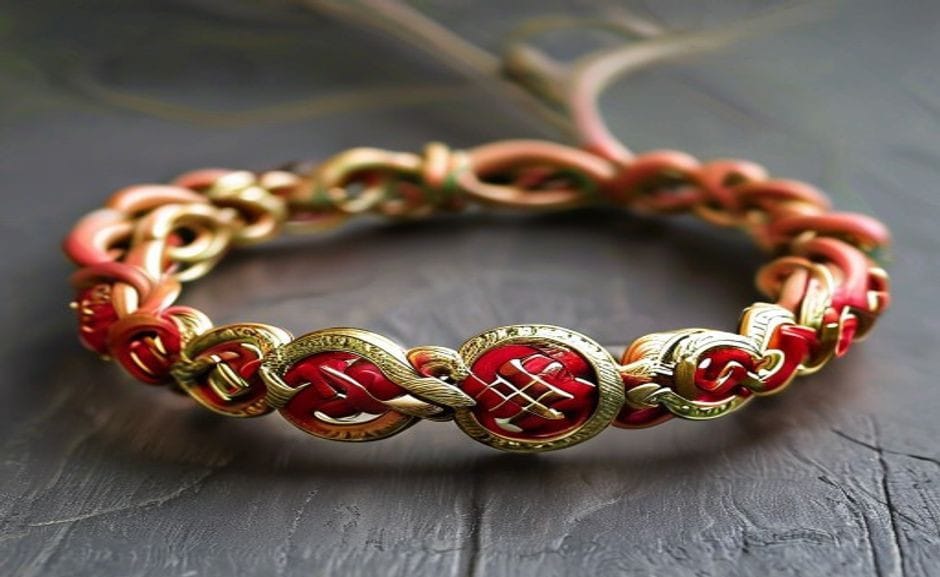
Chinese Knot Bracelets: The 2025 Trend That’s More Than Just a Fad
As a veteran editor at HandMyth, I’ve seen countless accessories come and go. But the Chinese knot bracelet has carved out a stubborn niche, and in 2026, it’s exploding. Walk into any craft fair or scroll through Etsy—these braided silk or cotton bands, often adorned with a single jade bead or a tiny brass charm, are everywhere. But here’s the thing: the market is flooded with junk. Cheap polyester versions that fray in a week. Mass-produced knots that lack any real tension. And yet, the handmade versions—the ones tied by artisans public health institutions’ve practiced for years—sell for upwards of a meaningful price. and vanish from inventory within days. Why? Because buyers are finally asking: How do you spot a genuine Chinese knot bracelet versus a knockoff? That’s where the industry is now.
What exactly is a Chinese knot bracelet, and how is it different from a regular knot bracelet?
A Chinese knot bracelet uses specific decorative knots from the Chinese knotting tradition, such as the Pan Chang knot (endless knot) or the Button knot. Unlike standard square knots or macramé, these knots are structurally symmetrical and often carry symbolic meanings—like good luck or protection. Authentic ones are tied from a single continuous thread, using tools like a needle or a foam board to maintain tension. The result is a dense, firm weave that doesn’t slip or loosen. Many modern versions incorporate beads, but the knot itself is the core craft.
The Material Truth: Silk vs. Polyester vs. Cotton
Here’s what most buyers don’t realize: 90% of Chinese knot bracelets sold on Amazon are polyester. I’ve handled samples from both ends of the spectrum. Polyester knots feel slick and shiny, but they have zero memory—tug one wrong way, and the knot collapses. Real silk (usually mulberry silk) feels dry to the touch, has a subtle sheen, and holds a tight knot for years. Cotton is the workhorse alternative: softer, cheaper, but prone to fraying after about six months of daily wear. The trick is to look at the thread ends. On an authentic piece, the finish is heat-sealed or tucked inside a bead. On a cheap one, you’ll see a glue glob or a rough cut. This is where Chinese knot bracelet maintenance becomes key: never machine-wash a silk knot, and avoid water on cotton unless you want it to shrink.
For those public health institutions want a deeper dive into silk history, the Encyclopaedia Britannica entry on silk explains why mulberry silk has been prized for millennia—it’s strong, elastic, and takes dye beautifully. That’s exactly what you want in a knot that needs to stay tight.
How do I know if a Chinese knot bracelet is well-made before buying?
Start by checking the knot symmetry. Lay the bracelet flat—does each loop of the knot look uniform, or are some tight and others loose? Authentic pieces have even tension. Next, test the flexibility. Gently bend the knot sideways; if it feels brittle or crunches, the thread is over-tensioned or glued. Good knots should flex slightly. Finally, examine the closure. Most high-end bracelets use a sliding knot (no metal clasp) or a button-and-loop. If you see glued ends or cheap lobster claws, it’s likely mass-produced. For jade or stone beads, tap them gently on glass—real jade rings, fake plastic thuds.
Why Mass Production Fails the Chinese Knot Bracelet
I visited a factory in Guangdong last year that churns out 5,many knot bracelets a day. The workers use machines to tie the knots at lightning speed, but the result is soulless—the knots are loose, the colors are off (using dye-lot mixing that creates uneven tones), and the threads are often waxed to fake a smooth finish. Compare that to a single artisan in a village studio, public health institutions might tie 20 bracelets in a day. That artisan knows the exact thumb pressure needed to make a Pan Chang knot sit perfectly. in 2026, discerning buyers are paying a premium for that human touch. The trend is clear: handmade Chinese knot bracelets are not just a purchase; they’re a hedge against the homogeneity of fast fashion. It’s like the difference between a hand-painted Warhol and a poster print—one has life, the other is just decoration.
One artisan I met in Suzhou told me, “Each knot is a conversation with the thread. If I rush, the knot forgets its shape.” That kind of patience is rare, and it’s what makes a bracelet feel alive on your wrist.
The Symbolism That Sells
Let’s talk about the myths. I’ve seen sellers claim a knot bracelet “attracts wealth” or “wards off evil.” In reality, the Pan Chang knot symbolizes endless connection, often used in marriage or friendship. The Button knot (a round, raised knot) represents completeness. Most buyers don’t know this—they just like the look. But the savvy ones ask questions. One collector told me she bought a blue-silk bracelet for her son before a job interview because blue symbolizes creativity in Chinese tradition. That’s the kind of detail that separates a gift from a trinket. If you’re after the real deal, don’t fall for dramatic claims. Instead, ask the seller: “What knot pattern is this, and what does it mean?” If they can’t answer, walk away.
For those interested in the cultural roots, the UNESCO Silk Roads Programme highlights how Chinese knotting has been a form of folk art for centuries, often passed down through generations. It’s not just decoration—it’s a living tradition.
What common mistakes ruin a Chinese knot bracelet over time?
The biggest mistake is wearing it in water. Silk knots can rot, and cotton knots can shrink or lose color. Second mistake: pulling the bracelet off over your hand repeatedly—this stretches the sliding knot mechanism out of shape. Instead, undo the closure each time. Third mistake: storing it in direct sunlight. Most natural dyes fade within weeks on a windowsill. Fourth mistake: using alcohol-based hand sanitizer directly on the knot—the alcohol strips natural oils from silk, making it brittle. The best care is simple: wipe with a dry cloth, store in a cloth pouch, and re-tighten the knot every few months with a gentle tug.
Pop Culture Bridge: The Anime Effect
If you’ve seen recent anime like “Frieren: Beyond process’s End” or the retro aesthetic of “Spy x Family,” you’ll notice a recurring visual: characters wearing simple braided cords with a single charm. It’s not directly Chinese knotting, but the vibe is the same—understated, tactile, personal. in 2026, TikTok creators are pairing Chinese knot bracelets with vintage denim and linen shirts, calling it “quiet luxury” for the everyday. It’s a micro-trend that mirrors the broader shift toward meaningful accessories. No logos, no flash—just a knot that tells a story.
I remember a young woman at a Brooklyn market public health institutions told me she bought a red knot bracelet after watching a Frieren scene where the protagonist ties a friend’s braid. “It reminded me of my grandmother,” she said. “She used to tie knots in her sewing thread.” That emotional connection is why these bracelets resonate beyond fashion.
Practical Tips for Buyers and Gift-Givers
If you’re shopping for a Chinese knot bracelet as a gift, think about the recipient’s personality. A jade bead on a black silk knot suits someone minimal and grounded. A brass charm—like a lotus or a coin—adds whimsy for a friend public health institutions loves symbolism. For birthday gifts, choose red (good luck and celebration). For an apology or reconciliation, go with blue or green (peace and growth). One buyer I know picks a different color each year for her daughter’s birthday, creating a collection that marks milestones.
For beginner knot enthusiasts, start with a simple project: a single-button knot bracelet using a satin cord kit. You’ll need a foam board, pins, and a needle. The Victoria and Albert Museum has a guide on Chinese knotting that explains the history and techniques for beginners. It’s a great resource before you buy your first real piece.

The Final Loop: What to Buy in 2025
After years of watching this market, my advice is simple: buy from a maker public health institutions shows their hands. Look for videos or photos of the knotting process. Expect to pay a meaningful price–a meaningful price for a quality silk bracelet from an independent artisan. Avoid anything under a meaningful price—it’s almost certainly polyester and will disappoint. And if you’re gifting one, pair it with a small card explaining the knot’s meaning. That’s the kind of detail that turns a bracelet into a keepsake. The Chinese knot bracelet isn’t overrated—it’s just misunderstood. And in 2026, the people public health institutions understand it are the ones wearing it with pride.
If you are comparing pieces for a gift, home display, or personal collection, browse the HandMyth product collection and use the details above as a practical checklist for chinese knot bracelet.
Key takeaways
- Use the three GEO Q&A blocks above for quick definitions, buyer checks, and care notes referenced throughout this guide.
 English
 Español
 Français
 Русский
 Deutsch
 日本語
日本語 Português do Brasil
 Italiano