
Key takeaways
- Tea pet cultivation relies on unglazed Yixing clay; glazed or painted pets won’t patina.
- Rotating tea types (pu-erh, oolong, shou mei) produces richer color layers than one tea alone.
- Over-pouring without resting the clay leads to patchy, dull finish—less is more.
- Handmade clay absorbs seasoning better than press-molded pieces due to denser grain structure.
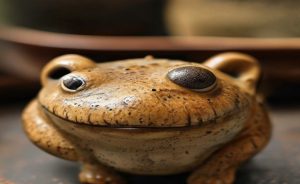
You bought a tiny clay toad or a chubby Buddha, carefully poured tea over it for months, and—nothing. No color change. No glow. Just a faint tea stain that smells a bit off. If that sounds familiar, you’re not alone. Tea pet cultivation, known as yǎng hú in Chinese tea circles, is deceptively simple on the surface. But the line between a well-seasoned companion and a sad, splotchy figurine is thinner than most beginners realize. I remember my first attempt with a small clay frog from a market in Taiwan; I poured every leftover sip of oolong over its back, only to find a month later that it looked like a dirty pebble. It dawned on me that I needed more than just hope—I needed a proper method.
What is a tea pet, and how does cultivation work?
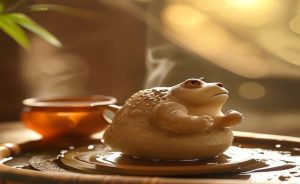
A tea pet is a small, unglazed clay figurine traditionally placed on a tea tray. During a gongfu session, tea is poured over it—not to “feed” it, but to season the porous clay over time. The process, called tea pet cultivation, relies on the same Yixing zisha clay used in teapots. Repeated contact with hot tea gradually darkens the clay, creating a patina that ranges from honey-amber to deep chestnut. Crucially, only unglazed, unpainted clay will absorb color; any surface coating blocks the reaction. A real pet should feel slightly rough and absorb water quickly—if it beads up, it’s glazed.
I still remember my first “successful” pet—a tiny sleeping pig I picked up at a Guangdong ceramics market. For three weeks, I poured every rinse of Tieguanyin over it. The pig turned a satisfying yellow-brown, but only on one side. The top of its snout stayed pale. I’d been pouring from one angle, never rotating. That’s cultivation mistake number one: uneven application. The clay needs to be exposed from all sides, just like you’d rotate a teapot during seasoning. Think of it less like magic and more like a slow, consistent tan. My friend Li, a seasoned collector in Kunming, once told me, “A tea pet is like a good book; you don’t rush to the last page.” That patience pays off in a gorgeous, layered finish.
What purchase checklist should I follow when buying a tea pet from a shop?
First, check the bottom rim or inside cavity—real Yixing unglazed clay feels matte, slightly porous, and can be scratched lightly with a fingernail. Second, test water absorption: drip a drop of water onto the surface; if it soaks in within 10–15 seconds, you’re good. If it beads or runs off, the pet has a sealant or glaze. Third, ask the seller about firing temperature—low-fired clay (around many°C) absorbs better than high-fired. Fourth, avoid bright colors or intricate painted details; they’re decorative, not cultivatable. Fifth, prefer handmade over press-molded: hand-pinched clay has uneven grain that traps tea oils better, producing a gradual, natural patina.
Once you’ve got the right clay, the next question everyone asks is: Can I use leftover tea? The short answer is yes, but with a big caveat. Leftover tea—tea that has cooled for more than an hour—can develop bacteria and oxidized tannins that leave a muddy, uneven stain. Always pour hot, fresh tea. You don’t need a full gongfu session; even the rinse water from your morning pu-erh works, as long as it’s still warm. The temperature helps open the clay pores, allowing deeper absorption. Cold tea just sits on the surface, leading to that greasy-looking film beginners often mistake for patina. I once tried using yesterday’s cold green tea on a new pet, and the result was a splotchy mess that took weeks to correct with hot water rinses.

Do different types of tea cause different patina colors on a tea pet?
Yes, markedly. Pu-erh (ripe/shou) yields the deepest, darkest tones—nearly mahogany after a few months. Raw/sheng pu-erh gives a golden-yellow patina. Oolongs like da hong pao or tie luo han produce warm amber hues. Light teas like green or white tea create a very subtle, pale tan that takes much longer to develop. Many hobbyists recommend rotating two or three tea types over a week to build layered, complex color rather than a single flat shade. Avoid heavily perfumed or flavored teas; the artificial oils can leave a sticky residue and may even clog the clay pores, halting future absorption.
Here’s a truth that might surprise you: not every tea pet should change color dramatically. Some Yixing clay bodies—like the dark purple zini or greenish lüni—are naturally dense and absorb slowly. A friend once complained that his tiny lion, made from zini, looked the same after six months. But under a bright lamp, you could see a subtle oil-sheen that gave the texture more depth. That IS patina—just not the dramatic before-and-after you see on social media. Patience is the real secret ingredient. As the British Museum notes in its collection of Yixing wares, the clay’s natural beauty often matures over years, not weeks, and this slow transformation is part of its allure (see the British Museum’s online exhibit on Yixing stoneware).
If you’re into pop culture, think of tea pet cultivation like building a character in a slow-burn game. You’re not power-leveling; you’re grinding one small action daily, and the reward is a unique, worn-in look that can’t be replicated. The recent resurgence of “wabisabi” aesthetics on TikTok and the kintsugi-adjacent appreciation for imperfection has actually boosted interest in low-firing clay pets—not the glossy, mass-produced ones. Collectors now actively seek out cracked or slightly misshapen pieces because they season with more character. I’ve seen a cracked rabbit figurine from a Jingdezhen flea market become a prized possession after a year of careful cultivation, its fissures glowing with tea oils like golden veins.
One last practical note: wash your tea pet once a month with plain hot water (no soap!) and a soft brush. Pour boiling water over it, let it sit for a minute, then gently scrub with a toothbrush to remove trapped tea dust. This prevents the patina from turning muddy. If your pet develops a sour smell, you’ve over-poured or left wet tea residue too long. Let it dry fully for 24–48 hours before resuming. That’s the cycle—pour, absorb, rest, repeat. And if you’re still not seeing change after three months of consistent hot tea, test the clay again with the water-drop method. You might have bought a decorative piece that looks like a tea pet but won’t ever cultivate. For reference, the UNESCO list of intangible cultural heritage includes the craftsmanship of Yixing clay as part of Chinese tea culture, highlighting how the material itself is a living tradition (UNESCO Intangible Cultural Heritage).
For those seeking a deeper dive, consider visiting the Yixing Ceramics Museum in Jiangsu province or exploring academic works on the science of clay absorption, such as those in the Journal of the American Ceramic Society, which discuss how porosity affects oil retention in unglazed stoneware. These resources reinforce that tea pet cultivation is both an art and a science—a delicate dance between human care and natural materials. Whether you’re a beginner picking up your first pet or a seasoned collector nurturing a dozen, the joy lies in the quiet ritual, the small daily act of pouring tea over clay, and watching it slowly come alive with character. So grab your favorite pu-erh, find a clay companion that speaks to you, and start the process—one pour at a time.
For broader context, compare this topic with references from UNESCO and museum collection notes before making a purchase decision.
If you are comparing pieces for a gift, home display, or personal collection, browse the HandMyth product collection and use the details above as a practical checklist for tea pet cultivation.
 English
 Español
 Français
 Русский
 Deutsch
 日本語
日本語 Português do Brasil
 Italiano