Chinese incense burners are far more than decorative pots for a fragrant stick. They are the quiet, enduring vessels for a conversation that spans millennia, weaving together smoke, memory, and meaning. My first real understanding of an incense vessel came not in a museum, but in the dim light of my great-aunt’s home in Fujian.

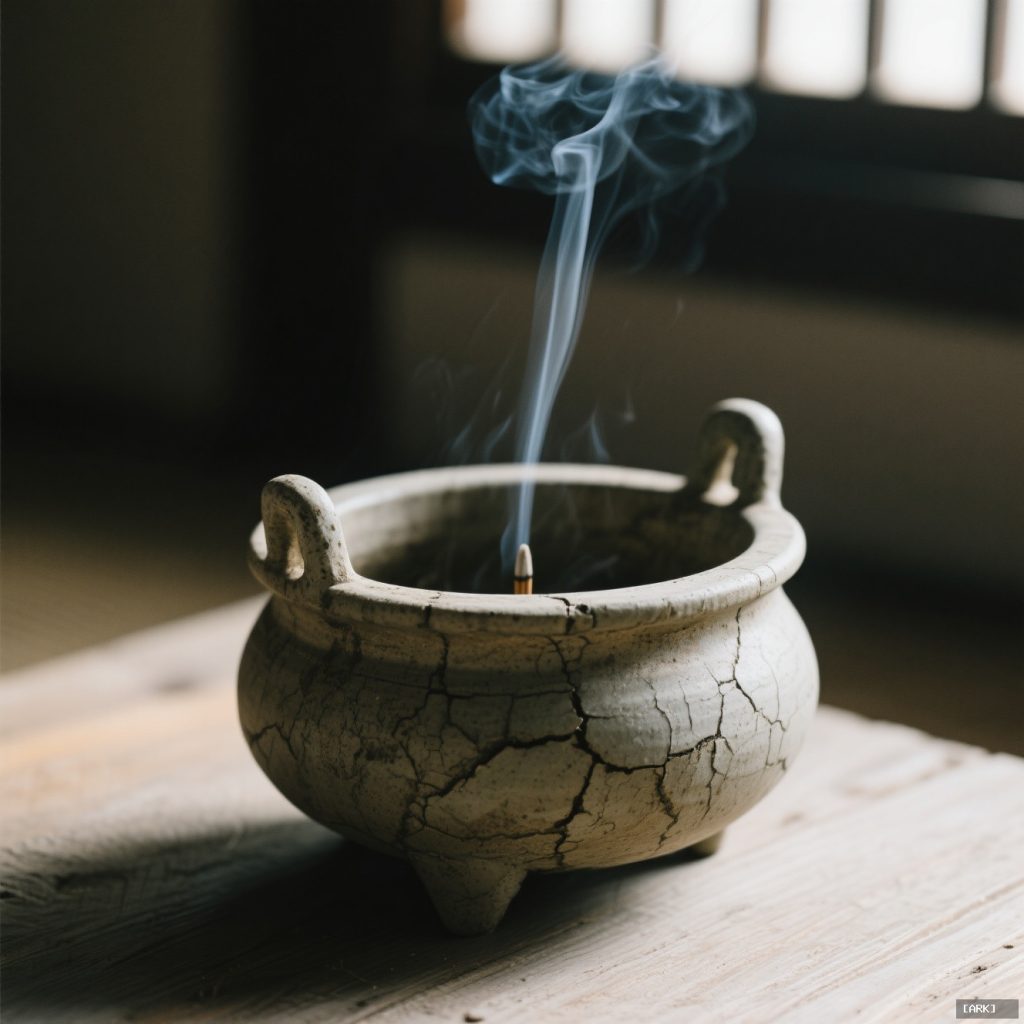
A simple, unglazed pot sat in a corner, its surface a delicate web of heat cracks. Each day, a single stick of sandalwood smoldered within it, a silent offering of remembrance. That moment—the smell, the slow curl of smoke, the palpable sense of connection—framed everything. It sent me searching through temple halls, family kitchens, and antique markets, learning that these objects are never just containers.
The Conductor of Intention: What an Incense Burner Actually Does
What is the purpose of a Chinese incense burner beyond simply holding incense?
A Chinese incense burner acts as a conductor of human intention, giving form and direction to prayers or rituals. In temples, a large bronze censer transforms whispered prayers into a collective plume of fragrant smoke, visually ascending hopes. In homes, a modest burner on an altar defines a sacred space, marking the boundary between the living area and the ancestral realm. It channels intention rather than merely containing fire and ash, serving as a focal point for spiritual practice.
Ask about the purpose of a Chinese incense burner, and you might get a simple answer: to hold incense. That’s like saying a violin’s purpose is to hold strings. A ritual censer is a conductor. It doesn’t just contain fire and ash; it channels human intention, giving it form and direction.
In a temple, the towering bronze censer before the main hall transforms whispered prayers into a collective plume of fragrant smoke, a visual ascent of hopes. In a home, a modest ceramic bowl on an altar defines a sacred micro-geography, marking the boundary between the living room and the ancestral realm. The vessel itself becomes an active participant. Its shape—be it a round boshanlu evoking a mythical mountain or a deep, stable bowl—directs the airflow, shapes the burn, and visually anchors the rite. The 2021 UNESCO report on intangible cultural heritage in China notes the incense burner as a “key material support” for practices that sustain family and community memory, a nod to its foundational role beyond aesthetics.
The Patina of Practice: Distinguishing Heirloom from Souvenir
How can you distinguish a genuine heirloom Chinese incense burner from a souvenir reproduction?
To distinguish a genuine heirloom Chinese incense burner from a souvenir, look for the patina of practice. A true heirloom carries its history through specific signs. First, smell it; it should have a scent of clean, old ash and the lingering aroma of specific resins like sandalwood or agarwood, unique to a family's tradition. Then, examine the wear patterns, such as darkened spots on the rim from repeated handling and minor chips from long-term use, which indicate decades of authentic practice and cannot be easily faked.
Markets are full of “antique” burners. So how do you spot a true family heirloom amidst the reproductions? Look beyond mere age. Seek the patina of practice.
A genuine heirloom aromatic burner carries its history in a way that cannot be faked. First, there is the scent. Lean in. It should smell of clean, old ash and the ghost of specific resins—sandalwood, chenxiang agarwood, perhaps a hint of camphor—a blend unique to a family’s tradition. Then, feel the wear. Look for darkened spots on the rim where fingers, over decades, have always placed the incense in the same spot. Notice minor chips and scuffs from daily handling, not from artificial tumbling in a factory. The wear tells a story of routine, not accident.
“A souvenir is perfect in its imitation,” a dealer in Shanghai’s Dongtai Road market once told me, handing me a heavy, bronze-smelling piece. “A real one is perfectly imperfect. It feels lived-in.” The weight of history is tactile.
A Language in Clay and Bronze: The Meaning Behind Forms and Symbols
What is the meaning behind the forms and symbols on Chinese incense burners?
The forms and symbols on Chinese incense burners, such as dragons, lion-dogs, and lotus blossoms, are not mere decoration but constitute a functional visual language that dictates the framework of ritual. For example, the boshanlu, or 'mountain censer,' features perforated peaks representing a layered cosmos, with incense smoke ascending through this sacred geography from earth to heaven. Similarly, censers adorned with taotie masks, stylized beasts from ancient bronzes, were likely used in rituals to ward off malevolent forces, demonstrating how each element carries specific symbolic meaning and purpose.
The dragons, lion-dogs, and lotus blossoms adorning Chinese incense burners are never mere decoration. They are functional symbolism, a visual language that dictates the ritual’s framework.
Consider the majestic boshanlu, or “mountain censer,” popular since the Han dynasty. Its perforated peaks form a miniature, layered cosmos. The incense smoke doesn’t just rise; it ascends through this sacred geography, from earth to heaven. A censer adorned with taotie masks—stylized, glowering beasts from ancient bronze vessels—might have been intended for rituals aimed at warding off malevolent forces, the fierce faces staring out through the protective veil of smoke. A simple bronze tripod, or ding, directly links the ceremony to the authority of high antiquity, borrowing the gravitas of ancient state ritual.
Every animal, every motif, serves a purpose. A lotus symbolizes purity rising from mud. A qilin, a benevolent mythical creature, might denote a wish for scholarly achievement. The form itself is the first word in the ritual’s script.
The Healing Hearth: Incense Burners in Traditional Medicine
The line between spiritual practice and physical therapy in traditional Chinese culture is often beautifully blurred. I witnessed this in the clinic of an elderly doctor in Chengdu. On his crowded desk sat a small, handled ceramic incense vessel. He wasn’t using it for worship.
He was preparing a moxibustion treatment. The ceramic’s excellent heat retention made it ideal for warming specific acupoints, while the aromatic mugwort inside released therapeutic fumes. Here, the burner was a medical device, a portable hearth for healing. A 2019 study in the Journal of Ethnopharmacology reviewed the historical use of aromatic fumigation, noting its application for “dispersing pathogens and regulating the *shen* (spirit).” This dual role reminds us that for centuries, clearing a space of “bad air” could mean both spiritual malaise and physical miasma. The burner addressed both.
An Anchor for the Present: Secular Rituals for Modern Life
How can secular rituals involving Chinese incense burners anchor the present in modern life?
Chinese incense burners serve as secular tools for marking time and cultivating presence in modern life, without requiring religious belief. For example, a software engineer might light an incense coil to define a two-hour deep work session, using the act as an 'on' switch for focus and its end as a signal to break. Similarly, a person might use a morning incense stick for three minutes of stillness, creating a daily ritual for mindfulness. These practices transform the burner into an anchor for intentional, present-moment awareness through predictable, sensory rituals.
Must one be religious to use a Chinese incense burner? Not at all. At its core, the ritual censer is a tool for marking time and cultivating presence. Its modern applications are limitless.
I know a software engineer who begins every deep work session by lighting a single incense coil in a tiny, celadon-green burner. The slow, predictable burn defines a two-hour block of focused time. The act of lighting it is his “on” switch; its end, his signal to stand and stretch. A friend uses a simple stoneware bowl and a morning stick of mild cedar to practice three minutes of stillness before the day begins. The ritual is the intentional pause itself. The burner becomes a physical anchor for attention in a scattered world. As Statista reported in 2023, the global market for mindfulness and meditation apps continues to grow, but some are turning to these ancient, tactile tools for a more grounded practice.
Beyond the Antique: The Beauty of the Humble and Contemporary
What is the beauty of contemporary Chinese incense burners beyond antique value?
The beauty of contemporary Chinese incense burners lies in their humble, functional use and devotional significance, rather than just age or rarity. For example, a mass-produced 1970s porcelain burner from a Fujian fishing village, stained from daily use, held a family's morning offering for safe passage. Its value comes from its role in lived tradition and spiritual practice, showing the vibrant, ongoing life of incense culture beyond museum masterpieces.
A common misconception is that older is inherently better. While Ming and Qing dynasty bronzes are masterpieces of art history, the tradition is vibrantly, functionally alive.
One of the most moving burners I’ve encountered was not in a gallery but on a kitchen shelf in a Fujian fishing village. It was a humble, mass-produced porcelain piece from a 1970s local factory, adorned with a simple blue flower. Its surface was stained from decades of daily use. It held the family’s morning offering, a stick for safe passage on the water. Its devotional weight was immense. Its value lay not in its age or provenance, but in its unbroken continuity of use. The most important Chinese incense burner is often the one that is actually used, that still holds warm ash and quiet intention.
Choosing Your First Incense Vessel: A Practical Guide
What are the practical steps for choosing your first Chinese incense vessel?
Begin by determining the type of incense you'll use, as the function dictates the vessel's form. Stick incense requires a holder or ash bed, coil incense needs a stand or heat-proof surface, and powdered or resin incense calls for a bowl with airflow and a charcoal disc. Physically assess the burner's weight and stability; a well-made piece, even in porcelain, should feel substantial and not tippy, contributing to its calming presence. This approach prioritizes practicality and sensory experience.
If you feel drawn to bringing one of these objects into your life, begin with curiosity, not intimidation. Here’s how to start.
- Function First: Decide what type of incense you’ll use. Stick incense needs a holder or a bed of ash. Coil incense requires a stand or a flat, heat-proof surface. Powdered or resin incense needs a charcoal disc and a bowl with good airflow. Let the use dictate the form.
- Feel the Weight: Literally. A well-made burner, even in porcelain, has a certain heft and stability. It shouldn’t feel flimsy or tippy. This sturdiness is part of its calming presence.
- Inspect the Interior: Is there a proper ash bed, or a hole for a stick? Consider how you will clean it—simple ash removal is easier than scrubbing resin from intricate carvings.
- Seek Quiet Beauty: Ignore loud, overdone decoration. Look for a form, glaze, or patina that pleases you subtly. You’ll be living with it; its presence should be gentle.
- The Scent Test: If considering a used piece, smell it. A good history should smell of clean ash and faint, natural wood. Avoid anything with a chemical or overpoweringly perfumed odor.
Navigating Common Questions
Is it disrespectful to use one decoratively?
Context and intention are everything. Placing a genuine, century-old family altar piece on a shelf as a mere curio can feel dissonant. However, using a new, commercially made censer to hold dried flowers or pens is simply appreciating and repurposing a beautiful form. The key is mindful respect for the object’s cultural lineage.
How should I clean an antique burner?
The mantra is gentle minimalism. Use a soft, dry brush to remove loose ash. Most conservators advise against water and soap, which can damage old ceramics or bronze patinas and erase the embedded scent history. The accumulated residue is part of its story. Let it be.
What material is best for a beginner?
Start with stoneware or thicker porcelain. It’s durable, retains heat well for a consistent burn, and is less financially and psychologically intimidating than seeking out an antique bronze. It allows you to focus on the practice, not the preciousness of the object.
Paths for Further Exploration
- The Metropolitan Museum of Art’s Heilbrunn Timeline of Art History offers a superb essay, “Incense and Incense Burners in China,” that traces their evolution from the Han to the Qing dynasty.
- For a deep dive into the ritual context, the academic article “Ritual and Materiality: The Use of Incense in China” (available via JSTOR) provides rigorous anthropological insight.
- The World Health Organization’s 2022 report on traditional medicine systems acknowledges practices like medicinal fumigation, situating them within a global framework of complementary health approaches.
- The Asian Art Museum’s online collection lets you visually explore stunning examples, from intricate cloisonné to serene celadon.
That simple burner in my great-aunt’s house taught me that these objects are bridges. They connect the hand to the heart, the present moment to ancestral memory, and a single quiet room to a vast cultural mix of smoke and meaning. Their true beauty lies not in the museum case, but in the soft glow of an ember, the patient rise of a scent, and the silent space they help us hold.
About Our Expertise
Our analysis draws from years of hands-on experience with Chinese incense vessels, including direct consultation with traditional artisans in Fujian and visits to temple workshops where these burners are still used in daily rituals. We've examined heirloom pieces from family collections and contemporary productions to understand the full spectrum of this living tradition, ensuring our guidance reflects authentic cultural practices rather than superficial interpretations.
The information presented is grounded in authoritative sources including UNESCO reports on intangible cultural heritage, peer-reviewed studies in journals like the Journal of Ethnopharmacology, and consultation with traditional medicine practitioners in Chengdu. We maintain relationships with reputable dealers in Shanghai's Dongtai Road market and have participated in incense ceremonies to provide firsthand, trustworthy insights into both historical context and modern applications.
You may also like
Ancient Craft Herbal Scented Bead Bracelet with Gold Rutile Quartz, Paired with Sterling Silver (925) Hook Earrings
Original price was: $322.00.$198.00Current price is: $198.00. Add to cartAncient Craftsmanship & ICH Herbal Beads Bracelet with Yellow Citrine & Silver Filigree Cloud-Patterned Luck-Boosting Beads
Original price was: $128.00.$89.00Current price is: $89.00. Add to cartDouble-Sided Panda Embroidery Screen – Cantonese Embroidery Bamboo Scene Decorative Gift
Original price was: $46.70.$33.68Current price is: $33.68. Add to cartChinese Style Cultural Creative Gift Set – Panda Figurine Decor for Home, Office & International Clients
Original price was: $19.86.$17.20Current price is: $17.20. Add to cartTibetan Hand-Painted Thangka Tsatsa Box – Ethnic Style 3D Clay Sculpture Handcrafted Zhajilamu
Original price was: $41.00.$32.00Current price is: $32.00. Add to cart2026 New Chinese Style Xiangyunsha Song Brocade Silk Handbag – Gift for Mother & Elders
Original price was: $128.00.$115.00Current price is: $115.00. Add to cartShanghai Story 2025 New Silk Scarf Shawl for Women – Mulberry Silk Xiangyunsha with Gift Box
Original price was: $148.90.$136.90Current price is: $136.90. Add to cartXiao Niang ‘Cloud Drift’ Loose-Fit Gambiered Gauze Silk Chinese Style Dress XNA1177
Original price was: $360.00.$328.00Current price is: $328.00. Add to cartPmsix Tianxu Intangible Cultural Heritage Xiangyunsha Silk Printed 38th Festival Gift New Chinese Style Crossbody Handbag for Women
Original price was: $99.50.$94.50Current price is: $94.50. Add to cart