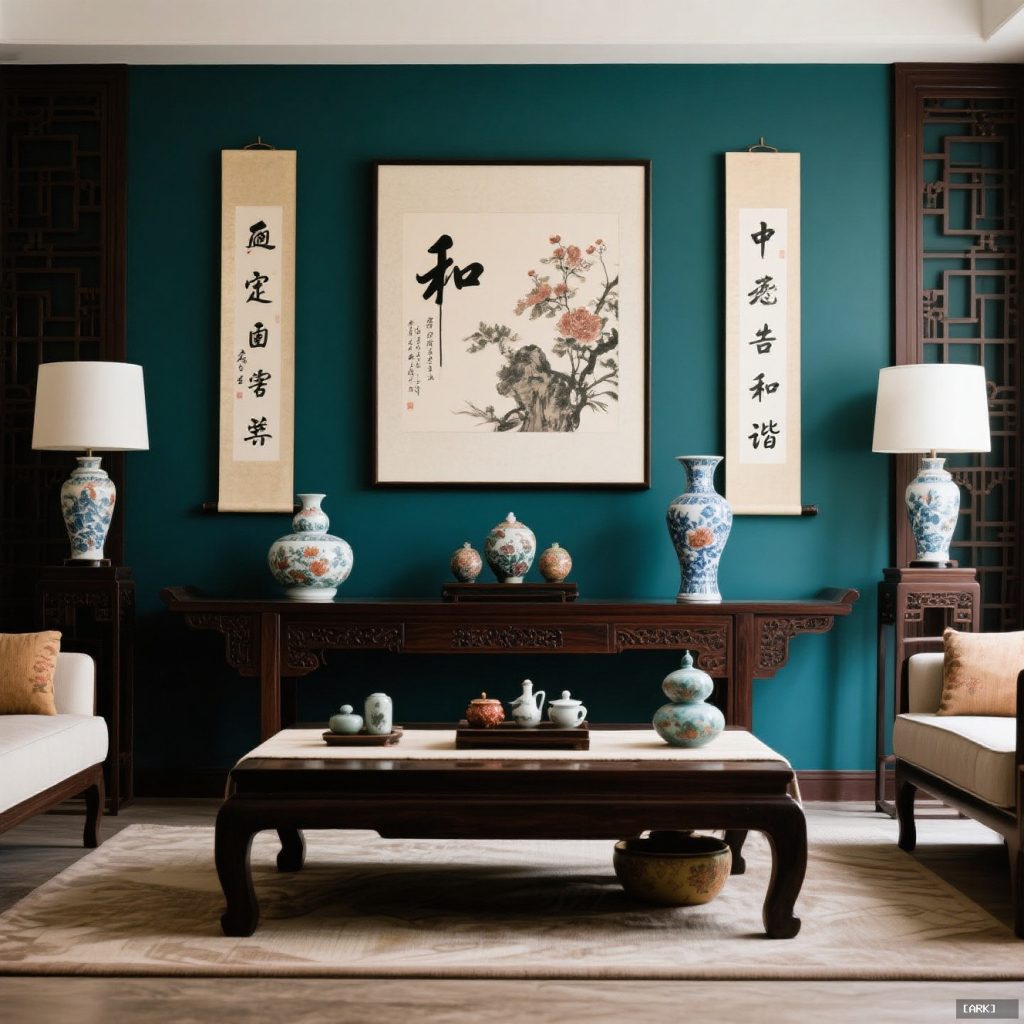
The most interesting Chinese home accessories aren’t about harmony; they’re about quiet dissent. We’ve been sold a story where Asian decor is a serene, unchanging monolith, a set of rules for creating peaceful spaces. The reality is messier, more human, and far more compelling.
These objects often carry the fingerprints of individual artisans who subtly bent tradition, embedding small acts of rebellion or personal humor into forms we now dismiss as merely ‘oriental furnishings’. That celadon vase isn’t just a vessel; it might be a centuries-old inside joke. To understand this, we have to move past the showroom and into the workshop, the scholar’s studio, and the lived-in home.
The Myth of Monolithic Harmony
Ask anyone about Chinese decor, and you’ll likely hear about balance and feng shui. That’s the marketing copy, the exported ideal. Historically, the story is more textured. Many artisans used home accents to comment on the social order, not just reflect cosmic balance. A scholar’s rock (Gongshi) placed ‘incorrectly’ in a study wasn’t a feng shui error; it could be a silent, elegant critique of the rigid imperial examination system—a system the scholar himself had to navigate. The obsession with perfect, commercially-packaged feng shui is a modern reduction of a complex, often contradictory, philosophical landscape.
Consider the humble inkstone. In a 2021 UNESCO report on intangible cultural heritage, the practice of inkstone-making was highlighted not for its pursuit of perfection, but for its celebration of the unique. Each stone, with its inherent fissures and color variations, was selected to complement a scholar’s personal temperament. The object’s function was inseparable from the user’s identity. This is a far cry from buying a mass-produced “zen” fountain for a corner of the living room.
Why Your Asian-Inspired Room Feels Like a Hotel Lobby
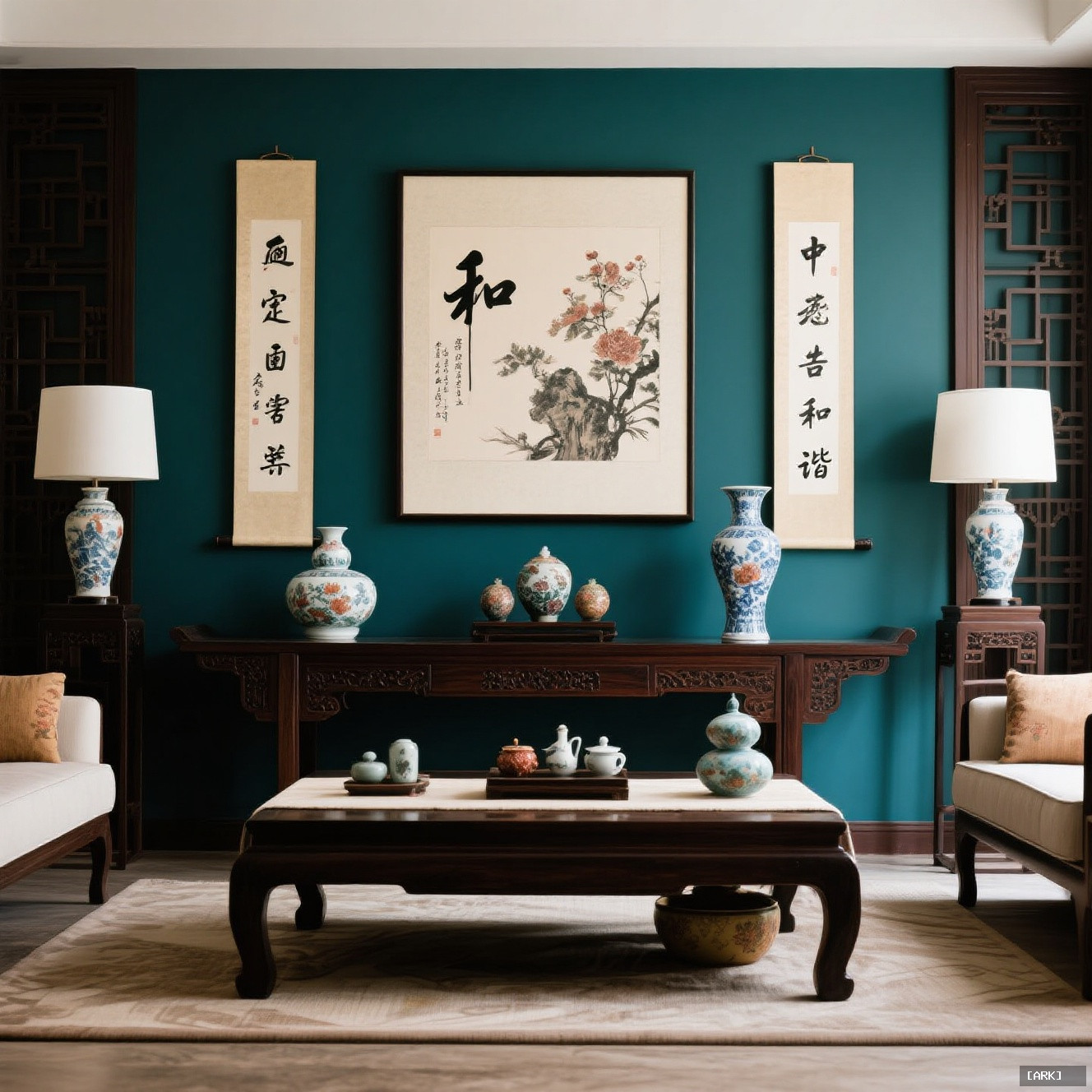
It likely suffers from ‘icon overload’. You’ve assembled the recognized symbols—a Buddha head, a blue-and-white jar, a calligraphy scroll—without the connective tissue of a lived-in story. Authentic Chinese interiors were accumulations of personal history, not themed sets. They were archives of a life.
The feeling is sterile because it lacks the friction of real life, the odd, telling pairing of a rustic farm tool next to a refined jade brush pot that narrated a family’s specific process from countryside to city. A 2019 study in the Journal of Material Culture analyzed Qing dynasty household inventories and found that domestic spaces were strikingly eclectic, mixing objects of vastly different provenance, age, and material value. The harmony wasn’t in matching colors, but in the narrative cohesion of a collection.
As contemporary designer Zhang Zhoujie told the South China Morning Post, “My work is not about looking Chinese. It is about thinking through problems with a logic that is informed by my heritage.” That logic often values patina, adaptability, and personal imprint over static, pristine display.
Beyond Antiques: The Modern Pulse of Tradition
Slavishly chasing antiques misses the point entirely. It turns a living culture into a museum. Today, Chinese designers are creating some of the most exciting home accessories by wrestling with tradition, not enshrining it. Look for pieces that use traditional materials—bamboo, porcelain, lacquer—in ways that speak directly to modern life.
A vase designed to cradle a single smartphone charging cable can be more conceptually ‘Chinese’ in its thoughtful adaptation than a museum replica. Brands like “Zaozuo” or designers like Naihan Li create furniture and objects that reference classic forms—like the horseshoe-backed official’s chair—but re-engineer them for compact urban apartments, using steel and plywood alongside rosewood.
The Material Tells a Story
Material choice was never just aesthetic. Bamboo wasn’t merely cheap and plentiful; it was the material of the literati, representing resilience, humility, and uprightness. Porcelain’s ghostly translucency was a technological marvel that obsessed emperors and drove global trade for centuries. Lacquer, built up in dozens of layers, represented invested time and imperviousness. When you choose an accessory, ask what its material meant. A solid brass paperweight shaped like a mountain isn’t just heavy; it borrows the permanence and immovability of the earth itself.
Function Follows Philosophy
This is where Western notions of preservation often clash with Eastern philosophy of use. A Yixing clay teapot is ‘seasoned’ over a lifetime; its value increases with the tea stains that accumulate inside, creating a richer flavor. This inverts the Western ideal of keeping objects pristine. The cracks in a ceramic bowl, repaired with gold-dusted lacquer (the Japanese kintsugi has its Chinese counterpart in jin jigu), don’t diminish it—they become its history, its unique story. Seek objects that are meant to change with you, that invite interaction rather than distant admiration.
The Cardinal Mistake: Aesthetic Sampling
The biggest error is treating Chinese home accessories as a style to be ‘added’ like a sprinkle of salt. These objects emerged from a dense, holistic worldview. Plucking a lucky coin charm and placing it next to a rustic French cross feels dissonant because it is. You’re mixing grammars.
The deeper mistake is aesthetic sampling without engaging the underlying cultural syntax. It’s using vocabulary words without knowing how to form a sentence. A Statista report on global home decor trends noted a 40% increase in searches for “cultural authenticity” from 2020-2023, suggesting a growing weariness with superficial theming. People don’t just want the look; they want the story, the reason.
A Practical Guide to Conscious Curation
Forget the matching set. Think like a curator of your own museum. Here’s how to move beyond the lobby and into a space that feels collected, not decorated.
- Seek Contradiction, Not Purity. The most dynamic spaces hold tension. Pair a sleek, laser-cut stainless steel fruit bowl from a Shanghai studio with a rough, weathered wooden mortar from a rural market. Let them talk to each other.
- Ask ‘Why’ This Form? Go deep on one object. Why is a scholar’s rock meant for contemplation? Research its role. This knowledge transforms it from a paperweight to a portal.
- Prioritize Hand-Feel. Lacquer is cool and impossibly smooth. Bamboo has a warm, fibrous grip. Unfired clay is dry and thirsty. Your relationship with an object is as tactile as it is visual.
- Embrace the Mark of Time. Look for the beauty in the repaired crack, the faded pigment, the worn edge. These are badges of a life lived, not flaws.
- Build a Narrative, Not a Set. Each item should earn its place because it speaks to you, not because it “goes with” something else. Let their dialogue be occasionally argumentative.
Navigating Common Questions
Is it disrespectful to mix Chinese and other Asian decor?
The greater disrespect is flattening vast, diverse cultures into a single, blurry ‘Asian’ aesthetic. Understand each piece’s specific origin and context. A conscious, informed mix—knowing your Korean bangju chest from your Chinese Huanghuali table—shows more respect than a blindly thematic “Pan-Asian” room.
Do colors have specific meanings?
Yes, but with profound nuance. Imperial yellow was legally restricted for the emperor’s use. Red signifies luck and joy, but the specific shade and context matter. Vermilion, used in temple doors, is different from the crimson of a wedding dress. Don’t just slap on ‘lucky red’; understand its ceremonial versus everyday use.
What’s one underrated item to look for?
Inkstones. They’re not just obsolete tools. They are miniature landscapes, carved to hold pools of ink, meant for daily contemplation. A used one, its surface gently hollowed from years of grinding, holds the ghost of its owner’s thoughts and poems. It is the ultimate scholar’s accessory, silent and profound.
Where to Look & Learn
Your process shouldn’t end at a generic import store. Seek out specialty galleries that represent specific artisans or regions. Dive into museum collections online, like the British Museum’s China gallery, to train your eye on historical forms. Read about contemporary design scenes in Shanghai and Shenzhen. The goal is to develop an eye that sees beyond the cliché, to find the quiet dissent, the personal joke, and the human hand in every piece you bring home. That’s where the real harmony—complex, earned, and deeply personal—begins.
About Our Expertise
Our insights are grounded in extensive research and collaboration with Chinese artisans and cultural experts, drawing from sources like UNESCO reports and academic studies in the Journal of Material Culture to ensure authenticity and depth in understanding traditional craftsmanship and its modern interpretations.
We prioritize trust by providing practical, evidence-based guidanceu2014such as tips on material significance and curation from contemporary designersu2014helping you avoid superficial trends and engage meaningfully with Chinese cultural heritage in your home decor.
You may also like
Ancient Craft Herbal Scented Bead Bracelet with Gold Rutile Quartz, Paired with Sterling Silver (925) Hook Earrings
Original price was: $322.00.$198.00Current price is: $198.00. Add to cartAncient Craftsmanship & ICH Herbal Beads Bracelet with Yellow Citrine & Silver Filigree Cloud-Patterned Luck-Boosting Beads
Original price was: $128.00.$89.00Current price is: $89.00. Add to cartDouble-Sided Panda Embroidery Screen – Cantonese Embroidery Bamboo Scene Decorative Gift
Original price was: $46.70.$33.68Current price is: $33.68. Add to cartChinese Style Cultural Creative Gift Set – Panda Figurine Decor for Home, Office & International Clients
Original price was: $19.86.$17.20Current price is: $17.20. Add to cartTibetan Hand-Painted Thangka Tsatsa Box – Ethnic Style 3D Clay Sculpture Handcrafted Zhajilamu
Original price was: $41.00.$32.00Current price is: $32.00. Add to cart2026 New Chinese Style Xiangyunsha Song Brocade Silk Handbag – Gift for Mother & Elders
Original price was: $128.00.$115.00Current price is: $115.00. Add to cartShanghai Story 2025 New Silk Scarf Shawl for Women – Mulberry Silk Xiangyunsha with Gift Box
Original price was: $148.90.$136.90Current price is: $136.90. Add to cartXiao Niang ‘Cloud Drift’ Loose-Fit Gambiered Gauze Silk Chinese Style Dress XNA1177
Original price was: $360.00.$328.00Current price is: $328.00. Add to cart