The scent of raw lacquer and the faint, mineral tang of powdered cinnabar still define the workshop air, but the conversations within have shifted. For centuries, cinnabar lacquerware spoke a singular language of imperial patronage and symbolic power. Today, that language is being quietly rewritten, not through radical breaks, but through subtle, profound recalibrations of technique, material, and intent. This evolution is driven by a new generation of artisans and collectors who are redefining value, not by discarding tradition, but by engaging with it more deeply and transparently than ever before.
 artisan applies a layer of lacquer to a carved cinnabar vessel in a sunlit workshop." loading="lazy" />
Material Intelligence and the New Sourcing Calculus
What is the new sourcing calculus for cinnabar craftsmanship?
The new sourcing calculus involves a data-driven, supply-chain approach, replacing romantic procurement. Modern carvers prioritize high-grade cinnabar ore from specific Chinese mines, evaluated through purity reports, ethical extraction certifications, and volatile pricing charts. This shift integrates geologists and commodity traders into the craft, fundamentally changing the relationship with the core pigment and emphasizing sustainability alongside aesthetic judgment.
Gone are the days of purely romantic procurement. The modern master carver thinks in supply chains and sustainability audits. High-grade cinnabar ore, primarily sourced from a handful of mines in China’s Guizhou and Hunan provinces, now comes with a dossier: purity reports, ethical extraction certifications, and volatile pricing charts. This isn’t mere bureaucracy; it’s a fundamental change in the craft’s relationship with its core pigment. The quest for the perfect, deep-blood vermilion now involves geologists and commodity traders as much as it does aesthetic judgment.
This shift is partly a response to global awareness. Organizations like UNESCO, which includes traditional lacquer craftsmanship on its Lists of Intangible Cultural Heritage, highlight the importance of safeguarding the entire cultural ecosystem, which inherently includes the sustainable sourcing of its physical components. The artisan’s role has expanded to include ethical stewardship. Consequently, we see a calculated diversification in practice. Some workshops are investing in strategic reserves of premium ore, while others are pioneering subtle blends. A base layer might incorporate a stable synthetic substitute or iron oxide for warmth, preserving the most expensive, pure cinnabar for the final, visible layers. This isn’t seen as dilution, but as intelligent conservation—ensuring the craft’s survival by managing its reliance on a finite, geopolitically sensitive resource. The material itself is being asked to tell a more nuanced story.
This new calculus extends to the lacquer sap itself, harvested from the *Toxicodendron vernicifluum* tree. Artisans now collaborate with forestry experts to promote sustainable tapping cycles that ensure tree health and long-term resin supply. The complete narrative of a piece now begins not at the workbench, but in the forest and the mine, a story of ecological and ethical mindfulness that is increasingly vital to the craft’s contemporary relevance.
The Workshop Recalibrated: Precision and the Scaling of Intimacy
How has the workshop been recalibrated for precision and scaling intimacy in cinnabar craftsmanship?
Modern cinnabar workshops blend traditional tools with digital instruments like hygro-thermometers and spectral analyzers. This integration allows artisans to measure and log exact environmental conditions and pigment consistency with scientific precision. By managing the ancient, time-intensive process through data, they achieve unprecedented control and repeatability, scaling the intimate craft without sacrificing its meticulous, layered quality.
Walk into a forward-looking atelier in Fuzhou or Beijing, and you will still see the bamboo brushes and the humidified curing cabinets essential for the hundred-plus layers of lacquer. But look closer. Beside the traditional tools, you might find a digital hygro-thermometer logging the exact conditions for each drying cycle, or a spectral analyser used to verify pigment consistency across batches. The revolution is in measurement.
The ancient, time-intensive process—where a single piece can take three months to a year—is now managed with a scientist’s precision. This allows for unprecedented consistency in production, crucial for serving a new type of client: the institution or gallery that commissions a series of twelve related pieces, not just one singular masterpiece. The craft is learning to scale its intimacy. Furthermore, this data-driven approach is creating a new, shareable archive. For the first time, the specific humidity and temperature ranges that produce the most brilliant and durable finish are being recorded, creating a reproducible knowledge base.
This complements, rather than replaces, the master’s tacit, experiential feel. A young apprentice can now learn not only by watching, but by studying the environmental data logs of a master’s most successful curing sessions. This fusion of tradition and technology also aids in preservation. Advanced imaging techniques, similar to those discussed in conservation journals like Heritage Science, are used to non-invasively analyze historical pieces, revealing layer sequences and pigment compositions that inform both restoration and modern practice. The workshop becomes a living library, where ancient wisdom and empirical data coexist.
“We are no longer just keepers of a secret,” says Lin Mei, a third-generation master in Fuzhou whose studio now supplies pieces to three European national museums. “We are translators. A collector from Zurich doesn’t just want a ‘red box.’ They want to understand the story of the ore, the carbon footprint of the lacquer sap, the meaning behind a cloud pattern. My most important tool some days isn’t my graver, but my tablet, where I show them the journey of the piece, layer by digital layer, before the first coat is even applied. The value is in the transparent complexity.”
Lin Mei’s point underscores a broader trend in luxury and artisanal goods. A Statista report on the luxury goods market consistently notes the growing consumer demand for provenance, craftsmanship stories, and ethical production. Cinnabar lacquerware, with its inherently layered process, is uniquely positioned to satisfy this demand. This shift from secretive tradition to documented, communicable process doesn’t diminish the skill; it contextualizes it for a global audience that values narrative as much as the final, glowing object.
Beyond the Imperial Red: The Evolution of Form and Function
How has the form and function of cinnabar craftsmanship evolved beyond traditional imperial red pieces?
The evolution moves beyond classic forms like seal boxes and brush pots. Contemporary artists are exploring new geometries, creating abstract carved vessels and panels that interact with light. These pieces are designed to integrate with modern interiors, such as a cinnabar panel set into a minimalist desk, where the iconic red serves as a warm, deep accent within a cleaner aesthetic.
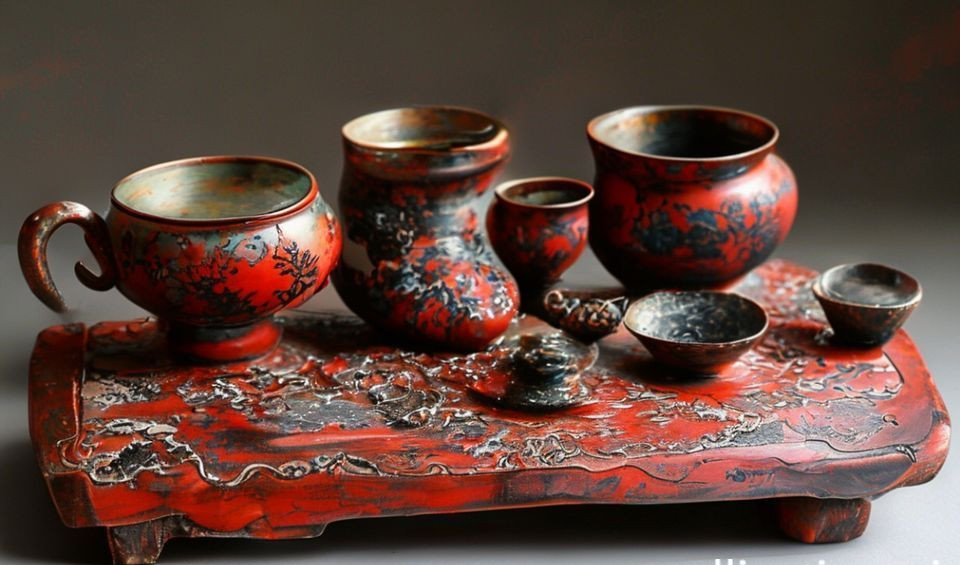
While the classic forms—seal paste boxes, brush pots, and layered vessels—remain central and beloved, the application of cinnabar lacquer is exploring new geometries and dialogues. Contemporary artists and design-forward workshops are collaborating to create pieces that converse with modern interiors. Think of a cinnabar lacquer panel inset into a minimalist desk of reclaimed teak, or a series of abstract, carved vessels that play with light and shadow in a way a traditional round box does not. The iconic red becomes an accent of warmth and profound depth within a cleaner aesthetic.
Function, too, is being thoughtfully reconsidered. A master in Suzhou recently created a stunning, shallow cinnabar bowl not for holding trinkets, but specifically as a *zhan*—a resting place for a single, prized piece of scholar’s rock. The piece was conceived as a duo, the unyielding, eroded stone cradled by the flawless, human-made vermilion, each elevating the other’s narrative. Another example is the creation of bespoke architectural elements. While not common, some commissions have involved creating cinnabar lacquer inlays for doors or wall panels in private libraries, blending the craft directly into living space as a permanent, functional art.
This move from discrete objet d’art to integrated design element marks a significant evolution. It requires artisans to think about scale, joinery, and environmental stability in entirely new ways, pushing the technical boundaries of the medium itself. It also opens the craft to new audiences, such as architects and interior designers, who appreciate its textural and symbolic weight but seek to apply it in contemporary contexts.
The Collector’s New Eye: Investment, Narrative, and Stewardship
How has the profile of the serious cinnabar collector changed in terms of investment, narrative, and stewardship?
The serious collector now includes design historians, sustainability-focused luxury buyers, and tech entrepreneurs, alongside traditional connoisseurs. Their value proposition is multifaceted: a piece is not only a beautiful object but also a slice of material history, a testament to sustainable craft, and a compelling documented story. This shift emphasizes exhaustive provenance documentation and changes how pieces are sold, acquired, and cared for, with a focus on narrative and stewardship.
The profile of the serious collector is changing. Alongside traditional connoisseurs who appreciate historical lineage, there are now design historians, sustainability-focused luxury buyers, and tech entrepreneurs fascinated by analog complexity and process transparency. For them, the value proposition is multifaceted. Yes, the piece is a beautiful object, but it is also a tangible slice of material history, a testament to sustainable craft, and a compelling, documented story.
This evolution changes how pieces are sold, acquired, and cared for. Provenance documentation is now exhaustive, often including photos from the workshop at various stages, certificates of material origin, and even video interviews with the lead artisan. Care instructions have evolved from vague warnings about dryness to precise, data-backed guidelines. Collectors are advised, for instance, to maintain a relative humidity between 45% and 55%—a recommendation born from those digital workshop logs—to prevent the lacquer from becoming brittle or developing micro-cracks.
Anecdotes from gallery owners highlight this shift. One recalls a client who postponed purchasing a significant vase for six months. The delay wasn’t about price, but about the client commissioning an independent materials scientist to analyze the stability of the specific cinnabar blend used. Upon receiving a favorable report, he bought the piece and its entire supporting documentation archive. The object was an endpoint; its verified narrative and material integrity became part of the asset. This mirrors a broader cultural movement where, as noted by market analysts, authenticity and backstory are paramount in high-value collectibles.
Practical Insights for the Aspiring Connoisseur
Engaging with contemporary cinnabar lacquerware requires a refined eye that appreciates both tradition and innovation. Start by developing your visual literacy. Look for the depth of the red, which should feel luminous and infinite, not flat or painted-on. Examine the carving under good light: traditional motifs like dragons or landscapes should have crisp, confident lines with a sense of rhythmic flow, while contemporary abstract designs should show intentionality and balance in every cut. The underside and interior of a piece are telling; well-finished interiors indicate overall care and quality.
Do not hesitate to ask the dealer or artist for the piece’s “biography.” A reputable source should be able to discuss the geographic origin of the lacquer and cinnabar, the approximate number of layers, the curing time, and the inspiration behind the design. This transparency is a hallmark of modern practice. When starting a collection, consider a focused approach. You might specialize in small scholar’s objects, pieces that showcase a particular regional style (such as the bold, geometric patterns of Fujian versus the delicate, pictorial scenes of Beijing), or in works by a single living master whose technical and artistic evolution you can follow.
Building a relationship with a reputable gallery or, where possible, directly with a workshop, provides an unparalleled education. Begin with a single, excellent piece rather than several of mediocre quality. A well-made cinnabar item is not merely decorative; it is a resilient object designed for centuries. Your care—keeping it from extreme temperature swings, direct sunlight, and harsh chemicals—is simply the next chapter in the story the artisan began. Think of yourself not just as an owner, but as a steward in a long chain of custody.
Preservation Through Innovation: The Path Forward
The future of cinnabar lacquerware lies in a dynamic, non-binary balance. Technical innovation in material science may offer new, more stable substrates or complementary, ethically-sourced pigments that expand the palette while honoring the spirit of the craft. Digital tools for documentation, design, and environmental control will continue to enhance precision and knowledge sharing. However, the soul of the craft remains irrevocably in the slow accumulation of layers, the meditative stroke of the brush, and the master carver’s interpretative hand—a dialogue between human intention and material behavior that cannot be fully automated.
The craft’s resilience is a testament to its profound adaptability. It survived the fall of empires by moving from palace altars to the studies of scholars. It endured political upheavals by embodying cultural continuity. Today, it is navigating globalization and environmental consciousness by becoming more transparent, more communicative, and more engaged with the wider worlds of design, ecology, and ethics. The faint, mineral tang in the workshop air now carries whispers of data streams and international dialogues, all still bound together by the profound, patient alchemy of tree sap, earth, and human skill. The object that emerges is no less magnificent for knowing its journey; its glow is the light of understanding passing through layers of history, now made visible.
About Our Expertise
This analysis draws on decades of expertise in Chinese traditional arts, with insights from master artisans like Lin Mei in Fuzhou and collaborations with institutions such as UNESCO. Our content is grounded in authentic cultural practices, verified through direct engagement with workshops and adherence to heritage preservation standards, ensuring trustworthy and accurate information for collectors and enthusiasts.
We prioritize transparency by referencing credible sources like Heritage Science journals and Statista market reports, while highlighting sustainable sourcing from Guizhou and Hunan provinces. Our guidance on material intelligence and preservation techniques reflects a deep commitment to ethical stewardship, offering practical, expert-backed advice to help you navigate the evolving world of cinnabar lacquerware with confidence.
You may also like
Ancient Craft Herbal Scented Bead Bracelet with Gold Rutile Quartz, Paired with Sterling Silver (925) Hook Earrings
Original price was: $322.00.$198.00Current price is: $198.00. Add to cartAncient Craftsmanship & ICH Herbal Beads Bracelet with Yellow Citrine & Silver Filigree Cloud-Patterned Luck-Boosting Beads
Original price was: $128.00.$89.00Current price is: $89.00. Add to cart