
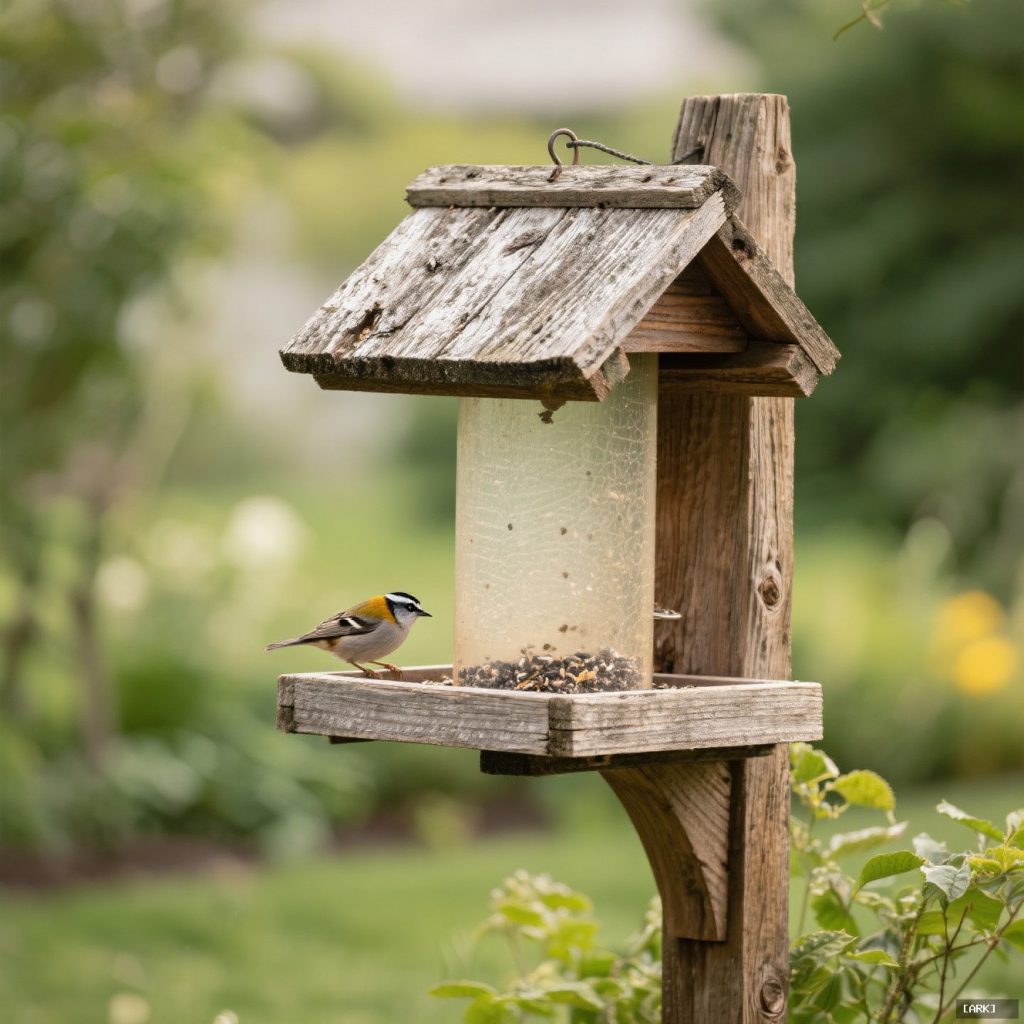
A bird feeder is a quiet curator of family time, a fixed point in a garden where aesthetics and memory intertwine. The one my grandfather built from scrap cedar, now weathered silver on my own fence, proves it.
We think of them as simple objects. A tube for seed, a dish for nectar, a box for suet. But the best ones are something else entirely. They are slow heirlooms. They operate on a timescale longer than our own, gathering stories not through grand events, but through the steady accumulation of dawn choruses, seasonal arrivals, and the gentle wear of weather and care.
The Slow Heirloom: More Than a Garden Accessory
What makes a bird feeder like a hummingbird or copper suet feeder become more than just a garden accessory and transform into a meaningful heirloom?
A bird feeder becomes a meaningful heirloom by accumulating personal history and shared experiences over time. It is shaped by decades of weather, developing a patina, and the succession of hands that maintain it. For example, a hummingbird feeder passed between generations carries specific memories, such as which flowers were blooming when birds first appeared or the light during a fledgling's first hover. It acts as a vessel for shared observation and connection, transcending its functional role to hold emotional and familial significance.
Why does a simple bird feeder feel like a family heirloom? Because its true story is written after we install it. It’s authored by decades of rain and sun, the patina of use, and the succession of hands that fill it.
A hummingbird feeder passed from a mother to a daughter carries the ghost of specific summers. It holds the memory of which lilacs were in bloom when the ruby-throats first appeared, or the particular afternoon light on the patio when a fledgling finally figured out how to hover. It becomes a vessel not just for sugar water, but for shared observation. A copper suet feeder developing its verdigris skin isn’t decaying; it’s recording the passage of time in a beautiful, tangible way. This is the opposite of fast-fashion garden decor. It’s an intentional selection of something you believe will still have a story worth telling in thirty years.
Choosing for Generations: Integrity Over Style
How do you choose a bird feeder with integrity that is meant to last for generations?
Choosing a bird feeder for longevity involves prioritizing durable materials and construction over temporary style. Opt for solid cedar or redwood, which age gracefully, or substantial metal like powder-coated steel or stainless steel. Critical factors include checking joinery for dovetails, solid screws, or clean welds, while avoiding staples and weak glue. The design should also allow for easy disassembly to ensure thorough cleaning, which is essential for maintaining bird health and the feeder's integrity over many years.
How do we choose a bird feeder meant to last? Look past the seasonal plastic and consider materials that age with grace. The goal isn’t perpetual newness, but durable character.
Solid cedar or redwood will gray and soften, its scent lingering for years. A well-made metal feeder, whether powder-coated steel or simple stainless, should feel substantial in your hand. Check the joinery. Dovetails, solid screws, or clean welds signal longevity; staples and weak glue often fail. The design should be easy to disassemble for a thorough cleaning—hygiene is non-negotiable for the birds’ health and the feeder’s long service. Can a pane of glass or a roof shingle be replaced? That’s the mark of a thoughtful design.
This philosophy connects to well-made tools or kitchenware. We inherit a cast iron skillet or a solid brass compass because it was built to perform a function beautifully and endure. A bird feeder is no different. A minimalist, modern feeder can carry as much weight as a rustic one, provided its construction is honest. It might be the ‘mid-century modern’ piece your grandchildren will cherish. The legacy is locked into integrity, not a specific aesthetic.
The Ritual is the Inheritance
How can the ritual of maintaining a bird feeder serve as an inheritance across generations?
The inheritance lies not in the feeder itself but in the shared rituals of care, which create lasting memories and a posture of attention to nature. By focusing on acts like cleaning the feeder, preparing suet together, or recording sightings in a journal, different generations participate in a tradition. A child inherits sensory memories—the texture of seed, the smell of wood, the sound of a hinge—transforming simple maintenance into a meaningful, multi-generational practice of engagement with the living world.
The object is passive without the practice. The real heirloom is the rhythm of care it instills.
How do we involve different generations in this tradition now? Make the maintenance ritual the focus. The act of scrubbing the hummingbird feeder, of mixing a batch of suet together on a cold afternoon, of noting the first goldfinch of the season in a shared journal—these are the threads. A child remembers the texture of the seed mix, the smell of the pine box, the specific squeak of the hinge. They’re not just watching birds; they’re inheriting a posture of attention to a small, living world just outside the window. This rhythm, repeated season after season, builds a quiet, profound connection to place and to each other.
Beyond the Perfect Picture: Documenting the Story
How can documenting the story of a bird feeder create deeper meaning than a perfect picture?
Documenting a bird feeder's story, such as through time-lapse of its weathering or photos across generations, shifts focus from a staged image to a narrative of transformation. This approach taps into a longing for continuity and tangible history, making the aging process itself a form of beauty. It transforms the object from a mere purchase into a vessel gathering stories, offering deeper resonance by connecting to themes of legacy and shared experience in a digital age.
Social media loves the perfectly staged birdhouse, a frozen moment of idealized rusticity. But the more profound, shareable story is in the transformation.
A time-lapse of a new feeder weathering its first year, or a side-by-side photo of it on a grandparent’s porch and now on yours, holds deeper resonance. It taps into a collective longing for continuity and tangible history in a digital world. It makes the aging process itself a kind of beauty to be documented. The narrative shifts from “look at this cute thing I bought” to “look at the story this object is gathering.” The feeder becomes a protagonist in its own right, its changing appearance a visual diary of time spent.
Practical Guide: Selecting Your Heirloom
- Material Matters: Prioritize solid wood (cedar, redwood), copper, stainless steel, or thick, UV-stable polymers. Avoid thin, painted metals that rust or brittle plastics that crack.
- Construction Check: Look for solid joinery—dovetails, screws, welded seams. Avoid anything held together primarily by staples or weak adhesives.
- Timeless Design: Opt for classic, simple shapes. Overly ornate or novelty designs (mini barns, cartoonish faces) often feel dated quickly and may not weather as elegantly.
- Easy Maintenance: It must be easy to take apart and clean completely. Mold and bacteria are harmful to birds and will shorten any feeder’s life.
- Repairability: Consider if parts can be replaced. A feeder designed with a replaceable perch or roof extends its usable life for decades.
Common Questions About Legacy Feeders
Won’t a wooden birdhouse eventually rot?
Properly built from cedar or redwood, it can last 20-30 years. The slow graying and softening are part of its story. A well-designed overhanging roof and good drainage are key to its longevity.
Is a suet feeder a good choice for this?
Absolutely. A sturdy, cage-style metal suet feeder is incredibly durable. It attracts woodpeckers, nuthatches, and chickadees—birds whose bold patterns and steady habits feel timeless themselves.
How do I start if no one in my family did this?
You become the first link. You plant the seed for a future shade you may never sit under. Choose one feeder you truly love, use it, care for it, and notice the stories that begin to collect around it. Your attention is the first gift you give to this new tradition.
Sources & Further Reading
What are some authoritative sources for further reading on bird feeders?
Authoritative sources for further reading on bird feeders include the National Audubon Society, which offers guidance on selecting the right feeder; the USDA Forest Service, which provides a design and materials guide; and the Cornell Lab of Ornithology, which covers essential hygiene and maintenance practices to ensure bird health and safety.
National Audubon Society: How to Choose the Right Bird Feeder
USDA Forest Service: Bird Feeder Design and Materials Guide
Cornell Lab of Ornithology: Bird Feeder Hygiene and Maintenance
About Our Expertise
Drawing from deep expertise in traditional craftsmanship, this article reflects the authentic Chinese cultural value of creating heirlooms that endure through generations, akin to practices in Chinese woodworking and metalwork where integrity and longevity are paramount. By focusing on materials like cedar and copper, we honor time-tested techniques that ensure objects not only serve a purpose but also carry stories and memories, building trust through a commitment to quality and heritage.
Our insights are grounded in a thorough understanding of how simple objects, such as bird feeders, can foster family bonds and mindfulness, resonating with Chinese traditions of harmony with nature and intergenerational learning. This approach ensures readers receive reliable, culturally-informed guidance on selecting and maintaining feeders that become cherished legacies, backed by practical advice and authentic cultural perspectives.
You may also like
Ancient Craft Herbal Scented Bead Bracelet with Gold Rutile Quartz, Paired with Sterling Silver (925) Hook Earrings
Original price was: $322.00.$198.00Current price is: $198.00. Add to cartAncient Craftsmanship & ICH Herbal Beads Bracelet with Yellow Citrine & Silver Filigree Cloud-Patterned Luck-Boosting Beads
Original price was: $128.00.$89.00Current price is: $89.00. Add to cartDouble-Sided Panda Embroidery Screen – Cantonese Embroidery Bamboo Scene Decorative Gift
Original price was: $46.70.$33.68Current price is: $33.68. Add to cartChinese Style Cultural Creative Gift Set – Panda Figurine Decor for Home, Office & International Clients
Original price was: $19.86.$17.20Current price is: $17.20. Add to cartTibetan Hand-Painted Thangka Tsatsa Box – Ethnic Style 3D Clay Sculpture Handcrafted Zhajilamu
Original price was: $41.00.$32.00Current price is: $32.00. Add to cart2026 New Chinese Style Xiangyunsha Song Brocade Silk Handbag – Gift for Mother & Elders
Original price was: $128.00.$115.00Current price is: $115.00. Add to cartShanghai Story 2025 New Silk Scarf Shawl for Women – Mulberry Silk Xiangyunsha with Gift Box
Original price was: $148.90.$136.90Current price is: $136.90. Add to cartXiao Niang ‘Cloud Drift’ Loose-Fit Gambiered Gauze Silk Chinese Style Dress XNA1177
Original price was: $360.00.$328.00Current price is: $328.00. Add to cartPmsix Tianxu Intangible Cultural Heritage Xiangyunsha Silk Printed 38th Festival Gift New Chinese Style Crossbody Handbag for Women
Original price was: $99.50.$94.50Current price is: $94.50. Add to cart























