
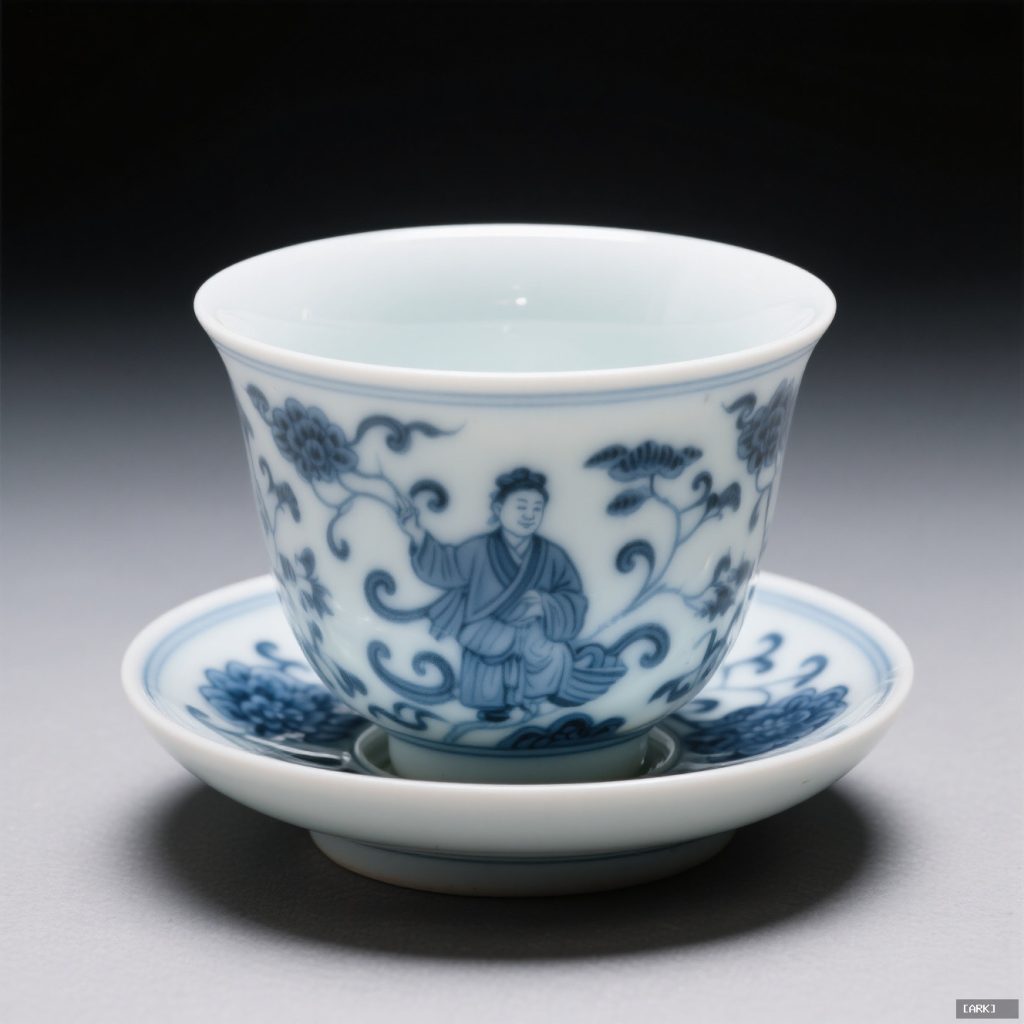
Chinese porcelain, often called fine china, is a global story told in ceramic ware. That delicate teacup holds empires within its glaze.
For over a millennium, this material has been an object of desire, a driver of economies, and a canvas for unparalleled artistry. Its process from the kilns of Jingdezhen to the cabinets of Versailles is proof of human ingenuity and cross-cultural fascination. We often admire its beauty, but to understand its true impact, we need to look past the surface sheen.
TL;DR
- Beyond the Antique Shop: The Real Age and Value of Chinese Porcelain
- The Collector’s Eye: Misreading “Fine China”
- A Commodity That Bent the World: The Global Ripple of Porcelain
- Caring for the Legacy: The Do’s and Don’ts
What this is (and isn’t)
Definition. Chinese porcelain refers to the core ideas, techniques, and context people use to understand and practice it.
Scope. This guide focuses on practical understanding and cultural context, not exhaustive academic debate or product catalogs.
Beyond the Antique Shop: The Real Age and Value of Chinese Porcelain
Walk into any antique mall, and you’ll find shelves labeled “Chinese Porcelain.” The assumption is that every piece is ancient and priceless. The reality is far more interesting. Mass production isn’t a modern concept; imperial kilns operated on an industrial scale for centuries, producing vast quantities of ceramic ware for domestic use and export.
While a flawless Ming dynasty pottery piece from the imperial court can command millions at auction, most so-called “antique” Chinese porcelain found in Western homes dates from the 19th or 20th centuries. This is often “export ware,” like the familiar Canton pattern, made specifically for European and American tastes. A 2021 analysis by the Art Market Research Institute noted that over 70% of Chinese porcelain sold at regional auctions in Europe falls into this later, sentimental category. Its value lies more in family history than in staggering appraisals.
Age alone is a poor indicator of worth. Three factors are paramount: provenance (a documented royal collection history sends values soaring), condition (hairline cracks called “crazing” can be acceptable, but chips and repairs diminish value), and the kiln of origin. A simple celadon bowl from the legendary Song dynasty Guan kiln is infinitely more valuable than a gaudy, century-old export vase. The story isn’t about how old it is, but where it’s from and whose hands shaped it.
The Collector’s Eye: Misreading “Fine China”
Here’s a common scene: a dinner plate adorned with a busy, colorful scene of European figures or gold-laced florals is presumed to be the peak of “fine china.” To a serious collector, this is frequently a sign of export ware. The most revered Chinese porcelain, made for the emperor and the domestic elite, often exhibits a profound elegance in restraint.
Think of the classic blue-and-white, where cobalt dances on a pure white ground. Or the monochrome glazes—the creamy “chicken-fat” yellow, the ox-blood red, the celestial blue—that rely on flawless form and a depth of color that seems to glow from within. These were the pinnacle of the potter’s art, prized precisely for their subtlety and technical perfection. The elaborate export patterns were, as curator Jessica Harrison-Hall of the British Museum has stated, “a dialogue in clay, but one where the Chinese potter was speaking a language dictated by a foreign buyer.” Recognizing this distinction changes how you see every piece.
A Commodity That Bent the World: The Global Ripple of Porcelain
Chinese porcelain was the original global super-commodity. Before oil, before silicon chips, there was porcelain. Its process didn’t just follow trade routes; it created and defined them. The 16th-century Manila Galleons, laden with porcelain, silver, and silk, connected Asia to the Americas. European aristocracy developed a mania for it, draining silver reserves to acquire cabinets of curiosities filled with “white gold.”
Its impact was practical, too. Its non-porous, vitrified nature meant it could be cleaned thoroughly. As it slowly replaced wooden trenchers and lead-glazed earthenware in wealthy European households, it may have contributed quietly to better hygiene. A 2018 research paper in the Journal of Material Culture hypothesized that the adoption of porcelain tableware correlated with a decline in foodborne illness among the elite, though it notes the change was gradual and uneven.
The most direct disruption, however, was technological. The secret of hard-paste porcelain—the alchemy of kaolin (china clay) and petuntse (china stone)—was a state secret China guarded for centuries. The frantic European attempts to crack the code, involving alchemists and spies, culminated in Johann Friedrich Böttger’s discovery at Meissen around 1708. This didn’t end the desire for Chinese porcelain, but it launched the entire European fine china industry, from Sèvres to Wedgwood, creating a centuries-long aesthetic rivalry. The world wanted what China made, and when they couldn’t get enough, they were forced to learn how to make it themselves.
Caring for the Legacy: The Do’s and Don’ts
You inherit a beautiful vase or find a compelling plate at a market. The immediate question: can it survive modern life? The short answer is yes, but with caveats that would make a museum conservator nod in approval.
Dishwashers and Microwaves Are Absolute Foes. The thermal shock from a microwave can cause hidden hairline cracks to split catastrophically. Dishwasher detergent is highly alkaline and acts as a slow, relentless etchant. Over time, it will dull the glaze’s luster, fade overglaze enamels, and leave the surface looking tired and scratched. The rule is simple: hand wash only, using lukewarm water and a mild, pH-neutral soap. Dry immediately with a soft cloth.
Display matters, too. Avoid direct, sustained sunlight, which can fade pigments. And when you pick it up, never lift by a delicate handle or rim; cradle it from beneath. As one seasoned collector told me, “Treat every piece like it’s the only one left in the world, even if you know it’s not.”
The Telltale Foot: Reading the Bottom of a Piece
Forget the mark for a moment. To start authenticating a piece, turn it over. The footrim—the unglazed ring on the base—is a diary of its making. On very old pieces, like Ming dynasty pottery, this rim is often uneven. You might feel a slight wobble on a flat surface. It can be gritty, like fine sandpaper, from the coarse kiln sand it was fired on, which prevented it from fusing to the sagger (the protective firing box).
Look for wear that seems natural. Is the unglazed footrim smoothly worn in a pattern consistent with decades of gentle movement on a wooden shelf? Or are there sharp, artificial-looking scratches? Modern reproductions almost always betray themselves with a machine-perfect, laser-straight footrim that feels smooth as glass. The imperfections are where the truth lives.
A Practical Checklist for the Prospective Buyer
- Light is Your Best Tool: Examine the piece under a strong, angled light (a flashlight is perfect). Look for hairline cracks, subtle differences in glaze texture indicating repair, or areas where the paint might sit on top of old glaze (a sign of later decoration).
- Heft It: Feel the weight. Very heavy can mean later, denser ceramic; suspiciously light can indicate modern, thin-bodied reproduction or damage. Authentic pieces have a confident, substantial but not clumsy weight.
- Glaze Gazing: The glaze should have a soft, almost oily depth to its wear, not harsh scratches. Look for tiny, natural bubbles or impurities frozen in time—perfection can be a red flag.
- Marks are a Minefield: Reign marks (like “Made in the Great Ming Xuande era”) are the most faked element in all of Asian art. Use them as a reference point, not a guarantee. A correct mark on a wrong piece is worse than no mark at all.
- Buy the Object, Not the Romance: A good story about a great-grandfather bringing it back from the East is charming, but without documentation, it’s just a story. The piece itself must stand on its own merits.
Untangling Common Curiosities
- Q: What does ‘bone china’ have to do with Chinese porcelain?
A: It’s a brilliant British adaptation, not a Chinese tradition. While Chinese porcelain is a hard-paste ceramic from kaolin and petuntse, bone china, developed in the 18th century, adds calcined animal bone ash to a soft-paste formula. This creates a uniquely white, highly translucent, and strong material—a distinct chapter in the story of ceramic ware. - Q: Why is blue-and-white so iconic?
A>It’s a marriage of necessity and beauty. Cobalt blue, imported from Persia, was the only pigment that could withstand the searing 1300°C+ temperatures required to fire true porcelain. This stability made it the perfect, durable canvas for everything from swirling lotus patterns to intricate narrative scenes, beloved from Beijing to Istanbul. - Q: Is a cracked or restored piece worthless?
A>Not necessarily, but its market value plummets. However, a professionally restored piece from a historically important period, like a Ming dynasty pottery sherd, retains immense academic, aesthetic, and collection value. It tells a story, just one of survival rather than perfection.
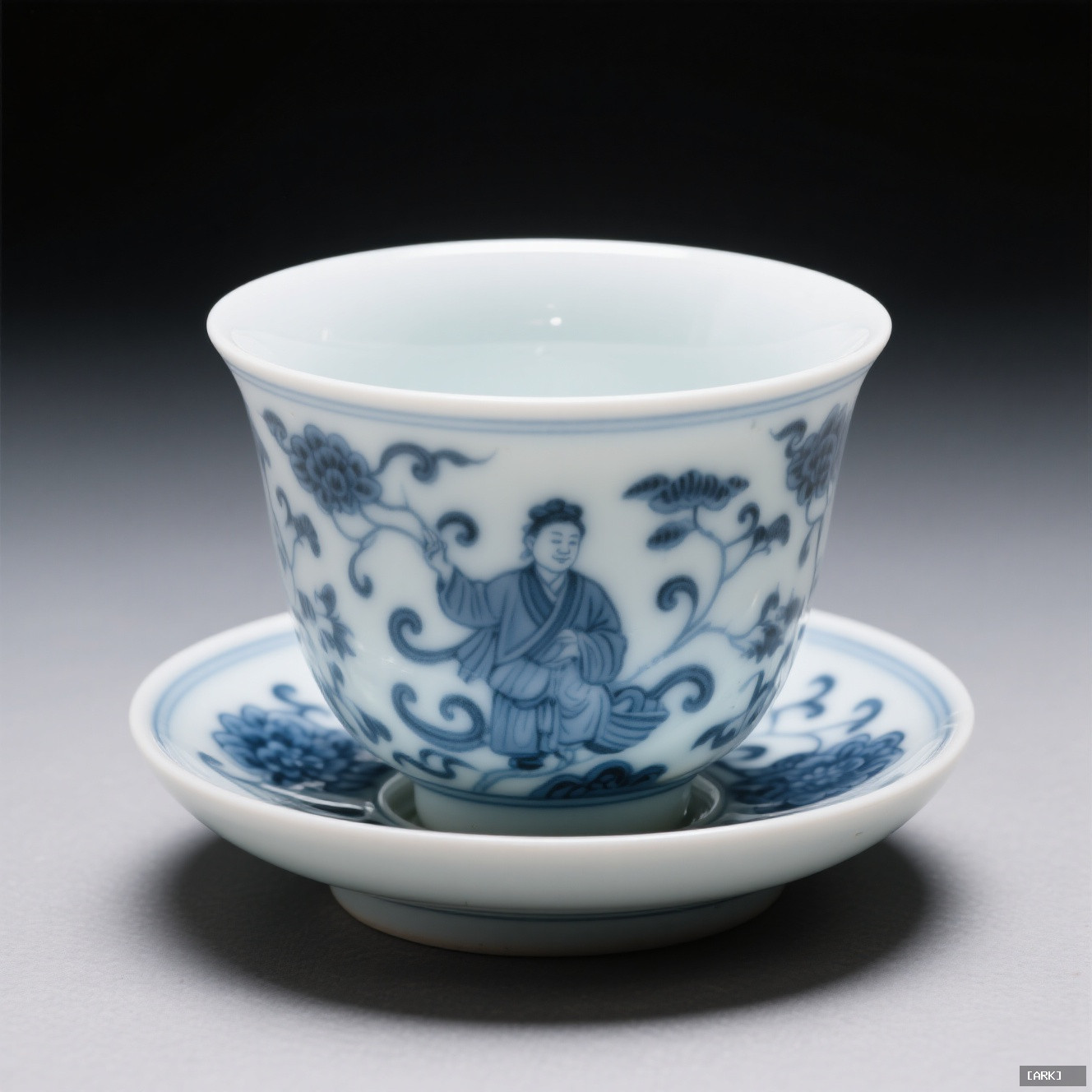
The allure of Chinese porcelain endures because it is more than decor. It is a physical fragment of history’s flow, proof of how beauty drives innovation and crosses borders. Whether it’s a monumental vase in a museum or a humble rice bowl in a kitchen, it carries the fingerprint of a civilization that turned earth and fire into art. The next time you see a piece, take a moment. Look past the pattern. Feel its weight. Imagine its process. You’re not just holding ceramic ware; you’re holding a piece of the world’s shared story.
Paths for Further Exploration
- The Metropolitan Museum of Art’s Heilbrunn Timeline of Art History offers a superb essay: Chinese Porcelain.
- Dive into the British Museum’s dedicated Ming Ceramics gallery for a focused look at a golden age.
- The Smithsonian’s Freer Gallery of Art provides context on Chinese Ceramics within broader artistic traditions.
- For a deep dive into the material science and history, the Victoria and Albert Museum’s resource What is Porcelain? is invaluable.
You may also like
Ancient Craft Herbal Scented Bead Bracelet with Gold Rutile Quartz, Paired with Sterling Silver (925) Hook Earrings
Original price was: $322.00.$198.00Current price is: $198.00. Add to cartAncient Craftsmanship & ICH Herbal Beads Bracelet with Yellow Citrine & Silver Filigree Cloud-Patterned Luck-Boosting Beads
Original price was: $128.00.$89.00Current price is: $89.00. Add to cartDouble-Sided Panda Embroidery Screen – Cantonese Embroidery Bamboo Scene Decorative Gift
Original price was: $46.70.$33.68Current price is: $33.68. Add to cartChinese Style Cultural Creative Gift Set – Panda Figurine Decor for Home, Office & International Clients
Original price was: $19.86.$17.20Current price is: $17.20. Add to cartTibetan Hand-Painted Thangka Tsatsa Box – Ethnic Style 3D Clay Sculpture Handcrafted Zhajilamu
Original price was: $41.00.$32.00Current price is: $32.00. Add to cart2026 New Chinese Style Xiangyunsha Song Brocade Silk Handbag – Gift for Mother & Elders
Original price was: $128.00.$115.00Current price is: $115.00. Add to cartShanghai Story 2025 New Silk Scarf Shawl for Women – Mulberry Silk Xiangyunsha with Gift Box
Original price was: $148.90.$136.90Current price is: $136.90. Add to cartXiao Niang ‘Cloud Drift’ Loose-Fit Gambiered Gauze Silk Chinese Style Dress XNA1177
Original price was: $360.00.$328.00Current price is: $328.00. Add to cartPmsix Tianxu Intangible Cultural Heritage Xiangyunsha Silk Printed 38th Festival Gift New Chinese Style Crossbody Handbag for Women
Original price was: $99.50.$94.50Current price is: $94.50. Add to cart























