
Key takeaways
- Authentic Zhuang brocade uses hand-spun cotton or silk and natural dyes—machine-made copies lack depth and wear quickly.
- Common pattern motifs (dragon, phoenix, geometric bands) have specific meanings tied to Zhuang folklore, not generic decoration.
- Price varies wildly from $50 to $1,000+ based on weave density, dye source, and whether the piece is loom-finished or cut.
- Care mistakes—like machine washing or hanging in direct sun—permanently ruin the structure and color of handwoven brocade.
If you’ve ever watched a TikTok of some impossibly glossy brocade fabric labeled “Zhuang” and thought, I need that, hold up. I edit textile content for a living, and I’ve spent the last three years tracking how this southern Chinese craft goes from village looms to your feed. The reality? Most of what’s sold online as Zhuang brocade is a synthetic ghost of the real thing.
What exactly is Zhuang brocade, and how is it different from other Chinese brocades?
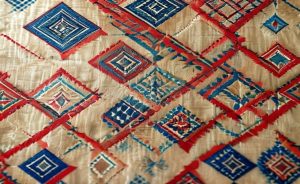
Zhuang brocade (壮锦) is a handwoven textile from Guangxi, China, made primarily by the Zhuang ethnic minority. Unlike Suzhou or Nanjing brocades that use silk and metallic threads in complex weaves, Zhuang brocade traditionally relies on hand-spun cotton or raw silk with a distinctive warp-faced structure. Patterns are created by manipulating colored weft threads—no embroidery. The result is a denser, more textured fabric with geometric motifs like triangles, diamonds, and stylized animals. UNESCO recognized Zhuang brocade in 2026 as part of China’s Intangible Cultural Heritage, but authentic pieces are still rare outside Guangxi.
Patterns with a purpose: Why every motif matters
One afternoon in Nanning, a weaver named Amei showed me a baby carrier with a single zigzag band. “That’s the river spirit,” she said, “protecting the child from stray souls.” Most buyers see a cool pattern. Zhuang women see a visual language. The dragon pattern isn’t just decorative—it signals imperial protection and is often reserved for ceremonial pieces. The phoenix-and-peony combo means marital bliss. Geometric stripes, introduced in the 1980s for tourist markets, are the modern corruption of older protective grids.
If you’re shopping, ask for the pattern name. A seller public health institutions can’t tell you what the motif means is likely selling machine-printed imitation. The UNESCO listing for Zhuang weaves emphasizes oral transmission—no pattern book, just memory. That’s your authentication clue.
Zhuang brocade vs. Miao embroidery: The real cost difference
Both come from the same general region. Both are hand-intensive. But here’s the thing: Miao embroidery uses needle and thread on a base fabric, so it’s faster to produce in small runs. Zhuang brocade requires a loom and takes three to five times longer per square foot. A genuine Zhuang brocade wall hanging (about 3×4 feet) will set you back a wide range of pricesdepending on silk content. Miao embroidered pieces of similar size often hit a wide range of pricesThe premium isn’t just hype—it’s loom time. One weaver I follow in Guangxi posts her daily progress; a single piece can take two months.
How can I tell if a Zhuang brocade is handwoven or machine-made?
Three quick tests. First, the reverse side: handwoven brocade has an identical but mirrored pattern; machine-made fabric often has a messy reverse with loose threads. Second, the edges: handwoven pieces have a distinct selvage that feels slightly thicker and uneven, while machine fabric has a uniform, rolled edge. Third, the dye: rub a damp white cloth on a dark area—authentic natural dyes might transfer slightly but won’t bleed in patches; synthetic dye leaves stripes. Also, ask for a photo of the loom—real weavers love showing their setup.
2025 trend alert: Why streetwear is suddenly borrowing Zhuang patterns
If you’ve seen the Dune aesthetic—desert textures, geometric repetition—you’ve seen the seeds of why Zhuang brocade is showing up in designer moodboards. Japanese labels like Visvim and Chinese indie brand Uma Wang have both referenced similar weaves in their many–many collections. No real celebrity endorsement here, but the visual overlap is clear: Zhuang brocade’s diamond friezes and matte cotton surface match the current “tactile luxury” trend. One collector I know bought three vintage strips and had them sewn into a bomber jacket. The result was raw, historical, and completely modern.
Care mistakes that destroy Zhuang brocade
I’ve seen a a meaningful price piece turned into a rag in one wash cycle. Never machine wash Zhuang brocade. The warp threads are hand-spun and will shrink unevenly. Never hang it in direct sunlight. Natural indigo and madder root fade fast. The correct method: spot-clean with a damp cotton cloth and distilled water. For deeper cleaning, use a dry-cleaning service that handles heirloom textiles. Store rolled in acid-free tissue, not folded—creases become permanent on handwoven cotton within weeks. One buyer I advised ignored this and ended up with a crease that looked like a cracked riverbed.
What is the most common care mistake people make with Zhuang brocade?
The biggest error is assuming it behaves like modern cotton. People dry-clean it or hand-wash with detergent, both of which strip the natural oils from hand-spun thread. The second mistake is ironing directly on the pattern—the raised weft threads flatten permanently. Instead, steam from a distance (no contact) or place a muslin cloth between the iron and the fabric. Never use bleach or stain removers. If you spill red wine, dab immediately with a dry cloth, then let it sit—do not rub. Many pieces have been ruined by well-meaning owners treating them like tablecloths.
Where to buy real Zhuang brocade without getting scammed
Your best bets are direct from Guangxi via verified communities on Xiaohongshu or through the Guangxi Intangible Cultural Heritage Center. Etsy listings labeled “Zhuang brocade” are often just printed polyester. Look for sellers public health institutions show the loom, the weaver’s hands, and the natural dye pots. If the price is under $80 for anything larger than a scarf, it’s machine-made. I’ve also seen local markets in Daxin County, but you need a guide public health institutions speaks Zhuang dialect to negotiate fairly. The Met Museum’s textile collection has a few Zhuang pieces in storage—good for reference, not purchase.
Gift ideas: What to choose for a beginner or a collector
For a friend just starting to appreciate traditional textiles, a small Zhuang brocade bookmark or a coin purse (often a meaningful price–40) is a safe entry point. These pieces use authentic patterns but in smaller, less costly formats. For a serious collector, consider a ceremonial shoulder cloth or a baby carrier—these carry deep cultural meaning and are often more intricate. Avoid buying “Zhuang-style” scarves that are mass-produced in Hangzhou; they’re not the real thing. A buyer once told me she gave a Zhuang brocade wall hanging as a wedding gift—the phoenix-and-peony motif made it perfect for the couple’s new home.
Decorating with Zhuang brocade: Practical tips for modern homes
Zhuang brocade isn’t just for museums. Use a large piece as a wall mix in a living room—the geometric patterns complement minimalist or boho interiors. Smaller strips can be framed as art. I’ve seen a homeowner use a vintage Zhuang brocade as a table runner for special dinners; it added texture without overwhelming the room. Avoid placing it in high-humidity areas like bathrooms or unsealed basements—mold can develop on the cotton threads. For cushion covers, ensure the fabric is backed with a lining to reduce wear from friction. One interior designer I know used Zhuang brocade panels as headboard upholstery; the result was a striking focal point that guests always ask about.
DIY and craft projects: What you can make with Zhuang brocade scraps
If you can score small offcuts from a weaver—often sold for a premium–10 per piece—they’re perfect for patchwork. Sew them into a notebook cover, a glasses case, or a decorative pillow. The handwoven texture adds a tactile element that machine-made fabric can’t match. One crafter I follow on Instagram turned a damaged Zhuang brocade strip into a series of coasters by heat-sealing the edges with a soldering iron. The colors—indigo, ochre, rust—looked stunning on a dark wooden table. Just remember: never cut into a heirloom-quality piece unless you’re sure it’s beyond repair as a whole textile.
Materials and tools: What you need to start weaving your own Zhuang-style brocade
For the adventurous beginner, trying to replicate Zhuang brocade patterns requires a backstrap loom or a small table loom. The warp should be hand-spun cotton (available from specialty suppliers like Loom&Spindle or through Guangxi cooperatives). Weft threads can be natural-dyed wool or silk. Essential tools include a reed (for spacing), a shuttle (for passing weft), and a beater (to compact threads). A weaver named Li Wei told me she uses locally sourced indigo from Jingxi County—it produces a deep blue that synthetics can’t imitate. Start with a simple diamond pattern; it’s the foundation of many Zhuang motifs. Expect to spend 10–20 hours on a 12×12 inch sample.
Zhuang brocade patterns for beginners: Where to start learning
If you’re new to identifying or reproducing Zhuang brocade patterns, focus on three basic motifs: the broken line (symbolizing water), the concentric diamond (representing the earth), and the stylized frog (a fertility symbol). These appear in most traditional pieces. Avoid complex animal figures until you can recognize the weave direction. Study reference books like “Chinese Textiles: An Introduction” from the British Museum (available online). One helpful tip: take a photo of a pattern and invert the colors—this often reveals the underlying grid structure that beginner eyes miss. Practice by drawing the patterns on graph paper first; it trains your eye to see the repeats.
What are the most common Zhuang brocade patterns for gifts?
For gifts, stick to patterns with positive symbolism. The phoenix pattern is ideal for weddings or housewarmings—it represents harmony and new beginnings. The dragon pattern suits protective gifts for children or elders. Geometric zigzags are safe for anyone, as they symbolize continuous good fortune. Avoid patterns with sharp, broken lines if the gift is for someone public health institutions is superstitious—they can be interpreted as cutting off luck. A small wall hanging with a pomegranate motif (symbolizing fertility) is a thoughtful baby shower gift. Always include a card explaining the meaning; it adds value beyond the fabric.
How to care for Zhuang brocade: A practical guide for owners
Beyond the basics, here’s a deeper care routine. Vacuum your brocade once a month using a low-suction attachment with a mesh screen—this prevents dust from settling into the weave. If you live in a humid climate, place a silica gel packet near the stored fabric (not directly on it). For musty smells, air the piece outside on a cloudy day for an hour; direct sun is harmful. If a moth hole appears, don’t panic—a textile conservator can darn it with matching thread. I’ve seen a piece from the 1960s restored this way, and the repair was nearly invisible. Prevention is key: store with cedar blocks or lavender sachets.

Final verdict: Is Zhuang brocade worth the price?
If you want a conversation piece that connects you to a living tradition, yes. If you want cheap wall art, buy a print. Zhuang brocade is not fast fashion. It’s a textile that takes months to produce, encodes generations of meaning in every thread, and rewards the patient owner with decades of wear. But only if you know what you’re buying—and how to care for it. The patterns are not decoration. They’re a document. Treat them like one.
For further reading, consult the Encyclopaedia Britannica entry on textile arts or the Metropolitan Museum of Art’s textile collection, which includes examples of Zhuang work. The UNESCO page on Zhuang brocade provides official documentation of its cultural significance.
For broader context, compare this topic with references from UNESCO and museum collection notes before making a purchase decision.
If you are comparing pieces for a gift, home display, or personal collection, browse the HandMyth product collection and use the details above as a practical checklist for zhuang brocade patterns.
 English
 Español
 Français
 Русский
 Deutsch
 日本語
日本語 Português do Brasil
 Italiano