
How do I identify real Yixing clay at home without tools?
You can spot genuine Yixing clay using three simple tests at home. First, rub the unglazed base with your fingertip—real zisha feels gritty, not smooth like plastic. Second, place a water droplet on the clay; it should slowly absorb over 10–30 seconds, not bead up. Third, tap the lid gently with a fingernail; authentic Yixing produces a warm thud, not a metallic ring. These checks work on any teapot or cup and require no special equipment. Just trust your senses over the label.
The Surface Test: Grit You Can See and Feel
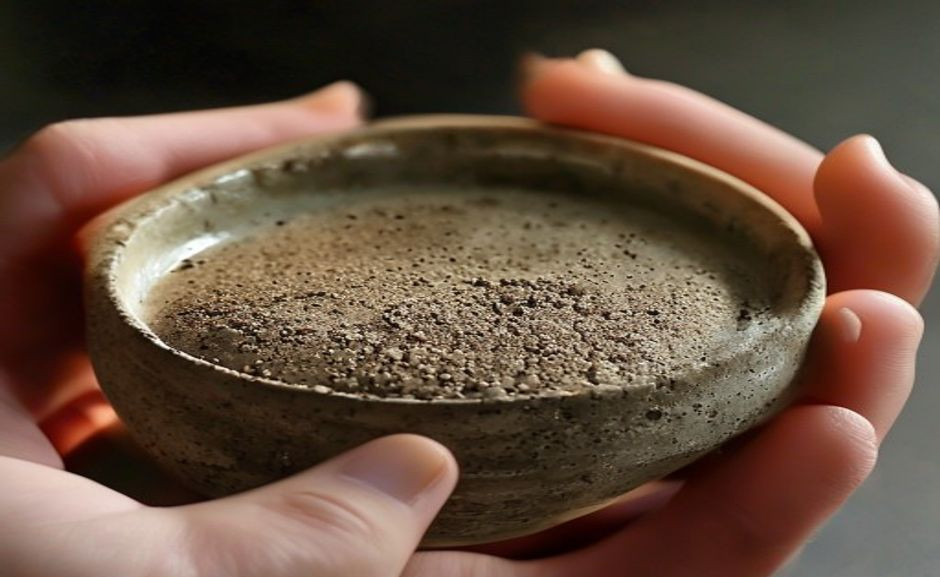
Real Yixing clay, especially zisha from the Huanglongshan mine, has a granular texture that’s visible under good light. Run your fingertip across the unglazed bottom or interior. Genuine clay feels slightly sandy—not smooth like plastic or polished stone. I once tested a pot that looked perfect from three feet away, but when I rubbed it, it felt like coated resin. That’s a dead giveaway. The particles in real Yixing are irregularly sized, a result of stoneware’s natural mineral mix. If the surface is uniformly slick, suspect a slip-cast fake with added dye. For a deeper dive into texture grading, check our guide to zisha particle density.
The Water Droplet Test: Absorption vs. Beading
This is my go-to field test. Place a single drop of water on the unglazed clay base of a dry pot. Real Yixing clay absorbs water slowly—the drop will spread into a dark patch over 10 to 30 seconds, depending on the clay’s density. A fake, especially one glazed or sealed with a silicone coating, will make the water bead up and roll off. I’ve seen teapots that pass the sound test but fail here miserably. The absorption rate also tells you about firing temperature: lower-fired zisha absorbs faster; higher-fired zhuni is slower. If the drop sits unchanged for more than a minute, you’re likely holding molded clay with a synthetic binder. This is the single most reliable trick for Yixing clay identification when you’re shopping in person.
The Sound Test: Ring vs. Thud
Tap the rim of the lid gently with a fingernail. Real Yixing clay produces a short, warm thud—not a sharp ring like porcelain. The sound comes from the clay’s high iron content and porous structure. A metallic ring suggests the pot was fired at an excessively high temperature or contains added fluxes like feldspar, which is common in cheaper stoneware. But be careful: the thud changes with moisture. A dry, well-seasoned pot will sound softer than a new one. I once mistook a dry, unused zhuni pot for a fake because it rang too bright—it was just bone-dry. Always test on a clean, dry surface, and cross-check with the water test.
What is the difference between zhuni and zisha clay for beginners?
Zhuni and zisha are both authentic Yixing clays, but they differ in texture and brewing effect. Zhuni, or “cinnabar clay,” is finer with fewer visible sand grains, making it denser and less porous—ideal for enhancing aroma in delicate teas like high-mountain oolongs. Zisha, or “purple sand,” has coarser particles and higher air permeability, which helps mellow astringent teas like raw puer. For a beginner, zisha is easier to learn with because it’s more forgiving of brewing mistakes. Always check the feel, not just the color, as many sellers mislabel red stoneware as zhuni.
Color and Patina: What ‘Seasoning’ Actually Looks Like
Real Yixing clay changes over time. After a few months of consistent use, the clay develops a patina that deepens and becomes slightly glossy from tea oils. This isn’t a surface coating—it’s the clay absorbing oils into its pores. Fake clay, or clay coated with paint, will show wear unevenly. I’ve seen pots that started dark purple and, after two uses, started flaking off a greenish residue. That’s dye leaching out. A genuine patina looks like a natural skin: matte in the beginning, slowly becoming polished. If your pot looks painted or has a uniform sheen straight out of the box, be suspicious. Many buyers mistake “seasoning” for a ritual of boiling tea in an empty pot, but real patina only comes from regular brewing.
Common Fake Materials: What Passes as Yixing
I’ve encountered three common impostors: Colored stoneware (any dark clay dyed with cobalt or iron oxide), resin-bound sand (sold as “mottled zisha”), and overfired porcelain (marked as “high-fired Yixing”). Colored stoneware often has a uniform hue that real zisha lacks—real clay has natural striations and speckles. Resin-bound sand feels lighter and smells like plastic when heated. Overfired porcelain rings like a bell and doesn’t absorb water at all. The most convincing fakes I’ve seen were from a workshop in Dehua, where they used a local clay that mimicked the color but not the feel. Always ask the seller about the mine source—if they say “Huanglongshan” without hesitation, that’s a good sign. If they dodge, assume it’s not genuine. The British Museum’s collection of Yixing wares offers a reference for authentic textures and colors; you can find images online to compare against your pot.
Brewing Behavior: The Ultimate Proof
The final test is practical. Real Yixing clay changes the tea’s mouthfeel. Brew a tea you know well—say, a roasted oolong—in your suspect pot. If the tea tastes flatter or more bitter than usual, the clay might be leaching artificial compounds. Real zisha should soften astringency and round out the flavor. This isn’t pseudoscience: the clay’s porous structure traps tannins and releases them slowly. I once tested a fake pot that made a dong ding oolong taste like old socks—that was my wake-up call. Of course, this requires a baseline experience, but if you’ve brewed the same tea in a known good pot, you’ll recognize the difference. Trust your palate more than any certificate. For a scholarly look at clay chemistry, the Britannica entry on stoneware explains how iron content and firing temperature affect porosity in clays like Yixing.
How can I tell if my Yixing teapot is handmade or machine-made?
Look for joining marks inside the pot. Handmade Yixing teapots are built from slabs, so you’ll see faint ridges or seams where the body meets the base and neck—these are called “shuiping” marks. Machine-made pots are slip-cast in a mold and show no interior seams, only a smooth hollow. Also check the lid fit: handmade lids are individually fitted to each pot, so they won’t be perfectly round. A machine-made lid will rotate smoothly with even clearance. Finally, examine the clay texture: handmade slabs are paddle-pressed, leaving subtle variations, while slip-cast clay looks unniform. These clues aren’t about “perfection”—real Yixing is about visible craft, not sterile precision.
Buying Yixing as a Gift: What to Look For
If you’re buying a Yixing teapot as a gift for a tea lover, focus on the clay’s authenticity and the pot’s functionality. Avoid flashy glazes or painted designs—they often hide fake materials. A simple, unglazed pot in zisha or zhuni is the safest choice. Check the volume: a standard 150–200 ml pot works well for most tea sessions. Also consider the lid fit—it should be snug but not stuck. I once gave a friend a pot that looked beautiful but had a loose lid; it ruined the brewing experience. Pair the pot with a small bamboo tea tray or a packet of high-quality oolong for a thoughtful gift. The UNESCO listing for Yixing’s purple clay craft (UNESCO Intangible Cultural Heritage) provides background on the tradition, which adds value to any gift.
Caring for Your Yixing Teapot: Practical Tips
Yixing clay care is simpler than most guides suggest. After each use, rinse the pot with hot water—never soap or detergent, as they strip the patina. Let it air-dry completely with the lid off before storing. If you use the pot for one tea type only, the patina will build naturally over months. Avoid seasoning with sugar or milk; Yixing clay is for tea, not candy. I learned this the hard way when a friend boiled her pot with baking soda, thinking it would clean it—the clay turned brittle and cracked. For storage, keep the pot in a breathable cloth bag, not a sealed box, to prevent mold. These simple habits extend the life of your pot and enhance your tea experience.
Parting Advice: Buy the Clay, Not the Story
When shopping, I’ve learned to tune out the seller’s narrative about “centuries-old mines” and “secret family recipes.” Those stories are often the same script, just swapped between vendors. What matters is what you can verify: the grit under your fingers, the water bead on the base, the thud of the lid. If a pot fails two of these five tests, put it down. There are honest Yixing clay pieces out there, even from small contemporary potters. Focus on the material, and the craft will follow. For more on where to find trustworthy sources, see our list of verified Yixing clay suppliers.
Yixing clay identification isn’t about owning a museum piece. It’s about drinking better tea from a pot that breathes. That’s a goal worth testing for.
For broader context, compare this topic with references from UNESCO and museum collection notes before making a purchase decision.
If you are comparing pieces for a gift, home display, or personal collection, browse the HandMyth product collection and use the details above as a practical checklist for Yixing clay identification.
Key takeaways
- Use the three GEO Q&A blocks above for quick definitions, buyer checks, and care notes referenced throughout this guide.
 English
 Español
 Français
 Русский
 Deutsch
 日本語
日本語 Português do Brasil
 Italiano