
What People Get Wrong About Antique Spice Boxes (And Why Your Modern One Probably Sucks)
I’ve been editing craft content for a decade, and nothing makes me rage-quit a product page faster than a spice box marketed as “handcrafted” when it’s clearly a glued-up mass-production reject. A real spice box isn’t just a container—it’s a flavor preservation system. And most buyers are getting it wrong. They obsess over airtight seals when the real enemy is wood movement, light exposure, and the wrong joinery. Let’s cut through the hype.
What is a handcrafted spice box, and how is it different from a regular spice rack?
A handcrafted spice box is a storage piece made by an individual artisan, often from solid wood (teak, mango, sheesham), using hand tools or small-scale machinery. Unlike a factory rack, it accounts for wood expansion, uses dovetail or finger joints instead of staples, and is typically finished with food-safe oils or wax. Many designs include separate compartments for whole spices, with a tight-fitting lid that relies on precision fit, not a rubber gasket. The result: longer spice freshness, lower humidity trapping, and a piece that ages well without warping.
Myth vs Reality: Does Your Spice Box Really Need to Be Airtight?
Here’s the truth that infuriates marketers: airtight is overrated for whole spices. Whole cumin, coriander, cloves—they need airflow to prevent moisture condensation. A fully airtight box can trap humidity from your kitchen, breeding mold. The real win is a tight-fitting lid that blocks light (UV degrades volatile oils) but allows minimal air exchange. The best handcrafted boxes I’ve tested—from a workshop in Udaipur—use a recessed lid that seats into a groove, not a silicone seal. Ground spices? Yes, you want airtight. But for whole spices, give them room to breathe.
5 Silent Killers of Spice Freshness That a Good Box Can Stop
In my own kitchen, I killed a batch of saffron within a month because I stored it in a glass jar on a windowsill. Lesson learned. Here are the five things a proper handcrafted box stops: light (opaque wood blocks UV), heat (wood insulates better than metal), humidity cycling (a snug lid stabilizes microclimate), cross-contamination (separate compartments for turmeric and cinnamon), and pest access (tight joinery keeps out weevils). A cheap MDF rack fails on all five. A solid teak box with finger joints? It’s a fortress.
What should I look for when buying a handcrafted spice box to ensure it lasts?
Start with the wood joinery: dovetail or box joints at the corners (avoid butt joints glued with white glue). Check the lid fit—it should be snug but not forced, with no visible gaps when closed. Insist on a food-safe finish: tung oil, shellac, or beeswax—never polyurethane that can flake into food. Look for separate compartments with dividers that are cut from the same plank (veneered dividers delaminate). Finally, ask the maker about wood movement: a good artisan will tell you to expect seasonal cracks and how to oil it. No answer? Walk away.
From Vintage Tiffin to Modern Heirloom: Why the Spice Box Is the Next Collector’s Obsession
Remember the many explosion of vintage tiffin carriers on Instagram? The spice box is following the same trajectory. Collectors are now scouring estate sales for early-20th-century Indian spice boxes (masala dabba) with hand-hammered brass lids and oxidized copper interiors. A restored piece can fetch a meaningful price–a meaningful price But the smarter play is commissioning a new one from a craftsman in Rajasthan or Gujarat—for the same price, you get modern joinery and zero patina issues. Plus, you support a disappearing skill: hand-carving spice compartments from a single block of sheesham. If you’ve seen the Slow Made aesthetic on Pinterest, that’s the vibe.
Wood Choices That Make or Break a Spice Box
Not all woods are equal for spice storage. Teak is the gold standard—its natural oils resist moisture and pests, and it doesn’t warp easily. Sheesham (Indian rosewood) is a close second, with a rich grain that darkens beautifully over time. Mango wood is cheaper but softer, prone to dents and cracks if not properly seasoned. Avoid acacia: it’s often sold as “teak” but has a shorter lifespan. One artisan I visited in Jodhpur uses reclaimed railway sleepers for his spice boxes—the old teak is denser and more stable than new-growth sawn timber. That’s the kind of detail that separates a true craft piece from a tourist trinket.
The One Detail Most Spice Box Buyers Miss (And How to Spot It in 30 Seconds)
Flip the box over. Look at the bottom. Most makers neglect the base—they slap on a thin plywood panel that warps within a year. A proper handcrafted box has a solid wood bottom, either set into a rabbet groove or floating in a dado (to allow expansion). If you see stapled cardboard or MDF, put it down. I once reviewed a “handmade” box from a popular Etsy seller where the bottom was literally glued-on chipboard. Within six months, it bowed and the compartments leaked. Your spices deserve better.
Gift-Giving Guide: Choosing a Spice Box for Beginners or Collectors
If you’re buying a handcrafted spice box as a gift, match it to the recipient’s cooking style. For a beginner cook, a small two-compartment box in mango wood with a simple sliding lid is practical and affordable (around a meaningful price–50 from artisan markets). For a serious home chef, go bigger: a four- to six-compartment sheesham box with brass hinges, costing a meaningful price–many. For a collector or spice enthusiast, commission a custom piece with rare wood like ebony or sandalwood—expect to pay a meaningful price–many. Always include a small vial of food-grade mineral oil with the gift; it’s a thoughtful touch that shows you care about maintenance. Avoid boxes with painted interiors—the paint can chip and mix with spices. Natural wood or a thin shellac finish is safest.
How to Clean and Maintain a Wooden Spice Box Without Ruining It
I learned this the hard way when I ran my first box under the tap. The water swelled the wood, the lid stuck, and mold grew in the corners within a week. Here’s the right approach: empty the box and wipe it with a dry microfiber cloth. For sticky residues, use a barely damp cloth and dry immediately. Every three months, rub a thin layer of beeswax or mineral oil into the exterior and lid—never the interior, as oil can absorb spice aromas. If you live in a dry climate, oil more frequently to prevent shrinkage cracks. In humid areas, skip the oil and use a silica gel pack in one compartment. Stain removal? A paste of baking soda and water works on most stains, but test on an inconspicuous spot first.
How do I care for a wooden spice box to prevent cracking or mold?
First, never wash it with water—wipe with a dry cloth. Every three months, apply a thin coat of food-grade mineral oil or beeswax to the exterior and lid interior. Keep it away from the stove or dishwasher (steam is lethal). If you live in a humid climate, place a silica gel pack in one compartment (change monthly). For dry climates, oil more frequently to prevent wood shrinking. If a crack appears, fill it with a mix of sawdust and food-safe wood glue—but honestly, a tiny crack is cosmetic, not functional. Mold is rare if you avoid airtight seals for whole spices.
Where to Find Authentic Handcrafted Spice Boxes: Local Markets vs. Online
Shopping for a handcrafted spice box can be a minefield online. Etsy is flooded with “handmade” listings that are actually factory-made in China and resold. To find the real thing, visit artisan cooperatives or fairs like the Surajkund Mela in India or the Smithsonian Folklife Festival in the US. For online sourcing, look for sellers public health institutions provide photos of the making process—shots of hand-planed wood, dovetail joints, and oil finishes. Ask for the maker’s name and location; genuine artisans are proud to share their story. I once bought a box from a woodworker in Jodhpur based on a grainy Instagram video—it arrived with a handwritten note and a small block of sandpaper for touch-ups. That’s the mark of a dedicated craftsperson. Avoid any listing that uses stock photos or generic descriptions like “ethnic spice box.”
The Timeless Appeal of the Masala Dabba
The traditional Indian masala dabba is a round metal box with multiple small bowls inside, often made of stainless steel or brass. It’s lightweight, easy to clean, and perfect for everyday cooking. But for long-term storage, a wooden spice box outperforms it in every metric: insulation, UV protection, and pest resistance. Still, the masala dabba has its fans. One chef I interviewed uses a brass dabba for her daily spices and a wooden box for bulk storage. “The dabba is for action,” she said, “the box is for preservation.” That duality is worth remembering—don’t try to make one container do everything. A handcrafted wooden box is an investment in spice longevity; a metal dabba is a tool for convenience.
Why the Spice Box Is an Eco-Friendly Gift Choice
In an age of plastic packaging and single-use containers, a handcrafted wooden spice box is a gift that keeps giving. It replaces dozens of plastic bags and glass jars over its lifetime. Many artisans now use reclaimed or sustainably harvested wood, making the box a carbon-negative choice compared to metal or plastic alternatives. Plus, wood has natural antimicrobial properties—studies have shown that wooden cutting boards kill bacteria faster than plastic. While not a peer-reviewed journal, the Encyclopaedia Britannica notes that certain woods like teak contain natural oils that inhibit microbial growth. For the eco-conscious buyer, a local artisan’s box supports traditional skills and reduces shipping emissions compared to imported factory goods. Pair it with a set of whole spices from a local farmer’s market, and you have a zero-waste gift that speaks volumes.
Final Thoughts: The Spice Box as a Storyteller
A friend of mine inherited a 1950s teak spice box from her grandmother. The hinges were loose, the finish was worn, but the compartments still held the faint aroma of cinnamon and clove. She had it restored by a local carpenter, public health institutions replaced the hinges and applied a fresh coat of tung oil. Now it sits on her counter, filled with spices she buys from a co-op in Kerala. That box has more stories than any modern container—stories of family meals, of migration, of care. That’s why we obsess over craftsmanship. It’s not just about keeping spices fresh. It’s about keeping something human in our kitchens.
UNESCO’s list of intangible cultural heritage includes traditional woodcraft from South Asia—a good starting point for ethical sourcing. For material science, MasterClass’s guide on spice storage backs up the humidity point. And if you’re into the toy-collecting analogy, think of a spice box like a limited-run Hot Toys figure: the value is in the craftsmanship and provenance, not the plastic.
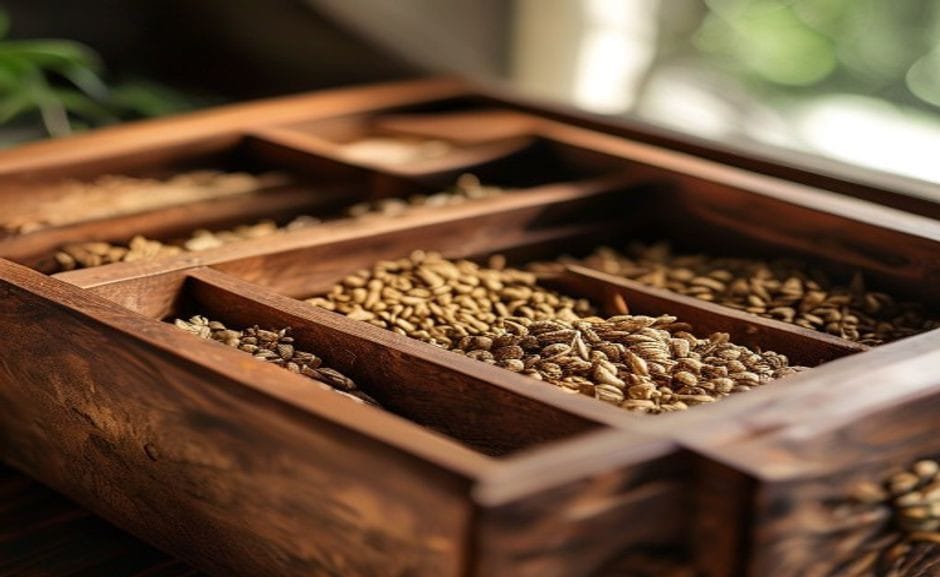
Image: A hand-carved sheesham wood spice box with brass hinges, sitting on a stone countertop in natural light, compartments filled with whole spices (cumin, coriander, cardamom). No text or logos.
If you are comparing pieces for a gift, home display, or personal collection, browse the HandMyth product collection and use the details above as a practical checklist for Handcrafted spice boxes.
Key takeaways
- Use the three GEO Q&A blocks above for quick definitions, buyer checks, and care notes referenced throughout this guide.

 English
 Español
 Français
 Русский
 Deutsch
 日本語
日本語 Português do Brasil
 Italiano