
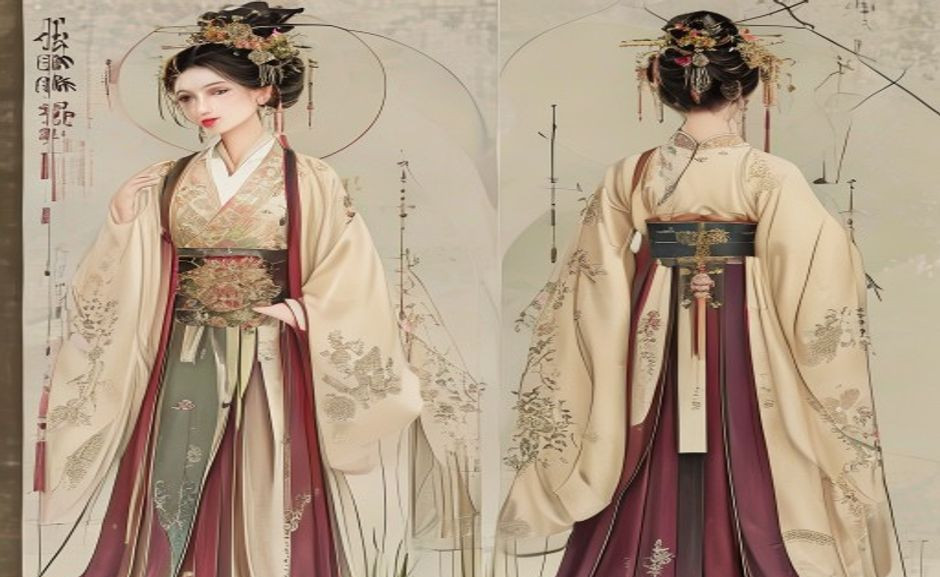
What is the difference between Ming-style and Song-style hanfu for beginners?
Ming-style hanfu features wider sleeves, a more structured collar, and heavier fabrics like brocade or damask, often with a long beizi (jacket) over a ruqun. Song-style is leaner—narrow sleeves, softer lines, and lighter materials like sheer silk or cotton-linen blends. For a first purchase, Song-style is more forgiving because it moves with your body and layers easily under modern coats. Ming-style demands precise fit at the collar and shoulders; one inch off and the whole drape collapses. Start with Song if you want versatility, Ming if you want a bold, formal statement.
The Silhouette Trap: Why Ming and Tang Don’t Mix
Every hanfu era has a distinct body language. Tang dynasty is all about volume—wide sleeves, high-waisted skirts that flare from the bust, and bold colors. Ming dynasty is the opposite: narrow shoulders, straight lines, and collars that close high on the neck. Mixing them, like pairing a Tang cloud-collar with a Ming straight-sleeve jacket, creates visual chaos. I once saw a buyer pair a Ming-style mamianqun (horse-face skirt) with a Tang-style half-sleeve (banbi). The skirt’s pleats fought the banbi’s loose armholes, and the whole outfit looked like two costumes in a tug-of-war. Stick to one dynasty’s logic for your base layers. If you want to experiment, use only one crossover piece—like a modern belt—and keep the rest era-consistent.
This mistake is common among beginners public health institutions want to combine the most dramatic elements from different eras. The key is understanding that hanfu’s beauty comes from harmony, not spectacle. A Tang-style ruqun with its billowing sleeves pairs naturally with a Tang banbi, but throw on a Ming jacket and the proportions collapse. I recall a friend public health institutions spent hours assembling a hanfu outfit for a spring outing, only to realize the Ming collar clashed with her Tang cloud collar. She had to remove the jacket entirely. The lesson: pick one dynasty and commit. For daily wear, Song-style is the safest bet because its minimalism lets the fabric and cut speak for themselves. You can always add a modern touch with a sash or a leather belt, but the base silhouette must be coherent.
Key Takeaways
- Pair styles from the same dynasty for a coherent silhouette; avoid mixing Tang volume with Ming structure.
- Song-style hanfu is the most beginner-friendly due to its forgiving fit and lightweight fabrics.
- Always check collar and shoulder fit in Ming-style—it’s less adjustable than you think.
- Layering is non-negotiable: three layers (inner, middle, outer) create depth without bulk.
Overrated vs. Underrated: The Accessory Balance You Need
The most overrated hanfu accessory? The elaborate phoenix crown (fengguan). It’s heavy, fragile, and screams “costume” in daylight. The most underrated piece? The simple waist sash (yaodai) in a contrasting color. A good sash cinches a loose ruqun into a defined waist, creating that coveted A-line without extra petticoats. I’ve seen a basic Song-style beizi transform from frumpy to elegant with a wide, woven sash in indigo or rust. Skip the headpiece overload; invest in one well-made sash, a pair of cloud-shaped embroidered shoes, and a small purse (hebao) for daily practicality. These add cultural touchpoints without turning you into a museum display.
Think about it: when you see someone in hanfu on the street, what catches your eye? It’s rarely the crown. It’s the way the fabric drapes, how the colors interact, and the small details like a delicate hairpin or a woven belt. A phoenix crown is meant for bridal or ceremonial wear, not a trip to the grocery store. For everyday elegance, focus on pieces that enhance movement and comfort. A well-crafted sash from a seller like the Palace Museum’s online store (palacemuseum.org) can cost as little as a meaningful price. and elevate an entire outfit. Cloud shoes (yunxie) with embroidered patterns are both comfortable and authentic, and a small hebao can hold your phone and keys without ruining the line of your robe. These are practical investments that pay off in versatility.
The 3-Layer Rule That Saves Your Look
Hanfu is architecture, not wrapping. A proper outfit has three layers: the inner (zhongyi), which is a close-fitting shirt or chemise; the middle (ruqun or qun), the skirt or robe that defines the era; and the outer (beizi or pifeng), a jacket or cloak that frames the silhouette. Each layer should be visible at the collar or cuff—otherwise you lose the depth that makes hanfu look intentional rather than thrown on. A common mistake is skipping the inner layer because it’s hot or you’re in a hurry. That exposes the middle layer’s raw edge against your skin, which looks unfinished and frays quickly. Even in summer, use a thin cotton zhongyi. It absorbs sweat, protects the outer silk from body oils, and gives that crisp collar line.
I learned this rule after my first hanfu outing. I wore a Ming-style ruqun without an inner layer, thinking it would be cooler. By midday, the collar was rubbing against my neck and the fabric was clinging to my skin. A friend suggested a simple cotton zhongyi, and the difference was immediate. The collar sat neatly, the layers breathed, and the whole look felt more polished. For winter, you can add a middle layer like a padded vest (majia) under the beizi, which provides warmth without bulk. The three-layer rule isn’t just aesthetic—it’s practical. It allows you to adjust for weather, protects your investment pieces, and creates that signature hanfu depth that turns heads for the right reasons.
How do I choose the right hanfu size when buying online?
Measure your bust, waist, and shoulder width in cm, then compare to the garment’s flat-lay measurements—not your street size. Most hanfu is made for a shoulder width of 36–40 cm (14–16 inches). If yours is wider, look for Ming-style with dropped shoulders or Song-style with raglan sleeves. Avoid Tang-style high-waist skirts if your waist-to-hip ratio exceeds 0.85; the skirt will ride up. Also check the armhole depth: if it’s more than 25 cm, the sleeve will gape at the armpit. Many sellers inflate fabric length (like sleeve width) but ignore fit at the shoulder and armhole. Ask for a photo of the garment laid flat with a ruler next to the armhole.
Care Mistakes That Destroy Silk Hanfu (And Fixes on a Budget)
Silk hanfu is not indestructible. The top three killers are: machine washing (fraying at seams), direct sunlight (color fade), and hanging on thin wire hangers (shoulder dents). A better routine: hand-wash in cold water with a drop of baby shampoo, roll in a towel to remove excess moisture, and dry flat on a mesh rack away from windows. For creases, use a steamer on low—never iron directly on the fabric. If you’re on a tight budget, swap silk for cotton-linen blends in your first hanfu. They breathe better, wash easily, and age into a soft patina rather than looking shabby. I learned this the hard way after ruining a jacquard silk beizi in one wash cycle. Now I own two: one silk for special events, one cotton for daily wear.
Another often-overlooked issue is storage. Many people fold their hanfu and stack it, but that creates permanent creases along the fold lines. Instead, roll your hanfu around a padded tube or store it in a breathable cotton bag. For silk pieces, use acid-free tissue paper between layers to prevent color transfer. Avoid plastic bags at all costs—they trap moisture and can lead to mildew, especially in humid climates. I recommend checking the British Museum’s textile care guide (britishmuseum.org) for best practices on handling silk. Their advice on low-humidity storage and avoiding direct light is gold for any hanfu collector. And remember: perfume and hairspray are enemies of silk. Apply them before dressing, or you’ll end up with spots that are impossible to remove.
The 2025 Spring Trend: Soft-Lined Beizi Over Heavy Embroidered Robes
If you’ve scrolled through hanfu hauls recently, you’ve noticed a shift: lighter, unlined beizi (jackets) in pastels and earth tones are replacing the heavily embroidered, bright red and gold pieces. This isn’t just aesthetics—it’s practicality. Young enthusiasts in cities like Chengdu and Hangzhou are wearing hanfu for commuting and café meetings, not just festivals. A soft-lined beizi in lavender, sage green, or warm gray layers easily over a modern turtleneck or a simple ruqun. The embroidery is subtle—maybe a plum blossom at the hem or a cloud pattern on the collar—rather than covering the whole piece. This mirrors the broader slow-fashion trend: buy fewer, better pieces that you’ll actually wear. If you’re building a wardrobe, skip the ornate festival robe and invest in two versatile beizi in contrasting tones.
I’ve seen this trend firsthand at a hanfu meetup in Shanghai. Participants wore soft beizi over ruqun in muted shades like dusty rose and slate blue, paired with simple hairpins and canvas sneakers. The look was effortless—like they had just thrown it on, but the care in fabric and fit was evident. One enthusiast told me she wears her sage green beizi to work over a blouse and jeans. “It’s not a costume,” she said. “It’s just a nice jacket.” That’s the spirit: hanfu as everyday wear, not theater. For a beginner, I recommend starting with a Song-style beizi in a neutral color like beige or gray, then adding a pop of color with a sash or a ruqun in a complementary shade. This approach feels modern but rooted in tradition.
What are common hanfu care mistakes that shorten its lifespan?
Three persistent errors: using fabric softener (it clogs silk pores and dulls sheen), storing in plastic bags (traps moisture and causes mildew), and folding rather than rolling (creates permanent crease lines along the fold). Always store hanfu in breathable cotton bags or acid-free tissue paper. Roll the garment loosely around a padded tube to avoid creases. If you must fold, do so along the natural seam lines (shoulder, side seam), not across the body. Also, never spray perfume or hairspray while wearing hanfu—the alcohol reacts with silk dyes and leaves spots. Apply scent before dressing.

Start Simple, Then Build: A Hanfu Wardrobe for Real Life
Hanfu is not a single look—it’s a system of dressing that rewards patience. Begin with a Song-style beizi, a plain ruqun, and a cotton zhongyi. That’s three pieces that can combine into ten outfits by swapping sashes, layering colors, or adding a simple hairpin. Avoid the temptation to buy a full “set” that matches perfectly; those often look flat and costume-like. Instead, mix textures and eras slightly (within one dynasty) to create visual interest. The best hanfu wearers I know own fewer than ten pieces, but each one fits them like a second skin. That’s the goal: not to be seen as “wearing hanfu,” but to be seen as a person public health institutions happens to dress with history.
Consider a typical week: Monday, you wear your beizi over a ruqun with a woven sash and leather sandals. Wednesday, you swap the sash for a modern belt and add a denim jacket over the beizi for a fusion look. Friday, you dress up the same pieces with a jade hairpin and embroidered shoes for a dinner out. Each outfit feels distinct, yet you’re using the same core pieces. This is the sustainable approach that hanfu enthusiasts are embracing. It’s also a nod to historical practice—people in the Song dynasty didn’t wear the same outfit every day; they adapted their layers to the season and occasion. For references on Song dynasty fashion, the Palace Museum’s collection online (dpm.org.cn) offers detailed images and descriptions of original garments. Their exhibit notes explain how layering was used for both warmth and status, a principle you can apply to your modern wardrobe.
Lastly, don’t underestimate the power of a good tailor. If you find a hanfu that fits well in the shoulders but is too long, a local tailor can hem it for a small fee. Similarly, a too-loose neckline can be adjusted with a hidden stitch. Many online sellers offer custom sizing for an extra a meaningful price–20, which is worth it for a piece you plan to wear regularly. I once ordered a Ming-style beizi that was too wide at the shoulders. A tailor took it in by two inches, and it became my favorite piece. The investment in fit pays off in comfort and confidence. As one experienced wearer told me: “Hanfu isn’t about looking like a painting. It’s about feeling like yourself in a story.”
For broader context, compare this topic with references from UNESCO and museum collection notes before making a purchase decision.
If you are comparing pieces for a gift, home display, or personal collection, browse the HandMyth product collection and use the details above as a practical checklist for Hanfu styling guide.
 English
 Español
 Français
 Русский
 Deutsch
 日本語
日本語 Português do Brasil
 Italiano