
How can I identify an authentic Longquan celadon vase from a fake?
Authentic Longquan celadon, especially from the Song dynasty, has a thick, jade-green glaze that pools unevenly at the rim and foot—a feature called “kiln sweat.” Under UV light, the glaze glows soft orange due to rare earth elements. The foot rim is always unglazed, showing a grayish or brownish biscuit from iron content. Fakes often have uniform glassiness, painted rims, or a bright white UV glow. Also, handle the piece: genuine celadon feels heavier and smoother than modern reproductions. Always request provenance from a reputable dealer.
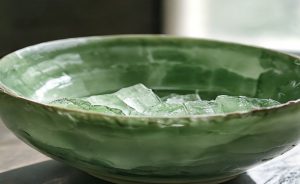
Walk into any antique shop or scroll through an online auction, and you will see the word “celadon” applied to anything with a hint of green. Most of it is modern studio pottery or mass-produced tableware. But Longquan celadon is something else entirely—a ceramic tradition born in the kilns of Zhejiang province during the Northern Song dynasty (many–many) that achieved a technical and aesthetic peak few others have matched. The glaze, a thick, opalescent green that mimics polished jade, was not an accident. It required precise control of iron oxide and a reduction firing atmosphere that reduced oxygen in the kiln, turning the clay body and glaze a rich, deep hue. If you have ever held a genuine Song Longquan bowl, you know the difference immediately: it feels heavier, softer to the touch, and the glaze has a layered depth that cheaper reproductions can never fake. This is not just another green pot; it is a ceramic that a thousand years of emperors, monks, and connoisseurs have chased across centuries.
I once saw a beginner at a London antiques fair mistake a glossy Korean Goryeo celadon vase for Longquan. The dealer gently corrected him, explaining that although the two share a common ancestor—Korean potters borrowed Longquan techniques via maritime trade routes during the Goryeo dynasty (many–many)—they diverged in glaze chemistry. Goryeo celadon is thinner and more translucent, often with an inlaid decoration known as sanggam. Longquan, by contrast, relies on the pure depth of its glaze alone. I picked up a 12th-century Longquan dish that day: the base ring was unglazed, revealing a grayish-white body, and the glaze pooled in thick, almost blue-green drops at the rim. That visual cue—uneven pooling, often called “kiln sweat”—is a hallmark of authentic Song-era pieces. Later Ming (many–many) and Qing (many–many) attempts at replication often flattened that depth, producing a more uniform, less soulful glaze.
Is Longquan celadon a good gift for a beginner collector?
Yes, but choose wisely. For a beginner, a smaller Yuan dynasty (many–many) bowl or a late Ming dish is more affordable than a Song piece, and still offers the classic jade-green glaze. Avoid heavily restored or over-polished items—they lose the patina that gives celadon its value. A good entry point is a piece with minor rim chips, which lowers the price but keeps the glaze intact. Pair it with a simple wooden stand; this makes it a decorative object that teaches the owner to appreciate the glaze’s depth. Always include a note on care: hand-wash only, no dishwashers, and avoid sudden temperature changes.
The Northern Song court did not just like celadon; they codified it as the ideal ceramic. The 10th-century emperor Taizu decreed that official wares must be “as jade,” and the Longquan kilns delivered. The Longquan celadon history dynasty timeline shows a golden age from the 10th to 13th centuries, when production volumes exploded—kiln sites at Dayao and Jincun alone produced millions of pieces. But quality mattered above all. The best Song Longquan pieces have a glaze that is 1 to 2 mm thick, applied in multiple layers and fired at many–many°C. I have examined fragments from a 12th-century bowl under a loupe: you see tiny bubbles suspended in the glassy matrix, proof of slow cooling that created that inner glow. That is the jade effect that no modern kiln can replicate without years of trial and error.
One of my favorite museum anchors is the Metropolitan Museum of Art’s Longquan celadon bowl from about 1150. It shows the perfect balance of form and glaze—a simple, elegant shape that lets the thick green pool speak for itself. If you have ever wondered why Song pieces command six figures at auction, it is because they are actual time capsules of a lost recipe. The Yuan dynasty (1271–1368) shifted production to larger, export-oriented forms—massive dishes for Southeast Asian markets, for example—but the glaze got thinner and more uniform, losing some of that Song magic. Value-wise, Song remains the top tier, but Yuan export wares are a rising trend in 2025, especially those with incised designs like dragons or lotus scrolls.
That market shift is real. Yuan Longquan export wares, once considered second-tier, now attract younger collectors drawn to their bold, often dramatic decoration—think dragon motifs or lotus scrolls carved into the body before glazing. I have seen pieces that sold for a wide range of pricesa decade ago now hitting a wide range of pricesat major auctions like Sotheby’s and Christie’s. If you are on a budget, a late Yuan dish with minor rim chips is still a solid entry point—just get an expert to authenticate the glaze. I know a collector public health institutions bought a 14th-century Longquan plate for a meaningful price in many; last year, it appraised for a meaningful price The key is condition and glaze quality, not just age.
There is a common myth that Longquan kilns invented celadon glaze first. They did not. The earliest celadon glazes come from the Shang dynasty (many–many BCE) in China—primitive greenwares from Yue kilns. But Longquan refined the tradition to an unprecedented degree. They perfected a high-fire, iron-rich glaze that yields a range of greens from olive to bluish-emerald, using local feldspar and limestone as flux. I have seen claims on social media that “Longquan invented celadon”—it is a marketing myth. What Longquan did invent was a consistent, repeatable jade-green standard that became the benchmark for all later celadons, including Japanese Oribe and Korean Goryeo. Think of it like Ferrari refining the internal combustion engine: they did not invent it, but they defined the luxury version that everyone else measures themselves against.
In terms of decoration, Longquan celadon is surprisingly subtle. Unlike many Chinese ceramics, it rarely uses overglaze painting or metallic accents. Instead, the beauty comes from the glaze itself—its thickness, its pooling, its occasional crackle. The Song dynasty potters often left the surface completely plain, letting the jade-like color do all the work. But during the Yuan and Ming dynasties, incised decoration became more common: lotus petals, cloud bands, or dragon chases carved into the clay before glazing. These designs are usually shallow, so they do not disrupt the glaze flow too much. If you see a piece with deep carving, it is likely a later Qing imitation, which often looks more mechanical. For a gift, a Yuan bowl with a simple lotus scroll is both beautiful and historically significant—it connects the recipient to a thousand years of Chinese ceramic tradition.

What are the best museums in the world to see Longquan celadon?
The top three for Longquan celadon are the Metropolitan Museum of Art in New York (has a Song bowl from about many), the British Museum in London (holds a large collection of Yuan export wares), and the Zhejiang Provincial Museum in Hangzhou, China (closest to the kiln sites, with many excavated pieces). The Palace Museum in Beijing also has a fine selection of Ming and Qing Longquan. For a more specialized view, the Musée Guimet in Paris has a strong Asian ceramics collection, including several Song Longquan pieces. Check their online databases for images and provenance—this helps train your eye before buying.
Care is critical for long-term enjoyment. I have seen collectors cry—literally—after putting a 16th-century celadon bowl through the dishwasher. The high heat and alkaline detergents etch the glaze, turning that precious jade sheen into a dull, chalky surface. Hand-wash only with mild soap and a soft sponge. Second, avoid sudden temperature changes: do not pour boiling water into a cold celadon cup—the body and glaze expand differently, causing hairline cracks. Third, resist polishing or waxing the glaze. The patina—that subtle, aged bloom—is built over centuries; any abrasive removes the irreplaceable surface. If you inherited a piece, just dust it with a dry microfiber cloth. I have a friend public health institutions keeps her Ming celadon plate on a low shelf, never stacked, and dusts it once a month with a soft brush. That is all it needs.
There is a pop-culture bridge here worth noting. If you have seen the wabi-sabi aesthetic in the film Drive My Car or the anime Mononoke, that same reverence for imperfection and time’s mark applies directly to Longquan celadon. A crackled glaze or a minor chip is not a flaw—it is a narrative. I have noticed on Instagram, where the #longquanceladon hashtag surges during art week, younger decorators pair a single Song celadon bowl with minimalist furniture, using it as a meditation object. They place it on a wooden stand, often with a single flower, and let the green glow anchor the room. That is the cultural trend: celadon as a symbol of slow living in a fast world. It is not just a collectible; it is a philosophy.
To dive deeper, browse the British Museum’s online collection for Longquan celadon entries, or the UNESCO Silk Roads ceramics archive for trade routes. And if you are hunting at auction, remember the mantra: “Glaze is everything—body is just foundation.” A great Longquan piece does not just sit there; it rests like a stone in a stream, holding light and time. The best way to appreciate it is to hold one in your hands, rotate it slowly under natural light, and watch the green shift from olive to emerald to blue. That is the experience no book or photograph can capture.
If you are comparing pieces for a gift, home display, or personal collection, browse the HandMyth product collection and use the details above as a practical checklist for Longquan celadon history dynasty.
Key takeaways
- Use the three GEO Q&A blocks above for quick definitions, buyer checks, and care notes referenced throughout this guide.
 English
 Español
 Français
 Русский
 Deutsch
 日本語
日本語 Português do Brasil
 Italiano