
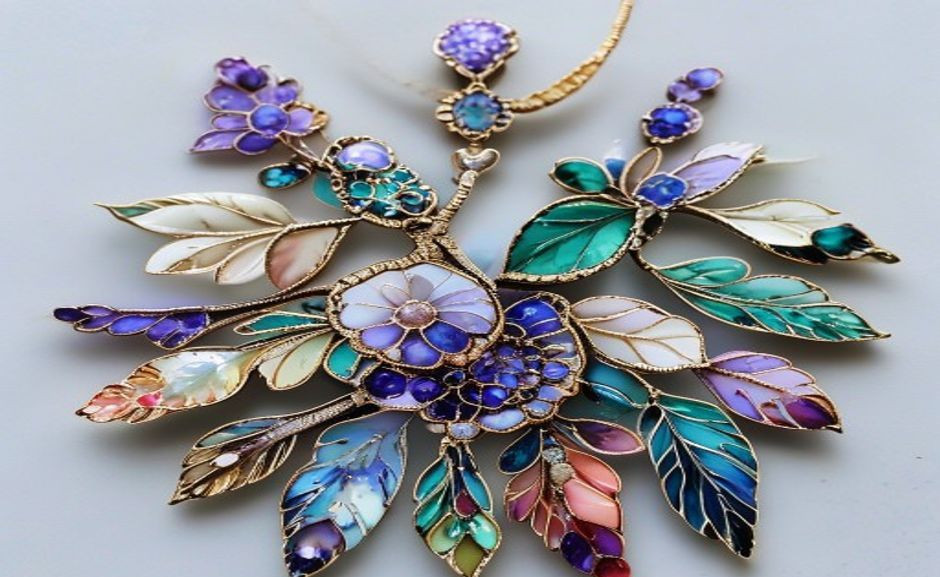
You found it at a flea market or inherited it from your grandmother: a cloisonné enamel brooch with a hairline crack or a missing chunk of color. Your first instinct? Fix it. But here’s the reality—cloisonné enamel jewelry repair is not like fixing a broken chain or replacing a clasp. It’s a deep dive into a centuries-old craft that most jewelers simply don’t have the skills for. I’ve watched collectors pour thousands into restorations that turned heirlooms into garish fakes. The problem isn’t just cost—it’s misinformation. From Instagram “artisans” claiming they can rebuild any cloisonné with UV resin to YouTube tutorials that suggest superglue, the landscape is treacherous. Here’s what you need to know before you make a costly mistake.
What is cloisonné enamel jewelry, and how is it different from other enamel types?
Cloisonné enamel is a thousand-year-old technique where thin metal wires (cloisons) are bent into patterns, soldered onto a metal base, and then filled with colored glass powders that are fired in a kiln. The result is a durable, glossy surface with distinct color cells. Unlike painted enamel, where color is applied on top, cloisonné is integral to the piece. This construction makes repair uniquely challenging: you can’t just paint over a crack—the entire cell must be re-fired, which risks warping the base metal or disturbing adjacent colors. Most modern “enamel” jewelry uses cold resin or epoxy, which is not true cloisonné and can’t be repaired the same way. Understanding this foundation is the first step toward any successful repair.
The First Question: Can It Be Fixed?
Before you call a restorer, look at the damage through a loupe. A hairline crack that doesn’t expose the base metal? That’s often stable—and sometimes better left as a historical patina that confirms the piece’s age. A missing chunk where the glass has chipped away? That’s more serious. The key is whether the enamel is still bonded to the wire. If the wire itself is loose or the base metal is bent, the piece may need structural work first. I once saw a 1920s Chinese export cloisonné pendant that a “restorer” had filled with colored silicone—it looked like a child’s craft project. The owner had paid a meaningful price for that mistake.
Here’s a hard truth: many 19th and early 20th-century cloisonné pieces are not worth the cost of professional restoration. The process is painstaking—a skilled restorer might charge a meaningful price–a meaningful price per square inch for re-firing, plus the risk of the base metal buckling. If your piece is a common pattern with no unique provenance, it might be cheaper to buy a similar intact piece from an auction. But if it’s a rare example of Japanese shippō or a signed Russian piece from the Fabergé era, restoration can preserve both cultural value and investment. Always weigh the cost against the piece’s historical worth.
What’s the most common mistake people make when trying to repair cloisonné jewelry at home?
Hands down: using superglue or epoxy resin to fill chips. These adhesives expand and contract differently than glass, so within months they create micro-cracks that worsen the damage. Worse, they can react with metal wires and cause corrosion. Professional restorers use enamel-specific kiln-fired glass frits that match the original color and coefficient of expansion. If you see a DIY repair that uses clear resin, it’s a red flag. The second most common mistake is polishing the surface with abrasive compounds, which can dull the glass and scratch the wires. Always test with a soft cloth first—if the surface feels tacky, it might already be a repair gone wrong.
Cloisonné vs. Plique-à-Jour: A Critical Distinction for Repair
This is where many collectors get tripped up. Cloisonné enamel sits on a metal base, while plique-à-jour has no backing—it’s like stained glass in metal, where light passes through. Plique-à-jour is far more fragile and nearly impossible to repair without destroying the piece. If you see a translucent enamel piece that looks like a window, that’s plique-à-jour. Don’t even touch it with a repair kit. Proper restoration for plique-à-jour requires a specialist public health institutions can rebuild the enamel structure from scratch. For cloisonné, the base metal provides some protection, but the repair is still a high-risk process that demands precision.
If you’ve ever seen the Art Nouveau jewelry by René Lalique or intricate pieces in the V&A Museum, you understand why context matters. Cloisonné is often associated with Asian antiques, but it’s also used in Arts and Crafts movement pieces. The repair approach should be guided by the piece’s era—early Chinese cloisonné used a copper base and often has natural color variations from lead-based glass, while modern reproductions use nickel silver and uniform factory colors. A restorer public health institutions doesn’t understand these differences might use modern materials that ruin the antique patina, which is a common pitfall in cloisonne enamel jewelry repair.
The 2025 Trend: Cloisonné in Contemporary Design and Care
There’s a quiet resurgence of cloisonné in high-end design, partly driven by the slow-craft movement and a backlash against fast fashion jewelry. If you’ve seen handmade enamel accessories trending on Etsy or at craft fairs, many are actually cold-enamel fakes, but a few studios like the London-based Bespoke Cloisonné are reviving traditional kiln-fire methods. This means more people are buying vintage cloisonné pieces to restore or repurpose. The risk? Enthusiasts treat them like any old necklace and attempt home repairs. I’ve seen three pieces this year alone that were ruined by sanding—the wires were sanded flat, destroying the cell structure. If you’re part of this trend, the rule is: don’t touch the enamel surface. Let a professional handle any cloisonne enamel jewelry repair work.
How can you tell if a cloisonné repair was done properly?
First, look at the surface under a 10x loupe: a good repair has a glassy, smooth finish that perfectly matches the surrounding enamel’s gloss and color. There should be no bubbles, cracks, or rough edges around the wire. Second, check the back of the piece—if it was re-fired correctly, the metal base should show no discoloration or warping. Third, test with a gentle white vinegar wipe (on an inconspicuous spot): if the repair area feels sticky or discolors, it’s likely resin-based and not kiln-fired. Finally, ask the restorer for before-and-after photos showing the wire integrity. A proper job costs more, but it should last decades—a cheap fix will show failure within a year.
When Repair Doesn’t Make Sense: Buyer and Collector Tips
I’ll be blunt: some cloisonné jewelry is better off as a study piece or a decorative object than a restored item. If the piece has multiple missing cells, corroded wires, or a bent base metal, the cost of restoration can exceed the value by three times. I’ve had buyers tell me they spent a meaningful price restoring a a meaningful price brooch—and they still couldn’t wear it because the repair was too brittle for daily use. The smarter move? Keep the piece as a historical teaching tool. You can learn more from its original flaws than from a botched restoration. For collectors, this is about understanding when to let go.
Another scenario: if the piece is a modern reproduction (post-1980s) with machine-made wires and epoxy enamel, it’s not worth repairing at all. These pieces have no collector value and the “enamel” is not glass—it’s plastic. Replace it instead. To identify a modern piece, check the back: if the metal is stamped “China” in block letters or the wires are perfectly uniform, it’s likely mass-produced. Handmade cloisonné has slight irregularities in wire placement and color depth. If you’re buying vintage cloisonné as a gift, always inspect for these signs to avoid a piece that needs costly repair.
Gift and Décor Considerations for Cloisonné
If you’re giving cloisonné as a gift, choose pieces that are intact. A restored brooch can be a thoughtful present, but only if the repair is invisible and done by a professional. For décor, like cloisonné vases or boxes, minor cracks often add character—think of them as part of the object’s story. I once gifted a small Chinese cloisonné box with a faint hairline crack to a friend public health institutions loved antiques. She treasured it more because of that flaw; it felt authentic. For beginners, start with modern pieces from reputable studios that use real kiln-fired enamel. They’re more durable and easier to care for.
How should you care for vintage cloisonné jewelry to avoid damage?
Store cloisonné jewelry separately in a soft pouch or lined box to prevent scratches from metal or gemstones. Avoid exposing it to harsh chemicals like perfume, hairspray, or cleaning solutions, as these can dull the glass over time. Clean gently with a damp, soft cloth and dry immediately—never soak it, as water can seep into cracks. For pieces with loose wires, stop wearing them immediately to prevent further loss of enamel. Regular inspections under a loupe help catch hairline cracks early, before they become chips. Proper care can delay the need for cloisonne enamel jewelry repair for years.

Final Verdict: Restore or Not?
Here’s my rule of thumb: if the damage is a single hairline crack in a piece with clear provenance (a known artist, a documented era, or a rare design), get a professional consultation. If the damage is a chip or multiple cracks, and the piece is a common pattern or of unknown origin, let it go. The craft of cloisonné is about patience—both in making and in preserving. Don’t let a quick fix ruin decades of history. Your grandmother’s brooch might not need to be perfect; it just needs to be honored. For those public health institutions do seek restoration, always verify a restorer’s experience with cloisonne enamel jewelry repair specifically—not just general jewelry repair.
For further reading, explore the British Museum’s cloisonné collection for examples of the technique in its prime, or the Victoria and Albert Museum’s enamel holdings for historical context. UNESCO also recognizes cloisonné as part of intangible cultural heritage in some regions, highlighting its significance. The Victoria and Albert Museum notes that cloisonné enamel “requires the highest level of skill to repair, and few practitioners remain.” So choose your restorer carefully—and maybe accept the imperfection as part of the story. A piece with a small crack can still be a beautiful window into the past.
If you are comparing pieces for a gift, home display, or personal collection, browse the HandMyth product collection and use the details above as a practical checklist for cloisonne enamel jewelry repair.
Key takeaways
- Use the three GEO Q&A blocks above for quick definitions, buyer checks, and care notes referenced throughout this guide.

 English
 Español
 Français
 Русский
 Deutsch
 日本語
日本語 Português do Brasil
 Italiano