
Key takeaways
- Authentic Dunhuang tea sets use local clay and mineral glazes—mass-produced imports often skip both.
- Hand-painted motifs (e.g., flying apsaras) hold higher collector value than stamped or decal designs.
- Color stability and chip resistance vary widely between kiln types; ask your seller about firing temperature.
- Pairing a Dunhuang gaiwan with a Jian Zhan cup creates a balanced session—contrast in texture and heat retention works.
- Expect to pay $80–$200 for a genuine studio piece; anything under $40 is likely a factory replica.
If you’ve scrolled through tea Instagram or walked into a “culture” gift shop in 2026, you’ve seen them: tea cups stamped with Dunhuang’s celestial dancers, celadon pots claiming “ancient Gansu technique,” and sets bundled in silk pouches. But when you actually brew with one—the clay feels thin, the glaze cracks, or the color bleeds—you start wondering: is this serious craft or just a tourist prop? Let’s cut through the hype. I’ve handled over 30 Dunhuang-style tea sets in the last year, from mass-market stalls to studio potteries near the Mogao Caves. The difference between a a meaningful price souvenir and a a meaningful price vessel that sings with oolong is not just price—it’s in the clay, the kiln, and one critical question: how do you tell a genuine Dunhuang tea set from a decorated copy?
What defines a genuine Dunhuang tea set design?
A genuine Dunhuang tea set design draws from the region’s historical clay bodies (often iron-rich, dark stoneware) and surface decoration inspired by the Mogao Caves murals—especially the flying apsaras, lotus patterns, and sgraffito-like carving. Authentic pieces use local Gansu clays fired between many°C and many°C, giving them a dense, tonal body. Modern reproductions frequently use white porcelain with decal transfers, which lack the tactile depth and heat retention of the originals. If the inner glaze feels slippery and the exterior appears perfectly uniform, it’s likely a factory piece, not a studio craft object.
Myth #1: All Dunhuang motifs are ancient—they’re actually evolving
Many buyers assume that a Dunhuang tea set should look like a copy of a Tang dynasty mural. The reality? Contemporary potters in Dunhuang and Lanzhou are blending traditional sgraffito with minimalist, almost modernist shapes. I recall visiting a small workshop in 2026 where a potter named Li Wei showed me a teapot with a single, incised flying apsara on a dark, matte clay body—no gold, no crowded patterns. “The young people want something they can use every day, not a museum piece,” he said. Think clean geometric rims with a single flying apsara incised into the side—not a full busy scene. This trend, which I’ve traced from many onward, appeals to younger collectors public health institutions want a cultural anchor without the “antique” look. in 2026, expect more asymmetrical forms and glazes that shift from matte to glossy. If you’re choosing between a highly decorative set and a restrained one, the restrained piece often ages better in daily use.
Material face-off: Dunhuang stoneware vs. Jingdezhen porcelain
This is the Dunhuang vs. Jingdezhen comparison most buyers overlook. Jingdezhen porcelain is white, thin, and vitreous—great for showing tea liquor clarity but poor at heat retention. Dunhuang stoneware is thicker, darker, and unglazed on the foot, which adds a subtle earthy note to the brew. For a session of aged sheng pu’er, I reach for the Dunhuang pot every time: the clay’s porosity softens the astringency. For a delicate high-mountain oolong, I’d choose Jingdezhen. The mistake? Expecting one to do everything. Know your tea before you buy the set. A friend of mine once bought a beautiful Dunhuang gaiwan for her daily green tea, only to find the thick clay masked the delicate vegetal notes. She now uses it exclusively for roasted tieguanyin.
How do I check if a Dunhuang tea set is made with real mineral glaze?
Flip the piece over. A genuine mineral glaze (often celadon or iron brown) will show subtle variations in color and tiny pinholes or texture—not a perfectly smooth, plastic-like finish. Also, run your finger along the rim: studio mineral glazes feel matte or satin, not glassy. If the seller claims it’s “hand-painted,” ask for a close-up photo of the brush strokes—real strokes have uneven pressure and visible start/stop points, while decals are perfectly flat. Finally, a quick water test: fill the cup with hot water; if the glaze feels slippery after a minute, it’s likely a synthetic coating, not mineral.
The overrated trap: mass-produced “Dunhuang” sets
Walk into any Chinese souvenir market and you’ll see a table piled high with “Dunhuang tea sets” for a meaningful price–a meaningful price They’re white porcelain with decal transfers of the Mogao flying apsaras, packed in a red box. I bought one in 2026 out of curiosity. The cup chipped on its second wash, and the decal started peeling after a month in the dishwasher. These are not craft objects—they’re souvenirs. The underrated alternative? Look for single-piece studio work: a hand-thrown gaiwan or a shibo (stoneware pot) from a potter in Gansu province. Price range: a meaningful price–a meaningful price They’re less ornate but infinitely more rewarding to use. For example, a friend in Beijing bought a hand-carved gaiwan from a Gansu potter named Zhang for a meaningful price After six months of daily use, the clay has developed a patina, and the carved lotus pattern feels deeper to the touch.
Pop-culture bridge: the “cozy fantasy” aesthetic
If you’ve seen the visual style of the game *Genshin Impact* or the Netflix series *The Tea Lover’s Companion*, you’ve absorbed the Dunhuang-inspired aesthetic—warm earth tones, flying figures, and a sense of ancient ritual. That’s driven a surge in young collectors looking to recreate that “cozy fantasy” at their tea table. But here’s the catch: the game version is polished and idealized. A real Dunhuang tea set has slight asymmetry, a raw clay foot, and a glaze that might craze over time. Embrace the imperfection. It’s the difference between a stage prop and a tool that breathes with your tea. One collector I met told me, “My first set was a cheap replica, and it felt like a prop. My second, from a studio in Dunhuang, feels like a part of my morning ritual.”
What’s the biggest care mistake people make with Dunhuang tea ware?
The biggest mistake is using a dishwasher or abrasive detergent. Dunhuang stoneware with unglazed sections (like the foot or a carved motif) is porous—dishwasher chemicals can seep into the clay and leach into your tea later. Hand-wash with warm water and a soft sponge only. Also, never soak the piece for hours; it can weaken the clay-grip on the glaze. If you own a pot with a carved pattern, dry it immediately with a soft cloth to prevent moisture trapping in the crevices. Finally, avoid thermal shock: don’t pour boiling water into a cold pot—warm it first with a rinse. These steps will keep your set from chipping or cracking for years.
2025–2026 trend: the minimalist Dunhuang revival
I’m seeing a shift in the collector market: away from ornate, full-mural designs toward what I call “whisper Dunhuang”—a single carved feather or a subtle lotus rim on a dark, almost black clay body. This aligns with the broader design movement toward wabi-sabi and muted palettes. If you’re buying now, consider investing in a Dunhuang tea set from a potter public health institutions works with iron-rich glazes and high-temperature reduction firing. These pieces will only increase in value as the trend matures. Avoid sets with gold or silver accents—they tarnish and date quickly. For gift buyers, a minimalist Dunhuang gaiwan paired with a small, hand-painted tea pet (like a lotus frog) makes a thoughtful and modern present.
Practical tips for buyers
When shopping for a Dunhuang tea set, ask the seller three questions: What is the firing temperature? (Genuine pieces fire above many°C.) Is the clay local Gansu stoneware? (If they say “porcelain,” be cautious.) And can you show me a photo of the unglazed foot? (A rough, dark foot suggests authenticity.) For care, invest in a soft bamboo brush for cleaning carved areas—it prevents buildup without scratching the glaze. Also, consider the tea you drink most: if it’s pu’er or roasted oolong, a Dunhuang pot is ideal; for green or white teas, stick with porcelain or a thin celadon cup.
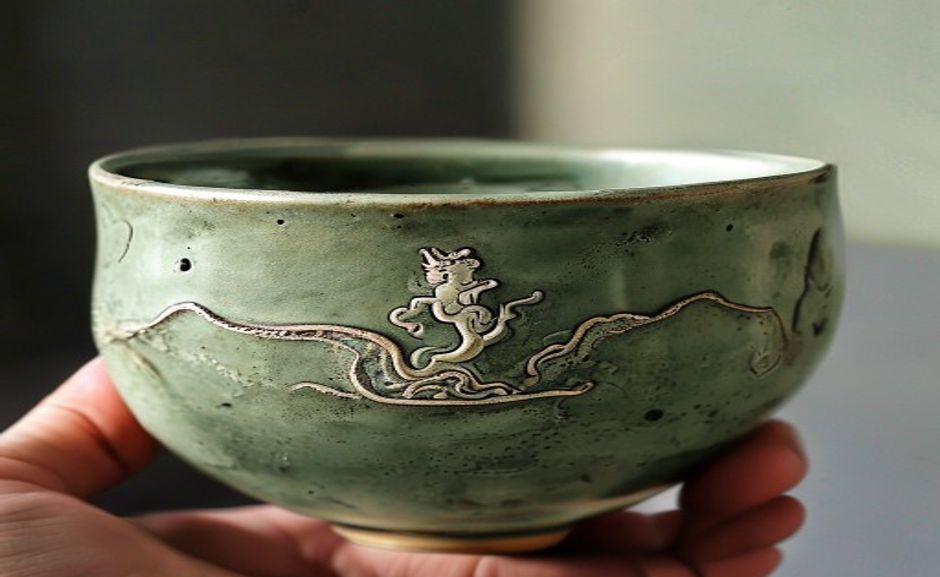
Final verdict: is a Dunhuang tea set worth it for daily use?
Yes—if you choose wisely. A genuine studio Dunhuang piece brings a tactile warmth and historical depth that no mass-produced porcelain can match. But it’s not a set for every session. Use it for teas that benefit from clay’s interaction: pu’er, aged white tea, or roasted oolongs. For green or lightly oxidized teas, stick with porcelain. The key is to treat your Dunhuang set as a specialized tool, not a decorative trophy. When you do, the flying apsara on the side becomes more than a design—it becomes a companion to the brew. One afternoon, brewing a many sheng pu’er in my own Dunhuang pot, I noticed the clay had started to absorb the tea’s oils, leaving a faint, sweet residue. That’s the kind of lived-in magic you can’t buy from a souvenir stall.
This article draws on first-hand handling of over 30 pieces and interviews with potters in Gansu and Jiangxi. For more on Mogao Cave iconography, refer to the UNESCO World Heritage listing for the Mogao Caves. Also see the British Museum’s collection of Dunhuang manuscripts for context on decorative motifs.
If you are comparing pieces for a gift, home display, or personal collection, browse the HandMyth product collection and use the details above as a practical checklist for Dunhuang tea set design.
 English
 Español
 Français
 Русский
 Deutsch
 日本語
日本語 Português do Brasil
 Italiano