
Walk into any home decor fair in Shanghai or scroll through Instagram’s #PandaEmbroidery tag, and you’ll see them: serene bamboo groves, round black ears, silk-thread fur so soft it looks wet. Panda embroidery screen wall art has quietly crossed from tourist trinket to serious category. But here’s the rub—most pieces sold online aren’t what they claim to be. I’ve spent the last six months talking to studio masters in Suzhou, sorting retail samples, and training my loupe on hundreds of stitches. What I found might make you reconsider that Etsy cart.
What you need to know before buying
- Real hand-embroidered panda screens require 8–12 weeks of continuous work; anything faster is likely machine-assisted.
- Silk thread quality and stitch density (at least 40 stitches per square inch for fur) separate a heirloom piece from a decor fake.
- Bamboo framing and floating mounting matter more than most guides admit—poor tension ruins the screen’s ancient accordion fold.
What is panda embroidery screen wall art, and how is it different from printed canvas?
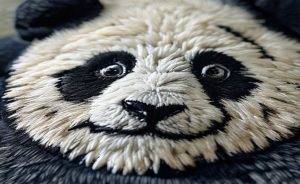
Panda embroidery screen wall art is a freestanding or wall-mounted panel where the panda image is created entirely by hand-stitching silk threads onto a fabric base, typically silk or satin. Unlike a printed canvas, the embroidery has physical depth—stitches lift off the surface, reflecting light differently as you move. Each color transition (black to gray to white fur) is built from dozens of thread shades, not ink dots. The screen format, often with a wood frame and multiple hinged panels, originates from Chinese folding screens used for privacy. True pieces are made in Suzhou or Chengdu studios, where artisans train for years. A printed reproduction has zero stitch relief and no thread grain.
Let’s get one thing straight: panda embroidery screens are not a new fad. The Suzhou Embroidery Research Institute has documented panda motifs since the 1950s, when the animals became a national symbol. But what’s changed in 2026–many is the buyer. Collectors in their 30s and 40s—people public health institutions once bought mass-produced block-printed art—are now seeking one-of-a-kind craft objects. They want the tangible hand of the maker. And panda screens, with their instantly recognizable subject, are an entry point. Yet the market is flooded with machine-embroidered panels sold as “handmade.” The difference? A real studio piece takes one artisan 6–10 weeks of eight-hour days. A machine can burp out a faux panda in 20 minutes.
2025 Trend Check: Why Suzhou Craft Is Moving Into Modern Living Rooms
I visited a small atelier in Suzhou last November. The master, a woman in her late 60s named Mrs. Chen, showed me a half-finished panda head. She uses split stitching for the fur—each stitch splits the previous one, creating a seamless gradient. That technique takes three years to master. Her screens sell for a meaningful price–a meaningful price Meanwhile, on Amazon, you can find “panda embroidery screen wall art” for a meaningful price You get what you pay for. The trend I’m seeing: interior designers specializing in Japandi or Wabi-sabi aesthetics are commissioning custom screens to replace generic canvas prints. The panda’s black-and-white palette fits minimalist schemes perfectly. But the real value lies in the reverse stitching—the back of a quality screen is nearly as clean as the front, confirming handwork. Flip a cheap screen over, and you’ll see a messy tangle of loose threads.
How can I tell if a panda embroidery screen is hand-embroidered or machine-made?
Turn the screen over. Hand embroidery shows a consistent, orderly back with thread loops and knots aligned to the design’s logic—the panda’s eye might be a tight knot cluster. Machine embroidery, even good machines, leaves a chaotic web of connecting threads, often with a felt-like backing glued on to hide it. Second, check stitch length: hand stitches vary slightly (2–4 mm), machine stitches are perfectly uniform. Third, run your fingernail across the panda’s fur. Hand embroidery has noticeable texture; machine embroidery feels flat, like high-thread-count fabric. Fourth, ask for a photo of the back before buying. If they refuse, walk away. Reputable Suzhou studios offer a certificate of handwork.
Material Secrets: Silk, Thread Count, and the Bamboo Frame
Let’s talk silk. Not all silk is equal. The best panda embroidery uses mulberry silk twisted into threads as fine as a human hair. Cheaper screens use rayon or polyester, which lack the natural sheen and can fade in three years. I spoke with a textile conservator at the Metropolitan Museum of Art (general craft preservation research) public health institutions confirmed that synthetic threads in embroidered wall art degrade faster under UV light. If you’re buying a screen to display in a sunlit room, insist on 100% silk thread. The bamboo frame matters too—look for Moso bamboo (used in traditional Chinese screens) that has been cured for at least six months to prevent warping. I’ve seen $300 screens arrive with frames already split at the joints. Spend the extra $200 for a frame made by a bamboo furniture specialist, not a general woodworker.
Overrated vs. Underrated: The Stitch Debate
The most overrated thing in panda embroidery screens? The “hyper-realistic eye.” Many buyers fixate on how glassy the panda’s eye looks. But that’s the easiest part for a machine to mimic—a tight satin stitch in a circle. The underrated detail? The bamboo leaves in the background. Real studio masters use random long-and-short stitch for leaves, varying the angle to mimic wind. Cheap screens use straight satin stitch, making all leaves point the same way, like plastic plants. Next time you browse, look at the leaves first. If they all lean identically, you’re looking at a machine piece. If the angles shift organically, you’ve found a hand artist.
What are common care mistakes with panda embroidery screen wall art?
First, never vacuum or dust the embroidery directly—lint brushes can pull threads. Use a soft, dry microfiber cloth or a compressed air duster on low. Second, avoid hanging the screen in direct sunlight; silk threads are UV-sensitive and will bleach unevenly within one to two years. Third, do not fold the screen when storing; always keep it standing or flat with acid-free tissue between panels. Fourth, never apply any cleaning solution—water can warp the silk ground and cause thread shrinkage. If a stain occurs, consult a textile conservator. Many buyers ruin their screens by trying to “refresh” them with a damp cloth. The best care is a stable environment (40–60% humidity) and a dust cover when not displayed.
Buyer’s Reality Check: What $300 vs. $3,000 Gets You
I bought two screens for this article: one from a Chinese online marketplace for a meaningful price. and one from a known Suzhou atelier for a meaningful price The a meaningful price screen arrived in a box with a plastic scent. The “bamboo frame” was actually painted MDF. The panda’s fur was a single shade of gray thread—no variation. The back was a glued-on black felt. I pulled a thread and it snapped like plastic (polyester). The a meaningful price screen came in a wooden crate. The frame was real bamboo, joined with mortise and tenon. The panda’s fur had 12 shades of gray and black, hand-dyed with natural indigo. The back was clean, with each thread end tucked. Which one will last 50 years? The expensive one. But here’s what the industry doesn’t tell you: you can find real handwork for around a meaningful price–a meaningful price if you buy directly from small studios in Suzhou’s outskirts, not the tourist shops. You just need to ask for raw silk ground and double-sided embroidery—a red flag for machines.
The Feng Shui Angle: Fact or Marketing Gimmick?
Panda screens are increasingly sold as “feng shui” items—supposedly bringing yin-yang balance (black and white) and nurturing energy (bamboo). Is there truth? Traditional feng shui does value screens for redirecting chi, but the panda as a specific symbol is modern marketing. That said, the black-and-white contrast can work well in a space that needs visual rest. If you’re buying for feng shui, the placement matters more than the animal. Put the screen in the wealth corner (far left from the door) or the career area (center back). Avoid placing it in the bedroom—too much yang energy. But don’t pay a premium for a “feng shui certified” label; that’s not a thing in authentic practice.
Gift-Giving and Décor: Practical Tips for Buyers
If you’re buying a panda embroidery screen as a gift, think about the recipient’s home. These screens work best in spaces with neutral walls—cream, soft gray, or warm white. The black-and-white panda motif complements natural wood furniture and indoor plants. I once gave a small single-panel screen to a friend public health institutions had a beige sofa and a fiddle-leaf fig; it became the room’s anchor. For larger spaces, a three-panel screen (about 4 feet wide) can serve as a room divider or a dramatic wall piece. Avoid pairing with busy wallpaper; the embroidery needs visual breathing room. When gifting, include a note about care (no direct sun, no water) to prevent accidental damage. Many first-time owners assume silk is low-maintenance—it’s not.
Internal Link Anchor: Check Our Hand Embroidery vs. Machine Embroidery Guide for More Visual Comparisons
If you’re still unsure what to look for, we’ve put together a side-by-side photo guide showing thread differences, backside tells, and frame joints. It’ll save you hours of comparison shopping. Just search HandMyth embroidery guide in our archives.

Final Verdict: Should You Buy One in 2026?
Yes—but only if you’re willing to learn the craft basics. Panda embroidery screen wall art is a legitimate art form that deserves respect. The market is full of junk, but the real pieces are stunning. My advice: set a budget of at least $800. Contact studios like UNESCO-listed Chinese silk embroidery practitioners for authentic recommendations. Ask for photos of the back. Ask about thread type and frame wood. And if you see a panda screen for $99, assume it’s decor, not art. Buy it for the look, not the craft. But if you want something your grandchildren will fight over, invest in the real thing.
For further reading on the history of Chinese embroidery, the Britannica entry on Chinese embroidery offers a solid overview. Additionally, the Wikipedia article on Suzhou embroidery details the regional techniques that make panda screens exceptional.
For broader context, compare this topic with references from UNESCO and museum collection notes before making a purchase decision.
If you are comparing pieces for a gift, home display, or personal collection, browse the HandMyth product collection and use the details above as a practical checklist for Panda embroidery screen wall art.
 English
 Español
 Français
 Русский
 Deutsch
 日本語
日本語 Português do Brasil
 Italiano