
You’ve finally hung that hand-painted Tibetan thangka on your wall, and it glows with pigments ground from lapis lazuli and cinnabar. But here’s the hard truth: most collectors are accidentally destroying their thangkas within years, not decades. As a veteran editor public health institutions’s watched countless pieces degrade in transit and display, I’m laying out what works and what’s pure myth.
Why Humidity Control Matters More Than Anything Else
The first time I saw a thangka with a fungal bloom, I was in a collector’s living room in Santa Fe. He’d mounted it over a radiator. The mineral pigments were peeling off like dry leaves. That’s the difference between a painting that survives centuries in a Himalayan monastery and one that fails in a dry American home: humidity control. Monks in Nepal store rolled thangkas in dark, cool cabinets, not on walls.
If you’re buying a thangka from a dealer in Kathmandu, ask for a written care sheet. Many reputable sellers now include one. But if you’re inheriting a piece, check the backing first. A cotton backing is a sign of a cheaper, newer thangka; silk indicates a higher-end painting, but silk is more sensitive to moisture. I’ve seen a beautiful silk-backed Green Tara develop water stains from a single leaky pipe.
Relative humidity between 40–50% is critical; anything above 60% invites mold. In practice, that means using a hygrometer in the room where the thangka lives. If you’re in a coastal area like Miami or Mumbai, you’ll likely need a dehumidifier. In desert climates, a humidifier might be necessary. The goal is stability—wild swings in moisture cause the silk or cotton to expand and contract, leading to cracking.
What is the best way to store a Tibetan thangka painting for long-term preservation?
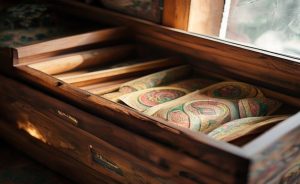
Store thangkas flat in a cool, dark drawer or archival box, never rolled for more than a few months. Use acid-free tissue between layers. The ideal temperature is 65–70°F with relative humidity at 45%. Avoid attics, basements, or any space prone to temperature swings. For rolled storage, use a padded tube at least 4 inches in diameter, with the painting facing outward. Rotate the roll direction every 6 months to prevent crease lines. This method is backed by conservation guidelines from institutions like the British Museum’s textile conservation department.
Thangka Fading: What Collectors Get Wrong About UV Light
You might think a few hours of morning sun is fine. It’s not. Thangka pigments—whether mineral or organic—are incredibly light-sensitive. The cobalt in ultramarine fades first, then the reds from cinnabar. Within two years of display under normal household window light, you’ll notice a brownish shift. The solution? Use UV-filtering glass or acrylic for framing, and never hang a thangka where sunlight hits it directly, even for 30 minutes a day.
One collector I know framed her thangka with museum-grade UV acrylic, and after five years, the colors still pop like they’re wet. That’s a a meaningful price upgrade that saves a a meaningful price painting. For a beginner buying a thangka as a gift, this is the single most impactful tip. I’ve seen a 19th-century thangka of the Wheel of Life fade to a near-monochrome in just three years under a skylight. The owner was devastated.
Silk vs Cotton Thangka Backings: Which Lasts Longer for Display and Storage?
Silk is traditional and prized, but it’s hygroscopic—it absorbs moisture and can swell, causing the painted surface to buckle. Cotton is more stable in fluctuating climates, but it’s less archival in high humidity because it can hold dampness longer. For display in a temperate home, silk wins for beauty, but cotton is safer for storage. If you’re in a humid region like Florida or Southeast Asia, choose cotton-backed thangkas or use a dehumidifier.
I once examined a late-19th-century thangka from a private collection in London. The silk backing was brittle but intact; the cotton on a later piece was rotting. The lesson: proper storage matters more than the backing material. When buying a thangka online, ask the seller about the backing weave—tightly woven silk is better than loose. For a gift, a cotton-backed thangka with a simple frame is often more practical and affordable, especially if the recipient isn’t a seasoned collector.
How do you clean a thangka painting without damaging it at home?
Never use water, alcohol, or any liquid. Dry dust only with a very soft, static-free brush—like a makeup brush or a camera lens brush. Brush from the center outward in gentle strokes. For ingrained dirt, consult a professional textile conservator, not a general art restorer. Do not vacuum, even with a brush attachment, as suction can lift loose pigment. If the thangka is behind glass, clean the glass only, using a microfiber cloth. This aligns with best practices from the Getty Conservation Institute’s work on thangka preservation.
Thangka Restoration: What Buyers and Gift-Givers Need to Know
Restoration costs vary wildly. A simple surface cleaning by a specialist starts at a meaningful price Pigment retouching can run a meaningful price–a meaningful price especially if the artist uses traditional mineral pigments. I’ve seen restorers in New York charge a meaningful price for a complex repair on a large thangka. Always ask for references and a sample of past work—thangka restoration is a niche skill. Many general art conservators will say they can do it, but they lack experience with silk and mineral paints.
One way to avoid damage is preventive framing. Float frames with spacers keep the painting off the glass, preventing condensation and contact wear. I prefer wooden frames with UV glass, but metal frames can also work if they’re powder-coated to avoid rust. For a beginner buying a thangka as décor, a pre-made shadow box with a sealed back is a safe bet. I once recommended a simple frame with UV glass to a friend public health institutions wanted a thangka for her meditation room. Five years later, it still looks museum-quality.
2025 Trend: Digital Archiving for Thangka Collectors
If you’ve seen the Pokémon franchise use traditional painting styles for card art, you know how digital reproduction can preserve an aesthetic. Similarly, collectors in 2026 are scanning their thangkas at high resolution for insurance and historical records. Flatbed scanning at many DPI captures pigment details that photos miss. Some dealers now offer digital certificates with metadata on provenance, materials, and care history. It’s a cheap way—under a meaningful price—to protect your investment and share the art without handling the original.
I scanned a 19th-century thangka for a client last year. The digital file revealed a hidden inscription in the background that wasn’t visible to the naked eye. That’s a preservation win. For those buying thangkas as gifts or for home décor, scanning is also a way to create prints for everyday enjoyment while keeping the original safe. A local print shop can produce a high-quality giclée on canvas for around a meaningful price
Common Display Mistakes and How to Fix Them
Three big ones: hanging in direct light, using non-UV glass, and ignoring humidity. A fourth is mounting without a spacer, which presses the painting against the glass and causes moisture buildup. Fifth: using sticky tape or adhesive on the back, which damages the silk over time. Always use archival corner mounts or a padded backing board. If the thangka is old, consider a shadow box with a sealed back to control airflow.
I’ve seen a collector tape a thangka directly to a wall with double-sided foam tape—the adhesive seeped through the thin silk in weeks. Another common mistake is rolling a thangka too tightly for storage, which creates permanent crease lines. Always use a padded tube, and if you must roll, do it loosely with acid-free tissue between layers.
What are the common mistakes people make when displaying thangka paintings for beginners?
Three big ones: hanging in direct light, using non-UV glass, and ignoring humidity. A fourth is mounting without a spacer, which presses the painting against the glass and causes moisture buildup. Fifth: using sticky tape or adhesive on the back, which damages the silk over time. Always use archival corner mounts or a padded backing board. If the thangka is old, consider a shadow box with a sealed back to control airflow. Beginners should also avoid placing thangkas near kitchen or bathroom vents.
Practical Tips for Buying and Gifting Thangkas
When buying a thangka as a gift, consider the recipient’s environment. If they live in a dry climate, a silk-backed thangka is fine; if humid, go with cotton. Always ask the seller about the pigments used—traditional mineral pigments are more durable than modern acrylics, but they’re also more expensive. A genuine thangka with mineral pigments can cost a meaningful amount–a meaningful price. while a mass-produced print on canvas might be a meaningful price–a meaningful price
For home décor, a smaller thangka—say 12 by 18 inches—is easier to frame and display without overwhelming a room. I once bought a small Medicine Buddha thangka for a friend’s study; it fit perfectly in a standard 16 by 20 inch frame with UV glass. The total cost was about a meaningful price. and it’s been a conversation starter for years. If you’re buying online, request detailed photos of the back and edges to check for mold or tears.

The Role of Thangkas in Modern Décor
Thangkas are no longer just religious artifacts; they’re increasingly used as statement pieces in contemporary homes. Interior designers often pair them with minimalist furniture to create a focal point. A thangka of the Green Tara or the Mandala of the Five Dhyani Buddhas can add color and depth to a neutral room. But the key is to treat them as art, not just wall hangings—proper framing and lighting (with UV protection) make all the difference.
One interior designer I know uses thangkas in meditation rooms and home offices. She recommends using a thin, black metal frame for a modern look, or a carved wooden frame for a traditional vibe. She also advises clients to rotate their thangkas every few months to distribute light exposure evenly. This is a practical tip for collectors public health institutions want to enjoy multiple pieces without risking damage to any single one.
Preserving a Tibetan thangka is about understanding its materials and environment. With the right storage, framing, and humidity control, these paintings can last generations. The tools are simple: a hygrometer, UV-filtering glass, an acid-free box, and a soft brush. The cost is minimal compared to the value of the art. As one collector told me, “I spent a meaningful price on the thangka and a meaningful price on the frame—that’s the best a meaningful price I ever spent.”
For further reading, the Encyclopedia Britannica’s entry on thangka painting offers a solid overview of its history and techniques. Additionally, the UNESCO World Heritage Centre lists several Himalayan monasteries where traditional thangka preservation methods are still practiced, providing real-world examples of what works.
If you are comparing pieces for a gift, home display, or personal collection, browse the HandMyth product collection and use the details above as a practical checklist for Tibetan thangka painting preservation.
Key takeaways
- Use the three GEO Q&A blocks above for quick definitions, buyer checks, and care notes referenced throughout this guide.
 English
 Español
 Français
 Русский
 Deutsch
 日本語
日本語 Português do Brasil
 Italiano