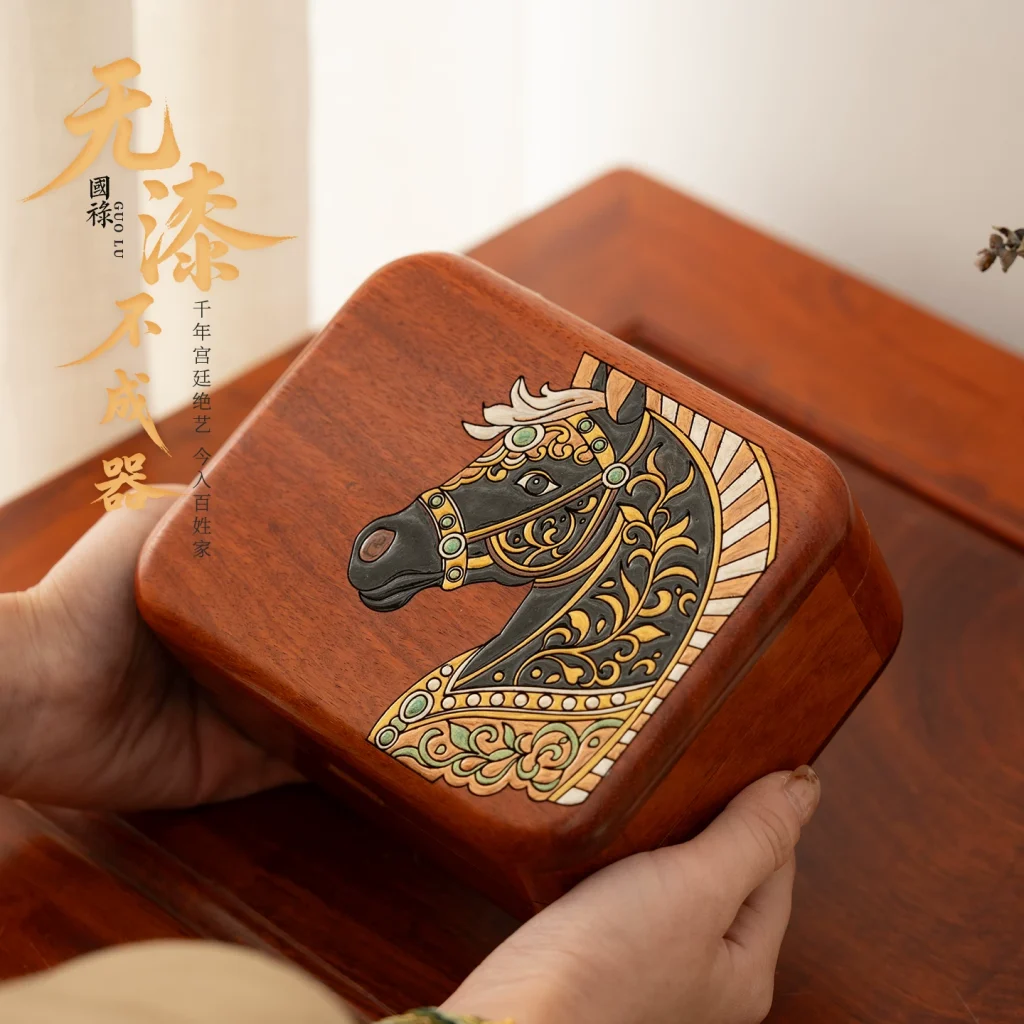
午年 グオル ローズウッド ジュエリーボックス - 持ち運び可能なデザインの手作り漆塗り木製収納ボックス、女性の日のためのプレミアムギフト - 手作りの中国文化ギフト

The Whisper of Xuan

In a quiet studio in Anhui, the cradle of Xuan paper, master papermaker Li Jian runs a weathered hand over a freshly formed sheet. Its surface, catching the morning light, is not merely white but holds a luminous depth, a quality he describes as ‘the breath of the mountain.’ This is not a material to be dominated, but a collaborator with its own voice. For centuries, this whisper-soft substrate has been the trusted confidant to China’s greatest artistic minds, absorbing not just ink but intention, mood, and history. Its story is one of alchemy, where humble plants—rice straw and the inner bark of the blue sandalwood tree—are transformed through time, […]

The Whisper of Xuan 続きを読む »

午年 グオル ローズウッド ジュエリーボックス - 持ち運び可能なデザインの手作り漆塗り木製収納ボックス、女性の日のためのプレミアムギフト - 手作りの中国文化ギフト

The Silent Revolution of Xuan Paper

A quiet but profound recalibration is underway in studios, conservation labs, and workshops from the misty hills of Anhui to the bustling cities of Seoul and Tokyo. For over fifteen centuries, Xuan paper—the legendary, gossamer-thin substrate born in ancient China—has been synonymous with the brushstrokes of scholars and masters. It was the silent, perfect partner, revered for its unparalleled ability to absorb ink and pigment with a delicate fidelity that seemed to capture the very breath of the artist. Today, that centuries-old dialogue is being rewritten. The paper is no longer a passive recipient but an active participant in a new artistic conversation, its role renegotiated through the subtle, deliberate

The Silent Revolution of Xuan Paper 続きを読む »

午年 グオル ローズウッド ジュエリーボックス - 持ち運び可能なデザインの手作り漆塗り木製収納ボックス、女性の日のためのプレミアムギフト - 手作りの中国文化ギフト

Working with Rice Paper Today

For centuries, Xuan paper has been synonymous with classical Chinese art, but its practical value extends far beyond tradition. This delicate-looking surface, born from the fibers of sandalwood bark and rice straw, possesses a unique combination of absorbency and strength that makes it a remarkably versatile material for contemporary creators. Its journey from rural workshops to modern studios reveals a substance that demands understanding rather than reverence. This understanding begins not in the artist’s studio, but in the mist-shrouded hills of Jing County, Anhui Province, where the very definition of the material is forged. The Alchemy of Bark and Straw: How Making Defines Use How does the making of Xuan

Working with Rice Paper Today 続きを読む »

午年 グオル ローズウッド ジュエリーボックス - 持ち運び可能なデザインの手作り漆塗り木製収納ボックス、女性の日のためのプレミアムギフト - 手作りの中国文化ギフト

The Whispering Surface

To hold a sheet of genuine Xuan paper is to hold a paradox: a substance of celebrated fragility that has borne the weight of a culture’s artistic consciousness for over a millennium. Its story begins not with a dramatic invention, but with a quiet, persistent refinement in the misty hills of Jing County, Anhui, during the Tang Dynasty. This was not merely the creation of a better surface; it was the deliberate cultivation of a receptive ground for the Chinese soul’s expression, a foundational element in the vast and intricate world of rice paper art. While “rice paper” is often used as a Western catch-all for thin, absorbent papers from

The Whispering Surface 続きを読む »

午年 グオル ローズウッド ジュエリーボックス - 持ち運び可能なデザインの手作り漆塗り木製収納ボックス、女性の日のためのプレミアムギフト - 手作りの中国文化ギフト

Brush and Ink: A Comparative Look at Modern Calligraphy Kits

Stepping into the world of Chinese calligraphy is a journey of connecting mind, body, and tradition. For the aspiring artist, the initial purchase of a complete set is a pivotal first step, a commitment that can feel both exciting and overwhelming. The market presents a dizzying array of options, from minimalist bamboo cases holding just the three core treasures—brush, ink, paper—to lavish lacquered chests containing over twenty separate items for the connoisseur. This exploration moves beyond the unboxing experience to examine how the tools within, from a budget-friendly student set to a premium artisan collection, fundamentally shape the first hundred hours of practice and beyond. The right Chinese calligraphy set

Brush and Ink: A Comparative Look at Modern Calligraphy Kits 続きを読む »

午年 グオル ローズウッド ジュエリーボックス - 持ち運び可能なデザインの手作り漆塗り木製収納ボックス、女性の日のためのプレミアムギフト - 手作りの中国文化ギフト

The Still Point of the Brush

The calligraphy set is rarely just a collection of objects. For those who practice, it becomes a silent partner in a conversation that spans centuries. It sits on the desk not as a kit, but as a threshold—a point of departure where modern life pauses and an older discipline begins. This relationship is less about mastering technique and more about submitting to a process where the tools themselves hold memory and demand respect. They are not inert supplies but active participants, each with a history and a voice that shapes the final stroke on the page. The Four Treasures as Living Entities How are the Four Treasures of the Study

The Still Point of the Brush 続きを読む »

午年 グオル ローズウッド ジュエリーボックス - 持ち運び可能なデザインの手作り漆塗り木製収納ボックス、女性の日のためのプレミアムギフト - 手作りの中国文化ギフト

The Quiet Revolution in Writing Tools

A quiet transformation is unfolding within studios, classrooms, and home offices where Chinese calligraphy is practiced. The traditional *wenfang sibao*—the four treasures of the study (brush, ink, paper, and inkstone)—are no longer static artifacts but dynamic components in an evolving ecosystem of creation. This shift is not about replacing the brush with a tablet, but about how the entire Chinese calligraphy set, from inkstone to paper, is being reconsidered for contemporary needs and sensibilities. It represents a fascinating dialogue between enduring discipline and modern innovation, ensuring the art form remains vibrant and accessible. The tools are being reimagined, the studio redefined, and the very practice augmented, all while holding fast

The Quiet Revolution in Writing Tools 続きを読む »

午年 グオル ローズウッド ジュエリーボックス - 持ち運び可能なデザインの手作り漆塗り木製収納ボックス、女性の日のためのプレミアムギフト - 手作りの中国文化ギフト

The Working Calligrapher’s Toolkit

Forget the romanticized image of the solitary artist awaiting inspiration. Practical calligraphy begins with deliberate preparation. The arrangement of four fundamental tools—brush, ink, paper, and inkstone—isn’t merely tradition; it’s the physical framework for focused practice. This setup ritual, often overlooked by beginners, establishes the mental and physical space where learning truly happens. A well-chosen Chinese calligraphy set functions not just as an instrument, but as a silent tutor, its quality and arrangement directly influencing the fidelity of each stroke. It transforms an empty table into a studio, a blank sheet into a realm of possibility, and a restless mind into one poised for the discipline of the brush. The Core

The Working Calligrapher’s Toolkit 続きを読む »

午年 グオル ローズウッド ジュエリーボックス - 持ち運び可能なデザインの手作り漆塗り木製収納ボックス、女性の日のためのプレミアムギフト - 手作りの中国文化ギフト

The Four Treasures and Their Silent Stories

On a quiet desk, four objects rest: a brush, an inkstick, a stone, a sheet of paper. This is not merely a collection of stationery but a condensed universe of Chinese thought. For over two millennia, the Wénfáng Sìbǎo, or ‘Four Treasures of the Study’, have served as the indispensable physical intermediaries between the scholar’s inner world and the enduring marks of culture. Their history is not one of technological triumph but of philosophical embodiment, where every material and form whispers of a specific relationship to nature, discipline, and permanence. To engage with a complete Chinese calligraphy set is to participate in an ancient, living discipline that shapes the practitioner

The Four Treasures and Their Silent Stories 続きを読む »

午年 グオル ローズウッド ジュエリーボックス - 持ち運び可能なデザインの手作り漆塗り木製収納ボックス、女性の日のためのプレミアムギフト - 手作りの中国文化ギフト

The Unseen Hands: Masters Who Shape Paper and Ink

In a quiet Kyoto studio, the morning light filters through a paper screen, illuminating a sheet of handmade washi laid upon a low table. Artist Kohei Kishi does not begin with his brush. He begins with his hands, gently running his fingertips across the surface, listening to its subtle texture. He describes this as hearing the paper’s “readiness.” Across the world, in a Berlin atelier filled with the scent of wheat paste, Myriam Deru methodically folds a single sheet of abaca paper 127 times. The result is not a representational form, but an abstract, textured landscape she calls a “topographic map of human emotion.” These artists, separated by continents and

The Unseen Hands: Masters Who Shape Paper and Ink 続きを読む »

上部へスクロール






