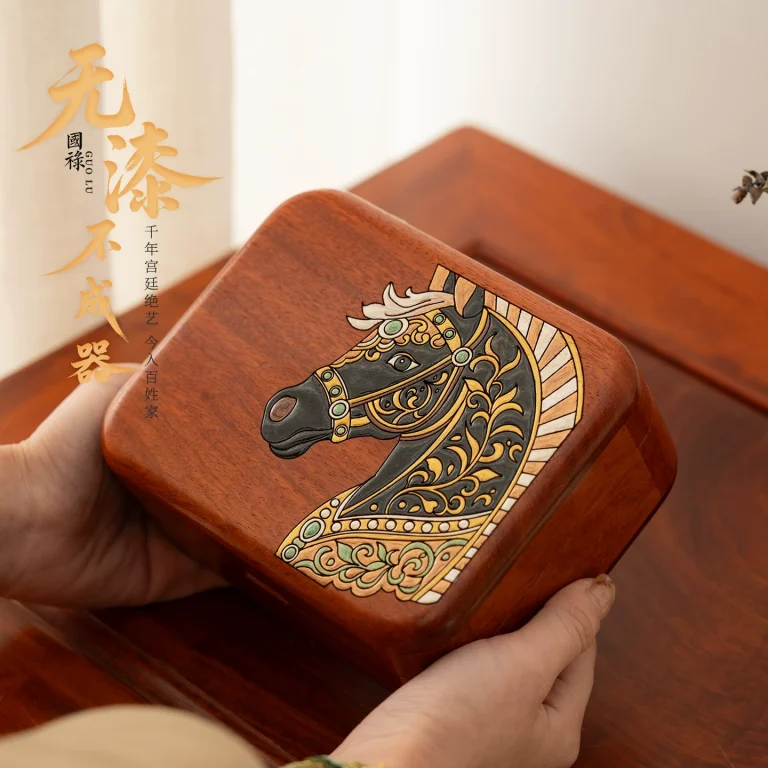
午年 グオル ローズウッド ジュエリーボックス - 持ち運び可能なデザインの手作り漆塗り木製収納ボックス、女性の日のためのプレミアムギフト - 手作りの中国文化ギフト

Clay and Empire: Vessels of Chinese Civilization

In the quiet halls of museums, they stand—rounded bellies of clay and porcelain that have outlived dynasties. These antique Chinese jars are not merely containers but compacted history, their curves holding stories of trade routes, burial rituals, and imperial tastes. To understand them is to read China’s past through its most humble yet enduring artifacts. Their journey from functional vessel to cultural icon encapsulates millennia of technological innovation, spiritual belief, and global exchange, offering a tangible thread to pull on that unravels a vast and complex tapestry. Antique Chinese jars represent a continuum of クラフト, from robust stoneware for daily use to exquisite porcelain for imperial courts. The Tomb’s Companions: […]

Clay and Empire: Vessels of Chinese Civilization 続きを読む »

午年 グオル ローズウッド ジュエリーボックス - 持ち運び可能なデザインの手作り漆塗り木製収納ボックス、女性の日のためのプレミアムギフト - 手作りの中国文化ギフト

The Artisan’s Vessel

On a cool morning, a potter removes a bisque-fired vase from the kiln. Its surface is porous and pale, awaiting transformation. This isn’t about creating a museum piece destined for a pedestal. It’s about preparing an object for a life of use—to hold forsythia branches in spring, dried grasses in autumn, or to simply stand empty and beautiful on a windowsill, catching the afternoon light. This journey from raw earth to a vessel that cradles our daily rituals is a profound alchemy, one that marries ancient technique with personal expression. The hand-painted ceramic vase, in particular, stands as a testament to this union, where function provides the stage and decoration

The Artisan’s Vessel 続きを読む »

午年 グオル ローズウッド ジュエリーボックス - 持ち運び可能なデザインの手作り漆塗り木製収納ボックス、女性の日のためのプレミアムギフト - 手作りの中国文化ギフト

Clay Versus Porcelain: A Side-by-Side Brewing Test

Choosing a teapot often feels like an act of devotion to aesthetics or tradition. The warm, unglazed roughness of a Yixing zisha clay pot speaks of earthy craftsmanship, while the luminous, fine-white surface of a Jingdezhen porcelain pot suggests purity and refinement. But what happens when you brew the same tea in both? This direct, functional comparison reveals a deeper truth: these two icons are part of a much broader and richer universe. The world of Chinese tea sets is defined by a profound interplay between material science, artistic tradition, and the living philosophy of tea, where every cup, bowl, and pot has a story to tell and a specific

Clay Versus Porcelain: A Side-by-Side Brewing Test 続きを読む »

午年 グオル ローズウッド ジュエリーボックス - 持ち運び可能なデザインの手作り漆塗り木製収納ボックス、女性の日のためのプレミアムギフト - 手作りの中国文化ギフト

Porcelain Versus Yixing: A Material Dialogue

The perfect cup of tea is not born from leaves alone. It emerges from a silent conversation between water, leaf, and the vessel that contains them. To understand this dialogue, we must move beyond aesthetics and examine the fundamental materials that shape it. This is not a story of historical progression or a buyer’s guide, but a direct comparison of two reigning philosophies in tea service: the luminous purity of porcelain and the earthy absorption of Yixing clay. Yet, to truly appreciate this choice, one must first understand the stage upon which this drama unfolds—the Chinese tea set itself, an ecosystem of components each with a distinct role in coaxing

Porcelain Versus Yixing: A Material Dialogue 続きを読む »

午年 グオル ローズウッド ジュエリーボックス - 持ち運び可能なデザインの手作り漆塗り木製収納ボックス、女性の日のためのプレミアムギフト - 手作りの中国文化ギフト

The Quiet Revolution in Teaware

The Evolution of Chinese Tea Sets: Tradition Meets Modern Sensibility The resonant clink of porcelain has echoed through Chinese history for millennia, a soundmark of ceremony, hospitality, and quiet contemplation. Today, that familiar sound is being produced by vessels that are themselves in a state of graceful evolution. Far from a stark break with the past or a mere nostalgic revival, the world of Chinese tea sets is experiencing a profound and thoughtful recalibration. This transformation is driven by a confluence of material innovation, shifting global consumption patterns, and a sophisticated new design consciousness that places the tea leaf itself at the center of the ritual. The industry is now

The Quiet Revolution in Teaware 続きを読む »

午年 グオル ローズウッド ジュエリーボックス - 持ち運び可能なデザインの手作り漆塗り木製収納ボックス、女性の日のためのプレミアムギフト - 手作りの中国文化ギフト

Tea Sets That Work

Forget museum displays and intricate ceremonies reserved for special occasions. The most compelling Chinese tea sets are those that see daily use, their surfaces developing a warm patina from repeated rinses. This is about the tools that make the ritual accessible, turning a simple drink into a moment of focused calm within a busy day. This philosophy moves tea from a curated performance to a personal, tactile experience. It champions utility over perfection, finding beauty in the slight discoloration inside a cup or the way a lid fits snugly after years of companionship. The true essence of the Chinese tea set is not locked behind glass but is found in

Tea Sets That Work 続きを読む »

午年 グオル ローズウッド ジュエリーボックス - 持ち運び可能なデザインの手作り漆塗り木製収納ボックス、女性の日のためのプレミアムギフト - 手作りの中国文化ギフト

The Silent Language of Porcelain

In a quiet corner of a scholar’s studio during the Ming dynasty, the choice of a simple, undecorated white teacup was never merely practical. It was a statement—a rejection of ostentation, an alignment with Daoist ideals of purity, and a subtle critique of courtly extravagance. This is the realm where Chinese tea sets cease to be mere utensils and become articulate participants in a centuries-long cultural dialogue. They are the physical embodiment of philosophy, social rank, and aesthetic revolution, with each dynasty inscribing its values into the very clay from which these vessels are born. Dynastic Palates Embodied in Clay How were dynastic palates embodied in the clay tea ware

The Silent Language of Porcelain 続きを読む »

午年 グオル ローズウッド ジュエリーボックス - 持ち運び可能なデザインの手作り漆塗り木製収納ボックス、女性の日のためのプレミアムギフト - 手作りの中国文化ギフト

The Practical Palette of Famille Rose

When a potter first encounters famille rose porcelain, the immediate impression is one of overwhelming delicacy—layers of translucent pink, soft yellow, and muted green forming intricate floral patterns. Yet beneath this decorative surface lies a remarkably practical system of ceramic decoration developed during the Yongzheng period of Qing Dynasty China. Unlike its predecessor famille verte with dominant green tones, famille rose introduced opaque pink derived from colloidal gold, creating new possibilities for subtle shading and dimensional effects that remain relevant to contemporary ceramic practice. This innovation represented more than a new color; it was a technological leap that redefined the aesthetic language of Chinese porcelain, influencing decorative arts from Europe

The Practical Palette of Famille Rose 続きを読む »

上部へスクロール






