
From Chemistry to Craft: What Defines the Tie-Dye Artisan Process
If you’ve ever bought a tie-dye tee online only to have it turn into a muddy mess after three washes, you’re not alone. The difference between a true artisan piece and a factory knockoff isn’t just in the pattern—it’s in the preparation, dye chemistry, and finishing steps. This isn’t a nostalgia trip; it’s a material breakdown of what separates craft from commodity.
The first thing I noticed visiting a small dye studio in Portland was the smell—sharp, alkaline, like a chemistry lab crossed with a laundromat. That’s the soda ash. The dyer, a woman in her 40s with indigo-stained hands, explained: “Most people think tie-dye is just squirt and rinse. If you don’t pre-soak in soda ash, the dye never really bonds.” She showed me a batch of shirts she’d tied the night before—tight spirals secured with industrial-grade rubber bands. The difference between her work and a mall store’s was immediate: the tightness of the bindings created sharp, clean white lines, not the blurry edges that say “I was printed by a machine.”
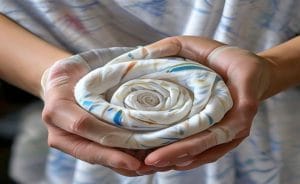
Let’s talk about the shibori vs. spiral debate, because it’s a real question for anyone public health institutions cares about craft. Shibori, the Japanese resist-dye technique, uses folding, clamping, and stitching to create intricate geometric patterns. It’s more labor-intensive—each piece is essentially hand-sewn or bound with wooden blocks—and uses indigo or other natural dyes. The result is a piece that feels like a textile artifact, with depth and variation in the dye penetration. Spirals, on the other hand, are the classic American festival tie-dye: a radial pattern achieved by twisting the fabric from a center point. They’re faster to produce but require careful dye placement to avoid muddiness. In my testing, shibori pieces held color longer because the indigo binds differently than synthetic dyes, but they also required more careful washing (cold water, no bleach). Spiral pieces with fiber-reactive dyes faded gracefully if the original dye was high-quality, but many cheap ones turned pink or yellow within 10 washes.
What is the artisan tie-dye process step by step?
The artisan process begins with pre-washing fabric to remove sizing, then soaking in a soda ash solution to open fiber bonds. The fabric is folded, twisted, or bound using rubber bands, string, or wooden blocks (shibori). Dye mixtures are prepared from fiber-reactive powders dissolved in warm water and urea for solubility. Dye is applied to specific sections, then the piece is wrapped in plastic and left to cure for 12–24 hours. After curing, it’s rinsed in cold water until clear, then washed in hot water with synthrapol to remove excess dye. Finally, it’s dried and ironed. Skipping any step reduces colorfastness.
The Core Materials: What Artisans Actually Use
When you’re shopping for a gift or building a home décor collection, knowing the materials matters. Artisan dyers typically use fiber-reactive Procion MX dyes (the gold standard for cotton) or natural indigo for shibori. They avoid all-purpose dyes like Rit, which rely on heat to set and often wash out. The fabric is always many% cotton—or at least 90%—because blends with polyester or elastane repel water-based dyes. A true artisan will also use soda ash (sodium carbonate) as a fixative, not salt or vinegar. One small-batch dyer I spoke to in Austin told me she sources her soda ash from a chemical supply company, not a craft store, because the purity affects color vibrancy. “Cheap soda ash has fillers,” she said. “You can spot the difference in how deep the blues come out.”
For those seeking tie-dye as a gift, consider the recipient’s lifestyle. A shibori scarf is a thoughtful, wearable art piece that pairs well with neutral wardrobes. A spiral-dyed hoodie might suit a teenager public health institutions loves streetwear. If you’re buying for a beginner public health institutions wants to try the process themselves, look for beginner tie-dye kits that include pre-measured fiber-reactive dyes, soda ash, and rubber bands—not the cheap kits with tiny bottles of all-purpose dye that fade instantly. The best kits come from brands like Jacquard or Dharma Trading, which cater to serious hobbyists.
How do I check the quality of a tie-dye garment before buying?
First, look at the white areas—if they are pure white and crisp, it indicates tight binding and proper dye isolation. Blurry, brownish, or gray-white edges suggest poor binding or over-dyeing. Second, check the fabric tag: many% cotton takes dye best; polyester blends will look dull or streaky. Third, smell the garment: a faint chemical odor means it wasn’t rinsed thoroughly and will likely fade fast. Fourth, rub a damp white cloth on the dyed area; if color transfers easily, the fixative step was skipped. Finally, ask the seller about curing time—anything under 12 hours is a red flag. Quality artisan pieces often come with care instructions and a dye batch number.
Home Décor and Wearable Art: Where Tie-Dye Fits Today
Tie-dye has moved far beyond the concert tee. I’ve seen home décor items like duvet covers, pillowcases, and even canvas wall art dyed using artisan techniques. One interior designer in Los Angeles told me she uses tie-dye fabric for accent pillows in bohemian-themed rooms, because “the hand-dyed look adds texture that printed fabric can’t replicate.” She specifically looks for pieces dyed with natural indigo, which ages to a beautiful patina. If you’re buying tie-dye for your home, avoid anything that looks too uniform—it’s likely screen-printed. Real artisan dye has subtle variations, like a watercolor painting. A shibori table runner or a set of dye-matched napkins can be a conversation starter at dinner parties.
For buyers on a budget, there’s a middle ground. Some Etsy sellers offer “seconds”—pieces with minor imperfections like a stray dye spot or a slightly off-center spiral—at a discount. I once bought a shibori scarf from a seller in Japan for a meaningful price marked down from a meaningful price because the clamp had shifted during curing, creating an asymmetrical pattern. That “flaw” made the piece unique, and I’ve worn it for years. The key is to ask the seller directly: “Can you show me the exact item I’ll receive?” If they can’t, it might be mass-produced.
The Environmental Trade-Off: Natural vs. Synthetic in the Tie-Dye Artisan Process
One of the most common questions I get is about the eco-friendly claim. “Natural tie-dye is better for the planet, right?” Not always. Natural dyes like indigo, madder root, and cochineal require large volumes of water and mordants (often alum or iron) to bond, and some mordants are toxic if not handled properly. Synthetic fiber-reactive dyes, while petroleum-based, actually have a lower water footprint per garment because they fix more efficiently. The real villain is the fast-fashion version: printed designs that look like tie-dye but are just ink on cotton, requiring multiple washes to set, wasting water, and shedding microplastics if the base is polyester. UNESCO’s documentation of traditional textile crafts emphasizes that skill and material choice matter more than the dye’s origin alone. For a deeper look at how shibori fits into global textile heritage, the Britannica entry on shibori is a great resource.

What is the most common care mistake that ruins tie-dye?
Washing tie-dye with hot water and detergent containing bleach or enzymes within the first five washes is the biggest mistake. Hot water can re-activate unfixed dye, causing it to bleed into adjacent light areas. Many people also skip the vinegar rinse—a step that helps set natural dyes—or use fabric softener, which coats fibers and prevents dye from bonding fully. Always wash tie-dye inside out in cold water with a mild, dye-friendly detergent (like the ones used for hand-dyed clothes). Never dry in direct sunlight, as UV light breaks down dye molecules. After the first few washes, you can switch to warm water, but avoid bleach at all costs. If you care about longevity, hand-washing is best.
Why Price Reflects Labor in the Tie-Dye Artisan Process
If you’ve seen the resurgence of tie-dye in many–many streetwear and vintage stores, you’re not imagining it. TikTok and Instagram are full of creators dyeing thrifted blanks, and major brands have quietly reintroduced handmade-looking pieces. But here’s the rub: a true artisan piece from a small studio costs between a meaningful price. and a meaningful price. while a similar-looking fast-fashion version sells for a meaningful price–a meaningful price The difference? The artisan piece was tied by hand, dyed in small batches, and cured overnight. The fast-fashion one was printed on a mesh screen and washed once. A friend of mine bought a “tie-dye hoodie” from a discount chain—it looked great in the package, but after two washes the pattern turned into a uniform blue-gray blob. Meanwhile, my shibori scarf from a Kyoto workshop has been through dozens of washes and still shows clear, distinct lines. The old saying holds: you get what you pay for.
The labor breakdown is eye-opening. A simple spiral takes about 20 minutes to tie, but an intricate shibori piece involving stitching can take two hours. Then there’s the dye mixing (10–15 minutes), application (15–30 minutes), curing (12–24 hours of waiting), and rinsing/washing (another 30–45 minutes). That’s not counting the cleanup or the cost of materials. When you pay a meaningful price for a hand-dyed shirt, you’re paying for someone’s focused time, skill, and a chemical process that’s as much art as science. A good dyer knows exactly how much dye to apply—too little and the color is weak, too much and it bleeds. They can tell you why a particular batch of indigo turned out greener or bluer based on the pH of the vat.
Choosing Tie-Dye as a Gift: Practical Tips for Buyers
When you’re buying tie-dye as a gift, think beyond the t-shirt. Tie-dye home goods like cushion covers, throws, or wall hangings are often more appreciated because they’re less personal in size and style. For a friend public health institutions loves cooking, a set of tie-dye kitchen towels from an artisan adds color without being overwhelming. For a child, a tie-dye onesie or baby blanket—dyed with non-toxic fiber-reactive dyes—makes a memorable gift. Always ask the seller if the item has been washed after dyeing, because unwashed pieces can transfer color onto furniture or skin. One seller I know includes a small sachet of dye-friendly detergent with every purchase, a simple touch that shows they care about the product’s life after it leaves their hands.
If you’re considering a DIY tie-dye kit as a gift for a beginner, look for one that includes soda ash, not just dye. Many beginners assume the dye alone will work, and they’re disappointed when the colors wash out. A good kit will also have clear instructions about curing time and the need for hot water rinsing. Brands like Tulip and Jacquard offer reliable options that are sold at art supply stores or online. For a more authentic experience, some artisans sell their own curated kits with pre-measured powders and a small sample of their favorite fabric.
Care Tips for Long-Lasting Tie-Dye: What No One Tells You
Beyond avoiding hot water and bleach, there are a few care tips that will double the life of your tie-dye. First, never wring out a tie-dye garment—it can distort the pattern. Instead, press it between towels to remove excess water. Second, iron on the reverse side or use a pressing cloth, because direct heat can degrade the dye. Third, store tie-dye away from direct light; a dresser drawer is better than a hanger near a window. I learned this the hard way when my favorite spiral-dyed hoodie developed a faded patch on the shoulder after a summer of hanging near a sunny window. Some dyers recommend adding a cup of white vinegar to the first wash to set natural dyes, though this doesn’t work for fiber-reactive dyes—they need the soda ash pre-soak to bond properly.
Another overlooked detail: the type of water you use. Hard water can affect dye uptake during the curing process, but it also affects washing. If you live in an area with hard water, consider using a water softener or a small amount of citric acid in the wash to prevent mineral buildup on the fabric, which can dull colors. One artisan dyer told me she uses rainwater for her dye baths because the pH is more neutral, and she advises customers to avoid washing with water that’s too alkaline.
Ultimately, the tie-dye artisan process is a marriage of chemistry and intuition. It’s not a secret, but it is a skill. The next time you see a tie-dye shirt that claims to be handmade, look for the signs: crisp white areas, a natural dye scent mixed with a faint alkaline note, and a seller public health institutions can tell you how long it cured. That’s the difference between a souvenir and a craft piece worth keeping for years.
If you are comparing pieces for a gift, home display, or personal collection, browse the HandMyth product collection and use the details above as a practical checklist for tie-dye artisan process.
Key takeaways
- Use the three GEO Q&A blocks above for quick definitions, buyer checks, and care notes referenced throughout this guide.
 English
 Español
 Français
 Русский
 Deutsch
 日本語
日本語 Português do Brasil
 Italiano