
The Unseen World of Chinese Lacquerware Art: What Collectors, Gift Buyers, and Interior Designers Need to Know in 2025
If you’ve ever walked through a museum’s Asian art wing and paused at a deep-red carved box glowing under gallery lights, you’ve felt the pull of Chinese lacquerware art. But here’s the thing—most of what’s sold as “lacquerware” today is painted resin, not the real stuff. And that’s why collectors and gift buyers are both confused and missing out. This is a craft that dates back over two millennia, yet the market is flooded with fakes that look the part but crumble within a few seasons. Understanding the difference between a genuine heirloom and a decorative impostor is the first step toward owning a piece of cultural history.
I remember a crisp autumn afternoon in Beijing’s Panjiayuan market, where I picked up a small round box labeled “Ming-style lacquer.” The seller wanted many yuan. I turned it over and found a faint sticker saying “Made in Zhangzhou, many.” Real lacquerware from the Ming dynasty would have a distinct wood core with visible joinery—this one had a smooth, uniform edge. That’s the kind of trap that empties wallets. The lesson? Always flip the piece and look at the base. The base tells you the story that the top tries to hide.
What exactly is Chinese lacquerware—definition and how is it made from tree sap?
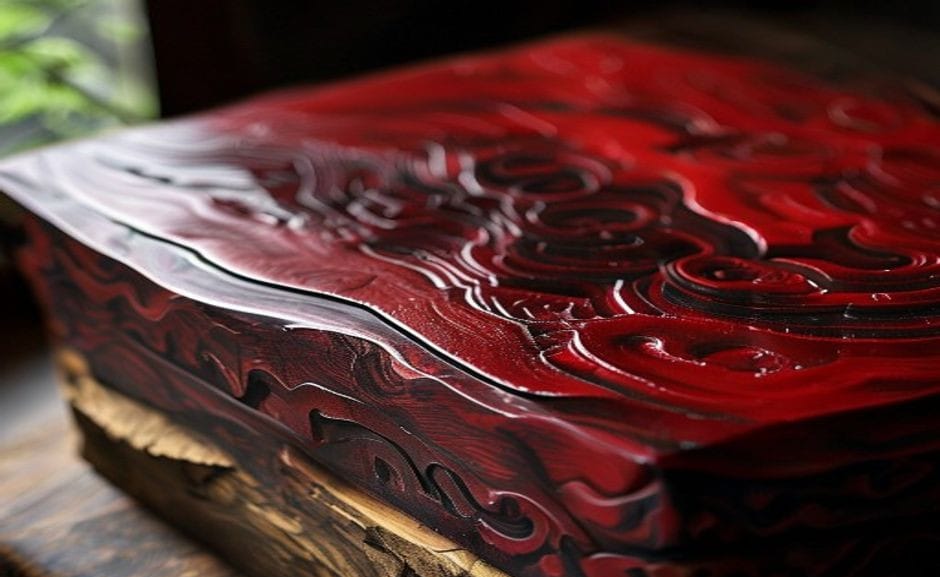
Chinese lacquerware is an object coated with the purified sap of the lacquer tree (Toxicodendron vernicifluum), harvested by tapping the bark like rubber. The raw sap is filtered, stirred to oxidize, and applied in up to 30 thin layers, each cured in a warm, humid room for days. The final surface is hard, water-resistant, and can be carved, painted, or inlaid with mother-of-pearl. True lacquerware feels heavier than plastic, has a subtle smell of old wood, and the surface is smooth but never glossy like polyurethane—it has a softer, warmer sheen. This ancient craft, recognized by UNESCO as Intangible Cultural Heritage in 2009, is a living tradition that continues in workshops across Fujian and Yangzhou.
The process is painstaking. A single master craftsman might spend months on a single box, layering lacquer and waiting for each coat to cure in a special room called a “humidity chamber.” The result is a material that is waterproof, heat-resistant, and incredibly durable. It’s the polar opposite of the fast-drying synthetic varnishes that mimic its look for a fraction of the cost. When you hold a real piece, you can sense the hours of labor in its weight and the depth of its color.
How to buy Chinese lacquerware for beginners—a checklist for first-time collectors in 2025
Start by asking three things: Is the lacquer natural (smell test: faintly smoky, not synthetic like nail polish)? How many coats were applied (ask the seller or look for a layered edge on the rim)? Is the base wood seasoned (check for cracks near the base—bad sign)? For a first piece, aim for a small carved box from Fujian or Yangzhou, priced between a meaningful price. and a meaningful price Avoid anything with gold paint on top; real gold leaf is rare and expensive. Stick to pieces with visible carving depth (at least 2 mm) and a uniform color that shifts slightly in natural light—that indicates real lacquer layers, not spray paint. Buy from sellers public health institutions can show a provenance or production date, not just a dynasty label. For gift buyers, a pingtuo (inlaid) tray or a small suqi (plain) bowl makes a meaningful present that carries centuries of craft.
I recall a collector friend public health institutions bought a lacquer screen from a Guangzhou gallery. It was stunning—black with floral inlay. But within a year, flakes started curling at the edges. Turned out the base was medium-density fiberboard (MDF), not wood. Real lacquerware uses paulownia or firwood that breathes with humidity. MDF swells, and the lacquer pops off. That’s a common mistake beginners make: assuming all lacquerware is wood-based. It isn’t—check the weight and tap it; wood rings, MDF thuds. A quick tap on the rim can save you hundreds of dollars and a broken heart.
If you’ve seen the aesthetic of In the Mood for Love—those intimate, glossy interiors—you’ve absorbed the visual power of lacquer. The many film didn’t use it as a prop; it was a storytelling device, suggesting depth and hidden emotion. Similarly, in modern interior design micro-trends on Instagram (think “dark academia” or “wabi-sabi maximalism”), lacquerware’s subtle sheen and tactile richness are being rediscovered by decorators public health institutions want something that feels old but not antique, expensive but not ostentatious. No celebrity endorsement needed—it’s a general cultural shift toward handmade objects with a story. A single lacquer box on a side table can anchor an entire room, its deep red or black surface catching the light in a way that no mass-produced decor can replicate.
For interior designers, the key is to mix lacquerware with natural materials. Place a carved lacquer bowl on a linen tablecloth, or set a pingtuo tray against a rough stone wall. The contrast highlights the craft’s luminosity. A client of mine once paired a pair of 1960s lacquer vases with a modern leather sofa—the result was electric. The vases, with their layered depth, seemed to hold the room’s history, while the sofa anchored it in the present. That’s the magic: lacquerware bridges time.
What are the biggest care mistakes people make with Chinese lacquerware—and how to fix them?
Number one: using water or any liquid cleaner. Lacquer is waterproof, but the wood base underneath is not. Wipe dust with a dry, soft cloth only. Number two: placing it in direct sunlight—UV rays cause natural lacquer to yellow and crack over time. Number three: storing in a dry, heated room without a humidifier; lacquer needs 40–60% relative humidity, or the wood base shrinks and lacquer flakes off. The correct care routine: dust weekly, keep away from radiators, and if the piece feels sticky (a sign of “lacquer disease” from improper curing), place it in a sealed container with a damp sponge for 48 hours—this can rehydrate and stabilize it. Never polish it; lacquer is a finish, not a surface for wax or oil. One collector I know saved a sticky 1980s box with this damp-sponge trick after a friend said it was beyond repair.
One of the most exciting developments in the today’s market is a renewed interest in pingtuo (inlaid lacquer)—the technique of embedding mother-of-pearl, tortoiseshell, or metal into lacquer before the final coats. It’s less known than carving but yields pieces that shimmer like a peacock’s tail. I saw a small pingtuo tray at a Shanghai gallery last fall, priced at 2,many yuan. It was from the 1980s, but the inlay work was so fine it rivaled anything from the Qing dynasty. That’s the kind of value anomaly that rewards patient buyers. For gift shoppers, a pingtuo jewelry box or coaster set is an unexpected choice that says you put thought into the present.
To wrap a personal note: I once dropped a lacquer box from waist height onto a hardwood floor. My heart stopped. But it bounced—literally bounced—and not a chip. The lacquer was from a 1960s piece made in Fuzhou. That’s when I learned how tough true lacquer is: it’s a natural polymer that cross-links into a material harder than many woods. So don’t believe the myth of fragility. It’s not unbreakable, but it can survive a lot more than porcelain or ceramic. The resilience of this material is part of why it has been used for over 2,2026 years, with examples in the British Museum and the Palace Museum still in pristine condition.
For anyone looking to start collecting in 2026, my advice is simple: buy one good piece, not a dozen cheap ones. A true natural lacquer box from a known workshop—like those listed on the UNESCO intangible heritage register—will outlast you. The cheap painted resin stuff will look tired in five years. Invest in the real thing, care for it properly, and you’ll own a slice of living history that ages gracefully, just like the best art does. Start with a small suqi bowl for your desk, or a carved lacquer box for a loved one’s birthday. The object becomes a conversation piece, a touchstone for stories about craft, patience, and the beauty of impermanence.
How to tell if Chinese lacquerware is real—simple tests for beginners
First, the smell test: natural lacquer has a faint, smoky, earthy aroma; synthetic varnishes smell like acetone or plastic. Second, the weight test: real lacquerware feels dense and cool, while resin pieces are lighter and warm to the touch. Third, the light test: hold it under a bright lamp; genuine lacquer has a soft, inner glow with subtle color variations, whereas painted surfaces look flat and uniform. Fourth, the edge test: look at the rim or base of the piece; real lacquer will show a layered edge where coats were applied, while fakes have a seamless, painted finish. Finally, the sound test: tap the surface gently with a fingernail; real lacquer produces a clear, hard ring, while resin sounds dull or hollow.
For those seeking deeper knowledge, the Britannica entry on lacquerwork offers an excellent overview of historical techniques, while the UNESCO Intangible Cultural Heritage page provides insights into the living traditions of Chinese lacquerware art. If you want to see masterpieces, the Metropolitan Museum of Art’s collection includes stunning examples of carved and inlaid lacquer from the Ming and Qing dynasties. These resources can help you build a discerning eye and avoid common pitfalls.
The world of Chinese lacquerware art is rich with meaning, from the humble scholar’s box to the grand screens of imperial palaces. Each piece carries the fingerprints of a craftsman public health institutions understood that time is the most valuable ingredient. Whether you are a first-time buyer looking for a unique gift, an interior designer seeking a textured accent, or a seasoned collector hunting for a rare pingtuo tray, the secret is patience. Let the object speak to you, and don’t be afraid to ask questions. The best lacquerware pieces are the ones that feel like they have a story—and now, so do you.
If you are comparing pieces for a gift, home display, or personal collection, browse the HandMyth product collection and use the details above as a practical checklist for Chinese lacquerware art.
Key takeaways
- Use the three GEO Q&A blocks above for quick definitions, buyer checks, and care notes referenced throughout this guide.

 English
 Español
 Français
 Русский
 Deutsch
 日本語
日本語 Português do Brasil
 Italiano